
Masonry Sealing / Waterproofing · Frankfort, IL
Masonry Sealing & Waterproofing in Frankfort, IL — Repair First, Seal Second, Never the Reverse
A sealer on a sound wall is useful protection. A sealer on a wall that is still taking water in through open joints is worse than doing nothing at all.
Quick Answer
Masonry sealing and waterproofing in Frankfort, IL is the application of a breathable penetrating sealer to sound, properly repaired brick and block so water is repelled while trapped vapour can still escape. Sealing over failed joints or blocked weep holes traps moisture and accelerates damage. Paul Lally's Masonry has served Chicagoland since 1988 — (708) 448-8866.
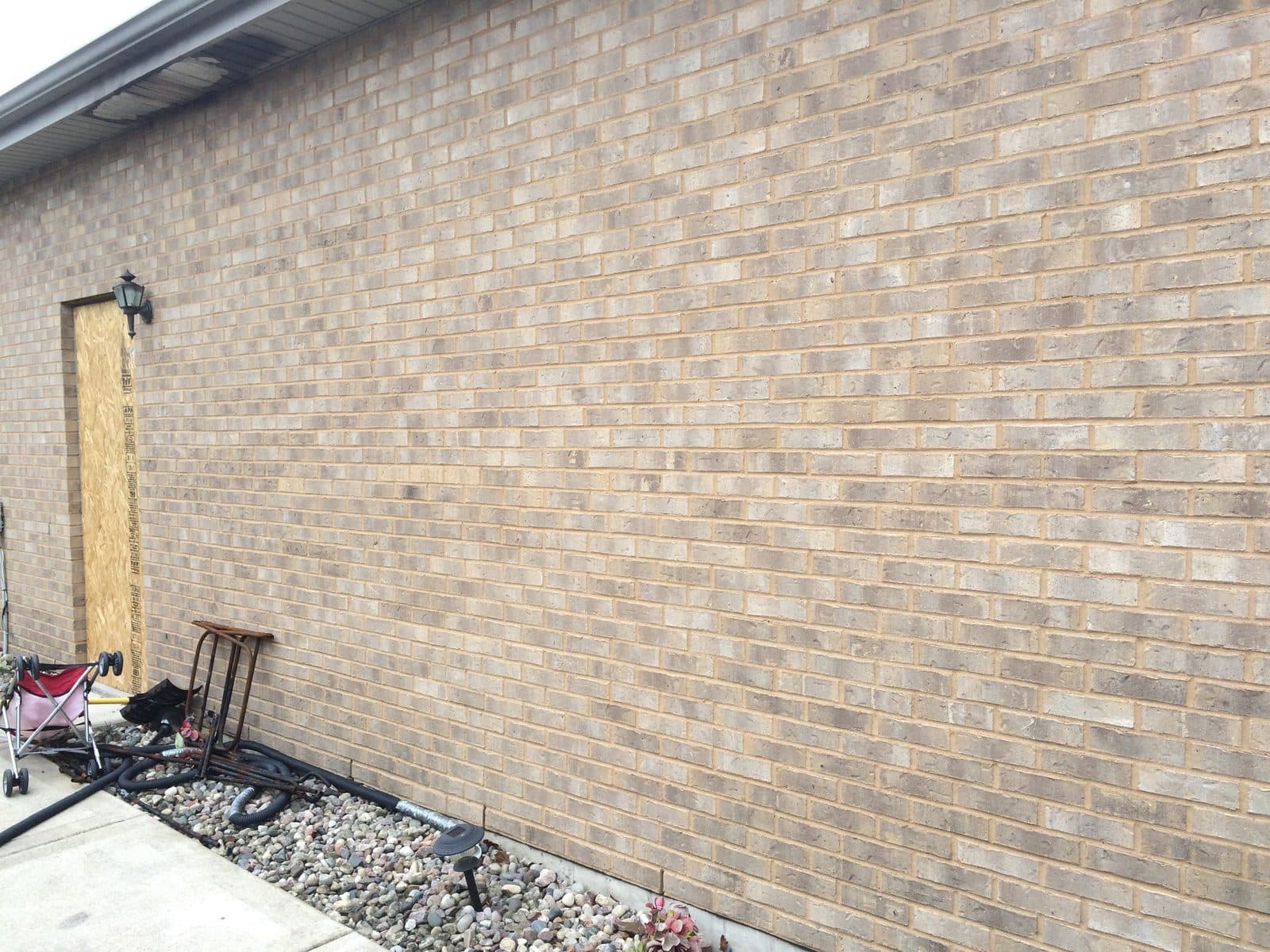
Here is the most useful thing a mason can tell a Frankfort homeowner about sealing: the product is not the decision. The sequence is.
A breathable sealer on sound, well-pointed masonry is genuine protection against Illinois freeze-thaw. The same product on a wall that is still taking water in through open joints — or a veneer wall whose weep holes have been painted shut — is worse than doing nothing, because it slows the wall's ability to dry without stopping anything getting in.
Masonry waterproofing in Frankfort, IL works when it is the last step. It fails when it is the only step.
Paul Lally's Masonry Inc. is a family-owned, insured masonry contractor serving Chicago and the Chicagoland suburbs since 1988 — tuckpointing, brick repair and replacement, chimney repair and rebuilds, lintel replacement, masonry restoration, and waterproofing for residential and commercial properties. Built on Craftsmanship. Backed by Experience. Free on-site estimates — call (708) 448-8866.
Two products, one word
Penetrating sealers — silane and siloxane chemistries — soak into the masonry and line the pores. Liquid water beads and runs off. Water vapour still passes through. The wall looks essentially unchanged and keeps its ability to dry.
Film-forming coatings — masonry "waterproof paints," heavy acrylics, elastomerics — sit on the surface. They block liquid water and they also block vapour. On a Chicagoland wall that is the problem: moisture that gets in behind the film through any joint, crack or opening cannot get out, and when it freezes it pushes the face of the brick off. That is spalling, and coatings cause a great deal of it.
Proper sealing means the first kind, over masonry that has been repaired first.
The Frankfort complication: most of the housing is veneer
This is where Frankfort differs from the older inner-ring suburbs, and it changes the whole conversation.
The village's substantial growth from the 1990s onward produced neighbourhoods of brick and stone veneer over frame — out along Cedar Road, the Route 30 corridor, and the subdivisions toward Lincoln-Way. A veneer wall is not a solid barrier. It is a drained cavity assembly, designed on the opposite principle to an old solid-masonry wall.
A veneer wall expects water to get through the brick. It manages it: water runs down the back face of the veneer, lands on through-wall flashing, and exits through weep holes at the base — the small unmortared vertical joints you can see every few feet above grade.
That design only works if the exits are open. Which is why the most common water failure on a Frankfort home of that era is not deteriorated mortar at all. It is:
- Weep holes painted, caulked or mortar-plugged during a prior repair
- Weep holes buried under decades of raised mulch and landscaping
- Flashing that is discontinuous, corroded or missing end dams
- A cavity partially blocked by mortar droppings from the original construction
- Failed perimeter sealant at the many material transitions veneer construction involves
Sealing the face of that wall addresses none of it. See weep holes in brick veneer.
Meanwhile the older village core near the Kansas Street and White Street downtown and the original town grid is solid masonry — a mass wall that manages water by absorbing and releasing it. There, sealing after proper repointing genuinely helps. Two building stocks, two completely different answers.
The sequence that works
- Diagnose the water path. Joints, a cracked lintel head, a spalled sill, coping, flashing, weep holes, gutter discharge, grade.
- Repair it — repointing, brick replacement, sill or lintel work, clearing and restoring weeps.
- Let the new mortar cure.
- Then seal, if the wall benefits from it.
Any scope that goes straight to step four should raise a question. Our post on do I need waterproofing after tuckpointing covers the decision.
Signs the wall needs repair before sealing
- Receding or crumbling mortar joints — you can rake a joint with a key and sand falls out
- Spalling or flaking brick faces, especially low on the wall or under a leaking gutter
- Efflorescence — white chalky bloom, meaning water is actively moving through the masonry
- Damp interior walls or a musty finished basement on a weather elevation
- Dark, slow-drying patches on one elevation after rain
- Blocked or invisible weep holes on a veneer wall
- Failed perimeter sealant at windows and material transitions
- A previously coated wall where the coating is blistering and lifting
Materials we use
Breathable penetrating sealers appropriate to the substrate — brick, block or stone — chosen for vapour permeability rather than for how the wall looks afterward. Mortar matched to the existing joints in type, colour, sand and profile, and softer than the units around it. Backer rod and properly tooled sealant where perimeters need renewing. And where a wall genuinely needs repair before it can be sealed, we say so — we would rather tell you the sealer should wait than take money for a product that will not perform.
What drives the cost
Wall square footage. The condition of the masonry and how much repointing, unit repair or weep restoration has to happen first. Height and access. Substrate porosity, which changes how much material a wall absorbs. Whether an old coating has to be dealt with. Weather windows, since both mortar and sealer need workable temperatures.
We publish no rates, because a number that means anything requires seeing the wall. Free on-site estimate, in writing — call (708) 448-8866.
What we will tell you honestly
Sometimes the answer is that your wall does not need sealing. A sound, well-pointed wall with working drainage and open weeps is already doing its job.
Sometimes the answer is that sealing is the wrong line item entirely — that the water is arriving from a chimney crown, a rusting lintel, a buried weep hole or a gutter running behind the fascia, and no surface product will touch it. Our name is on every job, and we would rather be right about that than sell a wall a coat of something.
Serving Frankfort and the surrounding Will County suburbs
We work throughout Frankfort and the communities around it — Mokena, New Lenox, Tinley Park, Orland Park, Homer Glen and Manhattan. Related services: masonry sealing and waterproofing, tuckpointing and repointing, brick repair, caulking and joint sealant, and limestone and sill repair.
For the full picture, read how water gets through a brick wall and is masonry waterproofing worth it.
Get an honest answer about your wall
Family-owned since 1988, insured, and straightforward about what a wall does and does not need.
Get a free on-site estimate — or call (708) 448-8866. Built on Craftsmanship. Backed by Experience.
Masonry Sealing / Waterproofing in Frankfort, IL — Frequently Asked Questions
How much does masonry waterproofing cost in Frankfort, IL?
It depends on the wall square footage, the condition of the masonry, whether repointing or unit repair is needed first, height and access, and the substrate's porosity. Paul Lally's Masonry provides a free on-site estimate in writing.
Should I seal my brick house?
Only if the masonry underneath is sound and the drainage works. A penetrating sealer on a well-pointed wall is genuine protection against freeze-thaw damage; on a wall with open joints or blocked weep holes it slows drying without stopping entry.
Will a sealer stop water already coming through my wall?
Usually not. Active entry has a path — a failed joint, a cracked lintel head, a bad sill, a plugged weep hole — and a surface product does not close a path. Find and repair the entry point first; sealing is the last step.
What is the difference between a breathable sealer and a waterproof coating?
A breathable penetrating sealer soaks in, lines the pores so liquid water beads off, and still lets vapour escape. A film-forming coating or masonry paint blocks vapour both ways, trapping moisture where it freezes and pushes the brick face off.
My house is brick veneer. Does sealing work differently?
Yes, and this matters in Frankfort. A veneer wall is a drained cavity assembly designed to let water in and release it through weep holes at the base. If those weeps are painted shut, mortar-plugged or buried by landscaping, no surface product will fix it.
Do I need tuckpointing before sealing?
If any joints are receding, cracked, sandy or open, yes. Mortar joints are the most permeable part of a wall, so sealing over failing joints locks moisture in. Repoint first, let the new mortar cure, then seal.
How long does masonry sealer last?
A quality penetrating sealer on properly prepared masonry generally protects for several years before renewal, and exposure drives the number — a south or west elevation weathers considerably faster than a sheltered north wall.
Can you seal in autumn in Illinois?
Yes, provided the masonry is dry, temperatures stay above the product's minimum for application and cure, and there is no rain in the window. Autumn is a common time to seal in Will County because it gets the wall protected before the first freeze-thaw cycles.
Masonry Sealing / Waterproofing in Nearby Areas
Other Masonry Services in Frankfort, IL
Learn more about our masonry sealing / waterproofing services across Chicagoland, or view all service areas.
Free on-site estimates across Chicagoland.