
Masonry Sealing / Waterproofing · Chicago, IL
Masonry Waterproofing in Chicago, IL — Sealing Soft Old Brick Without Suffocating It
Chicago's brick is soft, porous, and a hundred-plus years old. It survives by breathing — which makes sealing it the easiest thing in masonry to get catastrophically wrong.
Quick Answer
Masonry waterproofing in Chicago, IL is the application of a breathable, penetrating silane or siloxane sealer to brick and mortar so liquid water stays out while vapor still escapes. On the city's soft pre-1930s brick it only works after failing joints are repointed, and a film-forming coating will spall the brick. Paul Lally's Masonry has sealed Chicago masonry since 1988 — (708) 448-8866.
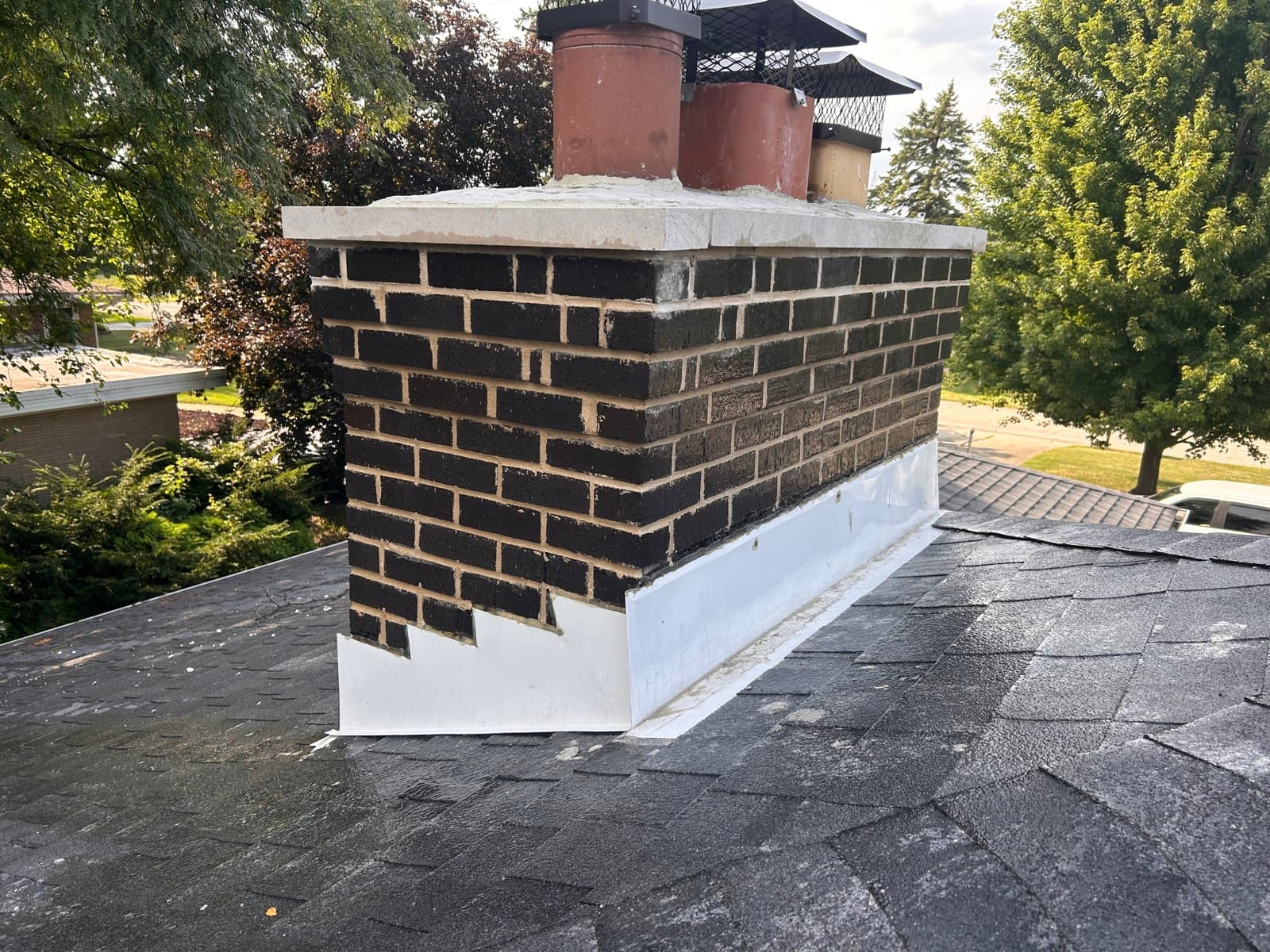
Most masonry waterproofing pages sell you the product. This one starts with a warning, because in Chicago specifically, sealing is the easiest thing in masonry to get catastrophically wrong.
The city's building stock is overwhelmingly soft, porous, locally-fired common brick laid in lime mortar, most of it built between roughly 1890 and 1930. That masonry has survived a hundred-plus winters for one reason: it breathes. It absorbs water and then releases it as vapor.
Masonry waterproofing in Chicago, IL only works when it preserves that. Paul Lally's Masonry has been sealing Chicago brick since 1988, and we turn down this work more often than we sell it.
What masonry waterproofing actually is
The application of a clear, penetrating sealer — typically a silane, siloxane, or blend — to brick, block, stone, and mortar. Not paint. Not a visible coating. It soaks into the pores, lines them so liquid water beads and runs off, then disappears. The wall looks exactly as it did, just dry.
The essential property is vapor permeability: it blocks liquid water coming in while letting vapor pass out.
Silanes have smaller molecules and penetrate denser masonry more deeply. Siloxanes are larger and suit more porous, absorbent units. Chicago common brick is at the absorbent end of that range, which is exactly why product selection isn't a formality here — we assess how thirsty your brick actually is before choosing.
The three things that go wrong
1. Sealing over failing joints
The overwhelming majority of water entering a brick wall comes through failed mortar joints — not the face of the brick. A soft, receded, or cracked joint is an open channel. Sealer over it doesn't close the channel; it coats it, hides it, and lets water keep running behind while the wall looks freshly maintained.
If a contractor offers to seal a wall with visibly failing joints and never raises repointing, that tells you what the rest of the work will be.
2. Film-forming coatings
A glossy "waterproofer," masonry paint, or elastomeric coating locks existing moisture inside the brick. Winter arrives, that trapped water freezes and expands roughly nine percent, and it has nowhere to go — so it pushes the hard fired face off the brick.
The product sold as protection becomes the cause of the spalling. On soft Chicago common brick this happens fast. See should you paint your brick — same physics.
3. Sealing masonry that didn't need it
Plenty of Chicago walls don't want a sealer at all. They want their joints repointed, their gutters cleared, and the grade fixed. Sealing a sound, well-drained wall adds little; sealing a wall whose real problem is a cracked chimney crown or failed coping addresses nothing.
The order that works
- Fix the water paths — repoint failing joints, replace spalled brick, address the lintel, chimney crown, parapet coping, and sealant at window heads.
- Fix the drainage — gutters clear, downspouts discharging well away, grade sloping away, snow kept off the base of the wall.
- Clean and let the masonry dry.
- Then seal — if it's warranted at all.
When sealing genuinely helps
- Chimneys. The most exposed masonry you own — weather on four sides above the roofline, and rarely maintained. The single best candidate on most buildings.
- Brick already showing efflorescence where the source has been traced and fixed
- Early spalling on otherwise sound masonry
- Heavily weather-exposed elevations, typically north and west, taking wind-driven rain off the lake
- A wall that's just been repointed — sealing protects the investment you've made
- Parapets and coping, after the joints are sound
- Exposed side and rear elevations on a city lot with no shelter from adjacent buildings
Signs worth investigating (sealing may or may not be the answer)
- Efflorescence — white, chalky salt deposits, proof water is moving through the wall
- Early spalling — faces beginning to flake, powder, or pop
- Damp or musty interior walls on an exterior-facing room
- Dark, slow-drying patches for days after rain
- Water stains near a chimney chase or above windows
- A chimney above the roofline never sealed or capped
Each of those has a cause worth tracing first. See stains on brick.
How Paul Lally's Masonry approaches it
- Read the masonry — its era, hardness, and porosity. Soft pre-1930s common brick and modern veneer want different decisions.
- Inspect the whole system — joints, brick condition, sills, lintels, chimney, parapet coping, grade, gutters.
- Tell you honestly whether sealing is right. Sometimes it isn't, and we'd rather say so than take the work.
- Repoint and repair what's failing.
- Assess absorbency to inform which chemistry suits the wall.
- Clean the masonry — efflorescence, dirt, and biological growth removed gently. Never sandblasting, never high-pressure washing, which strip the fired face off brick and the weathered skin off limestone.
- Let the wall dry. This step gets its own time.
- Protect surroundings — windows, trim, walks, and neighboring property on a tight lot.
- Apply at the correct coverage rate, typically saturating wet-on-wet so the product goes into the masonry rather than sitting on it.
- Cure, inspect, and walk it with you, with a realistic re-seal interval.
Materials
Breathable, penetrating silane and siloxane-based sealers — clear, vapor-permeable, invisible once cured, matched to the porosity of your brick. Mortar for repointing matched for type, color, sand, and joint profile: soft lime-rich or low-Portland mixes on pre-1930s brick, standard Type N on later work, Type S only where structure and exposure genuinely call for it.
Never a film-forming coating. Never masonry paint. Never sealer over joints we haven't made sound first. Never aggressive cleaning on historic brick or limestone.
What drives the cost
- Square footage and how many elevations — including side and rear walls on a city lot
- Surface prep — cleaning, and whether efflorescence or biological growth has to come off
- Height and access — upper stories, chimneys above the roofline, staging in tight gangways or alley-only access
- Repointing scope required before sealing
- Brick porosity — soft, thirsty Chicago common brick absorbs considerably more product
- Site conditions — narrow lots, adjacent buildings, parking restrictions
Paul Lally's Masonry gives a free on-site estimate in writing, and we'll say plainly if sealing isn't what your wall needs.
Local context: sealing decisions by Chicago building type
Bungalows and pre-1930s solid masonry. Soft common brick, lime mortar, multi-wythe walls where the joints are the only water barrier. These dry by breathing. Repoint first; seal only after, and only breathable. A film here is the worst combination in the city.
Greystones. Brick plus substantial Indiana limestone — sills, lintels, water table, steps, carved trim. The stone is porous, bedded, and irreplaceable. It must release moisture as vapor or it delaminates in sheets. We're most cautious here, and frequently advise against sealing the stone at all.
Two-flats, three-flats, and flat-roofed buildings. The parapet and coping above the roofline are where water actually enters. Sealing the street elevation while the parapet pours water down inside the wall is the classic sequencing error. See parapet wall repair in Chicago.
Newer construction and veneer. A single wythe with a drainage cavity behind it, designed to let water in and drain it out through weep holes. Never seal weep holes. Leaks here are usually flashing, blocked weeps, or corroded ties. See brick veneer vs. solid masonry.
Across all of them, Chicago supplies the stress: repeated hard freeze-thaw cycling, wind-driven rain off the lake pushing water horizontally into joints, and de-icing salt attacking everything within a few feet of grade.
Related masonry services in Chicago
Waterproofing is the finish line, not the starting line. Most Chicago projects begin with tuckpointing and repointing, and often include brick repair, brick replacement, chimney repair and rebuilds, parapet wall repair, lintel repair and replacement, limestone and sill repair, caulking and joint sealant, and foundation masonry repair. For whole-building scopes, residential, commercial, or historic masonry restoration.
Worth reading: is masonry waterproofing worth it and do I need waterproofing after tuckpointing. Nearby: brick repair in Chicago, tuckpointing in Chicago, masonry restoration in Chicago, and masonry waterproofing in Tinley Park.
Find out whether your brick should be sealed at all
Paul Lally's Masonry Inc. is a family-owned, insured masonry contractor serving Chicago and the Chicagoland suburbs since 1988 — tuckpointing, brick repair and replacement, chimney repair and rebuilds, lintel replacement, masonry restoration, and waterproofing for residential and commercial properties. Built on Craftsmanship. Backed by Experience.
We'll tell you what's actually letting water into your wall, and we'll recommend sealing only where it genuinely helps — in the right order, with a product your brick can breathe through. Our family name is on every job.
Free on-site estimates — call (708) 448-8866 or request an estimate online.
Masonry Sealing / Waterproofing in Chicago, IL — Frequently Asked Questions
Should I seal my Chicago brick at all?
Often the honest answer is no — or not yet. On the city's soft pre-1930s common brick, repointing failing joints and fixing the gutters does far more than any sealer, and sealing over failing mortar actively traps water. Where sealing does earn its place, it's on sound masonry showing efflorescence, early spalling, or heavy exposure — and on chimneys.
Do you have to tuckpoint before waterproofing?
If the joints are failing, yes — always. Most water entering a brick wall comes through failed mortar joints rather than the face of the brick, so sealing first just coats the leak path and conceals it. We repoint what's failing, then seal, so the wall is genuinely watertight instead of merely coated.
What's the difference between a breathable sealer and a waterproofing paint?
A breathable penetrating sealer soaks into the pores of the masonry, blocks liquid water, and lets trapped vapor escape — the brick looks unchanged. A film-forming paint or coating sits on the surface and traps moisture inside, which in Chicago's freeze-thaw climate pushes the fired face off the brick. We use penetrating sealers and never a film.
Can you seal a greystone or historic brick building?
Only with a breathable penetrating product, and only after the joints and stone are sound — and often we'll advise against it. Soft historic brick and porous limestone survive by releasing moisture as vapor, so a coating on that masonry causes the exact spalling and delamination it was meant to prevent.
How much does masonry waterproofing cost in Chicago, IL?
There's no flat rate. Cost depends on square footage of wall, how many elevations, how much cleaning and efflorescence removal is needed, height and access on a city lot, brick porosity, and whether repointing has to happen first. Paul Lally's Masonry provides a free on-site estimate in writing.
How long after tuckpointing should I wait to seal?
Let the new mortar cure fully first — weeks rather than days, and longer in cool weather. Sealing green mortar traps moisture in a curing joint and can affect both the cure and the sealer's performance. We'll give you a specific window based on the mortar used and the conditions it cured in.
What's the difference between silane and siloxane sealers?
They're related water-repellent chemistries differing mainly in molecule size — silanes are smaller and penetrate dense masonry more deeply, siloxanes are larger and suit more porous, absorbent units, and many products blend both. Chicago's soft common brick is highly absorbent, so the choice matters and we assess it on site.
How often does brick sealer need reapplying?
A quality penetrating sealer on properly prepped brick protects for several years before it needs renewing, with sun exposure, wind-driven rain, and brick porosity moving that interval. South and west elevations wear first. We'll recommend a realistic re-seal schedule at the estimate.
Masonry Sealing / Waterproofing in Nearby Areas
Other Masonry Services in Chicago, IL
Learn more about our masonry sealing / waterproofing services across Chicagoland, or view all service areas.
Free on-site estimates across Chicagoland.