
Masonry Restoration · Chicagoland, IL
Height and Access: The Masonry Cost Driver Nobody Explains
Two walls with the same amount of failed mortar can cost very differently, and the reason usually has nothing to do with the masonry. It's how the crew reaches it — and that's worth understanding before you compare quotes.
2026-08-13
Quick Answer
Height and access are among the largest cost drivers in masonry because reaching the work — ladders, pipe staging, or a lift — takes real time before any mortar is touched, and a chimney or parapet cannot be reached at all without setup. Narrow gangways, alley-only access, and shared lot lines add further constraints. Paul Lally's Masonry has served Chicagoland since 1988 — (708) 448-8866.
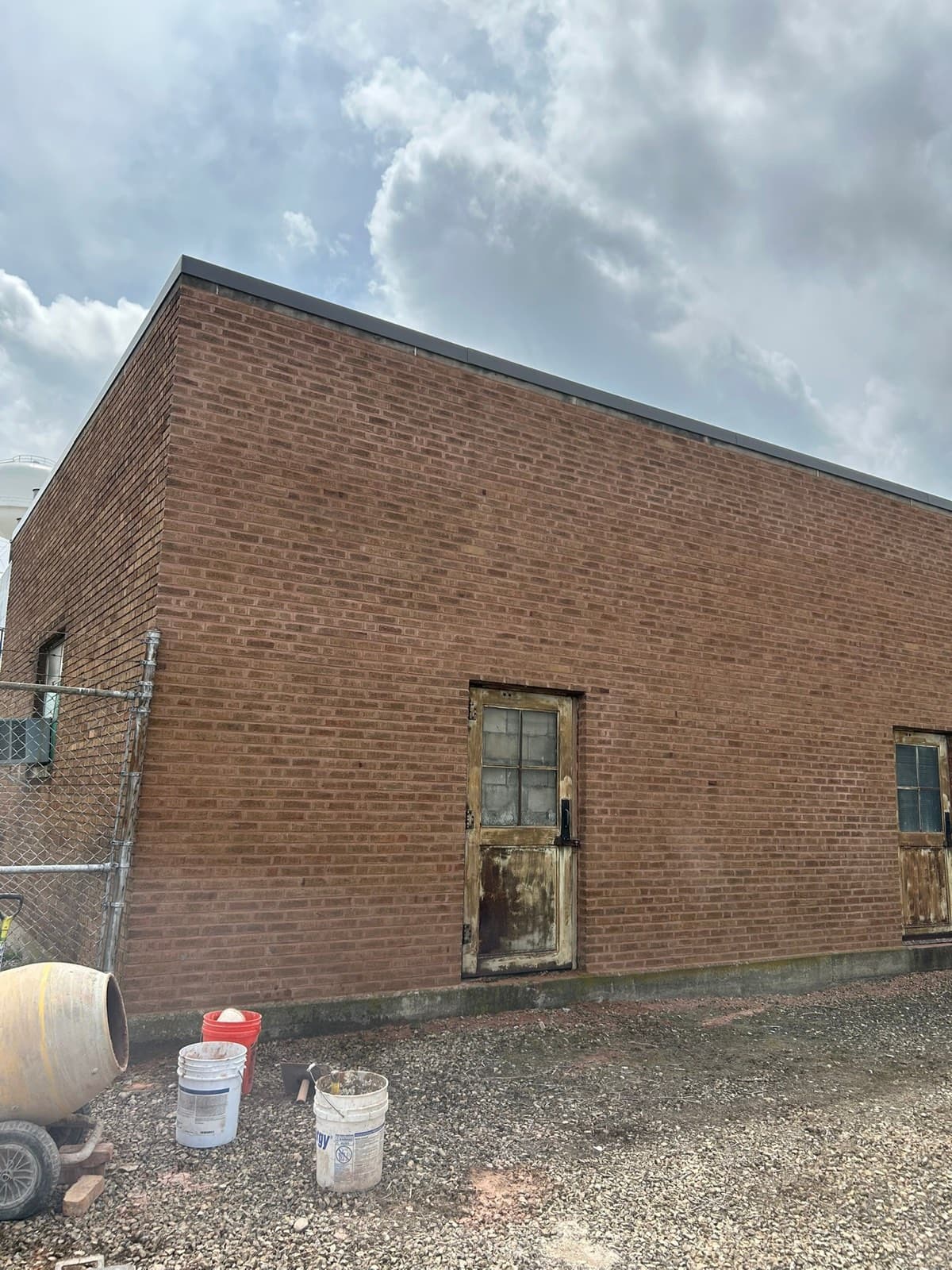
Two homeowners call about the same problem: failing mortar joints, roughly the same amount of wall. One quote comes back meaningfully higher than the other.
Nobody did anything wrong. The difference is usually not the masonry at all — it's how the crew reaches it.
Access is one of the largest cost drivers in this trade and one of the least explained, which makes comparing quotes harder than it should be. Paul Lally's Masonry has been setting up on Chicagoland buildings since 1988. Here's the part that doesn't show up in the scope.
The thing to understand: setup is real work
A mason cannot repoint a joint they cannot safely reach with both hands.
At ground level, that's nearly free. Walk up, work, walk away.
At a second or third story, it means pipe staging — erected, tied to the building, levelled, planked, and later dismantled and hauled out. That's hours or days of skilled labour before anyone touches mortar, and roughly the same again at the end.
On a roof, it means getting crew, tools, and material safely up a pitch and set up around the work, with the roof protected underneath.
None of that produces a single repointed joint. It's all necessary and it's all time.
Which is why the honest answer to "why does it cost that?" is frequently "because of where it is," not "because of what it is."
The access ladder
| Method | Suits | Trade-off |
|---|---|---|
| Ladders | Low, small, localized work | Minimal setup; limited reach, one hand occupied |
| Pipe staging | Any real elevation | Stable platform, both hands free, material to hand — but real setup and teardown time |
| Lift / boom | High or awkward positions | Fast to reposition; needs room to set and stabilise |
| Roof-based setup | Chimneys, parapets, coping | The only way to reach roofline masonry — protection down first |
Pipe staging is the workhorse for most residential and small commercial masonry above the first floor. It's slower to set than a lift but it gives a mason a proper working platform, which is what quality work actually requires.
Why chimneys cost what they do
The question we're asked most often, and access is the entire answer.
A chimney is a small amount of masonry in a genuinely awkward place. Getting a crew, tools, brick, and mortar safely onto a pitched roof and set up around a chimney can take as long as rebuilding the thing.
So the access-to-work ratio is worse there than almost anywhere on the building. A modest chimney rebuild carries the same setup burden as a much larger job.
Which is exactly why bundling matters. If a crew is going up for the chimney, that's the moment to also do the flashing condition, any roofline masonry, and — on a flat roof — the parapet and coping. See chimney crowns, caps, and flashing.
The Chicago lot problem
Access here has a local dimension you won't find in a suburb with an open yard.
The gangway. On a standard city lot the space between buildings can be a few feet wide, shared with the neighbour, and the only route to the side elevation. Staging in a gangway is slower to set, and sometimes a lift simply won't fit.
Shared lot lines. Staging frequently needs to sit on or over a neighbour's property. That's a conversation before it's a logistics problem — see shared walls and party walls.
Alley-only rear access. Material and debris often have to come and go through an alley rather than a driveway.
Street parking. On dense blocks, staging a mixing area and material near the building is genuinely constrained.
Zero setback. Where the building meets the public sidewalk, work above means protecting pedestrians below — barricades, overhead protection, and a site cleaned daily.
None of that changes the mortar. All of it changes the day.
And the suburban version
Different constraints, same principle.
Big elevations. Homer Glen, Frankfort, Naperville, and Orland Park build wide and tall — two-story faces, tall gable ends, three-car garages. More wall means more staging, and a gable end is genuinely awkward to reach.
Mature landscaping. Established beds, shrubs against the wall, and decks all have to be worked around or protected.
Long approaches. Getting material from the street to a rear elevation on a large lot takes longer than it sounds.
Open exposure. Bigger lots mean more wind, and wind stops staging work.
How to genuinely reduce it
Bundle by access, not just by risk.
This is the single most useful thing a homeowner can do with this information. When a stage of work requires a setup, look at everything else that setup would reach:
- Staging an elevation for repointing? Do the spalled brick, the sills, and any lintel on that wall in the same visit.
- Going up for the chimney? Do the flashing and any other roofline masonry.
- On a flat roof for the parapet? Do the coping and the chimney together.
- Working at grade? Handle the base course, parging, and the stoop while you're there.
One mobilization covering four items beats four visits covering one each — and it's the easiest saving available in a phased plan. See how to prioritize masonry repairs.
What you can do before the crew arrives:
- Move vehicles clear of the work zone and the drop area
- Unlock gates; make sure the gangway is passable
- Cut back or tie up shrubs against the wall
- Clear the base of the wall
- Let neighbours know if staging will sit near a shared line
- Secure pets, and plan for restricted access below the work
Every one of those is setup time you're not paying for.
Why this matters when comparing quotes
Access assumptions are one of the least visible reasons two bids differ.
One contractor may have priced pipe staging on a two-story elevation. Another may have assumed ladders. Those are genuinely different jobs — and the ladder version will likely produce worse work, because a mason working one-handed off a ladder cannot cut joints to depth and tool them properly the way they can from a platform.
So when quotes diverge, ask each contractor: "What access method have you allowed for?"
That single question explains more variance than the masonry usually does. See what actually happens during a free masonry estimate.
What access has to do with quality
Worth stating plainly, because it's the part that isn't obvious.
Proper masonry needs a proper working position. Cutting joints to roughly two and a half times their width, packing mortar in layers, and tooling each joint at the right moment all require both hands, good light, and time at the wall.
A mason on a properly set platform can do that. A mason stretching off a ladder is compromised, and the compromise shows up as shallow joints — which is the number one reason repointing fails early. See why masonry repairs fail.
So an access line in a quote isn't padding. It's frequently what makes the work last.
Weather stops access first
Access is usually the first thing weather shuts down — before mortar even becomes the issue.
- Wind stops staging work and rooftop work
- Ice makes roof access unsafe
- Rain halts grinding and repointing, and fresh work needs protecting
- Cold stops mortar curing properly regardless of access
Which is part of why masonry schedules move more than homeowners expect, and why booking earlier in the season matters. See the best time of year for masonry repair.
The safety dimension
Access is also where the genuine risk in this trade sits — crews at height, above sidewalks, over neighbouring property, handling heavy material.
Properly set staging, protection below, debris containment, and a site cleaned daily aren't overhead. They're what makes the work safe to do at all, and they're a fair thing to look for on day one. See what "insured" should mean when you hire a mason.
Related services
Access shapes the cost of tuckpointing and repointing, brick repair, brick replacement, chimney repair and rebuilds, parapet wall repair, lintel repair and replacement, limestone and sill repair, masonry waterproofing, and residential or commercial masonry restoration.
The bottom line
Two walls with identical damage can cost very differently, and it's usually the setup rather than the stone. Ground level is nearly free; a third story, a pitched roof, or a four-foot gangway are not.
Three things follow. Bundle everything that shares a setup. Ask competing bids what access they've priced. And treat a staging line not as padding but as the thing that lets a mason work properly — because a repair done from a bad position is the repair that fails first.
Paul Lally's Masonry Inc. is a family-owned, insured masonry contractor serving Chicago and the Chicagoland suburbs since 1988 — tuckpointing, brick repair and replacement, chimney repair and rebuilds, lintel replacement, masonry restoration, and waterproofing for residential and commercial properties. Built on Craftsmanship. Backed by Experience.
We'll tell you what the access on your building actually requires, and what else is worth doing while we're set up there. Our family name is on every job.
Free on-site estimates — call (708) 448-8866 or request an estimate online.
Frequently Asked Questions
Why does the same repair cost more higher up the wall?
Because reaching it is a real portion of the job. Work at ground level needs almost no setup; work at a second or third story needs pipe staging erected, tied, levelled, and later dismantled — hours or days of labour before anyone touches mortar, and the same again at the end.
Why is chimney repair expensive relative to its size?
Because a chimney is small but hard to reach. Getting a crew and material safely onto a pitched roof and set up around a chimney can take as long as the masonry itself, so the access-to-work ratio is worse than almost anywhere on the building. That's also why bundling other roofline work with it makes sense.
Does my narrow city lot make the job cost more?
It can. A gangway a few feet wide, a shared lot line, alley-only rear access, or street-parking restrictions all shape how staging and material reach the wall. It doesn't change the masonry, but it changes how long setup takes and sometimes what equipment is usable at all.
What's the difference between ladders, pipe staging, and a lift?
Ladders suit low, small, localized work. Pipe staging is the workhorse for any real elevation — a stable platform that lets a mason work with both hands and keep material to hand. A lift suits high or awkward access where staging can't be set, but it needs room to position and stabilise.
How can I reduce the access cost on my job?
Bundle everything that shares the same setup. If staging is going up on an elevation, do the repointing, spalled brick, sills, and any lintel on that wall in the same visit — one mobilization covering four items beats four visits covering one each.
Should I clear the area before the crew arrives?
It genuinely helps. Move vehicles, unlock gates, cut back or tie up shrubs at the wall, clear the gangway, and let neighbours know if staging will sit near a shared lot line. Anything the crew has to work around adds setup time.
Do quotes vary because of access assumptions?
Frequently, yes, and it's one of the least visible reasons two bids differ. One contractor may have priced pipe staging where another assumed ladders, which is a genuinely different job. Ask each what access method they've allowed for — it explains more variance than the masonry usually does.
Does weather affect access as well as mortar?
Yes. Roof work in ice is unsafe, wind stops staging work, and wet conditions halt both grinding and repointing. Access is often the first thing weather shuts down, which is part of why masonry schedules move more than people expect.
Is it cheaper to do all four elevations at once?
Usually per unit of work, because you're mobilising once. But it's only worth it if all four actually need work — mortar fails by exposure, so the sheltered sides often don't. A good mason tells you which elevations can wait rather than quoting the whole building by default.