
Brick Repair · Lemont, IL
Brick Repair in Lemont, IL — Where the Brick Meets the Stone Is Where It Fails
Lemont is a stone town, and it shows in the brick. A great many walls here are brick with limestone foundations, sills, water tables and trim — and the damage almost always starts where those two materials meet, because they absorb, move and shed water differently.
Quick Answer
Paul Lally's Masonry Inc. provides brick repair in Lemont, IL — replacing spalled and cracked brick and repairing the brick-to-stone junctions where the village's mixed masonry walls typically fail, using mortars matched softer than the units they hold. Family-owned since 1988, insured. Free estimates — call (708) 448-8866.
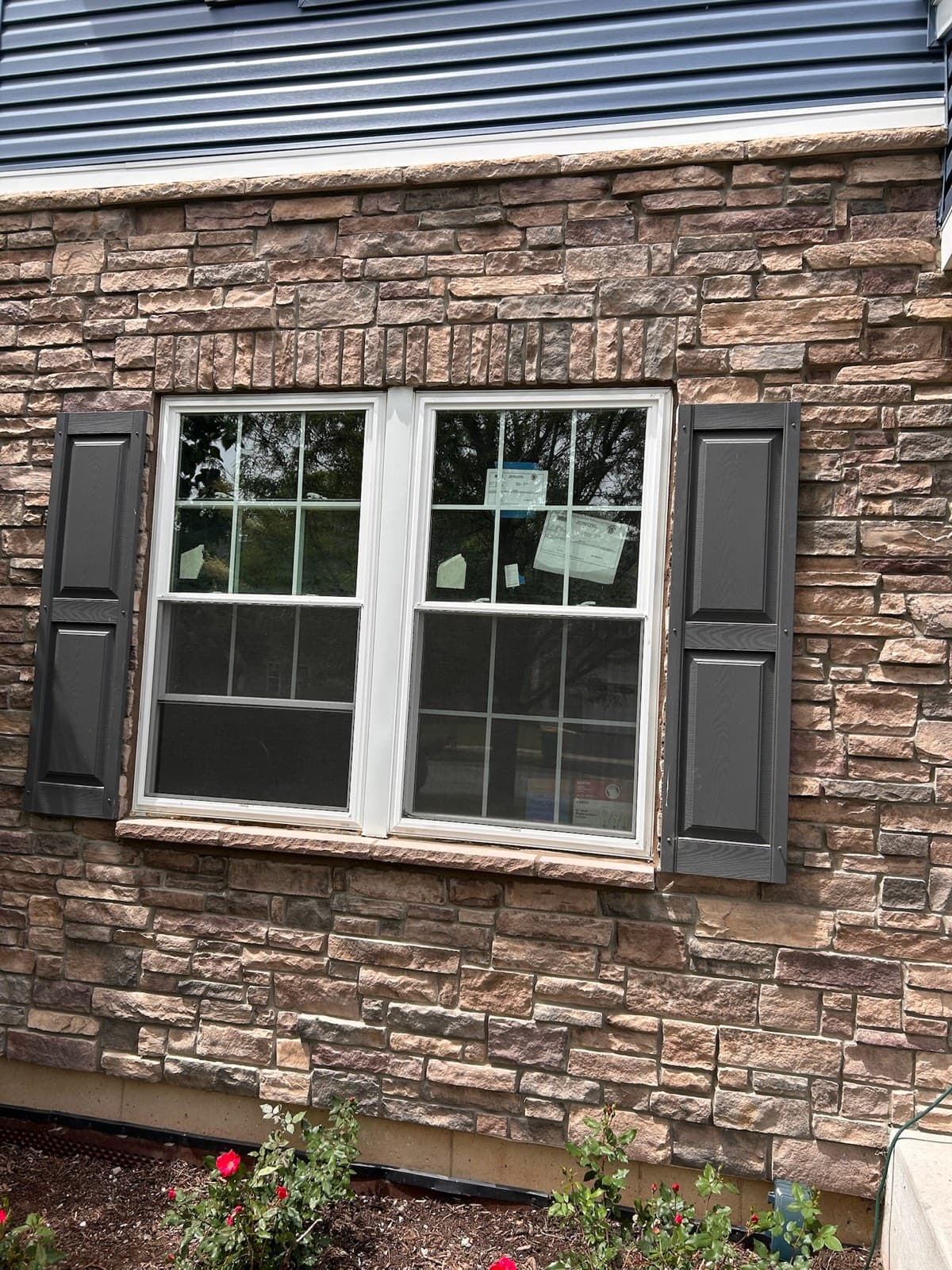
Brick Repair in Lemont, IL
Brick repair in Lemont, IL is rarely just brick repair. Paul Lally's Masonry Inc. repairs and replaces damaged masonry on homes and buildings throughout Lemont and the surrounding suburbs. Family-owned since 1988, insured, free on-site estimates. Call (708) 448-8866.
Look closely at almost any older wall in this village and you will find two materials, not one — and the trouble almost always starts where they meet.
Lemont Is a Stone Town, and the Brick Knows It
Lemont grew up around quarrying and the Illinois & Michigan Canal, and the local dolomitic limestone that came out of the ground here ended up in an enormous amount of what got built.
Which means the walls are mixed. Even on a house you would describe as brick, you will commonly find stone doing real work:
- Stone foundations carrying brick above them
- Water tables — the projecting stone course near the base
- Window and door sills, and sometimes stone lintels
- Belt courses and trim bands running across the elevation
- Steps, stoops and porch caps
- Copings on garden and retaining walls
Two materials in one wall is not a defect. It is how this village was built. But it does mean a brick repair here has to account for what the brick is sitting on and butting up against.
Why the Junction Fails First
Brick and limestone are not the same material and they do not behave the same way.
They absorb water differently. Porous limestone and fired brick take on and release moisture at different rates, so at the junction one side is often wetter than the other for longer.
They move differently. Temperature swings — and Chicagoland gives plenty — expand and contract the two materials at different rates. The joint between them absorbs that difference every single day.
Stone sheds onto brick. Any horizontal stone — a sill, a water table, a belt course — collects water and throws it somewhere. When it has lost its wash (its slope) or its drip edge, it stops throwing water clear and starts delivering it directly onto the brick and mortar below.
Put those together and the joint where brick meets stone is a stress and moisture concentration point. It opens first, and once it does, water gets behind both materials.
On a Lemont wall, look at the course of brick directly under every piece of stone. That is where the story starts.
When Brick Gets Replaced Rather Than Repaired
A brick has a hard, dense fired outer face and a softer core behind it. That face is what makes it weather-resistant.
When brick spalls, that face flakes or sheets away and the core is exposed. It cannot be patched back on — cover it and you have put something harder than the brick over a sponge, trapping water behind the patch. Spalled brick gets replaced.
So do units cracked all the way through, units that have lost bond (they move, or sound hollow when tapped), and units displaced out of plane.
What does not need replacing: eroded mortar joints with sound brick faces, which need tuckpointing.
Signs You Need Brick Repair
- Faces flaking, sheeting or crumbling
- Damage concentrated in the course beneath a stone sill or water table
- Open joints along a brick-to-stone junction
- Cement patches on stone, blistering or lifting away
- Crisp hard mortar standing proud of receded brick faces — a previous repair that was too strong
- Cracked-through units, or brick you can move by hand
- Brick that sounds hollow when tapped
- White efflorescence, proving water is moving through the wall
- A horizontal crack with rust staining above an opening — corroding lintel steel
- Stepped diagonal cracking, which means movement rather than weather
Risks of Waiting
A spalled brick has lost its hardest layer, so it takes water faster than the sound brick beside it and each freeze-thaw cycle takes a little more — spreading outward through its neighbours.
On a mixed wall there is a second cost. Water entering at an open brick-to-stone junction reaches both materials and whatever is behind them, and limestone that stays saturated sugars and delaminates. Damage that started as a few brick faces becomes brick plus stone, and stone is the part that is genuinely difficult to replace in kind.
Our Process
- Diagnose the cause — weather, a previous repair, corroding steel, or movement.
- Look at every stone element on the wall: has it kept its pitch and its drip edge, or is it now aiming water at the brick?
- Test the existing mortar hardness, since a too-strong previous repointing changes the plan.
- Sound the surrounding wall to find every unit that has genuinely failed.
- Source the match, favouring salvaged period brick on older buildings.
- Remove failed cement patches and hard mortar by hand where the surrounding material is soft.
- Cut out failed units without disturbing the courses above.
- Correct what caused it — restore a sill's wash and drip edge, replace corroded steel, fix a downspout, address grade.
- Set replacements in matched mortar, keyed to existing coursing and bond.
- Blend, don't block — scatter new units through the surrounding field.
- Repoint the brick-to-stone junction with a mix appropriate to both, clean down, and walk it with you.
Materials
Mortar must be softer than the unit it sits against. Mortar is the sacrificial component — meant to give first, because a joint can be raked out and replaced while a brick or stone face cannot.
On a mixed wall that means matching to each material rather than running one mix throughout: lime-rich, low-Portland mortars against soft historic brick and limestone; Type N on modern brick. Salvaged and reclaimed brick wherever it serves the match better than new material.
Related services: brick replacement, tuckpointing, limestone and sill repair, foundation masonry repair, and masonry restoration.
What Drives the Cost
- How many units come out once the wall is properly sounded
- Whether stone elements have to be repaired alongside the brick
- Match difficulty, and whether salvaged material must be sourced
- Undoing prior repairs — hard mortar and cement patches add hand labour
- Height and access, including Lemont's sloping sites and terraced yards
- Whether the underlying cause must be corrected
We do not quote masonry over the phone. The look is free and the estimate written.
Serving Lemont and the Surrounding Suburbs
Paul Lally's Masonry Inc. is a family-owned, insured masonry contractor serving Chicago and the Chicagoland suburbs since 1988 — tuckpointing, brick repair and replacement, chimney repair and rebuilds, lintel replacement, masonry restoration, and waterproofing for residential and commercial properties. Built on Craftsmanship. Backed by Experience. Free on-site estimates — call (708) 448-8866.
We work throughout Lemont and neighbouring Homer Glen, Palos Park, Willowbrook and Darien.
Get a Free Lemont Brick Repair Estimate
If the brick under your sills is crumbling while the rest of the wall looks fine, the stone above it is probably the reason. Call (708) 448-8866 or request a free estimate.
Brick Repair in Lemont, IL — Frequently Asked Questions
How much does brick repair cost in Lemont, IL?
It depends on how many units come out once the wall is sounded, how difficult the brick is to match on older stock, access and height, and whether stone trim or a stone foundation has to be addressed alongside it. Paul Lally's Masonry Inc. gives free on-site estimates in Lemont — call (708) 448-8866.
Why does damage start where brick meets stone?
Because the two materials behave differently. Stone and brick absorb water at different rates, move differently with temperature, and shed water differently — so the joint between them is a stress and moisture concentration point, and it is usually the first thing on a mixed wall to open up.
My house is brick but the foundation is stone. Is that normal here?
Very much so. Lemont grew as a quarrying town on the I&M Canal, and local dolomitic limestone turns up throughout the village as foundations, water tables, sills, steps and trim under and around brick walls. Mixed masonry is the norm rather than the exception.
Can spalled brick be patched instead of replaced?
No. Spalling means the hard fired face is gone, and nothing puts it back — a patch over the soft core traps water behind something harder than the brick and takes more off next winter. Spalled units get cut out and replaced with matched brick.
Does stone need different mortar than brick?
Often yes, and it matters. The governing rule is that mortar must be softer than the unit it sits against, so a soft historic limestone or soft older brick needs a lime-rich mix while modern brick can take a Type N. On a mixed wall we match to each material rather than using one mix throughout.
Somebody patched my stone with cement. Is that a problem?
Usually yes. A hard cement patch is denser and far less permeable than limestone, so moisture moving through the stone stops behind the patch and freezes there, taking off more material than was originally damaged. Removing it carefully is often the first half of a repair.
Do you work on older buildings in downtown Lemont?
Yes, on residential and commercial masonry throughout the village including its older stock. Paul Lally's Masonry Inc. has been working on Chicagoland masonry since 1988, and our name is on every job. Free on-site estimates — call (708) 448-8866.
Brick Repair in Nearby Areas
Other Masonry Services in Lemont, IL
Learn more about our brick repair services across Chicagoland, or view all service areas.
Free on-site estimates across Chicagoland.