
Masonry Restoration · New Lenox, IL
Masonry Restoration in New Lenox, IL — When Spot Repairs Stop Keeping Up
There's a point where patching one more crack stops making sense — where the lintels, the sills, the joints and the brick are all failing on the same clock. Paul Lally's Masonry Inc. restores New Lenox facades as one coordinated job instead of five separate visits.
Quick Answer
Paul Lally's Masonry Inc. provides masonry restoration in New Lenox, IL — repairing lintels, sills, brick, and mortar joints as one coordinated program rather than piecemeal patches, then waterproofing the finished facade. Family-owned, serving Chicagoland since 1988, insured. Free on-site estimates — call (708) 448-8866.
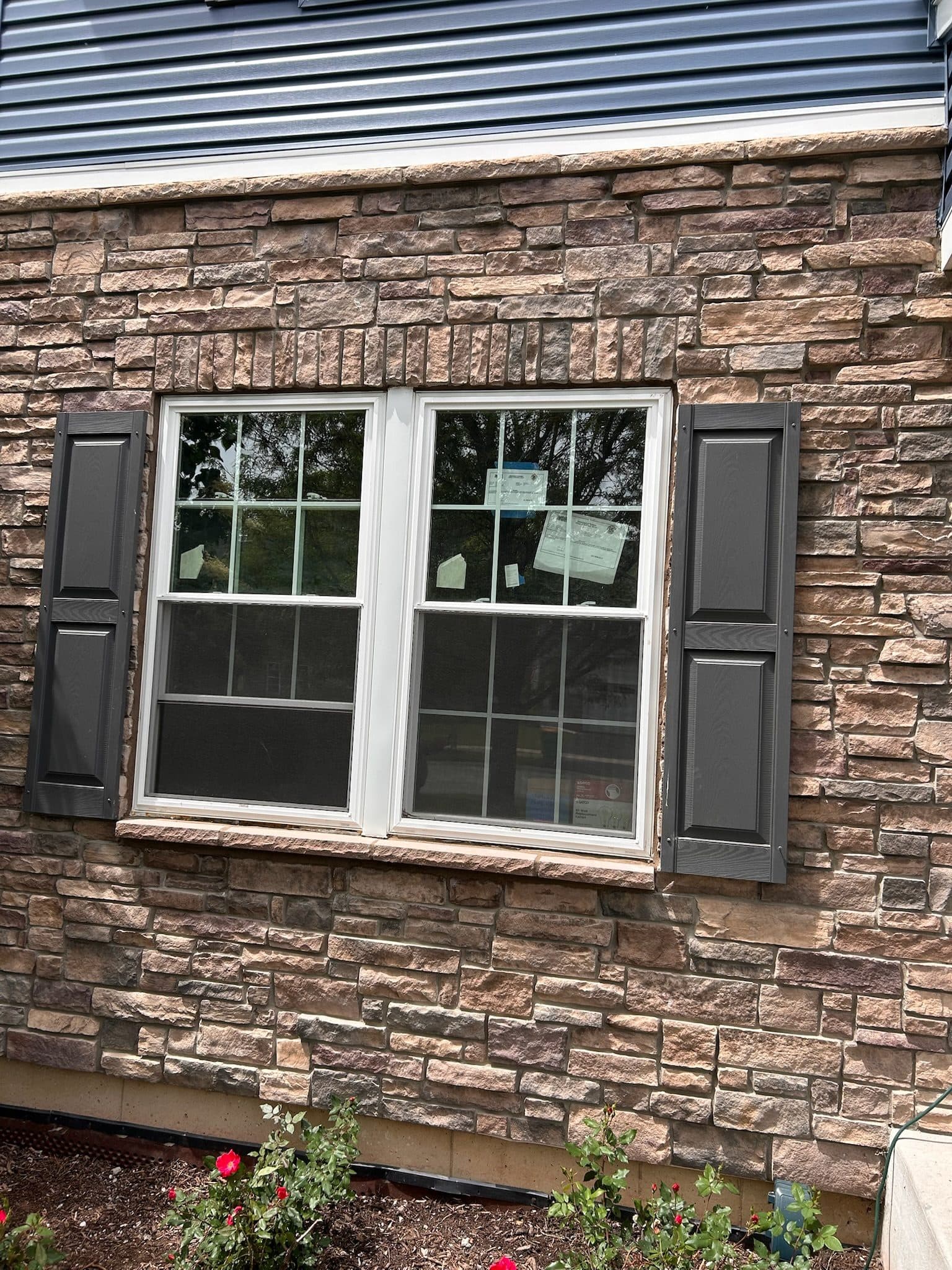
You patched the crack over the front window two summers ago. Last fall a sill started shedding. Now there's a stair-step crack running up the corner, and the mortar near the grade line rakes out with a fingernail. Nothing on that list is a crisis by itself — but together they're telling you the same thing: the wall has stopped shedding water, and patching one item at a time is losing the race.
Paul Lally's Masonry Inc. provides masonry restoration in New Lenox, IL — treating your facade as one system rather than a list of separate patches, so the lintels, sills, brick, and mortar joints are corrected in the right order and the wall is genuinely weathertight when we leave. We're family-owned and have worked Chicagoland brick since 1988. For a free on-site estimate, call (708) 448-8866.
What masonry restoration in New Lenox actually means
Restoration isn't a fancier word for repair. A repair addresses one failing item. Restoration is a coordinated program — tuckpointing the failed joints, replacing the brick that's beyond saving, swapping out rusted lintels, rebuilding or replacing failed sills, caulking the transitions, and waterproofing the finished wall — planned and executed as a single job.
The practical reason that matters is water. A brick wall only fails in one way: water gets in and can't get out. If you replace the spalled brick but leave the rusting lintel above it, the wall keeps moving. If you tuckpoint the joints but leave a cracked sill funneling water behind the veneer, you've sealed a leak inside the wall. Fixing the facade in pieces, across three different years, means you never actually close the loop.
The second reason is plain economics. Scaffolding, staging, mobilization, and setup are a real part of any masonry job. Doing lintels this year, brick next year, and sealing the year after means paying to get up to that wall three separate times. Doing it once, in the correct sequence, is both a better repair and a more sensible use of your money.
Why New Lenox facades are hitting this point now
New Lenox is really two housing stocks wearing the same village name, and they fail differently.
The older village core — the original town section along and around Route 30 — has the solid masonry you'd expect: full brick homes, older mortar, and joints that have simply spent decades in the weather. That's traditional deterioration, and it responds well to careful repointing with correctly matched mortar.
The much bigger story is the 1990s and 2000s subdivision boom that turned New Lenox into one of Will County's fastest-growing villages. Those homes are overwhelmingly brick veneer fronts — a single wythe of brick hung on the front elevation over a wood-framed house. And they are now, all at once, arriving at the age where veneer problems surface.
Rusting steel lintels
Above every window and door opening in a veneer front is a steel angle carrying the brick. Once its protective coating gives out, that steel rusts — and rusting steel swells to several times its original thickness. It has nowhere to go but up, so it jacks the brick course above it. The signature is a straight horizontal crack across the head of a window, sometimes with the brick visibly lifted or the joint mysteriously wide. Left alone, it displaces brick and eventually drops mortar. This is the single most common problem we're called for on New Lenox veneer homes. It's covered in depth in our guide to failing lintels and cracked brick above windows, and it's the core of our lintel repair and replacement work.
Failed sills
The sill below the window is supposed to throw water clear of the wall. When a limestone or concrete sill cracks, loses its slope, or loses the caulk joint at its ends, it does the opposite — it delivers water straight into the wall below and behind it. Sills are small, cheap-looking pieces of a facade that cause an outsized amount of damage. See our limestone and sill repair.
Weep holes, flashing, and the drainage cavity
This is the part most homeowners have never been told: brick veneer is not a waterproof wall — it's a drainage wall. Water is expected to get through the brick. Behind it sits an air cavity, and at the bottom of that cavity is flashing and a row of weep holes that let the water back out. When those weeps get mortared shut by a careless repair, painted over, or buried under a raised flower bed, the water has no exit. It sits in the cavity, saturates the back of the brick, and freezes.
Step cracks and spalling
A stair-step crack climbing diagonally through the mortar joints is the wall telling you something moved — settlement, a shelf-angle problem, or accumulated water damage. And spalling brick — faces flaking, popping, and crumbling — is almost always the end stage of trapped moisture going through a Will County freeze-thaw winter. Once the face is gone, that brick can't be patched; it gets replaced. That's brick replacement work.
How we sequence a masonry restoration
The order is not negotiable, and it's where most bad jobs go wrong.
- Diagnose the water. Before anything is repaired, we find every place water is entering and every place it's failing to exit — lintels, sills, joints, flashing, weeps, grade, gutters and downspouts.
- Correct the structure. Rusted lintels come out and get replaced. Failed sills are repaired or replaced. Displaced and spalled brick is removed and rebuilt with matched units.
- Renew the joints. Failed mortar is ground out to proper depth and repointed with mortar matched in color, sand texture, profile, and — critically — type. Hard modern mortar on soft older brick does real damage, so matching strength matters as much as matching color.
- Seal the transitions. Caulk the window and door perimeters and the control joints, where masonry meets something that isn't masonry.
- Waterproof last. With the wall genuinely dry and sound, a breathable masonry sealer sheds water without trapping vapor inside. Never — not once — do we seal over an active leak.
Paul Lally's Masonry Inc. is a family-owned, insured masonry contractor serving New Lenox, Will County, and the Chicagoland suburbs since 1988 — full masonry restoration, tuckpointing, brick repair and replacement, lintels, sills, chimneys, and waterproofing for residential and commercial properties. Built on Craftsmanship. Backed by Experience.
Why New Lenox homeowners call us
We've been putting our own family name on Chicagoland brick since 1988, and it changes how you work. We don't quote a facade over the phone, we don't skim mortar across joints we didn't grind out, and we don't sell you a sealant to hide a lintel problem. We tell you which items are urgent, which can wait a season, and which are cosmetic — then we put the whole plan in writing.
If your issue is narrower than a full restoration, we also do straightforward lintel work in New Lenox and tuckpointing in New Lenox on their own. And if you're not sure which you need, that's exactly what the free estimate is for.
Call (708) 448-8866 for a free on-site masonry restoration estimate in New Lenox, or request one here.
Masonry Restoration in New Lenox, IL — Frequently Asked Questions
What is the difference between masonry restoration and masonry repair?
A repair fixes one failing item — a cracked lintel, a few spalled bricks, an open joint. Restoration treats the facade as one system, correcting every water entry point in the right order so the wall stops deteriorating as a whole. In New Lenox we usually recommend restoration once three or more separate problems are active on the same elevation.
How do I know if my New Lenox home needs full restoration instead of spot repairs?
The tell is repetition: you patched the wall, and a season or two later something new opened up a few feet away. That means water is still getting in somewhere you haven't addressed. When lintels, sills, and joints are all aging on the same clock, restoring the elevation at once is what actually stops the cycle.
Why are the brick fronts on New Lenox subdivision homes cracking now?
Most of those homes were built in the 1990s and 2000s with brick veneer over a steel lintel above each window and door. Steel that has lost its coating rusts, and rusting steel expands with enough force to lift the brick above it — that's the horizontal crack line you see over a window. Those facades are simply reaching the age where it shows.
What are weep holes, and why do they matter on a brick veneer wall?
Brick veneer isn't waterproof — it's a drainage wall. Water that passes through the brick is meant to run down a cavity behind it, hit the flashing, and exit through weep holes at the base. When those weeps are mortared shut, painted over, or buried by landscaping, the water backs up inside the wall instead of draining out.
Should I seal or waterproof my brick to stop the problem?
Only after the water sources are fixed, never before. Sealing a wall that is still leaking traps moisture inside the masonry, and trapped water in a Will County winter is exactly what spalls brick. We repair first, then seal — sequence is the whole game.
What drives the cost of masonry restoration in New Lenox?
The main drivers are how much of the facade is involved, the height and access (a two-story elevation needing staging costs more to reach than a first-floor wall), how many lintels and sills are compromised, how extensive the brick damage is, and how difficult the existing brick and mortar are to match. We give you a written number after seeing the actual wall — the on-site estimate is free.
Do you offer free estimates in New Lenox?
Yes. Paul Lally's Masonry Inc. provides free on-site estimates throughout New Lenox, Mokena, Frankfort, and the surrounding Will County communities. We walk the elevation with you, show you what is failing and why, and put it in writing — call (708) 448-8866.
Masonry Restoration in Nearby Areas
Other Masonry Services in New Lenox, IL
Learn more about our masonry restoration services across Chicagoland, or view all service areas.
Free on-site estimates across Chicagoland.