
Foundation Masonry Repair · New Lenox, IL
Foundation Masonry Repair in New Lenox, IL — Block Foundations, Clay Soil, and Knowing Which Problem You Have
Type 'foundation repair' into a search bar in New Lenox and every result sells piering. Some foundations need it. Most of the walls we are called to look at are not moving at all — they are simply wearing out, and that is a mason's job, not a structural one.
Quick Answer
Paul Lally's Masonry Inc. provides foundation masonry repair in New Lenox, IL — repointing and rebuilding deteriorated block and brick foundation walls, parging, and repairing the exposed brick ledge at grade, while telling homeowners honestly when a moving wall needs a structural engineer first. Family-owned since 1988, insured. Free on-site estimates — call (708) 448-8866.
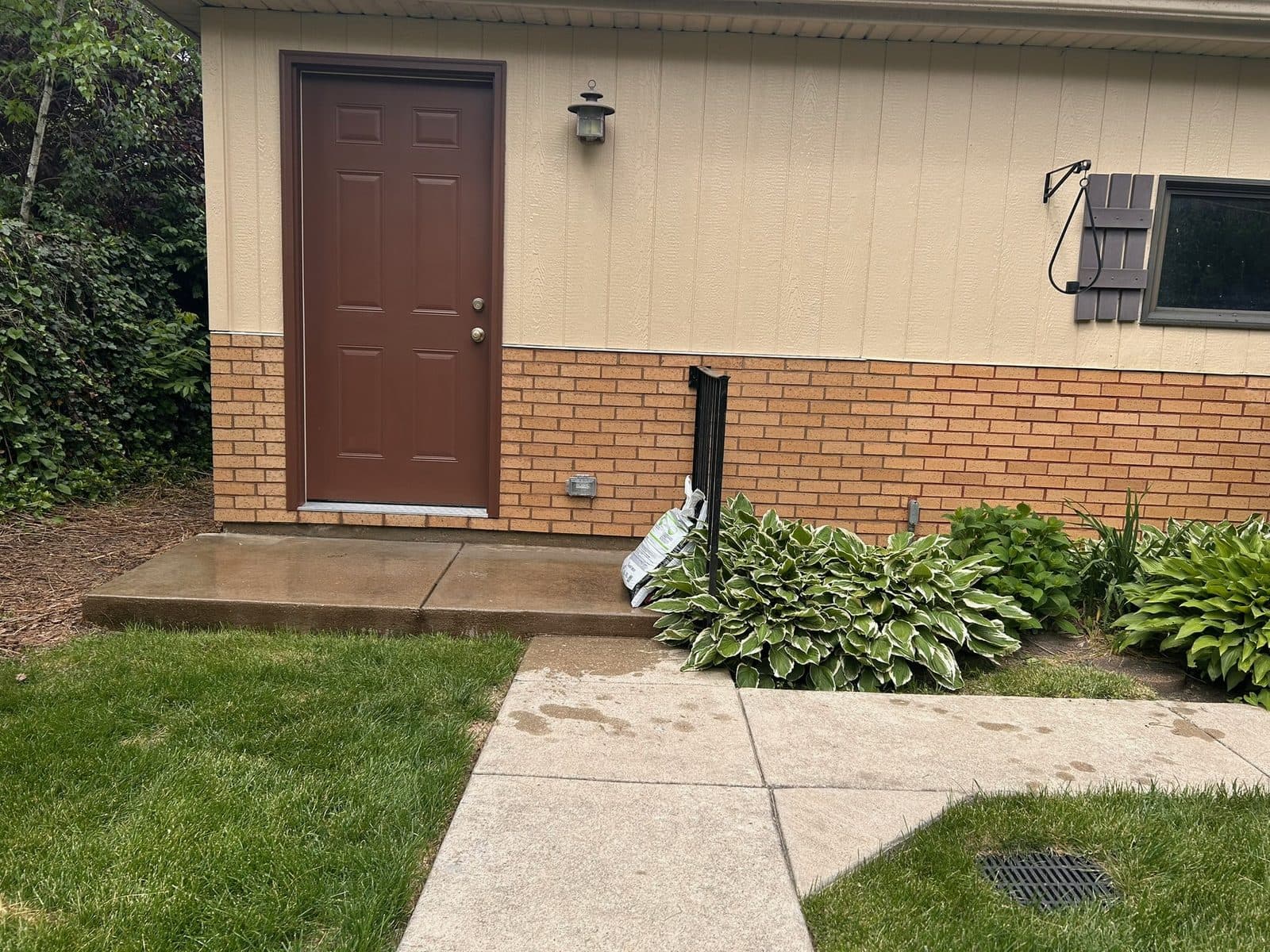
Foundation Masonry Repair in New Lenox, IL
Paul Lally's Masonry Inc. provides foundation masonry repair in New Lenox, IL — repointing and rebuilding deteriorated block and brick foundation walls, parging, and repairing the exposed brick ledge at the grade line. Family-owned and insured, serving Chicagoland since 1988. Free on-site estimates: (708) 448-8866.
Here is what happens when a New Lenox homeowner notices crumbling mortar in the basement and searches "foundation repair." Every result that comes back sells piering and underpinning — the structural answer, and by a wide margin the most expensive possible answer. Meanwhile the masons who could tell you whether your wall is actually a structural problem never use the word "foundation" on their websites at all.
So homeowners get routed to the biggest fix in the industry before anyone has established whether they need it.
We would rather tell you the truth up front: most of the foundation walls we get called to look at are not moving. They are wearing out. That is a mason's job.
Deterioration or displacement — the one question that decides everything
Every foundation problem sorts into one of two piles, and they have almost nothing in common.
Deterioration — the wall is eroding in place. The masonry itself is wearing out where it has been wet for decades.
- Mortar you can rake out with a screwdriver or a key
- Grit and sand piling on the basement floor at the base of the wall
- Spalled, flaking block faces or crumbling brick, especially near grade
- White efflorescence blooming across the wall
- Parging cracked, hollow and falling off in sheets
- The wall is still plumb, straight and true
That last line is the one that matters. This is a masonry repair — repoint, rebuild the failed courses, re-parge, and fix the water that caused it.
Displacement — the wall is moving. Something is pushing on it.
- Bowing or bulging in the middle of the wall
- A horizontal crack running along one mortar course for much of the wall's length — the classic sign of lateral soil pressure on a block wall
- Courses stepped or sheared out of line
- Cracks that measurably widen over months
- Doors and windows on the floor above going out of square
- Interior finishes cracking in the same place repeatedly after being patched
That is a structural question, and it needs a structural engineer before it needs a mason. Repointing a moving wall does nothing but erase the evidence and reset the clock on your ability to read it. We will tell you that on site, and we will tell you plainly when we are not the right contractor for your problem.
The New Lenox condition: clay, block, and a brick ledge that takes the beating
New Lenox is a Will County town that has grown enormously, and its housing stock reflects that: a modest older core near the Lincoln Way corridor, then wave after wave of subdivision building from the 1970s through the 2000s. What that produces, foundation-wise, is a village of poured and concrete-block foundations carrying brick-veneer or partial-brick houses, sitting in heavy clay soil.
Two things follow from that.
One: the clay moves. Clay soil swells when it takes water and shrinks when it dries. A wet spring following a dry late summer is a full cycle of soil pressure against the wall, every year. It is why drainage — where your downspouts discharge, how the ground slopes for the first six feet away from the house, whether the sump discharge runs back toward the foundation — does more for a New Lenox foundation than any product you can buy.
Two: the wall you are actually looking at is usually the brick ledge. When a homeowner here says "my foundation is crumbling," they are almost always pointing at the exposed course or two of masonry right at the grade line, where the block or foundation wall meets the brick above it. That band is the wettest masonry on the entire house:
- It takes rain splash bouncing off the ground, thousands of impacts a season
- It sits in direct contact with wet soil where grade has crept up over the years
- It catches shoveled snow that sits against it for weeks
- It gets the de-icing salt off the driveway and walk
- It is the slowest part of the wall to dry
That band failing is not a structural event. It is the most predictable masonry wear on a suburban house, and it is a repair.
Our process
- Look at the wall inside and out, at the exposed portion above grade and the interior face, and check plumb and line before anything else.
- Sort it — deterioration or displacement — and say so honestly.
- Find the water. Downspout discharge, grade and slope, sump discharge location, window wells, gutter condition, splash zone, sprinkler heads aimed at the house.
- Correct the water source first. Repairing masonry while the source is still running guarantees a repeat.
- Cut out failed mortar to depth and repoint with mortar matched to the wall — never skimming a thin coat over failed material.
- Rebuild what is genuinely gone. Failed block or brick removed and replaced with matched units, shored where the section is load-bearing.
- Parge the exposed wall where appropriate, over sound joints, to give it a continuous sheddable surface.
- Cure and protect — fresh mortar kept damp in heat, protected and heated in cold.
What drives the cost
How much wall is involved, first. Then whether the work is repointing and parging or removing and rebuilding courses. Then access — an exposed wall along a driveway is straightforward; a section that needs excavation to reach below grade is a different scale of job. Then how much of the damage is discovered once the wall is opened, and whether drainage correction is part of the scope. We do not publish figures for foundation work because the honest range is too wide to be useful. We come look at it and put it in writing, free.
Trust signals
Paul Lally's Masonry Inc. is a family-owned, insured masonry contractor serving Chicago and the Chicagoland suburbs since 1988 — tuckpointing, brick repair and replacement, chimney repair and rebuilds, lintel replacement, masonry restoration, and waterproofing for residential and commercial properties. Built on Craftsmanship. Backed by Experience. Our name is on every job. Free on-site estimates — call (708) 448-8866.
Related services
- Brick repair — spalled and failed units at the grade line
- Tuckpointing and repointing — failed joints above and below the ledge
- Masonry sealing and waterproofing — after the drainage and masonry are corrected
- Brick replacement — matched units where the face is gone
- Residential masonry restoration — whole-house scope and phasing
Get a free on-site estimate in New Lenox
If you are finding sand on the basement floor, mortar you can dig out with a key, or a crumbling band of brick right at ground level, get it looked at by someone who will tell you which of the two problems you actually have. Paul Lally's Masonry Inc. — (708) 448-8866 — or request an estimate online.
Foundation Masonry Repair in New Lenox, IL — Frequently Asked Questions
How much does foundation masonry repair cost in New Lenox, IL?
It depends on how much wall is involved, whether the work is repointing and parging or removing and rebuilding courses, how much of the wall is buried, and whether excavation is needed to reach it. Repointing an exposed block wall and rebuilding a section below grade are very different jobs. Paul Lally's Masonry Inc. gives free on-site estimates in writing — call (708) 448-8866.
Is my foundation failing or just deteriorating?
Ask one question: is the wall still straight? Crumbling mortar, spalling block faces, grit on the basement floor and open joints on a wall that is plumb and true is masonry wearing out — a repair. Bowing, courses stepped out of line, a horizontal crack across the middle of a block wall, or openings gone out of square is displacement, and that is a structural question first.
When do I need a structural engineer instead of a mason?
Whenever the wall is moving. Bowing or leaning, a horizontal crack running the length of a block wall, cracks that keep widening, or doors and windows going out of square all mean something is loading the wall, and repointing it would only hide the evidence. We will say so, even when it means we are not the right call.
What is the crumbling band at the bottom of my brick, just above the ground?
On most New Lenox houses that is the brick ledge — the exposed course or two of masonry at the grade line. It is the wettest band on the house: it takes rain splash off the ground, sits against wet soil, catches shoveled snow and de-icing salt, and dries slowest. It is usually the first masonry on a house to go, and it is a straightforward repair.
Why do foundations move in this part of Will County?
Heavy clay soils. Clay swells when it takes on water and shrinks when it dries out, so a wet spring after a dry summer moves the ground against the wall. Good drainage away from the house is the single most effective thing a homeowner can do about it.
Can you repair a block foundation from the inside?
Mortar joint repair and parging can be done on an exposed interior face, and it is worthwhile where the wall is sound and dry. But if water is being pushed through from outside, an interior coating treats the symptom. The lasting fix is on the exterior: drainage, grade and the masonry itself.
What is parging and does my wall need it?
Parging is a cementitious coat troweled over a block or rubble foundation to give it a continuous, sheddable surface. It protects the joints and units from direct weather at the exposed portion of the wall. When it cracks, spalls and falls away it stops protecting anything, and it is worth renewing after the joints beneath are sound.
Do you serve New Lenox and the surrounding Will County towns?
Yes — New Lenox, 60451, and the surrounding area including Frankfort, Mokena, Manhattan, Joliet, Homer Glen and Tinley Park. Paul Lally's Masonry Inc. has been doing this work since 1988. Free on-site estimates — call (708) 448-8866.
Foundation Masonry Repair in Nearby Areas
Other Masonry Services in New Lenox, IL
Learn more about our foundation masonry repair services across Chicagoland, or view all service areas.
Free on-site estimates across Chicagoland.