
Caulking & Joint Sealant · New Lenox, IL
Caulking & Joint Sealant in New Lenox, IL — The Smallest Line on the Estimate, and Often the Leak
Nobody calls a mason about caulk. They call about a wet window frame — and then somebody finds a sealant bead that gave up four winters ago.
Quick Answer
Masonry caulking and joint sealant in New Lenox, IL is the removal of failed sealant and installation of new backer rod and elastomeric sealant at expansion and control joints, window and door perimeters, and material transitions on brick and stone veneer walls. Paul Lally's Masonry has sealed Chicagoland masonry since 1988 — free on-site estimates, (708) 448-8866.
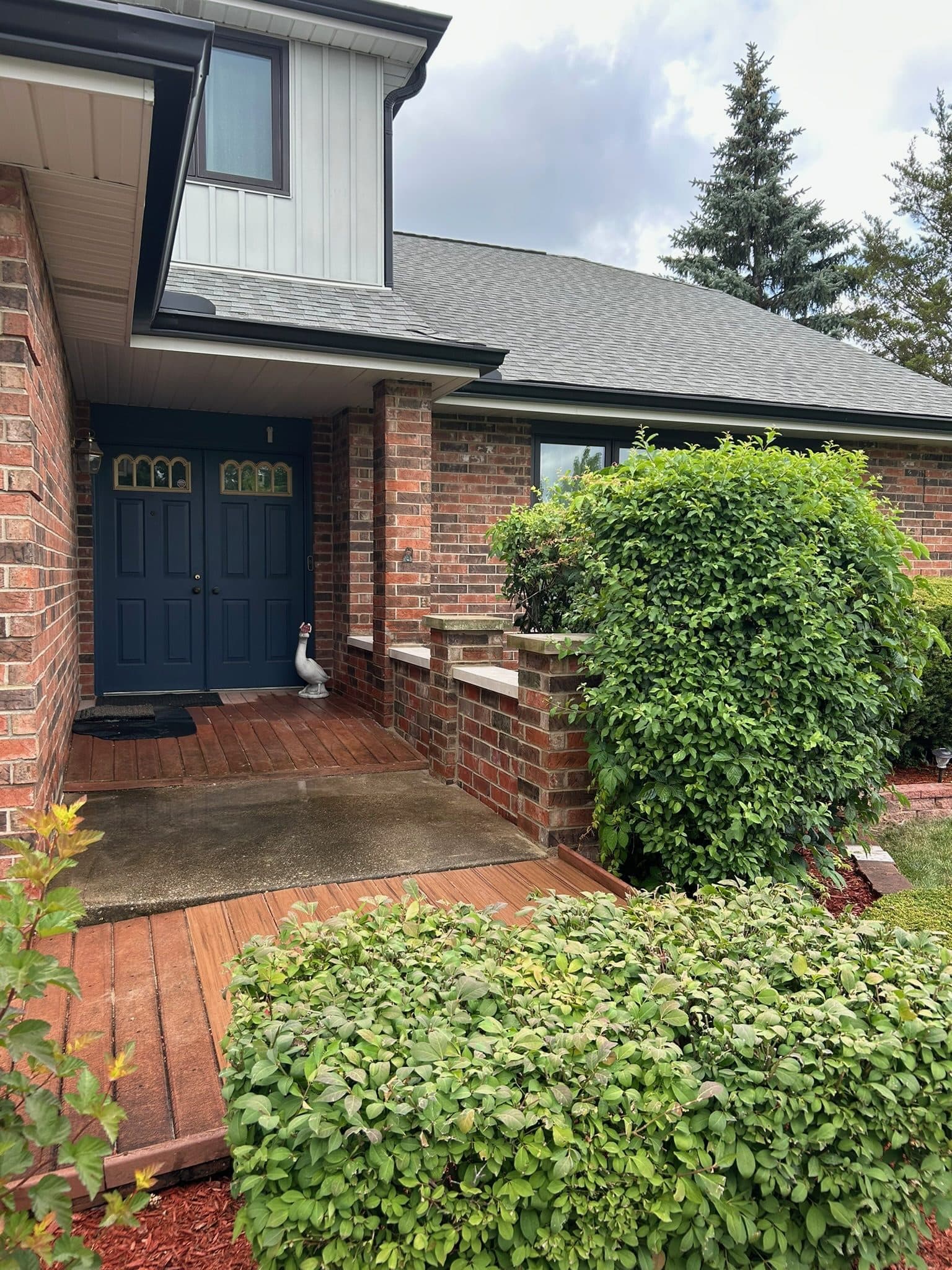
Nobody calls a mason about caulk.
They call about a wet window frame, a stain on a bedroom ceiling, or a basement corner that smells like a basement. Then somebody looks at the wall properly and finds a sealant bead that gave up four winters ago.
Masonry caulking and joint sealant in New Lenox, IL is the smallest line on almost any estimate we write, and disproportionately often it is the actual reason water is getting into the building.
Paul Lally's Masonry Inc. is a family-owned, insured masonry contractor serving Chicago and the Chicagoland suburbs since 1988 — tuckpointing, brick repair and replacement, chimney repair and rebuilds, lintel replacement, masonry restoration, and waterproofing for residential and commercial properties. Free on-site estimates — call (708) 448-8866.
Sealant and mortar do opposite jobs
This is the distinction most homeowners have never had explained, and it decides where each one belongs.
Mortar is rigid. It bonds masonry units into a wall, and it is not meant to move.
Sealant is elastic. It bridges the places where a building has to move — where brick meets a window frame, where two materials with different expansion rates meet, at expansion and control joints built into the wall deliberately.
Buildings move. They expand in July and contract in January, and brick, steel, aluminium and wood all do it at different rates. Sealant accommodates that. Put rigid mortar where movement happens and it cracks; put flexible sealant where mortar belongs and it fails while making the real repair harder and more expensive.
Where sealant belongs:
- Window and door perimeters where masonry meets frame
- Expansion joints and control joints
- Transitions between brick and siding, brick and stone, or masonry and trim
- Around through-wall penetrations — vents, hose bibs, conduit, dryer exhaust
- At sill ends and coping joints, where movement is expected
Where it does not: in the field mortar joints. We cover that comparison in detail in caulking versus tuckpointing.
How sealant fails
You can read most of it from the ground once you know the signs.
- Cracked or crazed bead — the surface has hardened and split
- Adhesive failure — the bead has let go along one edge, leaving a clean gap between sealant and brick
- Cohesive failure — the bead has torn through its own middle
- Shrinkage — it has pulled back and no longer fills the joint
- Gaps at corners and terminations, which is where most beads go first
- A chalky, powdery surface on old material
- A bead applied over an older bead, which never adhered properly to begin with
South and west elevations fail first. UV and heat cycling do more damage than cold does.
New Lenox, specifically
New Lenox is where this service matters more than most people expect, because of how the village was built.
The subdivisions from the 1990s onward — out along Cedar Road, Haven Avenue, Laraway Road and the Route 30 corridor — are predominantly brick and stone veneer over frame. A veneer wall is a drained cavity assembly, not a solid barrier, and it has far more material transitions than an older solid-masonry house: brick to siding, stone to brick, veneer to frame, and long runs of window perimeter. Every one of those is a sealed joint with a service life.
Those homes are now roughly twenty-five to thirty-five years old, which is exactly the point at which original sealant is finished. The brick is frequently in excellent condition while every perimeter bead on the house has quietly failed. It is the single most common thing we find on New Lenox homes of that era.
Tall entries and two-storey elevations on that stock mean long joint runs at height, so access is a real part of the work here.
The older village core near Route 30 and the original town grid has the opposite problem: solid masonry buildings with few or no designed expansion joints, and decades of caulk applied into mortar joints by well-meaning hands.
How we do it
- Identify the actual water path first. Sealant is the fix when the joint is the entry point. If the water is coming from a lintel, a sill, a chimney or an open mortar joint above, new caulk hides it rather than solving it.
- Cut out the old material completely — all of it, not a skim.
- Clean and prepare the joint faces so the new sealant bonds to sound, dry substrate.
- Install backer rod sized to the joint, so the bead bonds to two faces and can stretch and compress.
- Apply the correct sealant for the substrate and the expected movement, in a colour chosen to work with the masonry.
- Tool the bead so it is properly shaped and in full contact with both joint faces — that is what makes it last.
Materials
Elastomeric sealants appropriate to masonry, chosen for movement capability, adhesion to brick and stone, and UV stability — not whatever tube is nearest. Backer rod sized to the joint. Primer where the substrate calls for one. And mortar, not sealant, wherever the joint is a mortar joint.
What drives the cost
Linear footage of joint. Number of openings. Height and access. How much old material has to be removed and how stubborn it is. Whether joints need cutting wider to take a proper bead and backer rod. Whether other masonry repairs have to happen first.
It is usually the smallest number on a masonry estimate and one of the highest-return ones. Free on-site estimate, in writing — call (708) 448-8866.
Serving New Lenox and the surrounding Will County suburbs
We work throughout New Lenox and the communities around it — Mokena, Frankfort, Tinley Park, Homer Glen, Orland Park and Lemont. Related services: caulking and joint sealant, tuckpointing and repointing, masonry sealing and waterproofing, and brick repair.
To understand where sealant fits into the bigger water picture, read how water gets through a brick wall and weep holes in brick veneer.
Small line, large consequence
Family-owned since 1988, insured, and honest about which repair your wall actually needs.
Get a free on-site estimate — or call (708) 448-8866. Built on Craftsmanship. Backed by Experience.
Caulking & Joint Sealant in New Lenox, IL — Frequently Asked Questions
How much does masonry caulking cost in New Lenox, IL?
It depends on the linear footage of joint, how many openings are involved, height and access, and how much old material has to be cut out. It is generally the smallest line on a masonry estimate. Paul Lally's Masonry provides a free on-site estimate in writing.
How often does exterior masonry sealant need replacing?
Most exterior sealant on a Chicagoland building has a service life measured in years rather than decades, and south and west elevations go first. If the bead is cracked, hardened, pulling away at one edge, or has visible gaps, it is finished.
Can you just caulk over the old caulk?
No. New sealant will not bond to a weathered, dirty bead, so it fails almost immediately while trapping whatever the old joint was letting in. Proper work removes the old material entirely, cleans the joint faces, installs backer rod and tools a new bead.
What is backer rod and why does it matter?
A foam rod set into the joint behind the sealant. It controls the depth of the bead so the sealant bonds to two faces instead of three, which lets it stretch and compress with seasonal movement. Sealant packed into a joint without it tears itself apart within a season or two.
Should mortar joints be caulked instead of repointed?
No. Caulk in a mortar joint is a shortcut that traps water behind it, fails quickly, and leaves a joint that has to be cut clean before it can be properly repointed. Mortar joints get mortar; sealant belongs at movement joints and perimeters.
Where does sealant actually belong on a brick veneer house?
At window and door perimeters, at expansion and control joints, where brick meets siding or stone, at through-wall penetrations such as vents and hose bibs, and at sill ends and coping joints. Not in the field mortar.
Will new caulking stop my window leak?
Sometimes, when the failed perimeter bead is genuinely the entry point. Often the water is coming from a lintel, a sill or an open joint above, and finding the real path first is what makes the sealant work rather than hide the problem.
What time of year can caulking be done in Illinois?
Most of the year, provided the joint is clean and dry and temperatures sit within the product's range for application and cure. Late spring through autumn is ideal in Will County, and joints go in best when the wall is at a moderate temperature.
Caulking & Joint Sealant in Nearby Areas
Other Masonry Services in New Lenox, IL
Learn more about our caulking & joint sealant services across Chicagoland, or view all service areas.
Free on-site estimates across Chicagoland.