
Masonry Restoration · Chicago, IL
Masonry Restoration in Chicago, IL — Century-Old Brick and Stone, Done Correctly
Chicago's masonry was built soft on purpose. Restoring it means working with that, not against it — which is why the strongest mortar on the truck is almost always the wrong answer.
Quick Answer
Masonry restoration in Chicago, IL is the whole-building repair of century-old brick and stone — bungalows, greystones, two-flats, and storefronts — using soft lime-based mortar matched to the original, salvaged brick, and gentle cleaning. The governing rule is that mortar must be softer than the masonry. Paul Lally's Masonry has restored Chicago masonry since 1988. Free estimates: (708) 448-8866.
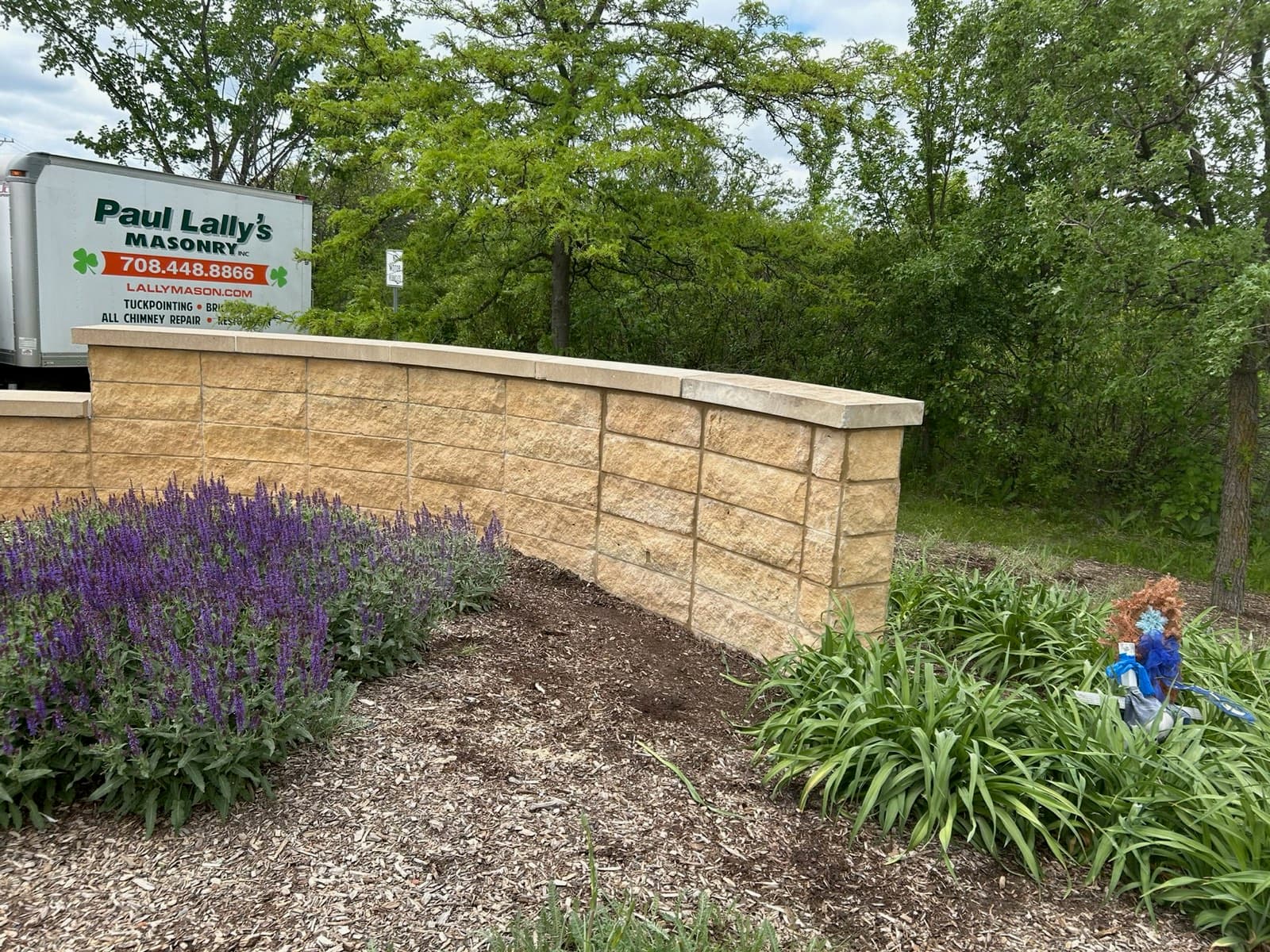
Chicago's masonry was built soft on purpose.
The common brick that built the bungalow belt, the greystones, the two-flats and the corner storefronts was locally fired, relatively porous, and laid in lime-based mortar that was softer still. That wasn't a limitation of the era — it was a working system. The joint yields, the brick survives, and you renew the joint every few generations.
Masonry restoration in Chicago, IL means working with that system rather than against it — which is why the strongest mortar on the truck is almost always the wrong answer here. Paul Lally's Masonry has been restoring Chicago brick and stone since 1988.
Repair, or restoration?
A repair fixes one failed element on an otherwise sound building. That's most jobs, and we'll say so when it's all you need.
Restoration is the right frame when:
- The building is pre-1930s and has never had comprehensive masonry work
- Mortar is soft across whole elevations, not just in patches
- Several components are failing at once — joints, brick faces, stone, a lintel, the chimney, the parapet
- Previous work used the wrong mortar and is now damaging the brick
- Original brick and stone are worth preserving rather than replacing
- Water is getting in and nobody has been able to say definitively where
The one rule that governs everything
Mortar must always be softer than the masonry beside it.
Mortar is the sacrificial element in a wall. It's designed to be weaker than the brick so that thermal movement, moisture cycling, and settlement are absorbed by the joint — which is inexpensive and straightforward to replace. That's why hundred-year-old Chicago walls are still standing.
Now pack a modern, high-strength, Portland-rich mortar into that wall. The joint is harder than the brick. The physics invert. All that movement has to go somewhere, and it goes into the brick — which spalls and crumbles along every mortar line.
A "stronger" repair destroys the building it was sold to protect, and the damage is not reversible. Repointing can be redone. Brick faces cannot be put back.
This is the single most common thing we're called in to correct on Chicago buildings, and it's usually the work of a well-meaning contractor from the last twenty years.
What restoration covers
- Repointing with matched mortar — joints cut to depth and repacked with a mix suited to the original masonry
- Brick repair and replacement — spalled and cracked units, matched or salvaged
- Limestone and stone restoration — sills, lintels, water table, steps, porch piers, carved trim
- Chimney repair and rebuilds above the roofline
- Parapet and coping on flat-roofed buildings
- Lintel repair and replacement where steel has rusted
- Gentle cleaning — never sandblasting, never aggressive pressure
- Caulking and joint sealant at movement joints and window perimeters
- Waterproofing — breathable penetrating sealers only, last, and only where warranted
Signs a Chicago building needs restoration
- Mortar you can rake out by hand across whole elevations
- Spalling brick — faces flaking, powdering, or popped off
- Spalling concentrated at joint edges — the signature of hard mortar against soft brick
- Delaminating limestone — stone coming away in flat sheets
- Eroded stone sills with the drip edge worn away
- A cracked chimney crown, missing cap, or soft joints above the roofline
- Loose or missing coping on a flat roof
- A horizontal crack above a window or storefront opening, with rust staining
- Step cracks climbing through the joints
- Efflorescence and damp interior walls
- Previous repointing that's already failing, or that looks grey and hard against soft brick
How we restore Chicago masonry
- Read the building first. Its era, its brick, its mortar, its stone. This determines the entire approach and it comes before any scope discussion.
- Test the mortar and brick hardness so the replacement mix is genuinely softer than the masonry.
- Walk the whole envelope — all elevations, the chimney, the parapet, the stone, the base course at grade.
- Diagnose the water. Nearly every failure traces back to water reaching somewhere it shouldn't.
- Sequence the work — cause before symptom, top of the building before the bottom, structure before surface, sealing last.
- Cut joints to depth — roughly two to two and a half times the joint width, back to sound mortar. On very soft brick, joints are sometimes hand-raked rather than power-ground to avoid damaging the arrises.
- Repoint with matched mortar — lime-rich or low-Portland, matched for color, sand, and joint profile, packed in layers and tooled to the existing profile.
- Save original material. Brick removed during the work is cleaned and relaid. Stone gets patched or Dutchman-repaired rather than replaced.
- Clean gently, if at all.
- Walk the finished building with you, with a maintenance cadence.
Materials
Lime-based and low-Portland mortars for historic work, matched for color, sand grain, and joint profile. Type N where the masonry is later and harder; Type S only where structure and exposure genuinely warrant it. Salvaged Chicago common brick from reclamation yards. Matched Indiana and Illinois limestone and tinted stone repair mortars. Breathable penetrating sealers only.
What we don't use on century-old Chicago masonry: hard modern high-strength mortar, sandblasting, high-pressure washing, film-forming sealers, or masonry paint.
What drives the cost
- Number of elevations and whether the work is phased
- Height and access — staging on a three-story greystone is a real portion of the job
- Ratio of repointing to brick and stone replacement
- Stone scope — patching, Dutchman repairs, or replacement, plus fabrication lead time
- Chimney and parapet condition
- Lintels — how many, and how much brick must be shored and relaid
- Matching difficulty and salvage sourcing
- How much previous bad work has to be undone — a genuine cost driver on Chicago buildings
- What's found once the joints are open
Paul Lally's Masonry gives a free on-site estimate in writing after walking the building.
Local context: reading Chicago's building stock
The bungalow belt — roughly 1910–1940, Northwest and Southwest Sides. Solid multi-wythe common brick, often face brick on the front and common brick on the sides, lime mortar, limestone sills and trim. Soft, absorbent, and easily ruined by hard mortar or aggressive cleaning.
Greystones — Bronzeville, Logan Square, Humboldt Park, Garfield Park. Brick with substantial Indiana limestone facades, sills, lintels, water tables, steps, and carved trim. The stone is the irreplaceable part and the whole reason restoration rather than repair is the right frame.
Two-flats and three-flats — everywhere. Load-bearing masonry, flat roofs with parapets, rear porches on masonry piers. The parapet above the roofline is nearly always the worst masonry on the building.
Courtyard buildings and corner storefronts — the same era characteristics at larger scale, with wide openings on steel lintels.
Across all of them: a hundred-plus Chicago winters. Repeated hard freeze-thaw cycling, wind-driven rain off the lake pushing water at walls horizontally, and de-icing salt attacking everything within a few feet of grade.
None of that is a defect. It's a maintenance cycle that ran longer than the original mortar was ever meant to last.
Related masonry services in Chicago
Restoration draws on tuckpointing and repointing, brick repair, brick replacement, limestone and sill repair, chimney repair and rebuilds, parapet wall repair, lintel repair and replacement, caulking and joint sealant, masonry waterproofing, and residential or commercial masonry restoration depending on the building.
Worth reading: historic masonry restoration and lime mortar, the Chicago bungalow and greystone masonry guide, why masonry repairs fail, and why your brick repair doesn't match.
Nearby: brick repair in Chicago, tuckpointing in Chicago, chimney repair in Chicago, parapet wall repair in Chicago, and commercial masonry restoration in Chicago.
Restore it the way it was built
Paul Lally's Masonry Inc. is a family-owned, insured masonry contractor serving Chicago and the Chicagoland suburbs since 1988 — tuckpointing, brick repair and replacement, chimney repair and rebuilds, lintel replacement, masonry restoration, and waterproofing for residential and commercial properties. Built on Craftsmanship. Backed by Experience.
We'll read your building before we price it, tell you which mortar it actually wants, and save every piece of original brick and stone we can. Our family name is on every job.
Free on-site estimates — call (708) 448-8866 or request an estimate online.
Masonry Restoration in Chicago, IL — Frequently Asked Questions
What's the difference between masonry repair and masonry restoration?
A repair fixes one failed element on a sound building. Restoration treats the whole exterior as one system, uses materials matched to the original construction, and prioritizes preserving original brick and stone rather than replacing it. On a century-old Chicago building, restoration is usually what's actually needed.
Why does old Chicago brick need a different mortar?
Because it's soft. The city's pre-1930s common brick was locally fired and laid in lime-based mortar, and mortar must always be softer than the brick beside it so the joint absorbs movement. Pack a hard modern Portland-rich mix against that brick and the brick face becomes the sacrificial element instead, spalling along every joint line — permanently.
How much does masonry restoration cost in Chicago, IL?
There's no square-foot rate — no two buildings need the same scope. Cost is driven by how many elevations are involved, height and access, the ratio of repointing to brick and stone replacement, chimney and parapet condition, and how difficult the original materials are to match. Paul Lally's Masonry provides a free on-site estimate in writing.
Can you restore a greystone facade?
Yes. Greystone work combines soft brick, Indiana limestone, and lime-based mortar, and the stone is the irreplaceable part — sills, lintels, water table, steps, and carved trim. We patch and use Dutchman repairs to save original stone wherever possible, and we never sandblast or high-pressure wash historic limestone.
My building is in a landmark district. Does that change the work?
It can change what approvals are required and what materials and finishes are acceptable, and those requirements depend on the specific district and designation — that's a question for the city and your architect rather than your mason. What we can say is that landmark-appropriate work is how we'd approach century-old masonry anyway: matched materials, soft mortar, and preserving original fabric.
Can you match hundred-year-old Chicago common brick?
Usually. Chicago common brick was produced in enormous quantities, so salvaged stock is genuinely available through reclamation yards and it's the best possible match. Original brick removed during the work is cleaned and relaid first, and where a compromise is unavoidable we'll show you the match before committing.
Should historic brick be cleaned or sealed?
Cleaned gently if at all, and sealed rarely. Sandblasting and high-pressure washing strip the hard fired face off brick and the weathered skin off limestone, leaving porous material that deteriorates far faster afterward. If sealing is warranted, only a breathable penetrating product over sound joints — never a film-forming coating on historic masonry.
How long does a full masonry restoration take?
A single elevation can run days to a couple of weeks; a full building including chimney, parapet, stone, and lintels commonly runs several weeks and is often phased across seasons. Historic work is deliberately slower — joints are sometimes hand-raked rather than ground, and mortar needs workable temperatures to cure properly.
Masonry Restoration in Nearby Areas
Other Masonry Services in Chicago, IL
Learn more about our masonry restoration services across Chicagoland, or view all service areas.
Free on-site estimates across Chicagoland.