
Masonry Sealing / Waterproofing · New Lenox, IL
Masonry Waterproofing in New Lenox, IL — Newer Brick Leaks in Older Ways
On a modern brick veneer home the wall is supposed to let water in and drain it back out. That changes the waterproofing question completely — because sealing the face of a wall that drains through its bottom course can trap the very water the system was built to release.
Quick Answer
Paul Lally's Masonry Inc. provides masonry waterproofing and brick sealing in New Lenox, IL — restoring the drainage a brick veneer wall depends on, then applying breathable water repellents to sound masonry where exposure warrants it. Family-owned since 1988, insured. Free on-site estimates — call (708) 448-8866.
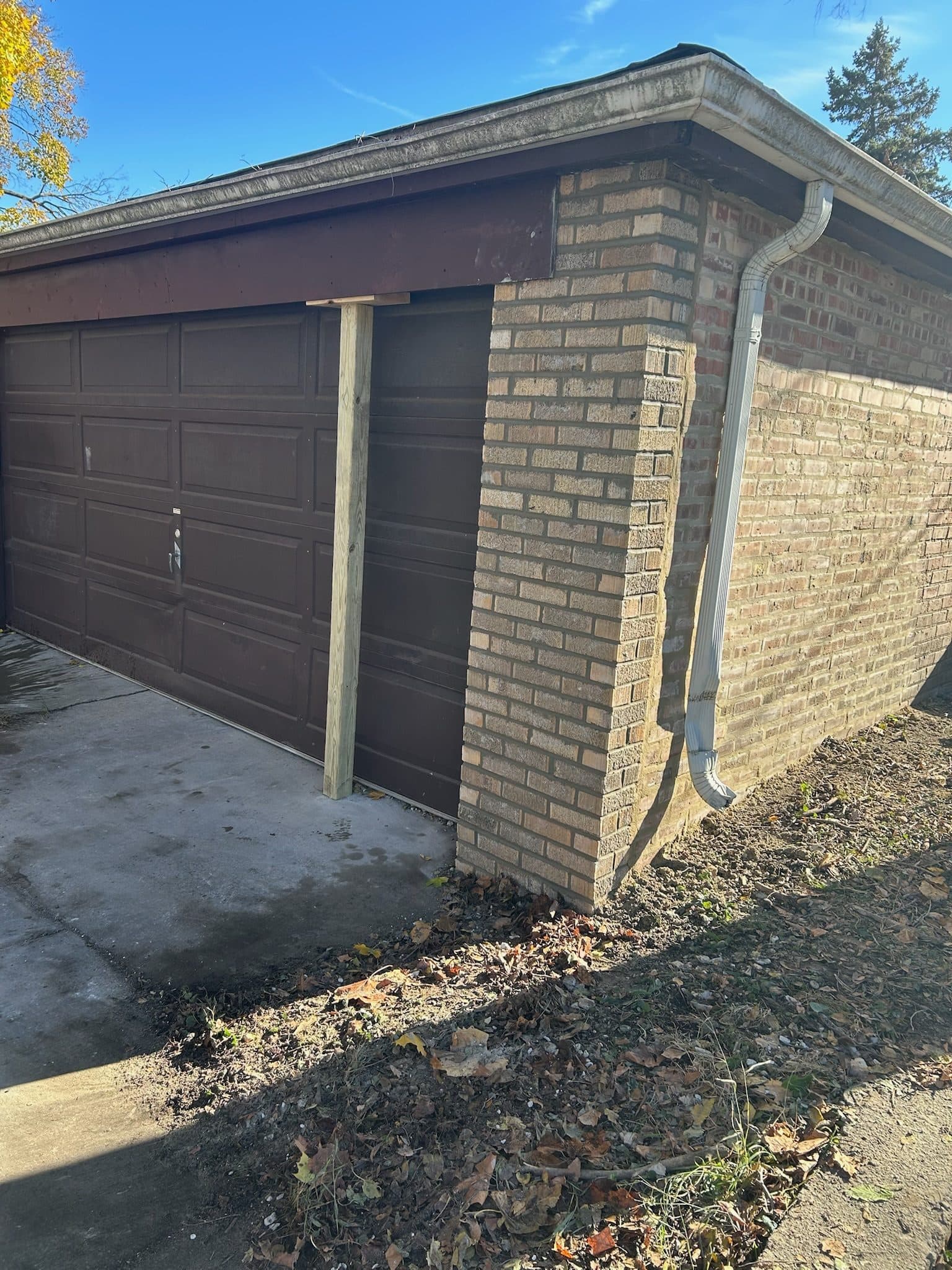
Masonry Waterproofing in New Lenox, IL
Masonry waterproofing in New Lenox, IL starts with an idea that surprises most homeowners: your brick wall is supposed to let some water through. Paul Lally's Masonry Inc. handles masonry sealing and water-intrusion work on homes and commercial buildings throughout New Lenox and the southwest suburbs. Family-owned since 1988, insured, free on-site estimates. Call (708) 448-8866.
Once you understand why, most of the bad advice on this subject sorts itself out.
Your Wall Is a Rain Screen, Not a Seal
Nearly every New Lenox home is brick veneer — a single four-inch skin of brick standing on the foundation ledge, tied back to the frame with metal wall ties, with a deliberate air cavity behind it.
That brick skin is not the waterproofing. It is a rain screen. It sheds most of the water and it is expected to let some through, because brick and mortar are porous and driven rain finds every joint.
The system works because of what happens next. Water that gets past the brick runs down the back face, lands on through-wall flashing, and exits through weep holes in the bottom course.
A veneer wall does not keep water out. It lets water back out.
Which produces the most important rule on this page: anything that blocks the exits makes the wall worse. Weep holes mortared shut during a repointing job, caulked over by a well-meaning homeowner, or simply buried under mulch and raised beds convert a drained wall into a container.
So Where Is the Water Actually Getting In?
On a modern veneer home, water rarely enters through the middle of a sound wall. It enters at the details:
- Around windows and doors, where sealant has aged out and hardened
- At sills, where a cast stone or precast unit has lost its pitch or its drip edge and now sheds water back onto the joint beneath it
- Above openings, where flashing over a lintel was omitted or lapped wrong
- At the chimney chase, exposed on every side with a chase cover or crown that has failed
- At the roof-to-wall junction, especially where a missing kickout flashing dumps roof runoff straight down the wall
- At penetrations — hose bibs, vents, conduit, lights, railings
- At the bottom course, where blocked weeps and grade against the wall keep it saturated
Sealing the face of the brick addresses none of those. That is why "waterproof the house" is usually the wrong scope and "find the path" is the right one.
The Sealer Question
Masonry sealing is a real service with real uses — it is just the last step, not the first.
The right product is a breathable, vapor-permeable water repellent, typically a penetrating silane or siloxane. It soaks into the masonry, lines the pores so liquid water beads and runs off, and still lets vapour escape outward.
The wrong product is anything film-forming — masonry paint and many products sold as "waterproofing." A film slows water going in and also stops moisture already inside the wall from getting out. In a Chicagoland winter that trapped water freezes, expands, and takes the face of the brick off with the coating still attached.
Judge a masonry sealer by how much vapour it lets out, not by how much water it keeps out.
Where Sealing Genuinely Helps in New Lenox
- Chimneys and chases — wet on four sides with nothing over them, and among the best candidates on any house
- Sound walls in hard exposure, particularly north and west elevations taking wind-driven rain
- Highly absorptive masonry that darkens quickly in rain
- Freestanding masonry — piers, monuments and garden walls, wet from every face
- After repairs are complete and cured, protecting work you have just paid for
And where it is the wrong answer: a wall with open joints, spalled brick, blocked weeps, or an active leak nobody has traced.
Signs Water Is Getting Into Your Masonry
- Efflorescence — white powdery bloom, proof water is moving through
- Dark saturation patches that stay damp long after rain
- Spalled or flaking brick, especially in the bottom courses
- Mortar joints eroded or crumbling
- Weep holes blocked, buried, or sealed shut
- Damp interior walls, or staining at a window corner that returns after painting
- Rust staining below a lintel or sill
- Musty smell along an exterior wall
Risks of Waiting
Water in a veneer cavity does not just sit there. It reaches the wall ties holding the brick back to the structure, and corroding ties expand, lose capacity, and eventually stop restraining the wall — which is how a veneer wall begins to bow. It reaches the sheathing and framing behind the brick. And it saturates the masonry going into winter, where dozens of freeze-thaw cycles do the rest.
Sealing a wall in that condition locks the problem inside it.
Our Process
- Find the water first. Windows, sills, lintels, chase, roof junctions, penetrations, weeps, gutters, grade.
- Check the drainage. Weep holes open and visible, flashing intact, nothing mortared or caulked shut.
- Assess the masonry — joint condition, brick condition, absorption, and any previous coating.
- Tell you honestly whether sealing is appropriate, including when the answer is no or not yet.
- Complete repairs first — tuckpointing, brick repair, sill work, caulking — and let fresh mortar cure.
- Clean gently, never by sandblasting or aggressive pressure, which erodes the brick face and makes absorption worse.
- Test an inconspicuous area for appearance and absorption.
- Apply the repellent at the correct rate, in suitable temperature and dry conditions, working top down, with windows, trim and plantings protected.
- Review the finished elevation with you and explain what to expect over time.
New Lenox Specifics
New Lenox is a young masonry town. The bulk of its housing went up from the 1990s onward, spreading along the Route 30 and Cedar Road corridors — dense, machine-made brick veneer on modern Portland-based mortar, over a drained cavity.
That matters because young brick fails differently. The mortar across most of these walls is often still sound, while the details are not: sealant well past its life, sills that have lost their drip edge, chase covers rusting, weeps buried under thirty years of accumulated mulch and raised beds.
Add Will County's freeze-thaw cycling — many swings above and below freezing each winter rather than one long freeze — and any water trapped in that cavity gets plenty of chances to do damage.
What Drives the Cost
- Wall area and number of elevations
- Height and access
- Masonry porosity, which decides how much product a wall takes
- Surface preparation required
- Whether repairs and drainage corrections come first — usually the larger part of the scope
- Previous coatings that complicate application
We do not sell sealing as a standalone fix over the phone. The look is free and the estimate written.
Serving New Lenox and Will County
Paul Lally's Masonry Inc. is a family-owned, insured masonry contractor serving Chicago and the Chicagoland suburbs since 1988 — tuckpointing, brick repair and replacement, chimney repair and rebuilds, lintel replacement, masonry restoration, and waterproofing for residential and commercial properties. Built on Craftsmanship. Backed by Experience. Free on-site estimates — call (708) 448-8866.
We work throughout New Lenox and neighbouring Mokena, Frankfort, Homer Glen and Tinley Park.
Get a Free New Lenox Masonry Assessment
If water is getting in and someone has told you the fix is to seal the whole house, get the path traced first. Call (708) 448-8866 or request a free estimate.
Masonry Sealing / Waterproofing in New Lenox, IL — Frequently Asked Questions
How much does masonry waterproofing cost in New Lenox, IL?
It depends on wall area, height and access, how absorptive the masonry is, and above all whether repairs and drainage corrections have to happen first. Sealing sound masonry is a modest job; a wall that is leaking needs the leak found instead. Paul Lally's Masonry Inc. gives free on-site estimates — call (708) 448-8866.
Is my brick house supposed to let water through?
If it is brick veneer — which nearly all New Lenox homes are — then yes. Veneer is a rain screen, not a seal. Water that gets past the brick runs down the back of it, lands on flashing, and drains out through weep holes in the bottom course.
What are weep holes and should they ever be filled?
Weep holes are the deliberate openings in the bottom course that let water drain out of the cavity behind the brick. They must never be caulked, mortared shut, or buried under mulch and soil. Blocking them turns a drained wall into a tank.
Will sealing my brick stop water getting into my house?
Not if the water is entering somewhere the sealer does not reach — around a window, at a failed sill, over a chimney chase, or through the top of the wall. Sealing the face of a veneer wall does nothing about those paths, and it can slow the wall's ability to dry.
What is the right kind of masonry sealer?
A breathable, vapor-permeable water repellent that penetrates into the masonry rather than forming a film on top of it. Film-forming coatings slow water going in but also stop moisture inside the wall from getting out, and in a Chicagoland winter that trapped water freezes and spalls the brick.
There is white powder on my brick. Does sealing fix it?
That is efflorescence — salts carried out of the masonry by water moving through it. It is proof there is an active water path, so sealing over it hides the evidence while the source keeps running. Find the water first.
Do you do masonry sealing in New Lenox and the surrounding area?
Yes, throughout New Lenox and the surrounding Will and Cook County suburbs — and we will tell you when sealing is not what your wall needs. Paul Lally's Masonry Inc., family-owned since 1988. Free on-site estimates — call (708) 448-8866.
Masonry Sealing / Waterproofing in Nearby Areas
Other Masonry Services in New Lenox, IL
Learn more about our masonry sealing / waterproofing services across Chicagoland, or view all service areas.
Free on-site estimates across Chicagoland.