
Masonry Sealing / Waterproofing · Orland Park, IL
Masonry Waterproofing in Orland Park, IL — Sealing That Actually Protects Brick
A sealer is the last step in protecting Orland Park brick, never the first. Paul Lally's Masonry Inc. finds and repairs the actual water path, then applies a breathable repellent that keeps water out without trapping it in.
Quick Answer
Paul Lally's Masonry Inc. provides masonry waterproofing and brick sealing in Orland Park, IL — repairing the actual water entry path first, then applying a breathable penetrating water repellent that resists driving rain and freeze-thaw damage without trapping moisture inside the wall. Family-owned since 1988, insured, free on-site estimates. Call (708) 448-8866.
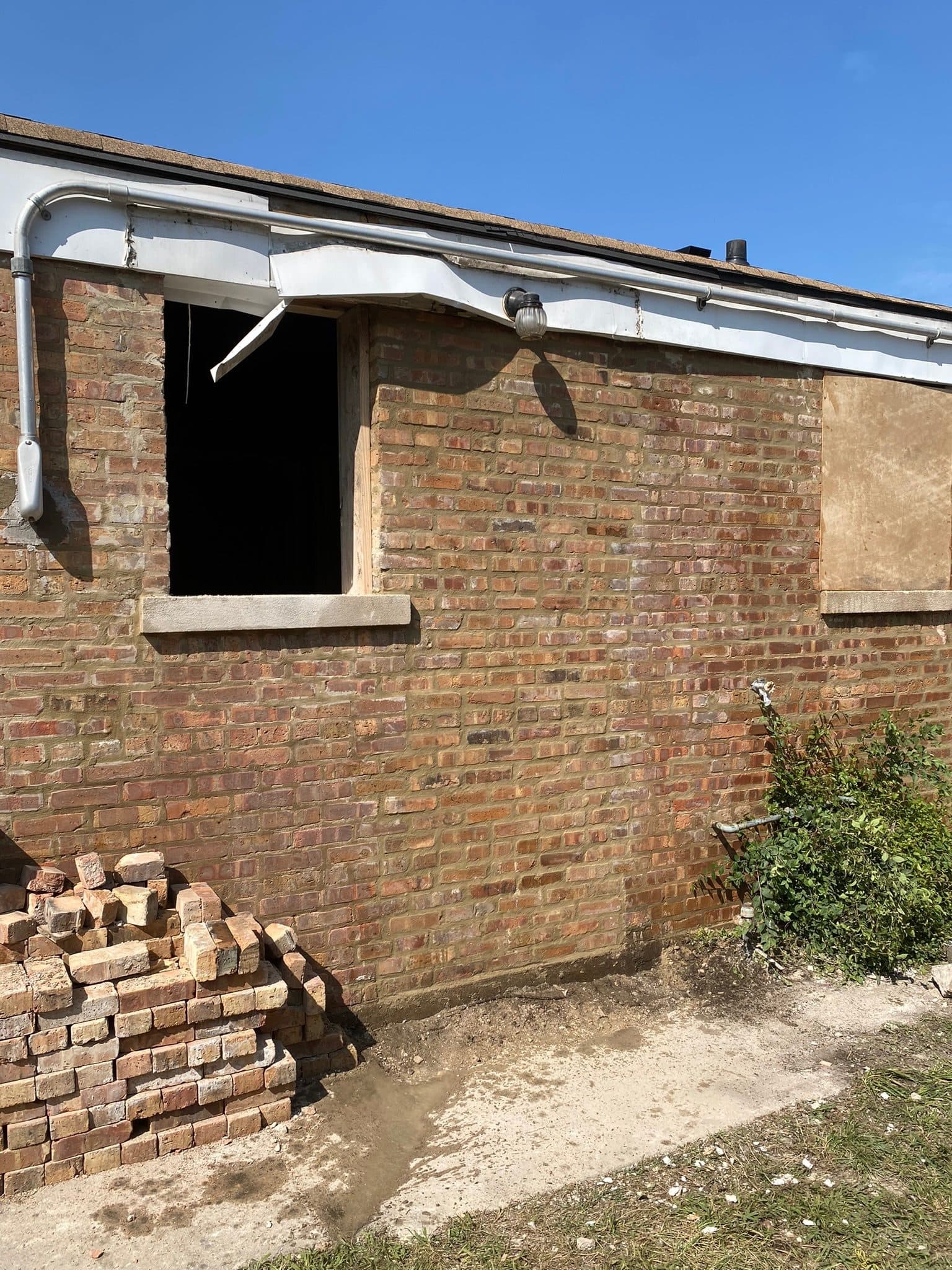
Most of what gets sold as "brick waterproofing" in the southwest suburbs is a sprayed-on afterthought. Someone coats a wall that already has open joints and cracked brick, the homeowner feels protected, and two winters later the face of the brick is flaking off worse than before — because the coating trapped the water instead of keeping it out.
Paul Lally's Masonry Inc. provides masonry waterproofing and brick sealing in Orland Park, IL — finding and repairing the actual water path first, then applying a breathable penetrating repellent that keeps driving rain out of the masonry while letting the wall dry. Family-owned, serving Chicagoland since 1988, insured. Free on-site estimate: (708) 448-8866.
The rule that decides whether sealing helps or hurts
Repair first. Seal second. Never the other way around.
A penetrating water repellent is designed to handle one thing: wind-driven rain hitting sound masonry. It cannot bridge an open mortar joint, a cracked brick, a failed sill, a rusted lintel, or a gap at a window. Water entering through any of those goes past a sealer as if it were not there — and then the sealed face slows down how fast the wall can dry back out.
So the honest sequence on an Orland Park home is:
- Diagnose the water path — where is it actually getting in?
- Repair it — tuckpointing, brick repair, sills, lintels, caulk joints, flashing
- Let new mortar cure
- Then apply a breathable repellent to the sound wall
Do it in that order and the sealer earns its keep for years. Do it backwards and you have paid to lock the problem inside.
Breathable repellent vs. film-forming coating
| | Penetrating repellent (silane/siloxane) | Film-forming coating (acrylic, "wet look") | |---|---|---| | Where it sits | Soaks into the masonry pores | Sits on the surface as a film | | Water | Repels liquid water | Blocks liquid water | | Vapor | Lets the wall breathe and dry | Traps moisture inside | | Appearance | No gloss, no color change | Glossy, darkens brick, can cloud | | Failure mode | Gradually wears and is reapplied | Peels, blisters, and spalls the brick face |
Brick walls are not meant to be airtight. They are meant to shed water and dry out. Anything that stops them from drying is working against the wall, and in Chicagoland's freeze-thaw climate trapped moisture is exactly what pops brick faces off. That is why we use penetrating silane and siloxane repellents chosen for the substrate — dense modern face brick, softer older brick, and limestone or cast stone trim do not all take the same product.
Why Orland Park walls need it
Orland Park's housing stock is largely 1970s through 2000s brick-veneer subdivisions, plus the older brick and stone around Old Orland, and a substantial commercial and multi-family stretch along the LaGrange Road and 143rd Street corridors.
Brick veneer is a drainage wall: a single wythe of brick with an air cavity behind it, flashing at the base and over openings, and weep holes to let water back out. It is designed to get wet and drain. That design assumes the mortar joints, the flashing, the sealant joints, and the weeps are all doing their jobs — and after twenty-five to fifty winters, on a lot of Orland Park homes, several of them are not.
Add the local exposure. Open subdivision lots and the ground around Centennial Park and the Lake Sedgewick area give west and south elevations very little shelter from driving rain. Wide-open backyards on newer streets do the same. Those elevations absorb the most water, go through the most freeze-thaw cycles, and show efflorescence and spalling long before the protected sides do.
Our waterproofing process
- Walk the whole envelope. We look at joints, brick faces, sills, lintels, chimney, caulk lines, weeps, grade, gutters, and downspouts — because water rarely enters where it shows up inside.
- Repair the entry points. Repointing, brick replacement, sill and lintel work, and sealant joints are completed first.
- Let the mortar cure. New mortar needs curing time before anything is applied over it.
- Clean and prepare. Surfaces are cleaned appropriately — never sandblasted, never blasted with high pressure, both of which permanently open up the masonry and make the water problem worse.
- Test-apply. A trial area confirms absorption rate, coverage, and that there is no unwanted change in appearance.
- Apply the repellent properly. Low-pressure, flood-coat application with correct overlap and coverage rate, masking windows, trim, and plantings. Under-applying is the most common failure — the material has to saturate, not mist.
What drives the cost of waterproofing in Orland Park
- Square footage of wall to be treated
- Height and access — a ranch elevation versus a two-story or a chimney needing staging
- Masonry porosity — thirsty older brick takes considerably more material than dense modern face brick
- Repairs required first — usually the largest part of the job on an older home
- Substrate mix — brick, limestone trim, and cast stone may need different products
- Surface prep and cleaning needed before application
We price it after we look, and the estimate is free. Call (708) 448-8866.
Paul Lally's Masonry Inc. is a family-owned, insured masonry contractor serving Chicago and the Chicagoland suburbs since 1988 — tuckpointing, brick repair and replacement, chimney repair and rebuilds, lintel replacement, masonry restoration, and waterproofing for residential and commercial properties. Built on Craftsmanship. Backed by Experience. Free on-site estimates — call (708) 448-8866.
Serving Orland Park and the surrounding suburbs
We seal and repair masonry throughout Orland Park's 60462 and 60467 neighborhoods, from the older streets around Old Orland to the newer subdivisions west of LaGrange Road, and across the neighboring towns. Homes that need repair before sealing often start with tuckpointing in Orland Park, brick repair in Orland Park, or residential masonry restoration in Orland Park. We do the same work in Tinley Park, Palos Park, Homer Glen, and Mokena.
Why Orland Park homeowners call Paul Lally's Masonry Inc.
We will tell you when sealing is worth doing and when it would be a waste of your money — including the times the answer is "fix the downspout first." We repair before we seal, we use breathable products that let your walls dry, and we do not sell coatings that look good for a season and cost you brick later. Family-owned since 1988, insured, and the family name is on every job. Built on Craftsmanship. Backed by Experience.
Want to know whether your Orland Park brick should be sealed — and what needs fixing first? Request a free on-site estimate or call (708) 448-8866.
Masonry Sealing / Waterproofing in Orland Park, IL — Frequently Asked Questions
How much does masonry waterproofing cost in Orland Park, IL?
It depends on the square footage of wall, the height and access, the porosity of the masonry (which sets how much material it drinks), and — usually the biggest factor — how much repair work has to happen before anything is sealed. Paul Lally's Masonry Inc. gives a free on-site estimate in Orland Park; call (708) 448-8866.
Should I seal my brick house?
Only after the masonry is sound, and only with a breathable penetrating repellent. Sealing a wall that has open joints, cracked brick, or a failed lintel just locks the existing water inside where it freezes and does more damage — the sealer is the last step, never a substitute for the repair.
What kind of sealer do you use on brick?
Penetrating silane and siloxane water repellents, chosen for the substrate. They soak into the masonry and line the pores so liquid water is repelled while vapor can still escape, which is what a brick wall needs to survive Chicagoland winters.
Why shouldn't I use a glossy or film-forming sealer?
Film-forming acrylics and 'wet look' coatings sit on the surface and block vapor. Any moisture already in the wall — and there always is some — gets trapped behind the film, then freezes and pops the brick face off, and the coating itself peels and clouds. It is one of the most common ways good brick gets ruined.
Does waterproofing replace tuckpointing?
No. A sealer cannot bridge an open or crumbling mortar joint; water goes straight past it. Failed joints get repointed first and the repellent is applied after the mortar has cured, which is when it does the most good.
How long does masonry waterproofing last in Illinois?
A quality penetrating repellent on properly prepared masonry typically performs for several years before it needs renewal, and exposure decides where in that range you land — a south or west elevation taking driving rain gives up before a sheltered north wall. We tell you what to expect for your specific walls.
What time of year should brick be sealed in Orland Park?
Late spring through early fall is ideal. The masonry needs to be dry, temperatures need to be moderate, and any new mortar needs to have cured first, so we generally do not seal in cold or wet conditions.
Will sealing stop my basement or interior wall from getting wet?
Only if the wall itself is where the water is entering. Interior dampness often traces to grade, gutters and downspouts, failed flashing, or a leak above the drainage plane — we find the actual source first, because sealing the wrong surface just moves the problem.
Masonry Sealing / Waterproofing in Nearby Areas
Other Masonry Services in Orland Park, IL
Learn more about our masonry sealing / waterproofing services across Chicagoland, or view all service areas.
Free on-site estimates across Chicagoland.