
Brick Repair · Chicagoland, IL
A Brick Fell Off My House. What Do I Do Now?
Falling masonry is the one situation where the order of your next three steps genuinely matters. Here's what to do in the first hour, what makes a condition urgent rather than routine, and what a mason will actually do when they arrive.
2026-08-05
Quick Answer
If masonry has fallen from a building, first keep people away from the area below it and do not stand under the wall to inspect it. Then photograph the condition from a safe distance, check for more loose material above, and get a mason out promptly. Loose brick, coping, or a leaning wall above a walkway is a safety issue, not routine maintenance. Paul Lally's Masonry serves Chicagoland — (708) 448-8866.
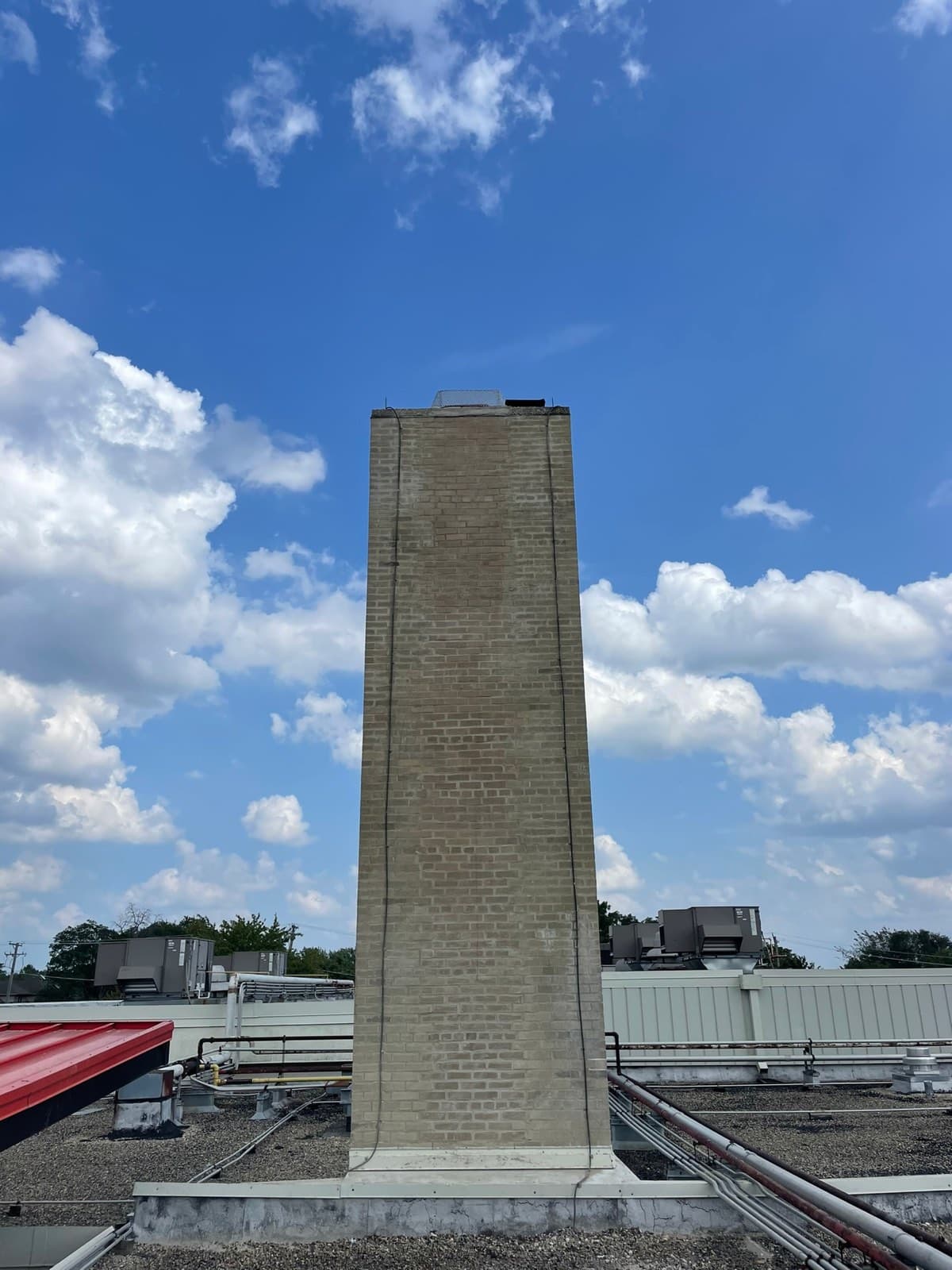
Most masonry problems are slow. Mortar recedes over decades, brick spalls a face at a time, cracks widen across seasons. There's usually time to think.
Falling masonry is the exception. A brick that came away on its own means something released it — and whatever did that is still acting on the masonry around it. Paul Lally's Masonry has been called out to this across Chicagoland since 1988, and the order of your next few steps genuinely matters.
Here's what to do.
The first hour
1. Keep people away from the ground below it. This is the whole priority. Move cars, block off the walkway, redirect the entrance, keep kids and pets clear. If it's a public sidewalk or a shared building entrance, sorting access is the first thing to do — before photographs, before phone calls.
2. Do not stand under the wall to inspect it. This is the instinct and it's the wrong one. If one unit released, the ones around it may be no better anchored. Look from a distance, at an angle, from across the street if you have to.
3. Do not climb up to check. Not a ladder against the affected wall, not onto the roof to look at the parapet or chimney. A wall that's already dropped material is not something to put weight against.
4. Photograph it from a safe distance. The fallen material where it landed, the void it came from, the wall above and around it, and any debris accumulating below. Useful for the mason, useful for your insurer, useful for documenting the condition.
5. Note what came down. A single face brick is a different problem from a coping stone, a chunk of chimney, or several units together. Tell whoever you call.
6. Call a mason. Describe what fell and what's above it — that's what lets us judge how quickly it needs eyes on it.
What makes it genuinely urgent
Not every piece of fallen masonry is an emergency, but these are:
- Anything above a walkway, entrance, sidewalk, porch, driveway, or parking area — the exposure is people, and that outranks everything else
- A wall that's visibly bowing, bulging, or leaning
- A leaning chimney, or a chimney that's shedding material
- Loose or shifted coping on a flat-roofed building
- Debris that keeps accumulating below the same spot
- A crack that's displaced — one side sitting proud of the other
- Multiple units having come away, or a visible void in the wall
- Anything on a two-flat, three-flat, or commercial building where tenants and the public pass beneath daily
Less urgent, but still get it looked at:
- A single spalled brick face flaking off at ground level
- Mortar crumbs and sand accumulating from a receding joint
- A loose unit low on a garage or shed wall away from foot traffic
Why brick falls: the five usual causes
Understanding which one you have tells you what the repair is.
1. Failed mortar joints
The most common. Mortar is the sacrificial element in a wall, designed to wear out — but once a joint has receded and softened past a point, the unit it was holding has nothing gripping it. Freeze-thaw finishes the job.
Repair: repointing, plus resetting or replacing the loose units. See what is tuckpointing.
2. A rusting steel lintel
The steel above a window, door, or garage opening corrodes and expands to several times its original thickness. With brick sitting on it and nowhere to go, it pushes up — cracking and displacing the masonry above the opening until units work loose.
Signature: a horizontal crack running the width of the opening, rust staining below, a lifted or sagging course. Repair: lintel replacement, with the brick above shored and relaid. See failing lintels and cracked brick above windows.
3. Corroded wall ties in brick veneer
On a brick-veneer wall — a single wythe hung on framing — metal ties hold the brick flat against the structure. The veneer carries no building load, but it's a heavy skin that has to stay anchored. When those ties corrode away, the wall can bow outward and units can release.
Signature: bulging or bowing veneer, sometimes rust staining without a crack above an opening. This is genuinely serious. See brick veneer vs. solid masonry.
4. Deteriorated parapet or coping
The wall above a flat roofline is exposed on both faces plus the top, so it fails decades ahead of everything below it. Coping shifts, joints open, the top courses go soft — and material comes off the roofline onto whatever is below.
On a Chicago two-flat or storefront, that's usually a sidewalk. See parapet wall repair.
5. Freeze-thaw spalling
Water absorbed into brick freezes, expands about nine percent, and pushes the hard fired face off. Usually that's a face flaking rather than a whole unit dropping — but on badly deteriorated masonry, units go too.
What a mason actually does when they arrive
- Assess the exposure below first — what's underneath, who passes through it, and whether access needs restricting before anything else happens.
- Look from a safe position and from height where necessary, rather than guessing from the ground.
- Sound the surrounding masonry — tapping to find units that have lost their bond but haven't dropped yet. This is the step that finds the next brick.
- Determine deterioration versus movement. A wall wearing out and a wall moving are different problems. If it's movement, you need a licensed structural engineer before masonry work makes sense — and we'll tell you that. See mason or structural engineer.
- Make it safe. Remove loose and unstable material, take down anything that could fall, shore where necessary. Making it safe and making it finished are two different jobs, and the first shouldn't wait for weather or budget.
- Diagnose the cause — joints, lintel, ties, parapet, or freeze-thaw.
- Scope the real repair in writing.
- Document the condition, which is usually what owners, tenants, and insurers all end up needing.
Stabilize now, repair properly later
Worth stating plainly because it resolves a lot of anxiety: you don't have to choose between doing nothing and doing everything immediately.
A condition can be made safe today — loose material removed, unstable sections taken down, shoring installed — while the full repair waits for workable weather or a budget cycle. Mortar needs temperatures reliably above freezing to cure properly, so a January call frequently ends with stabilization now and proper rebuilding in spring. That's the right sequence, not a compromise.
What isn't acceptable is leaving loose masonry above a walkway through a winter because the full repair can't happen yet.
What waiting actually costs
Falling masonry is the clearest illustration of why masonry deterioration is worth catching early, because the scope escalates on a curve:
- A loose unit → becomes a section as neighbors lose their bond
- A rust-jacked lintel → becomes a rebuilt opening as the brick above loses bearing
- A deteriorated parapet → becomes a full takedown and rebuild
- A bowing veneer wall → becomes a wall that has to come off and go back on
And on any building where people pass beneath, there's an exposure that has nothing to do with masonry cost at all.
Chicagoland context
This comes up here more than it should, for reasons that compound.
The building stock is old and dense. The bungalow belt, greystones, two-flats, three-flats, and neighborhood storefronts were built roughly 1890–1930 of soft common brick and lime mortar. That masonry is a hundred-plus winters into service, and much of it stands directly above public sidewalks with no setback at all — the exposure is immediate in a way it isn't in a suburb with a front lawn.
Parapets are everywhere. Chicago is a flat-roof city, which means an enormous quantity of masonry standing above rooflines, weathered on both faces, above sidewalks and entrances.
Freeze-thaw does the releasing. Repeated hard cycles, sometimes several in a week, working absorbed water into ice and prying masonry apart from the inside. Falling brick calls cluster in late winter and early spring for exactly this reason.
And the suburbs contribute their own version — rust-jacked lintels over the wide garage and picture-window openings of the postwar and later stock, dropping units above driveways and front entries.
Prevention: what stops it happening again
- Repoint before joints recede deeply. The cheap moment.
- Deal with a horizontal crack above an opening at the first sign, not the third winter.
- Get on the roof — or have someone who can — and look at the parapet, coping, and chimney annually.
- Watch for bowing or bulging on any veneer wall.
- Keep water off the masonry — gutters clear, downspouts discharging away, grade sloping off, snow not piled against walls.
- Walk the building each spring, after the freeze-thaw season, looking for new debris at the base of walls.
See the masonry maintenance checklist for Chicago and, for multi-unit owners, the two-flat and small apartment building guide.
Related services
Depending on the cause: brick repair, brick replacement, tuckpointing and repointing, lintel repair and replacement, parapet wall repair, chimney repair and rebuilds, limestone and sill repair, foundation masonry repair, and residential or commercial masonry restoration.
The bottom line
Clear the ground below it. Don't stand under it. Don't climb it. Photograph it from a distance. Then get a mason to it.
Loose brick, shifted coping, or a leaning wall above anywhere people walk is a safety condition, not a maintenance item — and the brick that already fell matters less than the ones around it that haven't yet.
Paul Lally's Masonry Inc. is a family-owned, insured masonry contractor serving Chicago and the Chicagoland suburbs since 1988 — tuckpointing, brick repair and replacement, chimney repair and rebuilds, lintel replacement, parapet wall repair, masonry restoration, and waterproofing for residential and commercial properties. Built on Craftsmanship. Backed by Experience.
Tell us what came down and what's above it, and we'll tell you honestly how fast it needs looking at. We'd rather make something safe today and rebuild it properly in the spring than let it sit through another winter.
Call (708) 448-8866 — free on-site estimates, or request one online.
Frequently Asked Questions
A brick fell off my house — is that an emergency?
Treat it as one until a mason says otherwise. A brick that came away on its own means something released it, and whatever did that is still acting on the masonry around it. The immediate priority is keeping people out from under the area, not diagnosing the cause.
What should I do in the first hour?
Keep people and vehicles away from the ground below the affected area, and do not stand under the wall to look up at it. Photograph the condition from a safe distance, note where the material came from, and call a mason. If the area is a public sidewalk or a shared entrance, restricting access is the first thing to sort out.
How do I know if more brick is going to come down?
You often can't from the ground, which is why a mason gets up to it. The warning signs visible from a safe distance are a wall that's bowing or leaning, coping that's shifted or missing, visible gaps where units have moved, debris continuing to accumulate below, and cracks that are displaced rather than flush.
Is a leaning chimney or parapet dangerous?
Yes, and both are treated as urgent rather than as maintenance. Masonry above a roofline is heavy, unsupported on both faces, and directly above whatever is below it — sidewalks, entrances, porches, parking. A visible lean means the wall has already moved and should be looked at promptly.
Who's responsible if brick falls on a public sidewalk?
Responsibility for building maintenance generally sits with the owner, and specifics depend on your situation, your lease if the property is tenanted, and your insurance — questions for your attorney, agent, or carrier rather than your mason. What we can do is document the condition in writing and address the masonry promptly, which is usually what everyone involved needs.
Can you make it safe today and repair it properly later?
Often, yes. Removing loose and unstable material, taking down anything that could fall, and shoring where necessary can stabilize a condition even when the full repair has to wait for weather or budget. Making it safe and making it finished are two different jobs, and the first one shouldn't wait.
Why did the brick fall in the first place?
The common causes are failed mortar joints that let the unit lose its bond, a rusting steel lintel expanding and pushing masonry out, corroded ties releasing a brick veneer wall, deteriorated parapet or coping above a roofline, and freeze-thaw spalling. Each has a different repair, which is why diagnosis comes before the fix.
Should I call a mason or a structural engineer?
If the wall is bowing, leaning, or displaced across a crack, or you're seeing sticking doors and sloping floors inside, call a licensed structural engineer. For loose or fallen individual units on a wall that's still straight and in plane, start with a mason — and ask them directly whether they see anything suggesting movement.
How fast can you get out to look at it?
We prioritize conditions where masonry could fall on people, and we'll tell you honestly when we can be there rather than promise a window we can't hold. Call (708) 448-8866 and describe what came down and what's above it — that helps us judge how quickly it needs a look.
Will masonry repair be more expensive because it's urgent?
The scope drives the cost, not the urgency. What genuinely does raise the number is waiting — a loose unit becomes a section, a rust-jacked lintel becomes a rebuilt opening, and a deteriorated parapet becomes a full takedown. Paul Lally's Masonry gives free on-site estimates in writing either way.