
Homeowner Education · Chicagoland, IL
What Masonry Still Gets Done in a Chicago January — and What Genuinely Has to Wait
Mortar needs workable temperatures to cure, so most exterior masonry has a season. That does not mean nothing happens between December and March — and the work that does happen then is often the cheapest of the year.
2026-09-30
Quick Answer
Most exterior Chicagoland masonry pauses in deep winter because mortar needs workable temperatures to cure, but several categories continue: emergency stabilisation of anything unsafe, interior foundation repointing, assessments and scoping, and protected work in marginal conditions. Winter is also the best time to plan and book spring work. Paul Lally's Masonry, insured, since 1988 — (708) 448-8866.
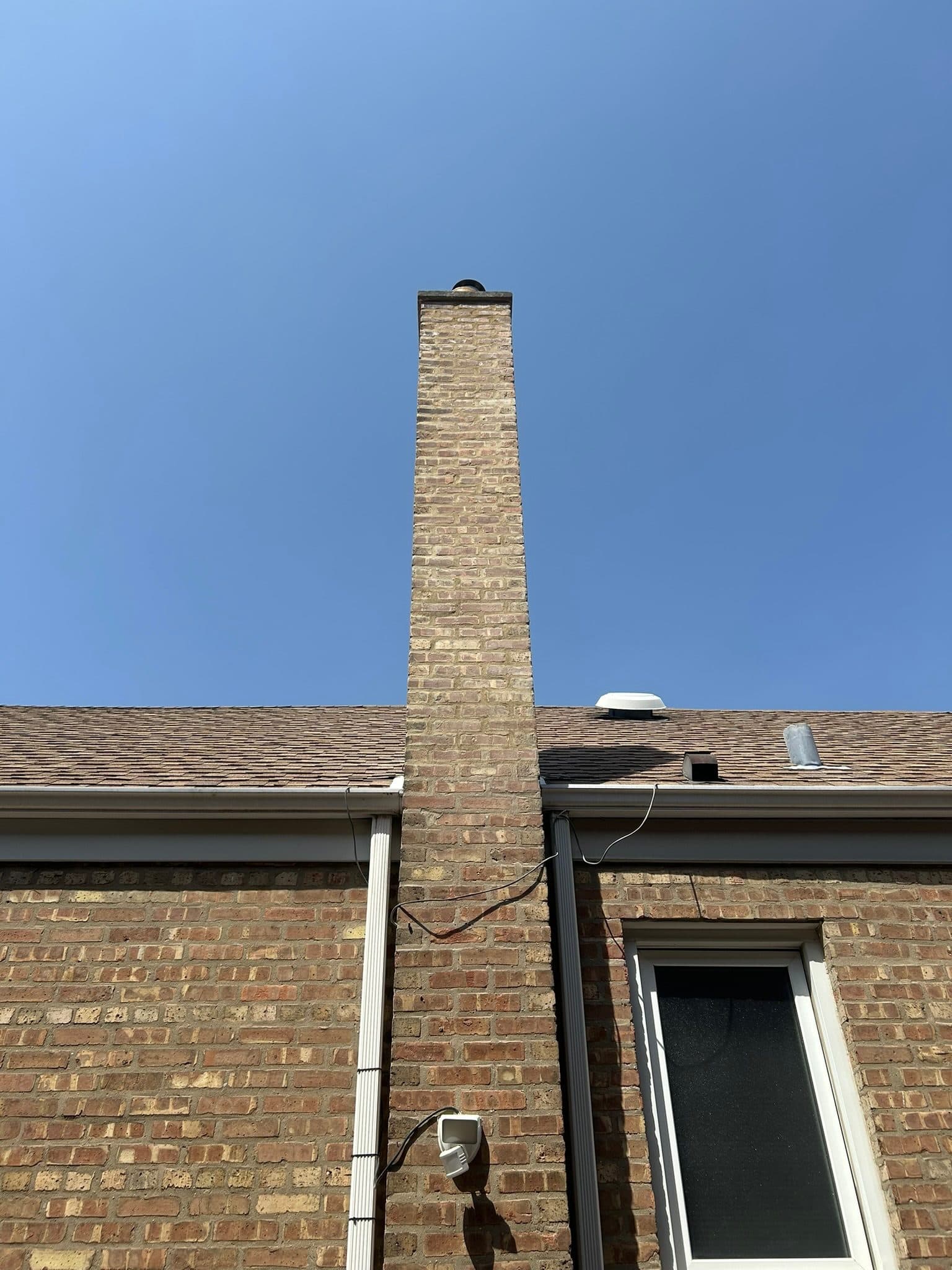
Homeowners call in October and ask the same question, phrased two ways.
Either "can you get this done before winter?" — or, once the first hard freeze has arrived, "is it too late?"
Both deserve a straight answer, and the straight answer is more nuanced than yes or no. Most exterior masonry in Chicagoland does have a season, for a real physical reason. But several categories of work carry straight through January, and the off-season turns out to be the best time of year to do a particular kind of useful thing.
Paul Lally's Masonry Inc. is a family-owned, insured masonry contractor serving Chicago and the Chicagoland suburbs since 1988 — tuckpointing, brick repair and replacement, chimney repair and rebuilds, lintel replacement, masonry restoration, and waterproofing for residential and commercial properties. Built on Craftsmanship. Backed by Experience. Free on-site estimates — call (708) 448-8866.
Why mortar has a season
Mortar does not dry. It cures — a chemical reaction that needs water present and temperatures above freezing to proceed properly.
Three things go wrong in the cold:
The reaction slows or stops. Below a working threshold, curing effectively halts. The mortar sits there soft rather than gaining strength.
Water in the mix freezes and expands. Ice forming inside uncured mortar disrupts it physically. The joint may look finished and be internally compromised — which shows up a year or two later as pointing that crumbles or sheets off.
The masonry itself is cold. A brick wall at twenty degrees pulls heat out of fresh mortar on contact, so the joint never reaches curing temperature regardless of the air.
That is why an honest contractor talks about workable temperatures through placement and the early cure period, day and night — not just whether it happens to be mild at noon. Our post on the best time of year for masonry repair covers the optimal end of that window.
What genuinely has to wait
- Whole-elevation repointing. The largest category and the clearest case.
- Brick and stone replacement at scale, where new units are being bedded in fresh mortar.
- Parapet and chimney rebuilding, unless the situation is an emergency.
- Masonry sealing. Penetrating sealers need the wall dry and temperatures within the product's range for application and cure — a January wall is rarely either.
- Caulking and joint sealant, for the same reason.
- Decorative and historic stone restoration, where the work is exacting and the materials unforgiving.
Pushing any of these into a hard freeze produces work that has to be done again. It is the definition of paying twice.
What still gets done, and gets done well
Emergency stabilisation — always, regardless of date
This is the important one. Making something safe never waits for the season.
If a parapet is shedding material onto a sidewalk, if brick is loose over an entry, if a chimney has become a hazard, if a vehicle has struck a wall — that gets addressed immediately. Loose material comes down, the area beneath gets secured and barricaded, netting or screening goes up where appropriate, and shoring goes in where something structural has failed.
The permanent repair is then scheduled for workable weather, with protection maintained through the interval. Our post on emergency falling brick and what to do covers the first hour.
Interior foundation work
Genuinely good winter work, and underused.
A foundation wall being repointed or parged from inside a heated basement is not subject to outdoor temperatures. The work proceeds normally. So a homeowner with eroded joints in a block or rubble foundation, sand accumulating on the floor, or a failing parge coat can have that addressed in February while exterior work is paused. See parging and interior basement walls.
Fireboxes and interior chimney work
Interior firebox and hearth work is indoor work. See firebox and hearth repair versus chimney repair.
Assessments, scoping and planning
Year-round, and this is where the off-season earns its keep — see below.
Protected work in marginal conditions
On shoulder-season days and in mild spells, targeted exterior work can proceed with protection: enclosures, ground heat, warmed materials, and covering the work through the cure period. It costs more and it is weather-dependent by definition, but on a small urgent scope it is a real option. We will tell you honestly whether a given week is workable rather than starting something that will not cure.
The case for using winter to plan
Here is the argument that actually saves homeowners money.
Assessments happen year-round. We can walk a building, get on a roof, photograph elevations and write a scope in January as readily as in June.
The calendar is open. A scope agreed in winter means the work is queued for the first workable weather. A scope agreed after the first warm weekend in April enters a queue behind everyone else who had the same thought.
You get time to decide. A written scope separated into urgent, deteriorating and cosmetic, read at a kitchen table in February, is a better decision than the same scope read under time pressure.
Phasing gets planned properly. Where a building needs more than one season's work, winter is when the sequence gets thought through — grouping by access so two items on one elevation share a single mobilisation rather than paying for staging twice.
Boards and partners can meet. On association, church and commercial property, the approval calendar is the real constraint. Winter is when a committee can actually consider a proposal without the construction season running out mid-discussion.
What winter does to masonry that is already failing
Worth stating plainly, because it is the reason deferral is expensive here.
A Chicago winter does not freeze once and hold. It thaws and refreezes dozens of times a season — mild afternoon, hard overnight, repeat. Every one of those cycles takes water that has entered an open joint, a spalled brick, a cracked sill or a failed crown, and expands it.
So a wall that is marginal in November is measurably worse in April. The joint that was receding has lost more depth. The brick with a hairline in its face has lost the face. The cracked crown has fed the whole stack for another season.
Nothing accelerates masonry deterioration in this region like a winter spent open. That is why the honest advice in late autumn is: get it assessed now, secure anything unsafe now, and have the scope ready to execute the moment conditions allow.
Two other winter-specific mechanisms:
Snow load on horizontal surfaces. Snow sitting on a water table, a cap or a coping for weeks is a far longer wetting event than rain, and it melts and refreezes in place.
De-icing salt. Tracked and splashed onto the bottom courses of every wall, step, stoop and garage apron. Salt attacks masonry directly and crystallises inside the pores, pushing faces off from within. See winter masonry protection.
How protected cold-weather work actually functions
Worth explaining, because "we can work through the winter with protection" is a claim homeowners hear without knowing what stands behind it.
Genuine cold-weather masonry protection involves some combination of:
Warming the materials. Heated mixing water, and sand stored where it has not frozen. Mortar mixed with frozen sand never reaches a workable state regardless of what happens afterward.
Warming the substrate. The existing masonry has to be above freezing where new mortar will contact it, or the wall pulls heat out of the joint on contact.
Enclosing the work area. Tarpaulins or poly sheeting with a heat source inside, maintaining temperature through placement and the early cure period — which means overnight, not just during the working day.
Extending the protection period. Mortar cures more slowly in the cold even when protected, so the enclosure stays up longer than the work takes.
Covering completed work from precipitation until it has gained enough strength.
All of that is legitimate, it is how commercial projects hold a winter schedule, and it costs real money — enclosure materials, fuel, and the labour to build and maintain it. On a large commercial scope with a deadline, that arithmetic can work. On a residential repointing job, it usually does not, and the honest recommendation is to wait.
The warning sign is a contractor who offers winter exterior pointing with no mention of any of the above. That is not cold-weather masonry. That is the same work done in conditions where it cannot cure.
Using the wait well
If a scope has been written and the weather has closed the window, there are four things worth doing in the interval — none of them requiring a mason.
Fix the water sources you can reach. Downspout extensions, clearing gutters, moving a splash block, pulling mulch and soil back off a foundation or away from weep holes. Masonry deterioration is a water story, and reducing the water reduces how much worse things get before spring.
Clear snow away from the base of walls rather than piling it against them, and keep de-icing salt off masonry steps and aprons where you can — sand gives traction without the chemistry.
Photograph the conditions, dated. Same positions each time, monthly. A crack or a spall documented through a winter tells you whether it is stable or progressing, which changes the priority order in spring.
Read the scope properly. Ask the questions you did not think of at the estimate. A homeowner who has had three months with a written scope makes better decisions than one deciding in a driveway.
What not to do over winter
Do not wrap sound masonry. A wall needs to dry. Covering it traps moisture against the face and does more harm than the weather would. Protecting a specific damaged area after an assessment is a different thing from shrink-wrapping a house.
Do not let somebody point your joints in a hard freeze because they are available and you are keen to get it done. Available in January usually means available for a reason.
Do not seal a wall in the cold. Product datasheets exist for a reason, and a sealer applied outside its temperature range simply does not perform.
Do not ignore an overhead hazard because it is February. That is the one category where the season is irrelevant.
A realistic Chicagoland calendar
| Period | What works |
|---|---|
| Late spring to early autumn | Everything — the core season |
| Mid to late autumn | Most work, with the window narrowing; assessments ideal |
| Deep winter | Emergency stabilisation, interior foundation and firebox work, assessments, scoping and planning |
| Early spring | Work resumes as conditions allow; booked scopes start first |
The practical takeaway: the season for doing exterior masonry is roughly two-thirds of the year, and the season for deciding about it is all of it.
What drives the cost
Scope and elevation area. Height and access, including staging. The ratio of repointing to rebuilding. Whether units must be matched. Whether protection or enclosure is needed for marginal-weather work, which is a genuine cost item. Whether the project is phased and mobilised more than once.
We publish no figures, because a number that means anything requires seeing the building. Free on-site estimate, in writing — call (708) 448-8866.
The honest answer to "is it too late?"
For a full repointing job in January — yes, and anyone who tells you otherwise is selling you work that will need redoing.
For getting it assessed, scoped, priced and booked so it happens first thing when the weather turns — no. That is exactly what winter is for.
And for anything loose above a doorway, a walk or a driveway — it was never a seasonal question.
Paul Lally's Masonry Inc. is family-owned, insured, and has worked Chicagoland winters since 1988. Our name is on every job. Related services: tuckpointing and repointing, chimney repair and rebuilds, foundation masonry repair, parapet wall repair, and masonry restoration.
Built on Craftsmanship. Backed by Experience. Get a free on-site estimate or call (708) 448-8866.
Frequently Asked Questions
Can you tuckpoint in winter in Chicago?
Not reliably in deep winter. Mortar needs workable temperatures to cure and gain strength, and pointing into freezing conditions produces joints that fail early. Marginal shoulder-season days can work with protection; a hard January week cannot.
What temperature is too cold for mortar?
Rather than a single number, the practical test is whether the masonry and the mortar can be kept above freezing through placement and the early cure period, day and night. That is why protection and heated enclosures exist, and why they add cost.
What masonry work can still be done in January?
Emergency stabilisation of anything unsafe, interior foundation repointing in a heated basement, assessments and scoping, and small protected repairs in favourable conditions. Anything structural and overhead gets made safe regardless of the date.
My chimney is dropping brick in December. Do I have to wait until spring?
No. Making a hazard safe never waits for the season — loose material comes down, the area below gets secured, and the stack gets protected. The permanent rebuild is then scheduled for workable weather, with protection maintained in between.
Is winter a good time to get an estimate?
It is the best time. Assessments happen year-round, the calendar is open, and a scope agreed in January means work starts as soon as conditions allow rather than entering a queue in April.
Do contractors charge less in winter?
We do not discount by season, but winter scheduling has a real advantage: you get first dates in spring rather than waiting behind everyone who called after the first warm weekend.
What about interior basement work?
That is genuinely good winter work. A foundation wall being repointed or parged from inside a heated basement is not subject to outdoor temperatures, so it proceeds normally while exterior work is paused.
Does winter damage masonry that is already deteriorating?
Yes, and quickly. A Chicago winter thaws and refreezes dozens of times a season, and every cycle expands water inside open joints and spalled brick. A wall that is marginal in November is measurably worse by April.
Should I cover or wrap my masonry for winter?
Not as a general practice — a wall needs to dry, and wrapping it traps moisture. Protecting specific damaged areas after an assessment is different from covering sound masonry, which usually does more harm than good.