
Brick Repair · Hinsdale, IL
Brick Repair in Hinsdale, IL — On a Historic Home, What You Don't Do Matters Most
Most of the brick damage we're called to on Hinsdale's older homes wasn't caused by weather. It was caused by a previous repair — hard mortar, a cement patch, or a pressure wash — and undoing that carefully is usually the first half of the job.
Quick Answer
Paul Lally's Masonry Inc. provides brick repair in Hinsdale, IL — replacing spalled and cracked units and repairing damage on historic and estate homes using soft, lime-rich mortars and gentle methods that protect original brick. Family-owned since 1988, insured. Free on-site estimates — call (708) 448-8866.
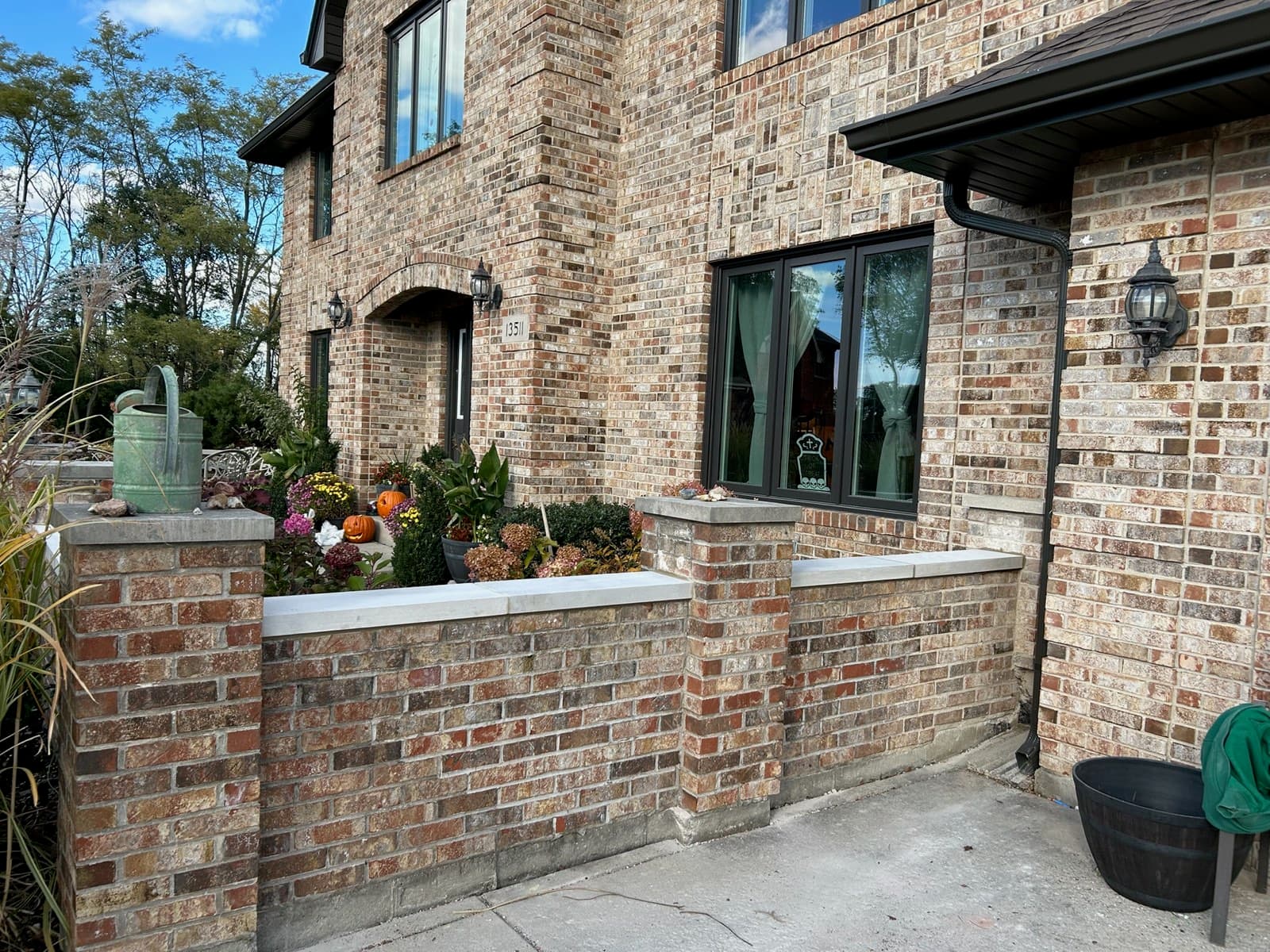
Brick Repair in Hinsdale, IL
Brick repair in Hinsdale, IL is unusual in one respect: on the village's older homes, the damage we are called to fix was often caused by the last repair, not by the weather. Paul Lally's Masonry Inc. repairs brick on historic, estate and modern homes throughout Hinsdale and DuPage County. Family-owned since 1988, insured, free on-site estimates. Call (708) 448-8866.
Which means a good part of the job is undoing well-intentioned work — carefully, so the original brick survives it.
Hinsdale Has a Lot of Old, Soft Brick
The village's building stock includes a substantial amount of genuinely old masonry — homes running back into the nineteenth century through the historic districts and the older residential streets, alongside grand early-twentieth-century houses and decades of later construction.
Brick from that older era is soft. It was fired at lower temperatures than modern brick, it is more porous, and it was laid in lime-rich mortar that was deliberately weak. That was not a limitation. It was the design: the mortar took the movement and the moisture, and it wore out first on purpose.
Modern practice can destroy that balance in a weekend, and it happens constantly.
The Three Repairs That Cause the Damage
1. Hard mortar
The rule is simple and absolute: mortar must be softer than the brick it sits against. When a century-old wall is repointed with a strong Portland-heavy mix, the relationship inverts. Movement, moisture and freeze pressure that the joint used to absorb now go into the brick faces, and the faces spall.
The tell: crisp grey joints standing slightly proud of crumbling brick. Once you have seen it you cannot unsee it, and it is on a lot of houses.
2. Cement patching
A grey cement patch over a spalled area is denser and far less permeable than the brick around it. Moisture moving out through the wall reaches the back of the patch, cannot pass, and freezes there — removing a bigger piece than the original damage, often with the patch still attached.
3. Sandblasting and aggressive pressure washing
This one is irreversible. Sandblasting strips the hard fired face off brick, exposing the soft, absorptive interior permanently. A wall that was durable becomes a sponge, and every winter afterward does damage that the original face would have shrugged off. Harsh pressure washing does a gentler version of the same thing.
On older masonry, the gentlest method that works is the correct method.
What Weather Damage Looks Like Instead
Genuine weather-driven failure has a different signature, and it concentrates:
- The bottom two or three courses, from splash-back off drives, walks and patios plus winter salt
- Under sills, where a whole window's runoff lands on one joint
- The weather elevation, generally north and west
- Chimneys, exposed on four sides with nothing over them
- Beside a downspout that has been discharging on the wall for years
If damage is scattered evenly across a whole elevation, look harder at the mortar and at what was done to the wall — not at the sky.
When Brick Gets Replaced Rather Than Repaired
- Spalled units — the fired face is gone and cannot be restored
- Units cracked all the way through
- Units that have lost bond — they move, or sound hollow when tapped
- Brick displaced out of plane from movement or corroding steel
- Badly impact-damaged units
And what does not need replacement: eroded mortar joints with sound brick faces, which need tuckpointing; or staining and efflorescence on otherwise intact brick.
Signs You Need Brick Repair
- Faces flaking, sheeting or crumbling
- Crisp mortar standing proud of receded brick faces
- Cement patches blistering, cracking or lifting away
- Cracked-through units, or brick you can move by hand
- Brick that sounds hollow when tapped
- A horizontal crack line with rust staining above an opening — corroding lintel steel
- Stepped diagonal cracking, which means movement rather than weather
- White efflorescence, proving water is moving through the wall
Risks of Waiting
A spalled brick has lost its hardest layer, so it takes on water faster than the sound brick beside it and each freeze-thaw cycle takes a little more — first from that unit, then its neighbours. On a historic home there is a second cost that does not apply elsewhere: every unit lost is original material that cannot be replaced in kind. The longer damage runs, the more of the house's actual fabric goes with it.
Our Process
- Diagnose the cause — weather, a previous repair, corroding steel, or movement.
- Assess the existing mortar hardness, because that changes the whole plan.
- Sound the surrounding wall to find every unit that has genuinely failed.
- Source the match, favouring salvaged and reclaimed period brick on older homes.
- Remove failed cement patches and hard mortar by hand, with chisels rather than grinders where the brick is soft.
- Cut out failed units without disturbing the courses above.
- Correct what caused it — steel, drainage, a downspout, grade.
- Set replacements in soft, matched mortar, keyed to the existing coursing and bond.
- Blend, don't block — scatter new units through the surrounding field.
- Repoint the transition, clean gently, and walk the finished wall with you.
Materials
Lime-rich, low-Portland mortars on the village's older masonry, matched for colour, sand and texture against cured mortar rather than the wet mix. Type N on modern brick. Salvaged brick wherever it serves the match better than new material.
Related services: brick replacement, tuckpointing, masonry restoration, limestone and sill repair, and lintel replacement.
What Drives the Cost
- How many units come out once the wall is properly sounded
- Match difficulty, and whether salvaged material must be sourced
- Undoing prior repairs — hard mortar and cement patches add real hand labour
- Height and access
- Whether the underlying cause has to be corrected
- Site conditions — landscaping, mature plantings, tight access
We do not quote brick work over the phone. The look is free and the estimate written.
Serving Hinsdale and DuPage County
Paul Lally's Masonry Inc. is a family-owned, insured masonry contractor serving Chicago and the Chicagoland suburbs since 1988 — tuckpointing, brick repair and replacement, chimney repair and rebuilds, lintel replacement, masonry restoration, and waterproofing for residential and commercial properties. Built on Craftsmanship. Backed by Experience. Free on-site estimates — call (708) 448-8866.
We work throughout Hinsdale and neighbouring Clarendon Hills, Western Springs, Burr Ridge and Willowbrook.
Get a Free Hinsdale Brick Repair Estimate
If your brick is crumbling but your mortar looks perfect, that is worth a second opinion before anyone does more of the same. Call (708) 448-8866 or request a free estimate.
Brick Repair in Hinsdale, IL — Frequently Asked Questions
How much does brick repair cost in Hinsdale, IL?
It is driven by how many units actually have to come out once the wall is sounded, how hard the brick is to match on an older home, access and height, and whether previous hard mortar or cement patching has to be removed first. Paul Lally's Masonry Inc. gives free on-site estimates in Hinsdale — call (708) 448-8866.
Why does hard mortar damage old brick?
Because mortar is meant to be the sacrificial part of a wall — softer than the brick, so it gives first and can be replaced. A hard Portland-heavy mix on soft historic brick reverses that, forcing movement and moisture into the brick faces until they spall. It is the most common cause of damage we undo.
Can spalled brick be patched instead of replaced?
No. Spalling means the hard fired outer face is gone, and nothing puts it back — a patch over the soft core traps water behind something harder than the brick and takes more off next winter. Spalled units get cut out and replaced.
Will you be able to match brick on a hundred-year-old house?
Often very closely, though rarely perfectly, and salvage is usually the better route on older homes. Reclaimed period brick matches in a way modern production cannot, and sound units taken from a hidden elevation to patch a visible one are frequently the best available answer.
Is pressure washing or sandblasting safe on my brick?
Sandblasting should never be used on historic brick — it strips the hard fired face and leaves the soft interior exposed, which is irreversible. Aggressive pressure washing does a milder version of the same thing. Cleaning older masonry should be the gentlest method that works.
How do I know if my brick problem is weather or a previous repair?
Look at the joints against the brick. If crisp grey mortar stands slightly proud of crumbling brick faces, the mortar is harder than the brick and the repair is the problem. Weather damage tends to concentrate near grade, under sills and on the weather elevation instead.
Do you work on historic and estate homes in Hinsdale?
Yes, and a good share of our Hinsdale work is exactly that. Paul Lally's Masonry Inc. has worked on older masonry throughout DuPage and Cook County since 1988, and our name is on every job. Free on-site estimates — call (708) 448-8866.
Brick Repair in Nearby Areas
Other Masonry Services in Hinsdale, IL
Learn more about our brick repair services across Chicagoland, or view all service areas.
Free on-site estimates across Chicagoland.