
Brick Repair · Chicago, IL
Brick Repair in Chicago, IL — Spalling, Cracks, and Century-Old Masonry
Chicago brick is soft, old, and unforgiving of the wrong repair. The mortar that fixes a 1990s veneer wall will actively destroy a 1910 bungalow.
Quick Answer
Brick repair in Chicago, IL covers spalled, cracked, and loose brick on the city's largely pre-1930s masonry — bungalows, greystones, two-flats, and brick storefronts. The critical decision is mortar hardness: soft historic brick requires a soft mix, or the brick face spalls. Paul Lally's Masonry has repaired Chicago brick since 1988. Free estimates: (708) 448-8866.
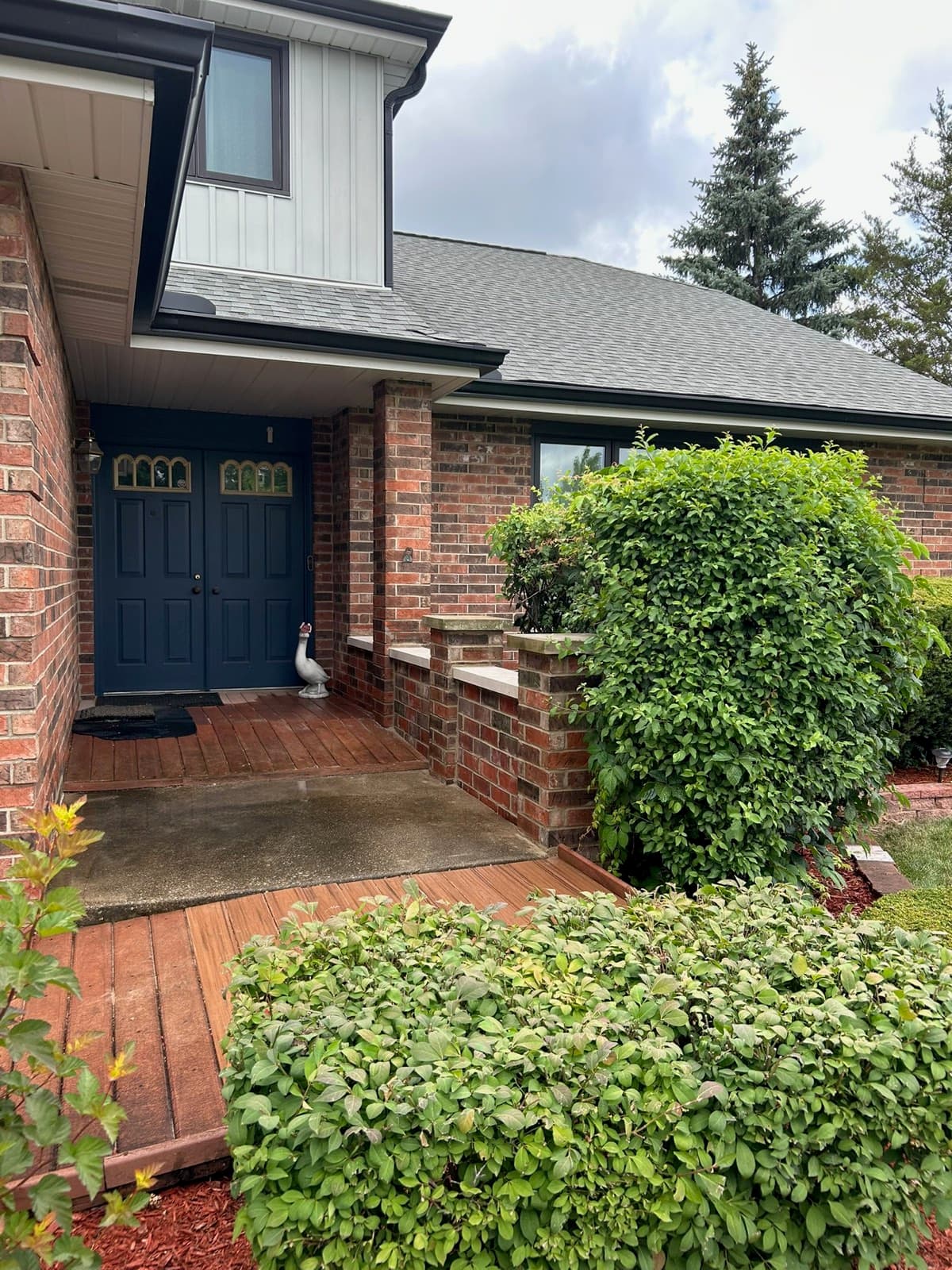
Chicago is a brick city, and most of its brick is old. The bungalow belt, the greystones, the two-flats and three-flats, the corner storefronts — the overwhelming majority went up between roughly 1890 and 1930, built of soft, locally-fired Chicago common brick laid in lime-based mortar.
That single fact governs everything about brick repair in Chicago, IL. The mortar that would be perfectly correct on a 1990s suburban veneer wall will actively destroy a 1910 bungalow — and it's the most common mistake we get called in to undo. Paul Lally's Masonry has been repairing Chicago brick since 1988.
Brick repair or tuckpointing? A clean answer
| What you're seeing | What failed | The fix | |---|---|---| | Mortar soft, sandy, receding — diggable with a key | The joints | Tuckpointing / repointing | | Brick faces flaking, powdering, popping off | The bricks (spalling) | Brick repair / replacement | | Bricks cracked through the unit | Unit failure — often movement or a lintel | Replacement + fix the cause | | Stair-step crack through the joints | Wall movement | Diagnose first, then repoint or rebuild | | Bricks you can rock by hand | Lost bond | Replacement, often localized rebuild | | Straight horizontal crack above a window | Rusting steel lintel | Lintel replacement |
Most Chicago jobs are a combination. You repair or replace the failed brick, and you repoint the joints around it — because the mortar that let water reach that brick is usually just as tired as the brick was.
Why Chicago brick fails: the mechanism
Always water plus cold:
- Water enters the brick — through a failed joint, a leaking gutter, splashback where pavement or soil sits high against the wall, an uncapped chimney, or failed coping on a flat roof.
- Temperature drops below freezing. Water inside the brick expands roughly nine percent.
- That expansion pushes the hard, fired outer face away from the softer core.
- The face pops off. The exposed core now drinks water faster, and the next winter does more damage than the last.
That's spalling. Chicago gives it ideal conditions: repeated hard freeze-thaw cycles — sometimes several in a single week — plus wind-driven rain off the lake that pushes water at walls horizontally, finding joints a vertical rain never would.
The other major cause is rust jacking: a steel lintel over a window or door corroding, swelling to several times its original thickness, and cracking the brick it carries. When cracked brick appears in a neat line above an opening, the lintel is the actual patient.
Signs your Chicago brick needs repair
- Flaking, powdering, or popped brick faces — the classic spalling signature
- Bricks cracked through the unit, not just through the joint
- Loose bricks that move under hand pressure
- Missing chunks at corners, sills, steps, and the base of the wall
- A rough, sandy surface where a smooth fired face used to be
- Cracked brick stacked above a window, door, or garage opening — suspect the lintel
- Efflorescence — white chalky salt deposits, proof water is moving through
- Damp or musty interior walls on an exterior-facing room
- Brick chips and mortar sand collecting on the ground below
The decision that matters most: mortar hardness
This is where Chicago brick repair genuinely differs from suburban work, and it deserves plain language.
Mortar is supposed to be the sacrificial element in a wall. It should be softer than the brick around it, so thermal movement, moisture cycling, and minor settlement are absorbed by the joint — which is inexpensive and straightforward to replace when it wears out. That's the design intent, and it's why hundred-year-old walls survive at all.
Now pack a modern, high-strength, Portland-rich mortar against soft Chicago common brick. The joint is now harder than the brick. The physics invert. That movement still has to go somewhere, and it goes into the brick — which spalls and crumbles along every line of mortar.
A "stronger" repair quietly destroys the wall it was sold to protect, and the damage is not reversible. Repointing can be redone; brick faces cannot be put back.
So on pre-1930s Chicago masonry we use soft, lime-rich or low-Portland mixes matched to the original. Standard Type N goes on more modern brick. Type S only where structure and exposure genuinely call for it — which on a century-old bungalow is almost never.
How Paul Lally's Masonry repairs Chicago brick
- Diagnose the cause first. We find out why the brick failed — joints, gutter, grade, sealer, chimney, coping, or lintel. Replacing brick without closing the water path just resets the clock.
- Assess the brick's hardness and age to determine the correct mortar. On soft historic brick this decision comes before anything else.
- Match the brick — size, color range, texture, and face. Salvaged Chicago common brick where a modern unit would read wrong.
- Cut out failed units cleanly, by hand and with careful grinding, without cracking neighbors. Speed ruins this step, and chipped brick arrises never come back.
- Prep the pocket — clean, dampened, ready to take mortar so the new unit genuinely bonds.
- Set the replacement with full bed and head joints, aligned to the coursing and plumb with the wall face.
- Match the mortar — type, color, sand, and texture blended to the existing joints, not generic grey.
- Tool the joint to match the existing profile. This single detail decides whether a repair disappears or announces itself.
- Repoint surrounding joints where they've failed, so the new brick isn't the only sound thing in a tired wall.
- Clean down and walk the work with you.
Materials
Salvaged and new face brick, Chicago common brick, and modern veneer units matched to what the building already has. Mortar matched for type, color, sand, and joint profile — soft lime-based and low-Portland mixes on historic masonry, Type N on most later work, Type S only where genuinely warranted. Breathable penetrating sealers only, if sealing is appropriate at all — never a film-forming coating, which traps moisture and causes the spalling it was meant to prevent.
What drives the cost of brick repair in Chicago
- How many bricks are actually failing — and how many more appear once the area is opened
- Location on the building — ground level versus a second or third story requiring staging
- Brick matching difficulty — common brick is straightforward; an unusual or discontinued unit takes sourcing
- Whether the cause needs fixing too — a rusted lintel, a bad downspout, a chimney, coping, grade
- Repointing scope around the repair
- Access — tight gangways, alley-only access, landscaping, parking restrictions
We don't quote brick repair from a photo or over the phone, and you should be cautious of anyone who does. Paul Lally's Masonry gives a free on-site estimate in writing after looking at the actual wall.
Local context: reading Chicago's brick by neighborhood and era
Chicago's masonry falls into recognizable populations, and each wants a different hand.
The bungalow belt — the Northwest and Southwest Sides, roughly 1910 to 1940. Solid multi-wythe common brick, often with a face brick front and common brick sides, lime-based mortar, limestone sills and trim. Soft, absorbent, and easily ruined by hard mortar or aggressive cleaning.
Greystones — Bronzeville, Logan Square, Humboldt Park, Garfield Park and beyond. Brick with substantial Indiana limestone facades, sills, lintels, and carved trim. The stone and the brick both want soft mortar, and the stone is irreplaceable.
Two-flats and three-flats — everywhere. Load-bearing masonry, flat roofs with parapets, rear porches on masonry piers. The parapet above the roofline is usually the worst masonry on the building.
Courtyard buildings and corner storefronts — larger-scale masonry with the same era characteristics plus wide openings on steel lintels.
Newer construction and veneer — post-1960s infill and rehab work, where the wall is a single wythe hung on framing with a drainage cavity behind it. That changes the diagnosis entirely; see brick veneer vs. solid masonry.
Across all of them, the failures cluster in the same places: north and west elevations taking the weather, the bottom three courses where snowpack, splashback, and de-icing salt sit, around and under sills, at chimney shoulders, above wide openings where lintels rust, and at the parapet on any flat roof.
Related masonry services in Chicago
Brick repair rarely stands alone. Chicago work commonly pairs it with tuckpointing and repointing, brick replacement for units past saving, lintel repair and replacement, chimney repair and rebuilds, parapet wall repair on flat-roofed buildings, limestone and sill repair on greystones, caulking and joint sealant, and masonry waterproofing once the wall is sound. For whole-building scopes see residential masonry restoration, commercial masonry restoration, and historic masonry restoration.
Worth reading: why is my brick spalling, brick repair vs. replacement, the Chicago bungalow and greystone masonry guide, and why masonry repairs fail.
Nearby: tuckpointing in Chicago, chimney repair in Chicago, parapet wall repair in Chicago, and masonry caulking in Chicago.
Talk to a mason who knows what your brick is made of
Paul Lally's Masonry Inc. is a family-owned, insured masonry contractor serving Chicago and the Chicagoland suburbs since 1988 — tuckpointing, brick repair and replacement, chimney repair and rebuilds, lintel replacement, masonry restoration, and waterproofing for residential and commercial properties. Built on Craftsmanship. Backed by Experience.
We'll tell you why your brick failed, which mortar your wall actually wants, and how small a repair we can get away with. Our family name is on every job.
Free on-site estimates — call (708) 448-8866 or request an estimate online.
Brick Repair in Chicago, IL — Frequently Asked Questions
Why is my Chicago brick crumbling and flaking?
That's spalling — water absorbed into the brick froze, expanded about nine percent, and pushed the hard fired face off. Chicago's repeated freeze-thaw cycles drive it, and once a brick loses its face it absorbs water faster, so it accelerates. The usual water sources are failed mortar joints, a bad gutter, splashback at grade, or a film-forming sealer that trapped moisture inside.
Do I need brick repair or tuckpointing?
Tuckpointing fixes the mortar joints; brick repair fixes the bricks themselves. If your joints are soft and receding but the brick faces are intact, you need tuckpointing. If brick faces are flaking, cracked through, or crumbling, those units need repair or replacement — and the surrounding joints almost always need repointing at the same time.
How much does brick repair cost in Chicago, IL?
There's no per-brick figure that means anything. Cost depends on how many units are failing, where they sit on the building, whether staging is needed for height, how hard the original brick is to match, and whether the cause — a lintel, a downspout, a chimney — has to be addressed too. Paul Lally's Masonry provides a free on-site estimate in writing.
Can you match the brick on my Chicago bungalow or greystone?
Usually, and matching is most of the craft. Chicago common brick from the pre-1930s era is soft, hand-molded, and variable, so we source salvaged brick wherever a modern unit would read wrong. We'll show you honestly how close the match will be before you commit rather than promise invisible and deliver a patch.
Why does the mortar type matter so much on old Chicago brick?
Because mortar must be softer than the brick beside it. Chicago's pre-1930s common brick is soft and was laid in lime-based mortar; pack a hard modern Portland-rich mix against it and the joint stops absorbing movement, so the brick face is sacrificed instead and spalls at the joint edges. That damage is permanent, and it's the most common bad repair we're called in to correct.
Should the whole wall be redone or just the damaged bricks?
Individual bricks are replaced routinely — that's the normal repair. A wall comes down and gets rebuilt only when damage is widespread, the wall is bowing or displaced, or the masonry has lost its structural bond. We scope the smallest repair that genuinely solves the problem, and we'll say so when that's all you need.
How long does brick repair take on a Chicago building?
A localized repair of a handful of units is often a same-visit job once material is on hand, while a full elevation on a two- or three-story building runs considerably longer. Sourcing matching salvaged brick can add lead time, and mortar needs workable temperatures to cure. We give a realistic schedule at the estimate.
What happens if I leave spalled brick alone?
Spalled brick has lost its weather-resistant fired face, so it absorbs more water every year and deteriorates faster each winter. The damage spreads into neighboring units and the mortar, water reaches the interior, and what would have been a handful of replacement bricks becomes a section rebuild. Brick failure never holds still.
Brick Repair in Nearby Areas
Other Masonry Services in Chicago, IL
Learn more about our brick repair services across Chicagoland, or view all service areas.
Free on-site estimates across Chicagoland.