
Brick Repair · Chicago Ridge, IL
Brick Repair in Chicago Ridge, IL — Sometimes Fifteen Bricks Really Is the Whole Job
Not every wall with a problem needs an elevation of work. On the modest post-war homes that make up most of Chicago Ridge, the honest answer is often a couple of dozen brick and a section of repointing — and a contractor who quotes the whole house without walking it is selling volume.
Quick Answer
Paul Lally's Masonry Inc. provides brick repair in Chicago Ridge, IL — replacing spalled, cracked and debonded units and repairing localized damage on the village's post-war homes, with scope kept to what the wall genuinely needs. Family-owned since 1988, insured. Free estimates — call (708) 448-8866.
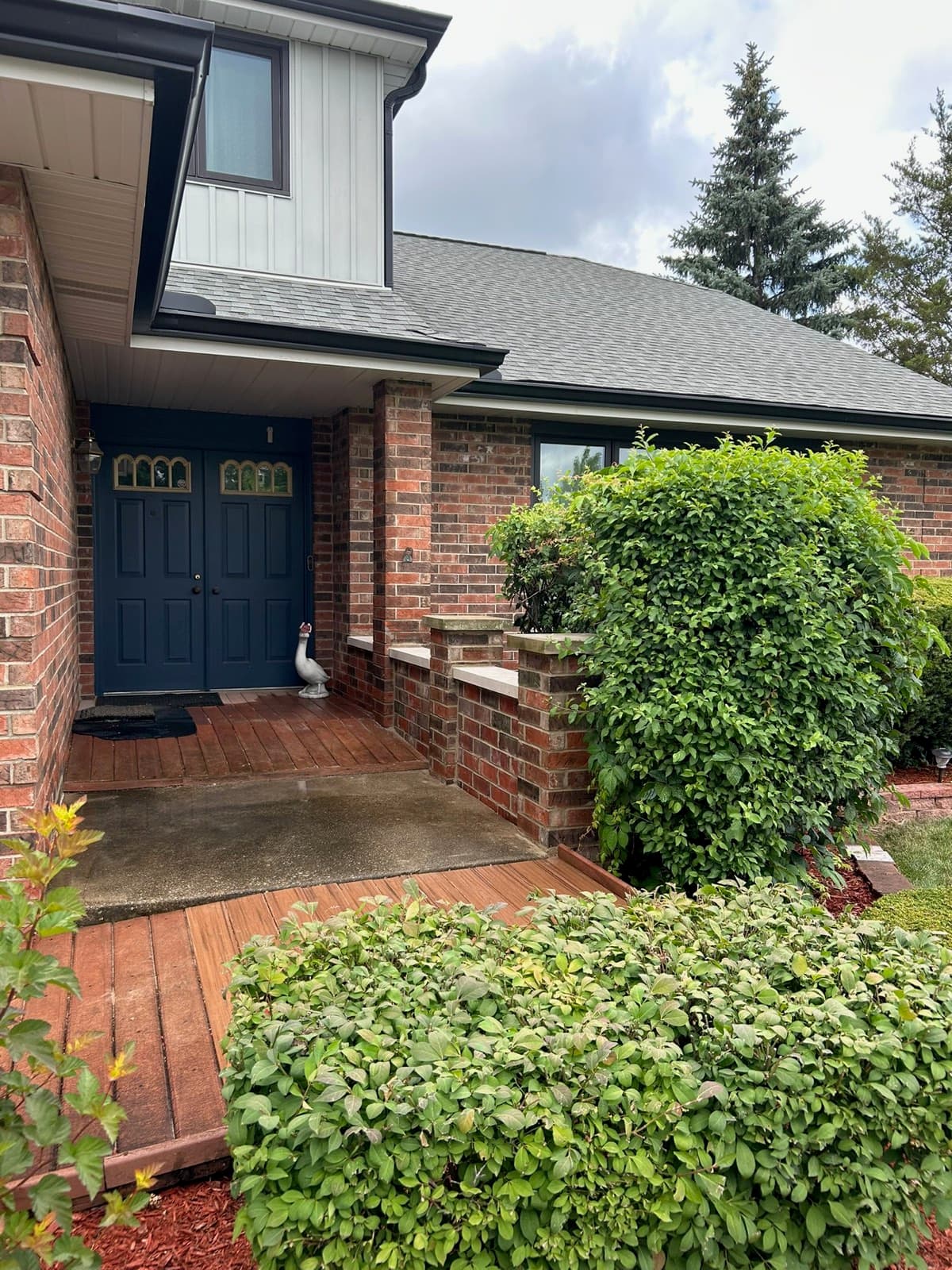
Brick Repair in Chicago Ridge, IL
Brick repair in Chicago Ridge, IL is a service where the honest answer is frequently smaller than the quote you were given. Paul Lally's Masonry Inc. repairs and replaces damaged brick on homes and commercial buildings throughout Chicago Ridge and the southwest suburbs. Family-owned since 1988, insured, free on-site estimates. Call (708) 448-8866.
That is an odd thing for a contractor to lead with. We lead with it because it is the single most useful thing a homeowner in this village can know before they start making calls.
Scope Is the Whole Argument
Chicago Ridge is a compact village of modest post-war homes — ranches, Cape Cods, bungalows and split-levels, mostly built in a fairly tight window, on smaller lots, alongside the commercial corridors around Ridgeland and 95th.
These are not big elevations. And on houses this size, the difference between an honest scope and an inflated one is not a rounding error — it is most of the bill.
Here is what we actually find on a typical call:
- Damage is localized. A band near grade, a patch beside a downspout, a course under a sill, the sun-and-salt side of a garage wall.
- The rest of the wall is genuinely sound. Joints tight, faces intact, nothing hollow.
- The right scope is a couple of dozen units and a section of repointing — not the elevation, and certainly not the house.
A quote for a whole elevation on a wall nobody sounded is a quote for volume, not for a repair.
There are real exceptions, and we will tell you when you are looking at one. But they should be demonstrated, not assumed.
How We Work Out What Actually Needs Doing
The method matters more than the opinion, so here it is.
Sounding. We tap the wall. A sound brick, properly bonded, rings solid. A unit that has lost bond or gone hollow behind an intact-looking face sounds dull and different. That is how you find the damage you cannot see — and it routinely turns up more than what is visible, which is exactly why the step cannot be skipped.
Reading the pattern. Where damage sits tells you what caused it, and the cause tells you whether it will spread:
| What you see | What it means | | --- | --- | | A band of spalling near grade | Splash line — roof runoff bouncing off a hard surface, plus winter salt | | A vertical stripe of damage | A downspout or a gutter joint dumping on the wall | | Damage under a sill | The sill has lost its wash or drip edge | | A horizontal crack with rust staining above an opening | Corroding lintel steel — the brick is a symptom | | Stepped diagonal cracking | Movement, not weather — different problem entirely | | Scattered damage across a whole elevation | Look at the mortar; a previous too-hard repointing may be the cause |
Checking the mortar. If crisp grey joints are standing slightly proud of crumbling brick faces, the mortar is harder than the brick — and replacing the brick without addressing that just repeats the failure.
When a Brick Genuinely Has to Come Out
A brick has a hard fired outer face and a softer core behind it. That face is what makes it weather-resistant.
Spalling means the face has flaked or sheeted away. It cannot be patched back on — cover it and you have put something harder than the brick over a sponge. Spalled brick gets replaced, along with units cracked through, units that have lost bond, and units pushed out of plane.
What does not need replacing: eroded mortar joints with sound brick faces. That is tuckpointing, and it is a different and usually smaller job.
Risks of Waiting
The reason we push people to address small damage early is that it does not stay small.
A spalled brick has lost its protective layer, so it takes on water faster than the sound brick around it, and each Chicagoland freeze-thaw cycle takes a little more — first from that unit, then from its neighbours. Water passing through open faces reaches whatever steel is in the wall and the structure behind it.
Fifteen bricks today is a contained job. The same wall left alone becomes a section, and a section becomes staging.
Our Process
- Diagnose the cause — weather and salt, impact, corroding steel, or movement.
- Sound the surrounding wall to find every unit that has genuinely failed.
- Check the existing mortar hardness.
- Tell you the honest scope, including when it is smaller than you expected.
- Source the match — size, colour range, texture and face treatment, checked against the wall in daylight.
- Cut out failed units by removing surrounding mortar and drawing the brick out without disturbing the courses above.
- Correct what caused it — a downspout, blocked weep holes, grade, corroded steel.
- Set replacements in matched mortar, keyed to existing coursing and bond.
- Blend, don't block — scatter new units through the surrounding field so the eye reads a wall, not a rectangle.
- Repoint the transition, clean down, and walk the finished work with you.
Materials
Type N covers most of the village's post-war brick, mixed softer than the units it serves — mortar is the sacrificial part, because a joint can be replaced and a brick face cannot.
Mortar colour is matched against cured mortar rather than the wet mix, since it lightens as it dries, and the tooled joint profile is matched to the surrounding field. On a small repair those two details matter more than anything else, because the new work sits directly beside the old.
Related services: brick replacement, tuckpointing, lintel replacement, limestone and sill repair, and waterproofing where genuinely warranted.
What Drives the Cost
- How many units come out once the wall is properly sounded
- Match difficulty on discontinued brick
- Height and access — a stoop is not a second-story gable
- Whether the cause has to be corrected as part of the work
- Whether hard mortar has to come out and the area be repointed
- Site conditions — tight side yards, neighbour protection
We do not quote brick work over the phone. The look is free, and if the answer is that you need less than you were told, we will say so.
Serving Chicago Ridge and the Southwest Suburbs
Paul Lally's Masonry Inc. is a family-owned, insured masonry contractor serving Chicago and the Chicagoland suburbs since 1988 — tuckpointing, brick repair and replacement, chimney repair and rebuilds, lintel replacement, masonry restoration, and waterproofing for residential and commercial properties. Built on Craftsmanship. Backed by Experience. Free on-site estimates — call (708) 448-8866.
We work throughout Chicago Ridge and neighbouring Oak Lawn, Worth, Bridgeview and Palos Hills.
Get a Free Chicago Ridge Brick Repair Estimate
If you have been quoted an elevation and you are not sure you need one, get a second look from someone who will sound the wall first. Call (708) 448-8866 or request a free estimate.
Brick Repair in Chicago Ridge, IL — Frequently Asked Questions
How much does brick repair cost in Chicago Ridge, IL?
It comes down to how many units genuinely have to come out once the wall is sounded, how difficult the brick is to match, access, and whether the cause has to be corrected too. On many homes here the honest scope is smaller than people expect. Paul Lally's Masonry Inc. gives free on-site estimates — call (708) 448-8866.
Is it worth calling a mason for just a few damaged bricks?
Yes, and earlier is cheaper. A spalled brick has lost the hard face that made it weather-resistant, so it absorbs water faster than its neighbours and pulls them into the damage. A dozen units addressed now is a genuinely smaller job than the same wall in five years.
A contractor quoted my whole elevation. Is that necessary?
Sometimes it genuinely is, and sometimes it is not. What tells you is whether they walked every wall and sounded the masonry, or quoted from the driveway. Ask which specific areas failed and why the rest is included — a straight answer is a good sign.
How do you know how many bricks actually need replacing?
By sounding the wall — tapping it, which reveals units that have lost bond or gone hollow behind a face that still looks acceptable. That is usually more than what is visibly damaged, and an estimate that skips this step will grow once work starts.
Why is the damage on my house all near the ground?
That is the splash line. Rain running off the roof edge hits the driveway, walk or stoop and bounces back onto the lowest courses, and in winter that water carries de-icing salt. Freeze-thaw and salt crystallization then flake the faces off.
Will replacement brick match my 1960s house?
Usually closely. Brick from that era was machine made in identifiable colour ranges, and while many exact runs are discontinued, good matches exist. What makes a repair disappear is blending replacements through the surrounding wall and matching mortar colour and joint profile.
Do you take on smaller masonry jobs in Chicago Ridge?
Yes. Paul Lally's Masonry Inc. works throughout Chicago Ridge and the surrounding southwest suburbs on jobs of all sizes, and our family name is on every one of them. Free on-site estimates — call (708) 448-8866.
Brick Repair in Nearby Areas
Other Masonry Services in Chicago Ridge, IL
Learn more about our brick repair services across Chicagoland, or view all service areas.
Free on-site estimates across Chicagoland.