
Brick Repair · Bridgeview, IL
Brick Repair in Bridgeview, IL — Salt Does More Damage Here Than Weather Does
Freeze-thaw gets the blame for most brick damage. In a village threaded by arterial roads and truck routes, salt deserves at least as much — it soaks into masonry all winter and then crystallises inside it, flaking the faces off from the inside out.
Quick Answer
Paul Lally's Masonry Inc. provides brick repair in Bridgeview, IL — replacing spalled and cracked brick on homes, commercial and industrial buildings, with particular attention to the salt-driven damage that concentrates near grade along the village's road and truck corridors. Family-owned since 1988, insured. Free estimates — call (708) 448-8866.
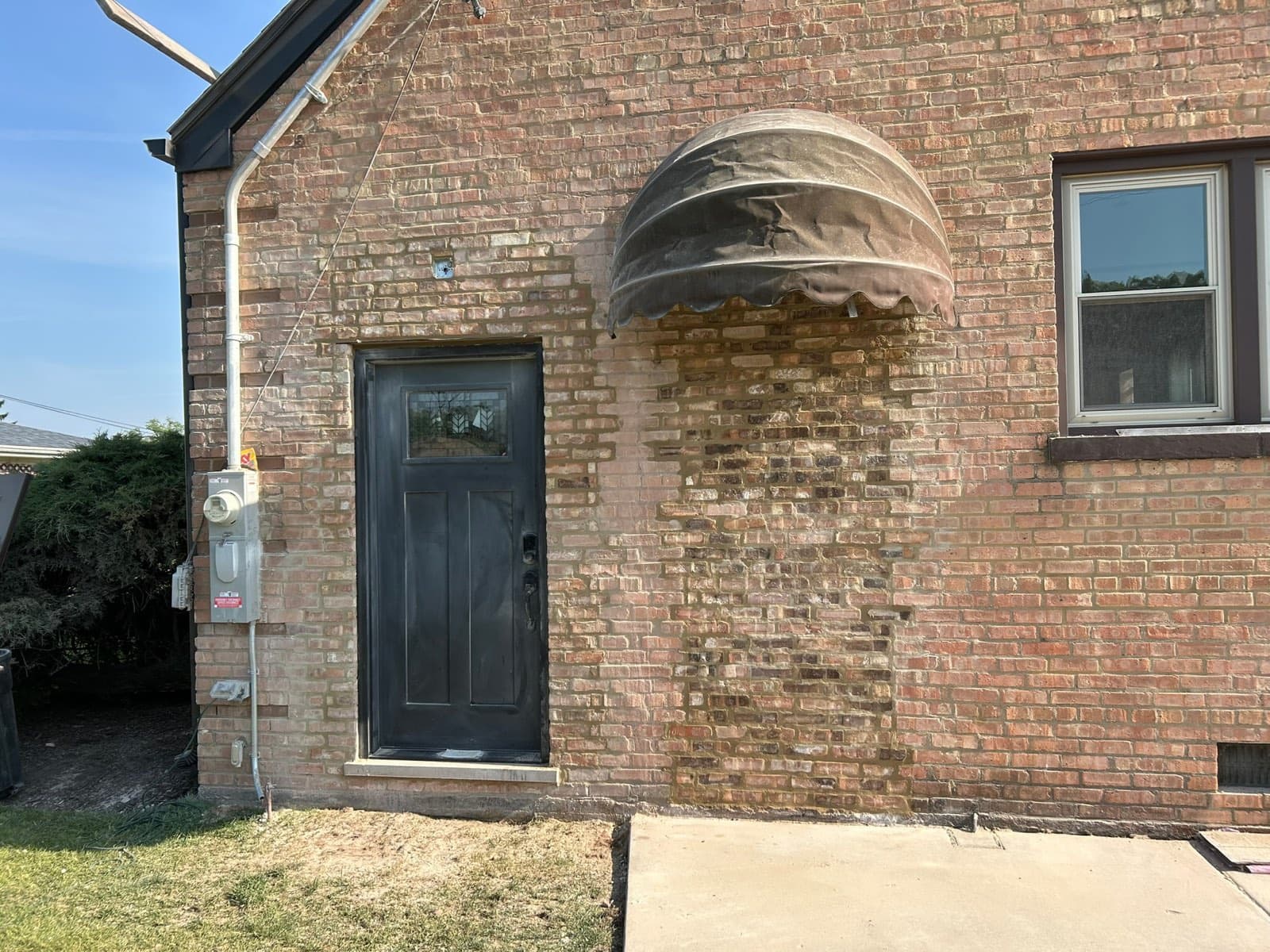
Brick Repair in Bridgeview, IL
Brick repair in Bridgeview, IL has a cause that gets far less attention than it deserves: salt. Paul Lally's Masonry Inc. repairs and replaces damaged brick on homes, commercial and industrial buildings throughout Bridgeview and the southwest suburbs. Family-owned since 1988, insured, free on-site estimates. Call (708) 448-8866.
Freeze-thaw takes the blame for nearly all masonry damage in this region, and it earns plenty of it. But in a compact village threaded by arterial roads, truck routes and heavily treated commercial pavement, salt is doing at least as much work — and it does it by a completely different mechanism.
How Salt Actually Destroys Brick
This is worth understanding, because it changes what you do about it.
Freeze-thaw is water in the pore structure freezing, expanding roughly nine percent, and pushing against the surrounding material until the face lets go.
Salt crystallisation is different. De-icer dissolves into meltwater, and that salty water soaks into porous brick and mortar. Then the wall dries — and as the water evaporates, the salt it carried crystallises inside the pore structure. Those crystals grow, and growing crystals exert real pressure against the pore walls from the inside.
The result looks similar to freeze damage: the hard fired face flakes and sheets away. But the driver is different, and critically, salt damage does not need a freeze to happen. It works every time the wall wets and dries.
In practice the two run together all winter, and they compound: salt keeps masonry damp longer, which gives freeze-thaw more to work with.
Why Bridgeview Gets More of It
Bridgeview is small, dense, and unusually well-connected for its size. Harlem Avenue, 79th Street, Archer and the Stevenson corridor put arterial traffic and truck routes through and around a village of only a few square miles, alongside a substantial base of commercial and industrial property with large paved areas.
All of that gets treated heavily in winter, and the practical consequences for masonry are direct:
- Road spray carries salt onto walls near the traffic lanes
- Plow and shovel throw puts salted snow directly against the lowest courses
- Large paved areas at commercial and industrial buildings are salted at scale, and that meltwater ends up against loading docks, dock walls, bollard surrounds and building bases
- Tight residential lots put driveways, walks and stoops right up against the house
- Snow piled against walls sits there for weeks, releasing salted meltwater the whole time
The signature is unmistakable: a band of spalled brick in the lowest courses, sharp at the top, running the length of whatever faces the pavement.
Where to Look on Your Own Building
- The bottom two to four courses on any elevation facing a drive, walk, lot or roadway
- The attached garage wall facing a salted driveway
- Stoops, steps and porch masonry, which are salted directly
- Loading dock walls and door surrounds on commercial buildings
- Anywhere snow gets piled by a plow or shovel
- Freestanding walls, piers and monuments at parking-lot edges
- The splash line generally, where runoff bounces off hard surfaces
Signs You Need Brick Repair
- Faces flaking, sheeting or crumbling, concentrated near grade
- A sharp horizontal band of damage at a consistent height
- White efflorescence — proof water and salts are moving through the wall
- Crumbling, receding mortar joints in the same band
- Cracked-through units, or brick you can move by hand
- Brick that sounds hollow when tapped
- A horizontal crack with rust staining above an opening — corroding lintel steel
- Stepped diagonal cracking, which means movement rather than weather or salt
Risks of Waiting
A spalled brick has lost the hard fired face that made it weather-resistant. What is exposed behind it is more absorptive than the surface that was protecting it — so it takes on more salted water, faster, and the following winter does more damage than the last. That is why salt damage spreads sideways through a course rather than staying put.
Water and salt passing through open faces also reach any steel in the wall and the structure behind it. And the cost curve is the usual one: scattered replacement is straightforward, but once a section has lost bond it becomes a rebuild, and a rebuild at height brings staging that dwarfs the masonry.
Our Process
- Diagnose the cause — salt and splash, freeze-thaw, impact, corroding steel, or movement.
- Trace the salt path — where it lands, where meltwater runs, where snow gets piled.
- Sound the surrounding wall to find every unit that has genuinely failed, not just the visible ones.
- Source the match — size, colour range, texture and face treatment, checked against the wall in daylight.
- Cut out failed units by removing surrounding mortar and drawing the brick out without disturbing the courses above.
- Correct what we can — downspouts discharging onto salted surfaces, blocked weep holes, soil and mulch against the lowest courses, grade.
- Set replacements in matched mortar, keyed to existing coursing and bond.
- Blend, don't block — scatter new units through the surrounding field.
- Repoint the affected band, clean down, and walk the finished work with you.
Materials
Type N covers most of the village's brick, always mixed softer than the units it serves — mortar is the sacrificial part, because a joint can be replaced and a brick face cannot.
Where a wall takes heavy salt exposure, replacement units and mortar selection matter more than usual, and a breathable, vapour-permeable water repellent on sound masonry can genuinely help reduce absorption — applied after repairs are complete and cured, never as a substitute for them, and never a film-forming coating that would trap moisture in the wall.
Related services: brick replacement, tuckpointing, waterproofing, foundation masonry repair, and commercial masonry restoration.
What Drives the Cost
- How many units come out once the wall is properly sounded
- Linear footage of the affected band
- Height and access, and staging on commercial or industrial walls
- Match difficulty on discontinued brick
- Whether the salt and water path can be corrected as part of the work
- Site and scheduling constraints at working commercial properties
We do not quote brick work over the phone. The look is free and the estimate written.
Serving Bridgeview and Southwest Cook County
Paul Lally's Masonry Inc. is a family-owned, insured masonry contractor serving Chicago and the Chicagoland suburbs since 1988 — tuckpointing, brick repair and replacement, chimney repair and rebuilds, lintel replacement, masonry restoration, and waterproofing for residential and commercial properties. Built on Craftsmanship. Backed by Experience. Free on-site estimates — call (708) 448-8866.
We work throughout Bridgeview and neighbouring Hickory Hills, Burbank, Palos Hills and Chicago Ridge.
Get a Free Bridgeview Brick Repair Estimate
If the bottom of your walls is flaking away while everything above it looks fine, that is a salt problem with a fixable path. Call (708) 448-8866 or request a free estimate.
Brick Repair in Bridgeview, IL — Frequently Asked Questions
How much does brick repair cost in Bridgeview, IL?
It depends on how many units come out once the wall is sounded, height and access, match difficulty, and whether the water and salt path has to be addressed too. Commercial and industrial walls also bring access and scheduling factors. Paul Lally's Masonry Inc. gives free on-site estimates — call (708) 448-8866.
Can road salt really damage brick?
Yes, and it is one of the most underrated causes in this region. Salt dissolves in meltwater, soaks into porous brick, and then crystallises inside the pore structure as the wall dries — and that crystal growth exerts pressure that flakes the face off from within.
Why is the damage on my building only in the bottom few courses?
Because that band gets everything at once: splash-back off walks and drives, plow and shovel throw, salt in the meltwater, and moisture wicking up from soil. It is also the slowest part of the wall to dry, so it goes into every freeze wetter than the rest.
Is salt damage different from freeze-thaw damage?
They look similar and they usually run together, but the mechanisms differ — freeze-thaw is water expanding as it freezes, salt damage is crystals growing inside the pores as the wall dries. Both flake the fired face off the brick, and both mean the unit has to be replaced.
Can I stop salt getting into my brick?
You can reduce it a lot: shovel before you treat, keep de-icer off the masonry itself, direct downspouts away from salted surfaces, and keep soil and mulch off the lowest courses. On sound masonry a breathable water repellent can help too, once repairs are done.
What is the white powder on my wall?
Efflorescence — salts carried through the masonry by water and left behind as it evaporates. It is not itself destroying the brick, but it is proof that water and salts are moving through the wall, so it points at a source worth finding.
Do you work on commercial and industrial buildings in Bridgeview?
Yes, residential and commercial both, throughout Bridgeview and the surrounding southwest suburbs. Paul Lally's Masonry Inc. has been doing this since 1988. Free on-site estimates — call (708) 448-8866.
Brick Repair in Nearby Areas
Other Masonry Services in Bridgeview, IL
Learn more about our brick repair services across Chicagoland, or view all service areas.
Free on-site estimates across Chicagoland.