
Caulking & Joint Sealant · Bridgeview, IL
Caulking & Joint Sealant in Bridgeview, IL — Commercial and Industrial Building Sealant, Done Before It Leaks
Bridgeview's commercial and industrial buildings are mostly brick and concrete block, and every one of them depends on sealant joints that wear out long before the masonry does. Here's where they fail, what proper replacement involves, and why caulking over old caulk doesn't work.
Quick Answer
Paul Lally's Masonry provides caulking and joint sealant replacement in Bridgeview, IL for commercial and industrial buildings: cutting out failed sealant at masonry control joints, window and door perimeters, storefronts, overhead door jambs and coping, then installing backer rod and new sealant. Family-owned, insured, serving Chicagoland since 1988. Free estimates: (708) 448-8866.
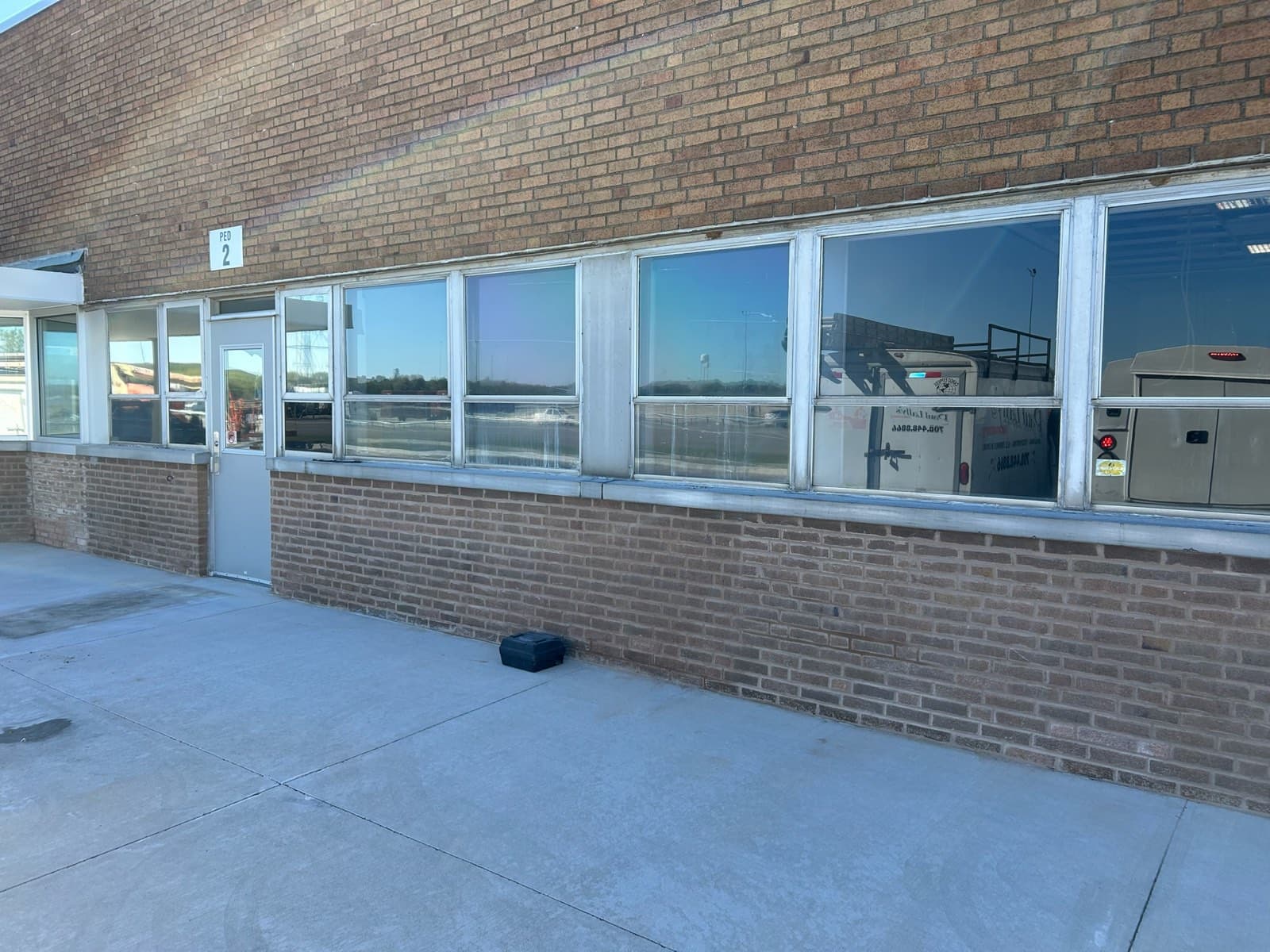
Caulking & Joint Sealant in Bridgeview, IL
Paul Lally's Masonry provides caulking in Bridgeview, IL for commercial, industrial and multi-unit buildings. We cut out failed sealant at masonry control joints, window and door perimeters, storefronts, overhead door jambs and coping joints, then install backer rod and new sealant tooled to shed water. We're family-owned, insured and have served Chicagoland since 1988, from our base in nearby Palos Heights. Call (708) 448-8866 for a free on-site estimate.
Bridgeview is a working village. Along Harlem Avenue and through its industrial areas, the buildings are mostly brick and concrete block: shops, warehouses, office-warehouse buildings, restaurants and storefronts. Every one of those walls has dozens or hundreds of feet of sealant joints, and sealant wears out long before brick or block does.
On a Bridgeview commercial building, the masonry is often fine and the leak is in the caulk. Sealant is the shortest-lived material on the wall.
Where commercial caulking fails in Bridgeview
| Joint | What it does | How it fails | What it causes | |---|---|---|---| | Control joints in block walls | Lets long block walls move | Sealant splits or pulls off one side | Water into the block cores, cracks next to the joint | | Expansion joints in brick | Lets brick expand | Hardened or filled with mortar | Cracked and pushed-out brick | | Window and door perimeters | Seals frame to masonry | Shrinks, cracks, debonds | Leaks at heads and sills, interior damage | | Storefront framing | Seals glass systems to masonry | Sun-baked and split | Leaks into retail space | | Overhead door jambs | Seals frame to block | Torn by impact and movement | Water and drafts at the opening | | Coping and cap joints | Seals joints in the top of the wall | Open joints | Water straight into the wall below |
What caulking is, and why it isn't tuckpointing
Caulking, more properly joint sealant, is a flexible material that fills joints that need to move: between two different materials (a window frame and brick), or between sections of a wall designed to move (a control joint). Tuckpointing is mortar, a rigid material, in the joints between bricks or blocks. They do different jobs, and mixing them up causes problems. Mortar in a moving joint cracks; caulk smeared over mortar joints traps water and looks bad. See our caulking vs tuckpointing guide for more.
Signs your building needs caulking
- Cracked, hard or shrunken sealant that has pulled away from one side.
- Gaps at window and door frames you can see light or daylight through.
- Leaks at window heads, storefronts or along a control joint after rain.
- Control joints filled with mortar or painted over.
- Vertical cracks in block right next to a control joint.
- Old caulk smeared over old caulk from past quick fixes.
Risks of waiting
A failed sealant joint is an open joint. On a block building, water through a control joint goes into the hollow cores and can sit there, causing efflorescence, peeling paint and interior damage. At windows and storefronts, water reaches framing, drywall and finishes. Each winter, water in the joints freezes and widens them. Replacing sealant is maintenance; repairing the damage behind it is a much bigger job.
Our caulking process in Bridgeview
- Survey every joint on the elevations in scope and mark what's failed.
- Cut out the old sealant completely, down to clean masonry and frame surfaces.
- Repair the masonry at the joint where edges are broken or mortar has filled a movement joint.
- Clean and prime joint surfaces as the sealant requires.
- Install backer rod to the right depth so the sealant can stretch properly.
- Install and tool new sealant so it bonds on both sides and sheds water.
- Walk it with you when it's done.
Materials we use
Commercial-grade sealants suited to masonry and to the joint's movement, closed-cell backer rod sized to the joint, primers where the sealant manufacturer calls for them, and matched mortar for any masonry repair at the joints. Color is matched as closely as practical to the masonry or the frames.
What drives the cost of commercial caulking
- Total length of joint and the number of elevations.
- Joint width and depth, and how much old material has to come out.
- Height and access, from ground-level storefronts to lifts on taller walls.
- Sealant type for the joint and the materials it joins.
- Masonry repair needed at damaged joints.
- Working around operations, such as loading docks and open storefronts.
We don't publish prices. You get a written scope after a free on-site estimate.
Caulking in Bridgeview and nearby
Bridgeview's commercial buildings range from older brick storefronts to block industrial buildings from later decades, and many have had little sealant maintenance. Along with sealant, these buildings usually need some masonry work too, so see our Bridgeview commercial masonry restoration and Bridgeview tuckpointing pages. We also replace sealant for building owners in Oak Lawn and Palos Heights, and nearby Burbank.
Why Bridgeview building owners call Paul Lally's Masonry
Paul Lally's Masonry Inc. is a family-owned, insured masonry contractor serving Chicago and the Chicagoland suburbs since 1988 — caulking and joint sealant, tuckpointing, brick repair and replacement, chimney repair and rebuilds, lintel replacement, masonry restoration, and waterproofing for commercial and residential properties. Built on Craftsmanship. Backed by Experience. Free on-site estimates — call (708) 448-8866.
- Since 1988, and our family name is on every job.
- Insured, with certificates of insurance available on request.
- Masonry and sealant together, so the joint and the wall around it are both right.
- Close by in Palos Heights.
For more detail, read why brick walls need expansion and control joints and warehouse and industrial building masonry repair. Related services: caulking and joint sealant, tuckpointing, commercial masonry restoration and waterproofing.
Get your sealant joints checked
Request a free on-site estimate or call (708) 448-8866. Built on Craftsmanship. Backed by Experience.
Caulking & Joint Sealant in Bridgeview, IL — Frequently Asked Questions
Who does commercial caulking in Bridgeview, IL?
Paul Lally's Masonry, a family-owned, insured masonry contractor serving Chicagoland since 1988, replaces sealant joints on commercial, industrial and multi-unit buildings in Bridgeview. Call (708) 448-8866 for a free on-site estimate.
How do I know when building caulk needs replacing?
Look for sealant that is cracked, hard, shrunken, pulled away from one side of the joint, or missing. Press it with a thumb: good sealant is still rubbery. If it's stiff, chalky or split, it has stopped sealing.
Can new caulk go over the old caulk?
No. New sealant won't bond properly to old sealant, and the old material keeps failing underneath. The failed sealant has to be cut out, the joint cleaned, backer rod installed where needed, and new sealant tooled into the joint.
Should a control joint in a block wall be filled with mortar?
No. A control joint is there so the wall can move. Filling it with mortar locks the wall and causes cracks nearby. It should be sealed with a flexible sealant over a backer rod.
How long does masonry sealant last?
It depends on the product, the joint design and how much sun and movement the joint sees. Sealant generally wears out well before the masonry around it, so joints should be checked every few years and replaced as they fail.
How much does caulking cost on a commercial building in Bridgeview?
It depends on the total length of joint, joint width and depth, height and access, the sealant type, and whether masonry repair is needed at the joints. We don't publish prices; you get a written scope after a free on-site estimate.
Caulking & Joint Sealant in Nearby Areas
Other Masonry Services in Bridgeview, IL
Learn more about our caulking & joint sealant services across Chicagoland, or view all service areas.
Free on-site estimates across Chicagoland.