
Parapet Wall Repair · Tinley Park, IL
Parapet Wall Repair in Tinley Park, IL — The Wall Above a Flat Roof
The wall above a flat roof is the only masonry on the building with weather hitting it from both sides. It fails decades ahead of everything else — and nobody can see it.
Quick Answer
Parapet wall repair in Tinley Park, IL is the repointing, rebuilding, and re-coping of the brick wall standing above a flat roofline. Exposed on both faces, it fails decades before the rest of the building and is the most common hidden source of ceiling leaks. Paul Lally's Masonry has rebuilt Chicagoland parapets since 1988 — (708) 448-8866.
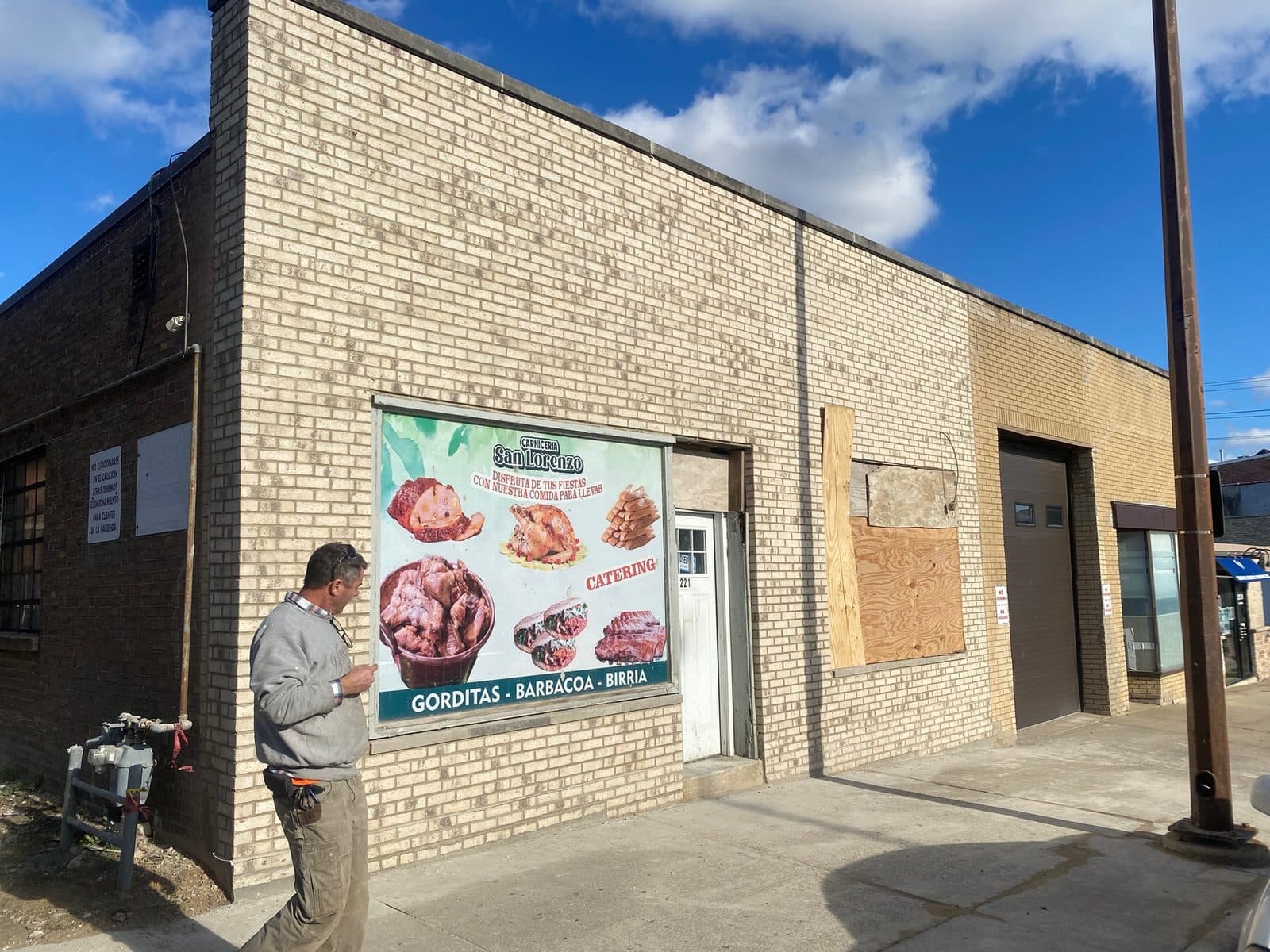
Every flat-roofed building in Tinley Park has a wall that nobody has looked at.
It runs the perimeter of the roof, stands a few feet above the deck, and carries the coping caps. It is the only masonry on the building with weather hitting it from both sides at once — and it is invisible from every point at street level.
Parapet wall repair in Tinley Park, IL is the work of putting that wall right: repointing, rebuilding where necessary, and resetting or replacing the coping. Paul Lally's Masonry has been going up on Chicagoland rooflines since 1988.
Why the parapet fails decades ahead of the rest
A parapet is the portion of exterior wall that continues past the roof deck. In Tinley Park you'll find them on the strip centers and retail buildings along the commercial corridors, on multi-tenant and office property, on buildings near the Metra stations and the amphitheatre district, and on flat-roofed garages and outbuildings.
Its jobs were fire separation between attached units, a safety edge at the roof, and a clean architectural termination.
Here's the mechanism: every other wall on your building is insulated on one side by the building itself. The parapet is not. Outside face, inside face, the top, and the underside of the coping — all exposed. Rain wets it from both directions, and Cook County winter then cycles that saturated brick through freeze and thaw from both faces at once. Absorbed water expands roughly nine percent each time, until the mortar loses its bond and the brick begins shedding its face.
That's why the top four courses above a roofline are so often soft enough to rake out by hand while the storefront elevation below is perfectly sound.
Why your new roof didn't fix the leak
The most common call we get on these buildings.
A roofer replaces what's on the deck. The masonry wall standing above it is a different trade and isn't part of the job. So when coping joints have opened, water stops running off the top of the wall and starts running down inside it — emerging as a ceiling stain in a tenant space well away from where it entered.
New membrane, same stain. The roofer usually did their job correctly.
Signs your Tinley Park parapet needs attention
- Ceiling stains in a tenant space or on the top floor
- Loose, cracked, shifted, or missing coping
- Receding or crumbling mortar joints above the roofline
- Spalling brick — faces flaking or popping off
- A leaning, bowing, or out-of-plumb parapet
- Loose brick you can rock by hand, especially at corners
- Efflorescence — white chalky deposits, water moving through the wall
- Debris on the roof — mortar sand, brick chips, coping fragments at the base of the wall
- Damp or musty smells in an upper unit
A leaning parapet and loose brick above an entrance or parking area are safety items, not maintenance — and on a retail building the exposure is customers.
What waiting costs
Parapet deterioration accelerates rather than creeping. Once the coping joints open, water saturates the full thickness of the wall from the top down, and every freeze cycle after that does more damage than the last.
The repair grows with it. Repointing and resetting sound coping is a contained job. Wait a few winters and the same wall needs its top courses rebuilt, new coping, replacement brick, and flashing coordination — while all that water has been soaking framing, insulation, and tenant finishes.
On a parapet the masonry invoice is rarely the expensive part of waiting. The interior is, and on a tenanted building so is the relationship with whoever's under that ceiling.
How Paul Lally's Masonry repairs a Tinley Park parapet
- Inspect from the roof. Both faces, coping joints, brick soundness, and where water is genuinely entering — often several feet from where the stain shows inside.
- Scope section by section. Corners and the weather-facing side almost always go first. We tell you which sections need rebuilding and which only need repointing, and we don't rebuild sound wall.
- Protect the roof. Membrane protection down before any brick comes off.
- Take down what's unsound, salvage what isn't. Original brick that matches gets reused.
- Rebuild plumb, on the right mortar — chosen to suit the age and hardness of the original masonry.
- Grind and repoint the sound sections, joints cut back to solid mortar, packed in layers, tooled to the existing profile.
- Reset or replace the coping, repointing and sealing the cap joints. This is where cheap parapet jobs quietly fail.
- Coordinate at the flashing line so the work leaves a sound condition rather than burying a problem.
- Clean the roof and leave it as we found it.
Materials
Mortar matched for type, colour, sand, and joint profile — standard Type N on most of Tinley Park's commercial masonry, softer mixes on older brick, Type S only where structure and exposure genuinely call for it.
Mortar should be softer than the brick. A hard modern mix against older brick stops the joint absorbing movement, so the brick face spalls at the joint edges — on the most weather-exposed masonry you own.
Coping in precast concrete, limestone, clay tile, or metal, matched to what's already up there. Salvaged brick where matching matters. Sealants at cap joints specified per condition with backer rod setting bead depth. Everything above the roofline is built to shed water first — on a parapet, water management is the structural strategy.
What drives the cost
- Height and access — how crew and material reach the roof, and whether staging or a lift is needed
- Linear footage and how many sides
- Repair-to-rebuild ratio — repointing is a different scope than relaying courses
- Coping condition — resetting sound caps versus sourcing replacements
- Brick matching and salvage
- Flashing coordination at the roof line
- Operational constraints — keeping storefront entrances and parking usable
- What's found once the top courses come off
We don't quote parapet work from the parking lot. A real estimate means getting on the roof. Paul Lally's Masonry gives a free on-site estimate in writing.
Local context: Tinley Park's flat-roofed stock
Tinley Park grew hard from the 1960s onward, and its flat-roofed masonry clusters where you'd expect: the retail and strip centers along the commercial corridors, multi-tenant and office buildings, light industrial and flex space, the commercial blocks near the Metra stations and the historic downtown, and the buildings that came with the village's later expansion.
Structurally that means a lot of concrete block with brick or stone veneer on the street elevation, exposed block on the sides and rear, wide storefront openings on steel lintels below, and parapets with precast or metal coping above.
That masonry is now thirty to sixty years old — original mortar at the end of its service life, coping that hasn't been reset in decades, and sealant in the cap joints on its second or third lifetime.
Cook County weather supplies the rest: repeated hard freeze-thaw cycling, wind-driven rain, and de-icing salt from the parking lots working the base of the same buildings from below.
Related masonry services in Tinley Park
Parapet work rarely travels alone. It's commonly paired with tuckpointing and repointing on the upper facade, lintel repair and replacement over wide storefront openings, brick replacement for spalled units, caulking and joint sealant at coping and control joints, foundation masonry repair at grade, and masonry waterproofing once the joints are sound. For whole-building scopes see commercial masonry restoration.
Worth reading: our parapet wall repair guide, the two-flat and small apartment building guide, and how to prioritize masonry repairs.
Nearby: tuckpointing in Tinley Park, brick repair in Tinley Park, masonry caulking in Tinley Park, masonry waterproofing in Tinley Park, and parapet wall repair in Oak Lawn.
Get someone on the roof before you replace anything else
Paul Lally's Masonry Inc. is a family-owned, insured masonry contractor serving Chicago and the Chicagoland suburbs since 1988 — tuckpointing, brick repair and replacement, chimney repair and rebuilds, lintel replacement, parapet wall repair, masonry restoration, and waterproofing for residential and commercial properties. Built on Craftsmanship. Backed by Experience.
If your ceiling stain outlived a new roof, we'll go up and show you why — and scope only the sections that actually need rebuilding. Our family name is on every job.
Free on-site estimates — call (708) 448-8866 or request an estimate online.
Parapet Wall Repair in Tinley Park, IL — Frequently Asked Questions
I replaced the roof and it still leaks. Why?
Because the leak is very likely the parapet, not the roof. A roofer replaces the membrane across the deck, but the brick wall standing above that roof is masonry and isn't part of the job — so water entering through open coping joints or failed mortar above the roofline is untouched by a new roof.
What is a parapet and why does mine fail first?
A parapet is the section of exterior wall that continues past the roof deck and stands above a flat roof — common on Tinley Park strip centers, retail buildings, and flat-roofed commercial property. Every other wall is sheltered on one face by the interior; the parapet is exposed on both faces plus the top, so it takes freeze-thaw from all directions.
Does my parapet need repointing or a full rebuild?
If the mortar is soft and receding but the wall is plumb and the brick is sound, repointing and re-coping usually solves it. If a section leans, bows, has lost bond, or the brick is spalling through, that section comes down and gets rebuilt. Parapets are rarely uniformly bad — corners and weather faces go first.
How much does parapet wall repair cost in Tinley Park, IL?
There's no flat rate. Cost is driven by building height and how the crew reaches the work, linear footage involved, whether coping is reset or replaced, how many courses come down and go back up, and what's found once the top courses are off. Paul Lally's Masonry provides a free on-site estimate in writing after inspecting the roofline.
What is coping and does it have to be replaced?
Coping is the cap on top of the parapet — precast concrete, limestone, clay tile, or metal — and its only job is shedding water off the top of the wall. Sound caps can often be reset with their joints repointed and sealed; cracked, spalled, or missing pieces get replaced. Leaving bad coping in place undoes every repair below it.
Is a leaning parapet dangerous?
Yes, and it's treated as urgent rather than routine. A parapet out of plumb, bulging, or dropping loose brick over a sidewalk, entrance, or parking area is a safety issue — and on a retail building that's directly above where customers walk. That one doesn't wait for a budget cycle.
Can you work on the parapet without damaging my roof?
Yes. The roof membrane at the base of the wall gets protected before any brick comes off, and we coordinate carefully where flashing ties into the masonry. If the flashing or counterflashing is already failing we'll tell you, so it can be addressed while the wall is open rather than sealed behind finished work.
Can the work be phased?
Yes, and on commercial property it usually should be. Anything that could fall near an entrance or parking area comes first, then active water entry into tenant space, then the remaining perimeter. We'll give you a scope you can budget against across seasons.
Parapet Wall Repair in Nearby Areas
Other Masonry Services in Tinley Park, IL
Learn more about our parapet wall repair services across Chicagoland, or view all service areas.
Free on-site estimates across Chicagoland.