
Masonry Sealing / Waterproofing · Tinley Park, IL
Masonry Waterproofing in Tinley Park, IL — Sealing Brick, in the Right Order
Sealing brick is cheap insurance when it's done in the right order and genuine harm when it isn't. Here's how Paul Lally's Masonry decides whether your Tinley Park brick should be sealed at all.
Quick Answer
Masonry waterproofing in Tinley Park, IL is the application of a breathable, penetrating silane or siloxane sealer to brick and mortar so liquid water stays out while vapor still escapes. It only works after failing joints are repointed — sealing comes last, never first. Paul Lally's Masonry has sealed Chicagoland brick since 1988. Free estimates: (708) 448-8866.
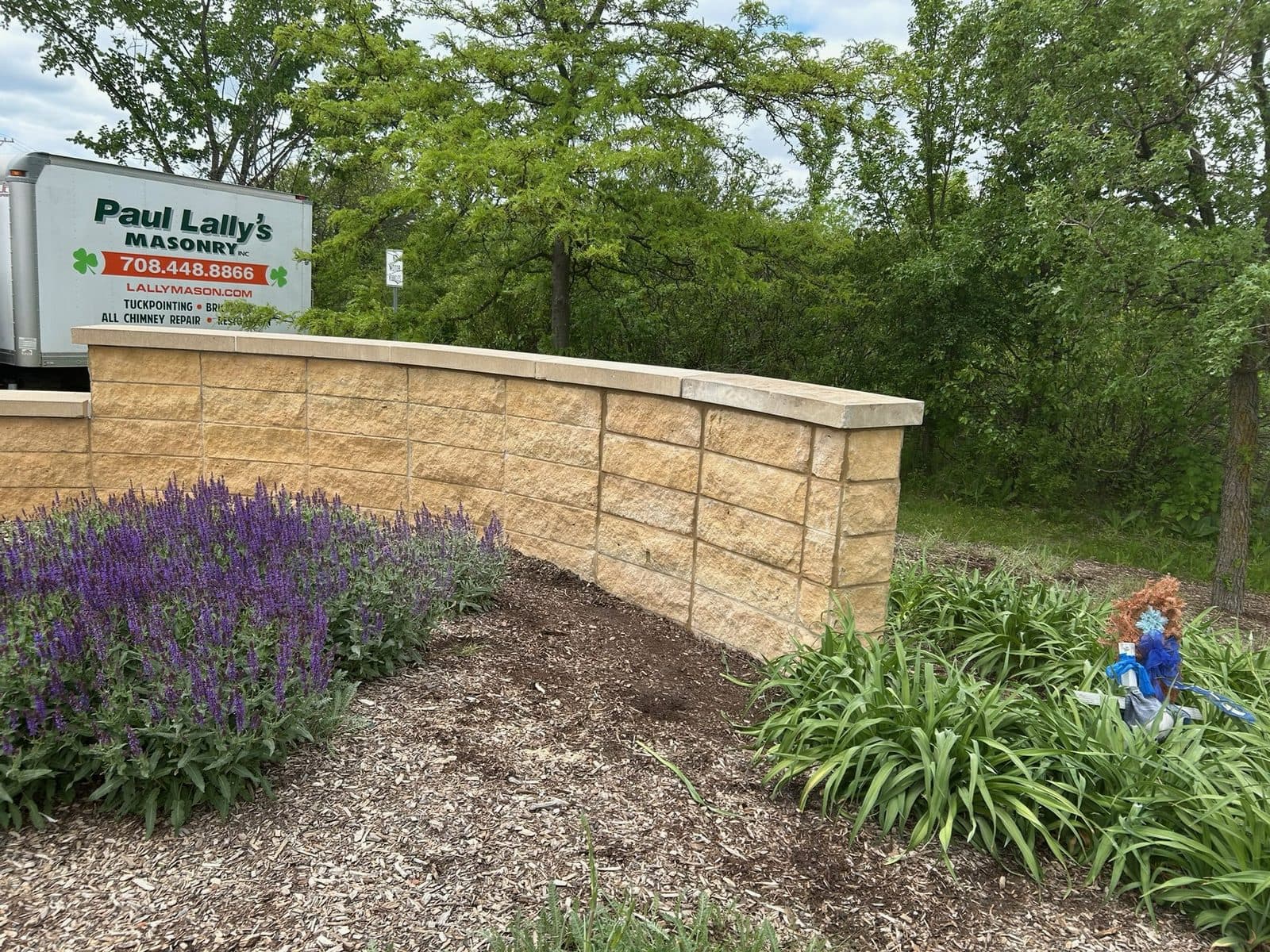
There's a version of masonry waterproofing that adds decades to a brick wall, and a version that destroys it. The difference isn't the product on the truck — it's whether anyone bothered to fix the wall first. Masonry waterproofing in Tinley Park, IL is the last step in a sequence, not a standalone service, and Paul Lally's Masonry has been applying it in that order since 1988.
Here's the short version: seal sound masonry with a breathable penetrating product and you slow freeze-thaw damage for years. Seal failing masonry, or seal it with a film, and you trap water inside a wall that then spalls from the inside out.
What masonry waterproofing actually is
Masonry waterproofing is the application of a clear, penetrating sealer — typically a silane, a siloxane, or a blend of the two — to brick, block, stone, and mortar. It is not paint and it is not a visible coating. It soaks into the pores of the masonry, lines those pores so liquid water beads and runs off, and then disappears. The wall looks exactly as it did, just dry.
The property that matters most is vapor permeability. Masonry always carries some moisture — from inside the house, from the ground, from water finding a way in somewhere else. That moisture has to be able to leave as vapor. A proper sealer blocks liquid water coming in while letting vapor pass out.
Silane, siloxane, and why we don't use one product for every wall
These are the two workhorse water-repellent chemistries, and they differ mainly in molecule size:
- Silanes have smaller molecules, so they penetrate deeply — well suited to denser, harder, less absorbent masonry.
- Siloxanes have larger molecules that perform well on more porous, absorbent units, sitting slightly nearer the surface.
- Blends aim to get useful behavior across a range of substrates.
Which one belongs on your wall depends on how absorbent your brick actually is — something we assess on site rather than assume. A product that's excellent on a hard modern brick can underperform on soft, thirsty older masonry, and vice versa.
The rule that decides everything: repair first, seal last
This is where most waterproofing jobs go wrong, so we'll be blunt.
The overwhelming majority of water entering a brick wall comes through failed mortar joints — not through the face of the brick. A joint that's soft, receded, or cracked is an open channel. Sealer applied over that joint does not close the channel. It coats it, conceals it, and lets water keep running behind while the wall looks freshly maintained.
So the order is not negotiable:
- Fix the water paths — repoint failing joints, replace spalled brick, address the lintel, chimney crown, coping, and the caulking at window heads.
- Fix the drainage — gutters clear, downspouts discharging well away, grade sloping away from the wall.
- Clean and let the masonry dry.
- Then seal — if sealing is warranted at all.
If a contractor offers to seal a wall with visibly failing joints and never raises repointing, that tells you what the rest of the work will be like.
Signs your Tinley Park masonry would benefit from sealing
- Efflorescence — white, chalky salt deposits on the brick face
- Early spalling — brick faces beginning to flake, powder, or pop
- Damp or musty interior walls on an exterior-facing room
- Dark, slow-drying patches on the wall for days after rain
- Water stains near a chimney chase or above windows
- A chimney above the roofline that's never been sealed — the most exposed masonry you own
- Heavily weather-exposed elevations, typically north and west
- A wall that's just been repointed — sealing after tuckpointing protects the investment you just made
What waiting costs
Unsealed, absorbent brick in Cook County goes through the same destructive cycle every winter: water soaks in, freezes, expands roughly nine percent, and pushes the hard fired face off the brick. That's spalling, and once a brick loses its face it drinks water faster — so the next winter does more damage than the last.
Sealing doesn't stop water that's entering through failed joints. But on masonry that's already sound, it meaningfully slows the absorption that drives spalling, and it's among the least expensive things you can do for a brick house.
How Paul Lally's Masonry waterproofs a Tinley Park home
- Inspect the whole wall system — joints, brick condition, sills, lintels, chimney, coping, grade, and gutters. Not just the surface.
- Tell you honestly whether sealing is the right move, and what has to happen first. Sometimes the answer is that your wall doesn't need it.
- Repoint and repair what's failing.
- Test the brick's absorbency to inform which sealer chemistry suits it.
- Clean the masonry — efflorescence, dirt, biological growth, and old residue removed so the sealer can actually penetrate.
- Let the wall dry. This step gets its own time. Sealer on damp masonry doesn't penetrate and doesn't perform.
- Protect surroundings — windows, trim, landscaping, walks, and drives.
- Apply at the correct coverage rate, typically in a saturating wet-on-wet application so the product goes into the masonry rather than sitting on it.
- Cure, inspect, and walk the finished work with you, with a realistic re-seal interval.
Materials
Breathable, penetrating silane and siloxane-based masonry sealers — clear, vapor-permeable, invisible once cured, and chosen to match the porosity of your brick. Mortar for any repointing matched for type, color, sand, and joint profile: standard Type N on most residential work, softer mixes on older soft brick, Type S only where structure and exposure genuinely call for it.
Never a film-forming coating. Never masonry paint. Never sealer over joints we haven't made sound first.
What drives the cost of masonry waterproofing
- Square footage and how many elevations are in scope
- Surface prep — how much cleaning, and whether efflorescence or biological growth has to come off
- Height and access — a second-story elevation or a chimney above the roofline needs ladders or staging
- Repointing scope required before sealing
- Brick porosity — softer, thirstier brick absorbs more product
- Site conditions — landscaping, decks, tight side yards, and hardscape to protect
Paul Lally's Masonry gives a free on-site estimate in writing, and we'll say plainly if we think sealing isn't what your wall needs.
Local context: Tinley Park brick and Cook County weather
Tinley Park grew hard from the 1960s through the 1990s and beyond, and its masonry reflects that: brick ranches and split-levels in the older sections, then large stretches of subdivision housing with brick-veneer fronts, brick chimneys, and stone accents over frame construction, plus commercial and retail masonry along the corridors and near the Metra stations.
Two things follow. First, that brick is now thirty to sixty years old — mature enough that original mortar joints are reaching the end of their service life, which is exactly the condition where sealing-before-repointing does damage. Second, most of it is brick veneer, and veneer walls depend on the drainage cavity behind the brick to work. That makes trapped moisture a particular hazard in this housing stock and makes the choice of a breathable product especially important. Our guide to brick veneer vs. solid masonry explains why the wall type changes the approach.
Cook County weather does the rest: repeated hard freeze-thaw cycling, wet springs, and wind-driven rain that pushes water at walls horizontally. The failures cluster on north and west elevations, on chimneys exposed on four sides above the roof, and in the bottom courses where snowpack and splashback sit against the wall.
Related masonry services in Tinley Park
Waterproofing is the finish line, not the starting line. Most Tinley Park projects begin with tuckpointing and repointing, and often include brick repair, brick replacement for spalled units, chimney repair and rebuilds, lintel repair and replacement, limestone and sill repair, caulking and joint sealant, and foundation masonry repair where water is reaching below grade. For whole-house scopes, see residential masonry restoration.
Worth reading: is masonry waterproofing worth it and do I need waterproofing after tuckpointing. Nearby work: tuckpointing in Tinley Park, brick repair in Tinley Park, and masonry waterproofing in Homer Glen.
Find out whether your brick should be sealed at all
Paul Lally's Masonry Inc. is a family-owned, insured masonry contractor serving Chicago and the Chicagoland suburbs since 1988 — tuckpointing, brick repair and replacement, chimney repair and rebuilds, lintel replacement, masonry restoration, and waterproofing for residential and commercial properties. Built on Craftsmanship. Backed by Experience.
We'll look at the whole wall, tell you what's actually letting water in, and recommend sealing only when it will genuinely help — in the right order. Our family name is on every job.
Free on-site estimates — call (708) 448-8866 or request an estimate online.
Masonry Sealing / Waterproofing in Tinley Park, IL — Frequently Asked Questions
Does my Tinley Park brick actually need to be sealed?
Not every wall does, and we'll tell you when it doesn't. Sealing earns its keep on brick showing efflorescence, early spalling, damp interior walls, or heavy weather exposure, and on chimneys, which take rain from four sides. If your mortar is sound and the wall stays dry, sealing is optional insurance rather than a repair.
Do you have to tuckpoint before waterproofing?
If the mortar joints are failing, yes — always. Most of the water entering a brick wall comes through failed joints rather than through the face of the brick, so sealing first just coats the leak path and hides it. Paul Lally's Masonry repoints what's failing, then seals, so the wall is genuinely watertight instead of merely coated.
What's the difference between a breathable sealer and a waterproofing paint?
A breathable penetrating sealer soaks into the pores of the brick, blocks liquid water, and lets trapped vapor escape — the brick looks unchanged. A film-forming paint or coating sits on the surface and traps moisture inside the wall, which accelerates spalling in our freeze-thaw climate. We use penetrating sealers and never a glossy film.
What's the difference between silane and siloxane sealers?
They're closely related water-repellent chemistries that differ mainly in molecule size. Silanes are smaller and penetrate dense masonry more deeply, while siloxanes are larger and work well on more porous, absorbent units — and many products blend both. The right choice depends on how porous your brick is, which is something we assess on site rather than guessing.
How much does masonry waterproofing cost in Tinley Park, IL?
There's no flat rate. Cost depends on the square footage of wall, how many elevations are involved, how much cleaning and efflorescence removal the surface needs, height and access, brick porosity, and whether repointing has to happen first. Paul Lally's Masonry provides a free on-site estimate in writing.
How long should I wait to seal after tuckpointing?
Give the new mortar time to cure fully first — a matter of weeks rather than days, and longer in cool weather. Sealing green mortar traps moisture in a curing joint and can affect both the cure and the sealer's performance. We'll give you a specific window based on the mortar used and the conditions it cured in.
How often does brick sealer need to be reapplied?
A quality penetrating sealer on properly prepped brick protects for several years before it needs renewing, with sun exposure, wind-driven rain, and how absorbent the brick is all moving that interval. South and west elevations wear first. We'll recommend a realistic re-seal schedule for your specific walls at the estimate.
When is the best time of year to seal brick in Tinley Park?
Late spring through early fall, on dry masonry, in moderate temperatures. Sealer needs the brick genuinely dry to penetrate and needs time to cure before freezing weather arrives, so we won't apply it to a wall still holding moisture just to fit a schedule. A wall sealed wet is a wall sealed badly.
Masonry Sealing / Waterproofing in Nearby Areas
Other Masonry Services in Tinley Park, IL
Learn more about our masonry sealing / waterproofing services across Chicagoland, or view all service areas.
Free on-site estimates across Chicagoland.