
Foundation Masonry Repair · Chicago Ridge, IL
Foundation Masonry Repair in Chicago Ridge, IL — Deterioration and Movement Are Not the Same Problem
The question that sorts a foundation problem is not how bad it looks. It is whether the wall is still straight.
Quick Answer
Foundation masonry repair in Chicago Ridge, IL is the repointing, rebuilding, unit replacement and parging of deteriorated block, brick or stone foundation walls — a masonry repair, distinct from structural underpinning or interior drain tile. Paul Lally's Masonry has served Chicagoland since 1988 — family-owned, insured, free on-site estimates, (708) 448-8866.
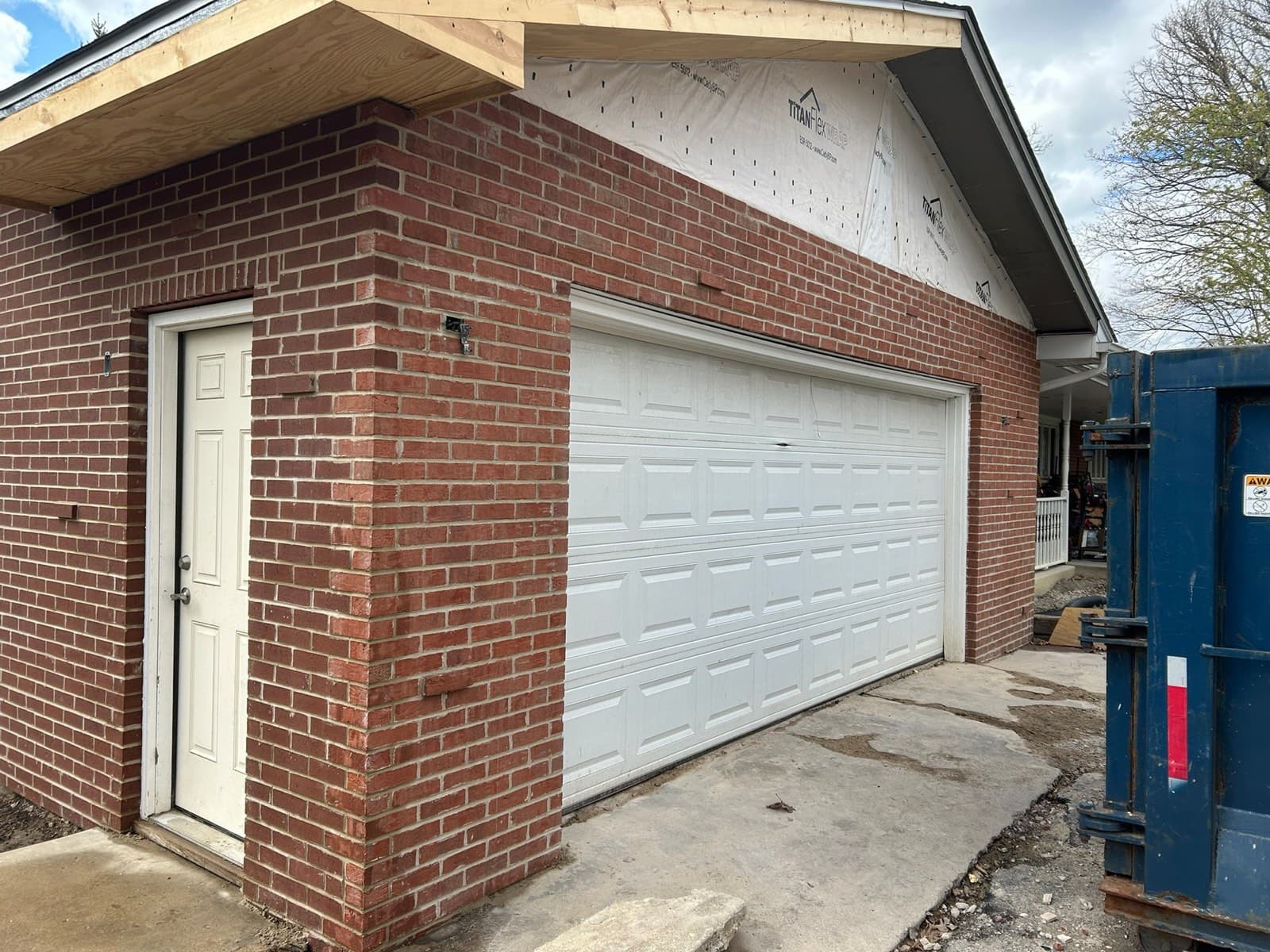
There is one question that sorts almost every foundation call we take, and it is not how bad the wall looks.
Is the wall still straight?
A foundation wall that is plumb and in line, with eroded joints, sandy mortar, spalled units or missing material, has a deterioration problem. Mortar has a service life, and on a wall laid in 1958 it has reached the end of it. That is masonry work.
A wall that is bowing, bulging, stepped out of line, showing a long horizontal crack, or cracking progressively wider over months has a movement problem. Movement is structural, and the honest answer is that a structural engineer should look at it before any mason quotes anything.
Foundation masonry repair in Chicago Ridge, IL is the first of those. Paul Lally's Masonry Inc. is a family-owned, insured masonry contractor serving Chicago and the Chicagoland suburbs since 1988 — tuckpointing, brick repair and replacement, chimney repair and rebuilds, lintel replacement, masonry restoration, and waterproofing for residential and commercial properties. Built on Craftsmanship. Backed by Experience. Free on-site estimates — call (708) 448-8866.
Three different trades get called "foundation repair"
They solve different problems, and confusing them is how people spend a great deal of money on the wrong thing.
Structural underpinning and piering. For a foundation settling because the soil beneath it will not carry the load. Piers are driven or drilled to competent bearing and the foundation transferred onto them. Where it is genuinely needed, nothing substitutes.
Interior drainage and waterproofing. Drain tile, sump systems, vapour barriers. For managing water that is already reaching the basement. It manages symptoms; it does not repair masonry.
Foundation masonry repair. Restoring the wall itself — repointing eroded joints, replacing failed units, rebuilding deteriorated sections, parging over sound masonry. For walls whose material has deteriorated but whose position has not changed.
Most Chicago Ridge foundations that homeowners worry about need the third one.
What Chicago Ridge foundations are made of
Chicago Ridge was built out heavily through the post-war decades along the Ridgeland Avenue, 95th Street and Southwest Highway corridors, and the housing reflects it: brick ranches, Cape Cods, bungalow-style homes, split-levels, and a layer of small brick apartment buildings and two-flats.
Concrete block dominates. It fails at the joints, cracks at control joints, spalls at the base where splash and road salt collect, and produces the classic long horizontal crack when it is genuinely being pushed.
Solid brick appears on the older end of the stock. Brick foundations spall and lose joints, particularly in the courses nearest grade.
Poured concrete on the newer construction. It cracks rather than erodes, which is a different conversation.
Knowing which you have determines the mortar, the technique, and whether a mason is even the right trade.
Signs of a foundation masonry problem
- Sand or mortar dust on the basement floor along the base of the wall
- Joints you can rake out with a screwdriver — soft, receded or missing
- Spalling or flaking on block or brick, especially near grade
- Step cracking through the mortar joints
- Efflorescence — white mineral bloom — meaning water is actively moving through the wall
- Daylight or a draft through a joint
- Damp patches that reappear on the same section after rain
- Failing parge coat blistering or falling off in sheets
And the ones that mean call an engineer first: bowing, bulging, a long horizontal crack running with the coursing, courses sheared out of line, or upstairs doors going out of square.
Local conditions that make it worse
Two things work against foundations here in particular.
Grade and drainage. Decades of added mulch, landscaping and regrading have raised soil against a great many foundations in this area, and a downspout discharging at the wall does the rest. A foundation wall that never dries deteriorates on a much faster clock than one that dries between rains. We look at grade, downspouts, splash and window wells as part of the assessment, because they determine how long the repair lasts.
Road salt at grade. The bottom courses of every wall, step and stoop take salt every winter, and it is brutal on block and on soft brick alike.
How we approach the work
- Assess the wall type and its condition, inside and — where relevant — outside.
- Establish deterioration versus movement, and say so plainly.
- Repoint deteriorated joints with mortar matched in type, softness, colour and profile.
- Replace failed units — block, brick or stone — matched to what is there.
- Rebuild sections that have gone past repair.
- Parge over sound masonry where a continuous protective surface is appropriate.
- Address the water — grade, downspouts, window wells, splash — because the repair only lasts as long as the conditions allow.
What drives the cost
Wall type and how much of it is involved. Linear footage of repointing versus square footage of rebuilding. Whether work is interior, exterior or both — exterior foundation work may require excavation, which changes the job substantially. Access, headroom, and whether the basement is finished. Whether units have to be sourced and matched.
We publish no prices, because a number that means anything requires seeing the wall. Free on-site estimate, in writing — call (708) 448-8866.
What we will tell you honestly
That some of what looks alarming is cosmetic. That some of what looks minor is not. And where a wall needs a structural engineer before it needs a mason, we will say so rather than quoting around it — our name is on every job, and the wrong repair on a moving wall is worse than no repair at all.
Serving Chicago Ridge and the surrounding southwest suburbs
We work throughout Chicago Ridge and the communities around it — Oak Lawn, Worth, Bridgeview, Burbank, Hickory Hills and Palos Heights. Related services: foundation masonry repair, tuckpointing and repointing, brick repair, and masonry sealing and waterproofing.
For more on what your foundation is built from, see identifying your foundation masonry, and for the interior side, parging and interior basement walls.
Get a straight answer about the wall
Family-owned since 1988, insured, free on-site estimates.
Get a free on-site estimate — or call (708) 448-8866. Built on Craftsmanship. Backed by Experience.
Foundation Masonry Repair in Chicago Ridge, IL — Frequently Asked Questions
How much does foundation masonry repair cost in Chicago Ridge, IL?
It depends on the wall type, linear footage involved, how much is repointing versus rebuilding, whether exterior excavation is needed, and whether units must be matched. Paul Lally's Masonry provides a free on-site estimate in writing.
Is my foundation problem a masonry repair or a structural one?
The dividing question is whether the wall is still straight. Plumb and true with eroded joints, missing mortar or spalled units is a masonry repair. Bowing, bulging, sheared out of line, or actively moving is a structural question that needs an engineer before a mason.
Why is there sand on my basement floor?
Mortar is leaving the wall. The joints are eroding and depositing their sand content on the floor below. On a wall that is still plumb that is deterioration and a repointing conversation — if the wall is also out of line, that is movement and a different one.
Is a horizontal crack in a block foundation serious?
It can be. A long horizontal crack running with the coursing on a block wall usually means the wall is being pushed rather than simply deteriorating, and that should be looked at by a structural engineer before any masonry work is quoted.
Will repointing the foundation stop my basement leaking?
It helps considerably where open joints are the water path, but basement water is usually a drainage problem as much as a masonry one. Grade, downspouts and window wells matter, and a mason who ignores them is treating half the issue.
What is parging?
A thin cementitious coat troweled over a block, brick or stone foundation to give it a continuous protective surface. It protects the joints and units beneath — it is not a waterproofing membrane, and it only performs over masonry that is already sound.
Do you need to dig up the outside of the house?
Not always. A great deal of foundation masonry work is done from inside where the wall face is exposed and accessible. Exterior excavation comes into it when the damage, the water path or the wall type requires working the outside face.
What are Chicago Ridge foundations usually made of?
Mostly concrete block on the post-war housing stock, with brick and occasionally poured concrete on the older and newer ends. Knowing which you have determines the mortar, the technique and whether the repair is even a masonry repair at all.
Foundation Masonry Repair in Nearby Areas
Other Masonry Services in Chicago Ridge, IL
Learn more about our foundation masonry repair services across Chicagoland, or view all service areas.
Free on-site estimates across Chicagoland.