
Foundation Masonry Repair · Chicago, IL
Foundation Masonry Repair in Chicago, IL — Masonry Work, Not Foundation Underpinning
Search 'foundation repair Chicago' and you'll mostly find underpinning and waterproofing specialists. That's a different trade from what most crumbling foundation walls actually need.
Quick Answer
Foundation masonry repair in Chicago, IL is the repointing, parging, and rebuilding of deteriorated brick and block at and just above grade. It addresses masonry wearing out — not structural settlement, which needs a licensed structural engineer first. Paul Lally's Masonry has repaired Chicago foundation masonry since 1988. Free estimates: (708) 448-8866.
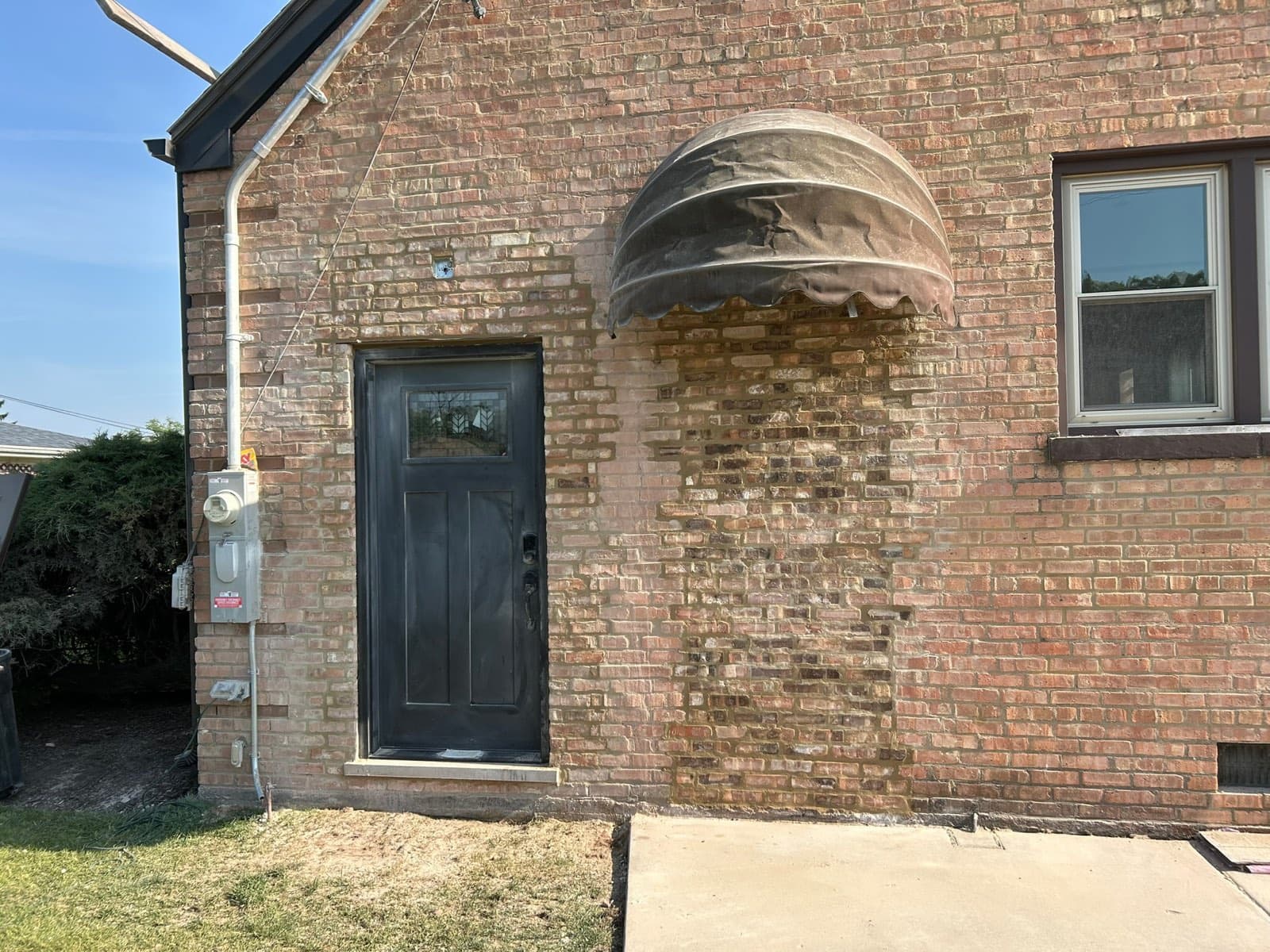
Search "foundation repair Chicago" and you'll get underpinning contractors, piering specialists, and basement waterproofing companies. All legitimate trades — and most of them are not what a crumbling foundation wall actually needs.
Foundation masonry repair in Chicago, IL is a different job: repointing, parging, and rebuilding the brick and block at and just above grade that has simply worn out. Paul Lally's Masonry has been doing that work in the city since 1988, and the first thing we do on any foundation call is establish which of the two problems you actually have.
Deterioration or movement? This distinction is the whole page
Plenty of contractors blur these together. They shouldn't be blurred.
Masonry deterioration — the material wearing out:
- Mortar joints crumbling, receding, going soft and sandy
- Block or brick faces spalling — flaking, powdering, popping off
- Parging cracking and sheeting away from the wall
- Sections that have lost their bond
Through all of it, the wall is still straight, still plumb, still in plane. It's doing its structural job. The surface and the joints have reached the end of their service life. That's masonry work, and it's ours.
Structural movement — the wall going somewhere:
- Bowing or bulging inward
- Leaning out of plumb
- Horizontal cracking across the wall
- A crack where one side sits proud of the other
- Sticking doors, sloping floors, fresh plaster cracks upstairs
That needs a licensed structural engineer first — to determine the cause and specify the remedy — before any masonry work is worth doing. We'll say that plainly at the estimate rather than sell you a repair that won't hold, and we're glad to do the masonry portion once there's a plan.
A wall that's still moving will reopen whatever we build. That's not caution; it's the reason the sequence matters. See mason or structural engineer.
Why grade-level masonry fails in this city
Everything about the bottom of a Chicago wall is hostile:
- Splashback. Rain hits the sidewalk, gangway, or alley apron and throws water straight back at the base of the wall.
- Snowpack. Shoveled and plowed snow gets piled against the foundation and melts there for weeks.
- De-icing salt. Municipal salting plus every sidewalk and stoop in the neighborhood. Salt draws into porous block and mortar, then crystallizes and expands as it dries — a destructive cycle that works year-round, not only in freezing weather.
- Clay soil. Chicago's heavy clay holds moisture against the wall for months at a time.
- Gangway drainage. On a narrow city lot, the space between buildings often drains poorly or not at all, and the wall stands in it.
- Freeze-thaw. Absorbed water freezes, expands roughly nine percent, and pries the masonry apart from inside — and grade-level masonry is the wettest on the building, so it cycles hardest.
Signs your Chicago foundation masonry needs repair
- Crumbling, sandy, receding mortar joints you can dig out by hand
- Spalling block or brick faces — flaking, powdering, popped off
- Parging cracked, bubbled, or sheeting away
- White efflorescence on the foundation wall, inside or out
- A damp or musty basement or crawl space, or staining along the base of the wall
- Missing chunks at corners, at the stoop, and along the gangway
- Debris — mortar sand or block fragments collecting at the base
- Deterioration concentrated beside pavement — the salt signature
- Water entering at the joint between the floor slab and the wall
What waiting costs
Grade-level deterioration accelerates for a simple reason: every bit of material that fails exposes more absorbent surface to the same water. A joint that's receded a quarter inch collects and holds water in a way a sound joint never does. Parging that's separated becomes a reservoir pressed against the block.
The scope grows accordingly. Repointing and re-parging a deteriorated section is routine maintenance. Left long enough, the same wall needs courses rebuilt, units replaced, and — once mortar has receded far enough that the wall is losing bearing at its base — a considerably more involved repair.
How Paul Lally's Masonry repairs foundation masonry
- Establish deterioration versus movement first. Everything downstream depends on this, and if it's movement we'll tell you to call an engineer.
- Find the water. Grade, downspout discharge, gangway drainage, splashback, where snow gets piled, where salt is applied. Repairing masonry while the water source remains is temporary work.
- Remove what's failed. Deteriorated parging comes off back to sound material — it does not get patched over. Failed mortar is cut back to solid.
- Rebuild or replace courses and units where masonry has spalled through or lost bond.
- Repoint with matched mortar, cut to proper depth and packed in layers rather than skimmed.
- Re-parge where appropriate, over properly prepped masonry so it bonds instead of trapping water behind itself.
- Address drainage, or tell you plainly what needs to change.
- Clean up and walk it with you, with a straight answer on what to watch.
Materials
Mortar matched for type, color, and sand — standard Type N on much of the work, Type S where the greater compressive strength genuinely suits below-grade and high-exposure conditions, and softer, lime-rich mixes on the city's pre-1930s masonry, where hard modern mortar would spall the soft brick.
Foundation work is one of the few places where Type S is often the right call rather than an overreach — but it's decided per wall, not applied as a default, and the governing rule still holds: mortar softer than the masonry it sits against, so the joint wears out instead of the block or brick face.
Concrete block and brick matched to the existing units. Parging mixes appropriate to the substrate. Where sealing is warranted, only breathable, penetrating products — never a film-forming coating, which on a foundation wall traps moisture exactly where you least want it held.
What drives the cost
- Linear footage of wall involved, and how many sides
- Repair type — repointing, parging, or rebuilding courses
- Depth of deterioration, and whether it runs meaningfully below grade
- Access — gangway width, shared lot lines, alley-only rear access, street parking restrictions
- Excavation, where genuinely required
- Drainage corrections needed before or alongside the masonry
- Unit matching where block or brick must be replaced
- What's found once failed parging comes off — the honest variable here
We don't quote foundation masonry from the sidewalk, and you should be cautious of any figure offered before someone has looked at the wall and the grade around it. Paul Lally's Masonry gives a free on-site estimate in writing.
Local context: Chicago foundations at grade
The city's older stock — bungalows, greystones, two-flats, three-flats, and storefronts built roughly 1890–1930 — sits on foundations of brick, stone, or early block, with a water table course near grade on greystones and a base course of common brick on most everything else. That masonry is a hundred-plus years into service.
Later construction adds concrete block foundations with parging, on the same clay and in the same climate.
Three things concentrate the damage:
The gangway. On a standard Chicago lot the space between buildings is narrow, often shared, frequently drains poorly, and never gets inspected. The foundation masonry along it is routinely the worst on the building.
The public way. Sidewalks, stoops, and the street get salted every winter, and all of it splashes and wicks into the base of the wall. Chicago's salt load is genuinely among the most aggressive things acting on its masonry.
Snow storage. On a tight lot, shoveled snow has nowhere to go but against a wall.
The damage clusters exactly where you'd predict: along the gangway, at the front stoop and steps, beside the alley apron, under downspouts, and on the north side where snow lingers and sun never reaches.
Related masonry services in Chicago
Foundation work often accompanies tuckpointing and repointing higher on the wall, brick repair and brick replacement, limestone and sill repair where a water table course is failing, caulking and joint sealant, and masonry waterproofing once the masonry is sound. For whole-building scopes, residential or commercial masonry restoration.
Worth reading: foundation masonry repair in Chicago, step cracks in brick walls, mason or structural engineer, and protecting masonry through winter.
Nearby: brick repair in Chicago, tuckpointing in Chicago, limestone and sill repair in Chicago, foundation masonry repair in Oak Lawn, and foundation masonry repair in Bridgeview.
Get a straight answer about what's happening at grade
Paul Lally's Masonry Inc. is a family-owned, insured masonry contractor serving Chicago and the Chicagoland suburbs since 1988 — tuckpointing, brick repair and replacement, chimney repair and rebuilds, lintel replacement, foundation masonry repair, masonry restoration, and waterproofing for residential and commercial properties. Built on Craftsmanship. Backed by Experience.
We'll tell you whether you're looking at masonry wearing out or a wall that's moving — and if it's the second, we'll point you to an engineer before you spend anything with us. Our family name is on every job.
Free on-site estimates — call (708) 448-8866 or request an estimate online.
Foundation Masonry Repair in Chicago, IL — Frequently Asked Questions
Is foundation masonry repair the same as foundation repair?
No, and the difference matters. Foundation masonry repair fixes masonry that's wearing out — crumbling mortar, spalling block, failed parging — on a wall that's still straight and in plane. Structural foundation repair addresses a wall or footing that's moving, which is engineering work and a different trade entirely.
How do I know which one I need?
Look at whether the wall is deteriorating or moving. Crumbling, sandy mortar and flaking block faces on a wall that's still plumb is masonry. Bowing, leaning, horizontal cracking, or a crack where one side sits proud of the other is movement — and that needs a licensed structural engineer before any masonry work makes sense.
How much does foundation masonry repair cost in Chicago, IL?
It depends on how much of the wall is involved, whether the work is repointing, parging, or rebuilding courses, access on a tight city lot, and whether drainage has to be corrected first. A deteriorated section of base course is very different from a full foundation wall. Paul Lally's Masonry provides a free on-site estimate in writing.
Why is the masonry at the bottom of my building crumbling?
Because that's where the water and salt concentrate. Snowmelt and rain splash off sidewalks and gangways onto the wall, plowed snow sits against it for weeks, de-icing salt soaks into the masonry, and Chicago's heavy clay soil holds moisture against it for months. Freeze-thaw then expands all of that from the inside.
What is parging and should mine be patched or removed?
Parging is the thin cement coat applied over foundation block or brick to protect it. Once it cracks, bubbles, or sheets away, water gets behind it and sits against the masonry — often doing more harm than no parging at all. Failed parging gets removed back to sound material rather than patched over.
Will repairing the masonry stop my basement leaking?
Sometimes. Repairing failed mortar and parging closes one path water uses, but a wet Chicago basement often also involves grade, downspout discharge, gangway drainage, or below-grade issues. We'll tell you honestly at the estimate whether masonry repair addresses your problem or whether drainage has to come first.
Do you have to excavate?
Not usually. A great deal of foundation masonry work is at and just above grade and is reached without digging — which matters on a Chicago lot where the gangway may be a few feet wide and shared. Excavation only enters the picture when deterioration runs meaningfully below grade or footing drainage is part of the fix.
Does Chicago's clay soil affect foundation masonry?
It does, in two ways. Heavy clay holds moisture against the wall for months, keeping grade-level masonry wet far longer than sandier ground would, and it swells and shrinks seasonally, which contributes to the settlement cracking common across the city's older stock. The moisture is the part that drives masonry deterioration.
Foundation Masonry Repair in Nearby Areas
Other Masonry Services in Chicago, IL
Learn more about our foundation masonry repair services across Chicagoland, or view all service areas.
Free on-site estimates across Chicagoland.