
Foundation Masonry Repair · Evergreen Park, IL
Foundation Masonry Repair in Evergreen Park, IL — Where the Brick Meets the Clay
On an Evergreen Park bungalow, the eighteen inches of wall between the lawn and the first course of face brick does more work, and gets less attention, than any other part of the house.
Quick Answer
Foundation masonry repair in Evergreen Park, IL addresses cracked poured and block foundation walls, failed parging, step cracks, deteriorated window wells and areaways, and seepage at grade on 1920s–1950s brick bungalows, Georgians and Cape Cods. Paul Lally's Masonry, family-owned and insured since 1988, gives free on-site estimates — (708) 448-8866.
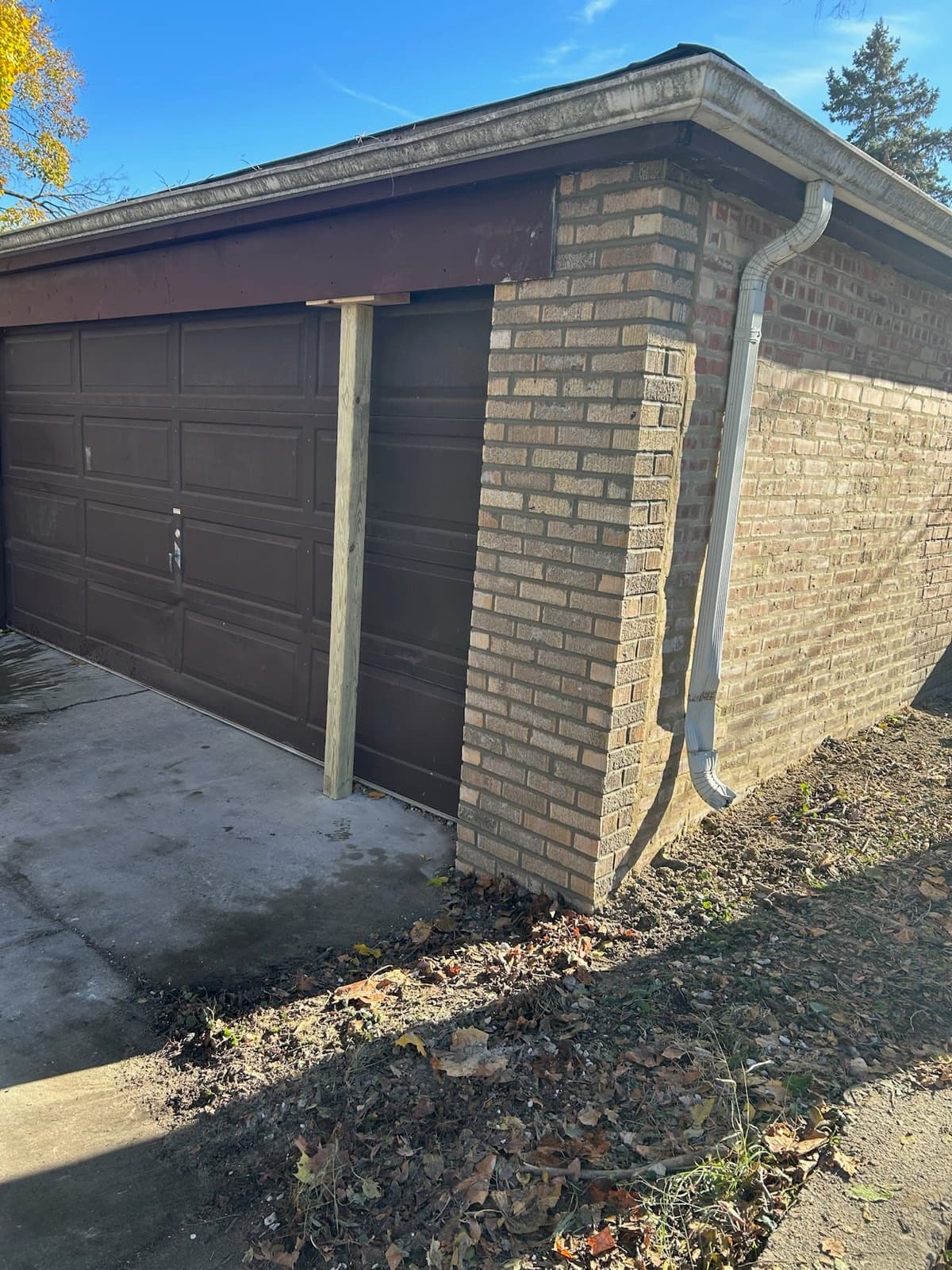
Foundation masonry repair in Evergreen Park, IL fixes the part of the house where the brick meets the ground — cracked poured or block foundation walls, failed parging, step cracks, deteriorated window wells and the seepage that follows. Paul Lally's Masonry repairs foundation masonry on Evergreen Park bungalows, Georgians and Cape Cods and will tell you honestly whether you need a mason or an engineer. Free on-site estimates: (708) 448-8866.
On an Evergreen Park home, the strip of wall between the lawn and the first course of face brick does more work and gets less attention than anything else on the house. It holds back wet clay, sheds whatever the gutters miss, and freezes every winter at the exact line where the soil stops insulating it.
Paul Lally's Masonry Inc. is a family-owned, insured masonry contractor serving Chicago and the Chicagoland suburbs since 1988 — tuckpointing, brick repair and replacement, chimney repair and rebuilds, lintel replacement, masonry restoration, and waterproofing for residential and commercial properties. Built on Craftsmanship. Backed by Experience. Free on-site estimates — call (708) 448-8866.
Two problems that look the same
Almost every foundation call starts with a crack or a damp basement. Underneath, it is one of two things.
Deterioration. The masonry itself is wearing out — parging delaminating, block faces spalling, mortar eroded at grade, brick above the foundation soaked and crumbling. The wall is where it was built; it is just losing material. This is mason's work.
Movement. The wall has shifted — bowed inward under soil pressure, settled at a corner, or cracked with one side offset from the other. Masonry repair is part of the fix, but the cause is structural, and the first step is understanding why it moved.
Telling those apart is the most valuable thing an estimate does. Our guide on whether you need a mason or a structural engineer goes through the distinction.
Evergreen Park houses and what is under them
Evergreen Park was built out mostly between the 1920s and the 1950s — Chicago-style brick bungalows, brick Georgians, and later Cape Cods and ranches on tightly platted lots.
Most of these homes sit on poured concrete foundations, with a band of exposed concrete above grade that was parged or simply left bare, and face brick starting just above. Some, particularly later and smaller houses and additions, sit on concrete block. Many have window wells at basement windows and areaways — the masonry stairwells down to a basement door — that are now seventy to a hundred years old.
The ground is the other half of the story. This part of Cook County sits on dense clay that holds water, swells when wet and shrinks when dry. Add downspouts that discharge at the foundation and grading that has settled back toward the house over decades, and the soil against the wall stays saturated most of the year.
Signs your foundation masonry needs repair
- Parging cracked, hollow-sounding or falling away in sheets
- Step cracks following the mortar joints of a block wall
- Vertical cracks in poured walls that weep water or leave mineral deposits
- Horizontal cracks or an inward bow in a basement wall
- Spalled or crumbling brick in the first few courses above grade
- Water or efflorescence on the inside of the basement wall, especially after rain
- Window wells full of standing water, or separated from the wall
- Areaway walls leaning, cracked, or with loose cap stones
- Doors and windows in the basement sticking or out of square
What waiting costs
Water in the foundation is the root of nearly every failure here. It freezes in the cracks, widens them, pushes off the parging and saturates the brick above. Each winter makes the opening larger and lets more water in the next spring.
Movement problems are worse to wait on. A bowing wall rarely straightens itself, and the repair for a wall that has moved a little is far less involved than for one that has moved a lot. A crack you can measure today is worth measuring again in a month. If it has grown, call.
How we repair foundation masonry
- Diagnose first. We look at the crack pattern, the inside and outside of the wall, the grading, the gutters and the downspouts, and tell you whether this is deterioration or movement. If it is movement beyond masonry repair, we say so and recommend a structural engineer.
- Correct the water source. Downspout extensions, grade pitched away from the wall, and window well drainage. Repairing masonry while water still runs at it is money spent twice.
- Excavate where needed to expose the damaged section below grade.
- Repair cracks and block — routing and filling cracks in poured walls, replacing or rebuilding damaged block, and repointing failed joints.
- Re-parge the exposed foundation on a sound, clean substrate.
- Repair or rebuild window wells and areaways, including the masonry around the opening and their drainage.
- Replace or repoint brick at grade where the bottom courses have spalled.
Materials
Cement-based parging matched to the substrate and applied in proper coats. Mortar compatible with the existing masonry — never harder than the brick or block it bonds. Replacement block and brick matched to the wall. Where the wall below grade needs it, a damp-proofing coat before backfill. See our waterproofing service for interior and exterior water management.
What drives the cost
Whether the problem is deterioration or movement. The length and depth of wall involved. Poured concrete versus block. Excavation and access — Evergreen Park side yards are narrow, and some work is hand-dug. Window well and areaway repairs. Drainage corrections. Whether an engineer's design is required. We provide a free on-site estimate, in writing, with each item listed — call (708) 448-8866.
Serving Evergreen Park and nearby neighbourhoods
We work throughout Evergreen Park and its neighbours, including Oak Lawn foundation repair and Chicago's Beverly and Mount Greenwood on the city side — see our Chicago foundation masonry page. In Evergreen Park we also handle brick repair, tuckpointing and lintel replacement. Related reading: step cracks in brick walls, window wells and areaways, and downspouts, grading and masonry damage. Service hub: foundation masonry repair.
Find out what is really happening at grade
Family-owned since 1988, insured, and our name is on every job.
Get a free on-site estimate — or call (708) 448-8866. Built on Craftsmanship. Backed by Experience.
Foundation Masonry Repair in Evergreen Park, IL — Frequently Asked Questions
How much does foundation masonry repair cost in Evergreen Park, IL?
It depends on whether the problem is surface deterioration or movement, the length of wall affected, whether it is poured concrete or block, how much excavation is needed, window well or areaway work, and drainage corrections. Paul Lally's Masonry provides a free on-site estimate with each item listed.
Is a crack in my foundation a structural problem?
Not always. Thin vertical shrinkage cracks in poured concrete are common and usually just need sealing against water. Cracks that are wide, growing, offset, horizontal, or stepping through block are signs of movement and deserve a closer look.
When should I call a structural engineer instead of a mason?
When a wall is bowing inward, has a horizontal crack with displacement, has cracks that keep widening, or the floor above has moved. We will say so plainly at the estimate, and we work to an engineer's repair design when one is needed.
What is parging and why is mine falling off?
Parging is the cement coat over the exposed foundation above grade. It lets go when water gets behind it, usually from a downspout, poor grading or a crack in the wall underneath, and freeze-thaw pops it loose. Re-parging over a wet or cracked wall without fixing the cause just repeats the failure.
Why does my basement leak at the window well?
Window wells and areaways collect water by design. If the well has no working drain, the liner has separated from the wall, or the masonry around the opening is cracked, water pools against the foundation and finds its way in at the window.
Can downspouts really damage a foundation?
Yes. Evergreen Park sits on clay soil that holds water and swells, so a downspout dumping at the foundation saturates the ground right where the wall is weakest. Extending downspouts and correcting grading is often the cheapest and most important part of the repair.
Foundation Masonry Repair in Nearby Areas
Other Masonry Services in Evergreen Park, IL
Learn more about our foundation masonry repair services across Chicagoland, or view all service areas.
Free on-site estimates across Chicagoland.