
Residential Masonry Restoration · Palos Park, IL
Residential Masonry Restoration in Palos Park, IL — One House, Assessed as One System
Most houses do not need everything this year. They need the two or three things causing the rest of the damage — and an honest answer about what can wait.
Quick Answer
Residential masonry restoration in Palos Park, IL is whole-house exterior masonry work — tuckpointing, brick repair and replacement, chimney work, lintel and sill repair, and sealing — assessed as one system and sequenced by priority rather than sold piecemeal. Paul Lally's Masonry has served Chicagoland since 1988 — free on-site estimates, (708) 448-8866.
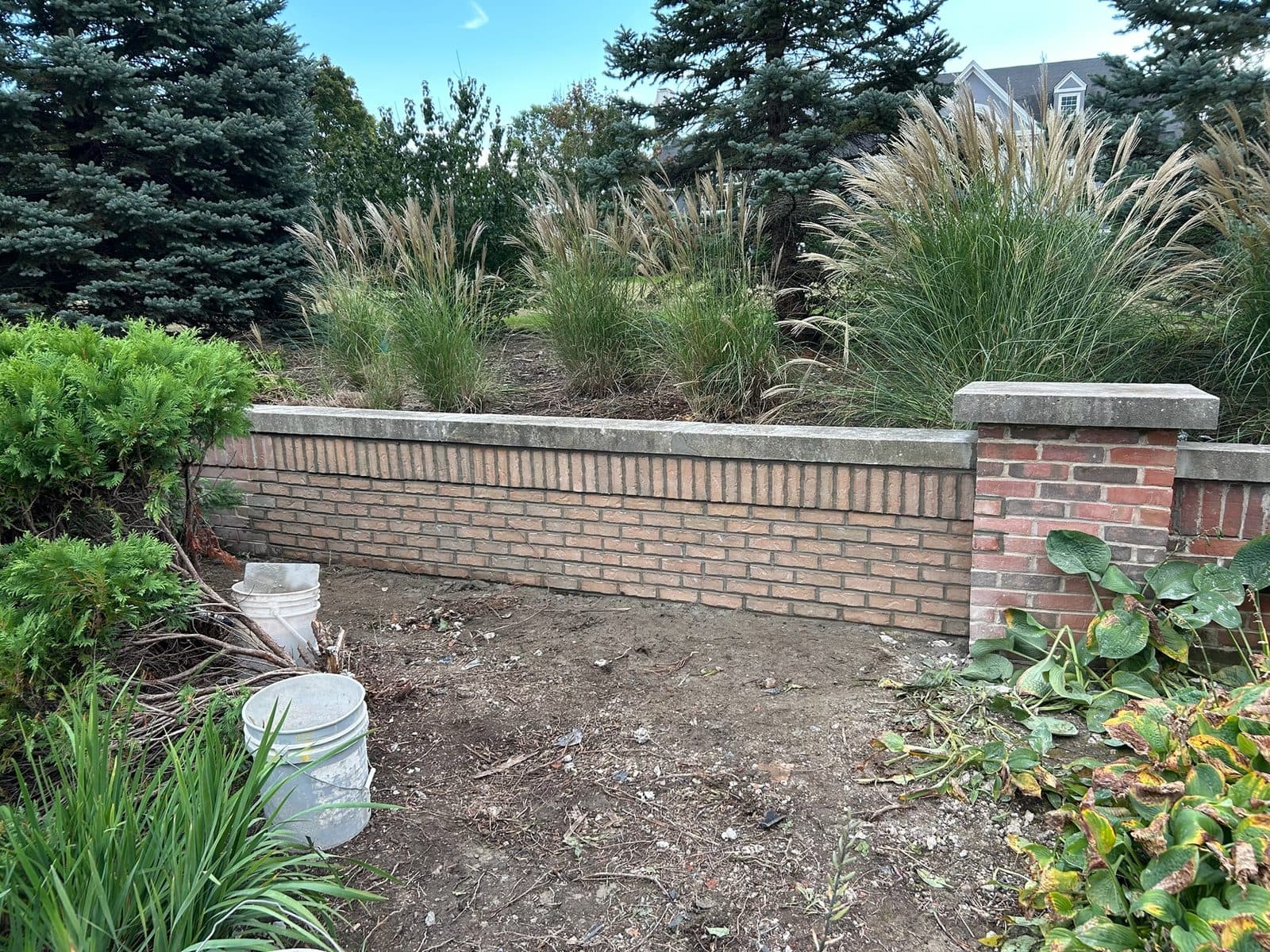
The most useful thing a mason can hand a homeowner is not a price. It is an order of operations.
Most houses that need work do not need all of it this year. They need a short list done now — because those items are causing the rest of the damage — and a longer list that can honestly wait. Residential masonry restoration in Palos Park, IL is that approach applied to a whole house: the exterior assessed as one system rather than as a series of unrelated repairs.
Paul Lally's Masonry Inc. is a family-owned, insured masonry contractor serving Chicago and the Chicagoland suburbs since 1988 — tuckpointing, brick repair and replacement, chimney repair and rebuilds, lintel replacement, masonry restoration, and waterproofing for residential and commercial properties. Built on Craftsmanship. Backed by Experience. Free on-site estimates — call (708) 448-8866.
Why the sequence matters more than the scope
Masonry damage almost always has a source, and the source is almost always above the damage.
Repair spalled brick beneath a window and leave the cracked sill above it, and the brick spalls again. Repoint a chimney and leave the cracked crown, and the new joints wash out in three seasons. Seal a wall whose joints are open, and you slow the wall's drying without stopping the water getting in.
So the order runs:
- Structural and overhead first — lintels, loose brick above a walkway, a leaning chimney, a wall that has moved.
- Active water entry second — crowns, sills, flashing, failed sealant, open joints on the weather elevations.
- Deterioration third — repointing and unit replacement on walls losing material but not yet leaking.
- Appearance last — cleaning, blending, sealing sound masonry.
An estimate that does not distinguish those four is a list, not a plan.
What a whole-house assessment covers
- Mortar joints on all four elevations, noted separately, because they will not be in the same condition
- Brick and stone units — spalling, cracking, loose or displaced material
- Lintels above every opening, including the garage
- Sills, water tables and porch caps — pitch, drip edge, end joints
- The chimney, inside and out, including crown, cap and flashing
- Foundation masonry at grade, where splash and road salt do their work
- Sealant and any expansion joints
- Water management — downspouts, grade, splash blocks, window wells
That last item is not masonry, and we look at it anyway, because it determines how long the masonry work lasts.
Palos Park, specifically
Palos Park is unlike the denser southwest suburbs around it, and the difference shapes the work.
Large wooded lots and heavy canopy. The village sits on the ridge country beside the Palos preserves, and most homes here have substantial mature tree cover. That is why people live here — and it is why the north and east elevations stay damp for days after rain while the south side dries in hours. Masonry damage is a function of how long material stays wet, not just how often it gets wet, so on a Palos Park house the shaded walls are frequently a decade ahead of the sunny ones in deterioration.
A wide mix of housing. Custom and semi-custom homes on treed acreage, mid-century ranches and split-levels, older cottages from the village's earlier days, and newer construction — which means one street can hold four different mortars and four different brick eras.
A great deal of cast stone trim. On the mid-century stock especially, what people call "the limestone" is often cast stone — a moulded concrete product that fails like concrete, sometimes exposing internal reinforcement as it spalls. Identifying it correctly determines the repair.
Grade and drainage. Rolling, wooded lots move water in ways flat subdivisions do not. Decades of leaf litter, raised beds and added landscaping have brought grade up against a lot of foundations here, and a wall that never dries deteriorates on a much faster clock.
Long driveways and set-back houses. Access and staging are usually straightforward, which helps — but chimneys on tall, steep roofs are common and that is where the access cost sits.
Materials and matching
Mortar matched to the wall, not to convenience. Type and hardness first — mortar must stay softer than the units around it, because mortar harder than the brick drives stress into the brick and takes its face off. Then colour, sand and joint profile, so a repointed section reads as part of the wall.
Brick and stone matched in size, colour and texture, with salvaged units reused wherever sound. Where matching is genuinely difficult, we say so and discuss taking replacement units from a less visible elevation rather than pretending a mismatch will not show.
Sealant where sealant belongs, mortar where mortar belongs, and never the reverse.
What drives the cost
Number of elevations. The ratio of repointing to rebuilding. Chimney, lintel and stone scope. Height and access, including staging on a steep roof. Whether brick or stone must be matched or sourced. Whether the work is phased or done in one season. Weather windows, since mortar needs workable temperatures to cure.
There is no square-foot figure that survives contact with an actual house, and we do not publish one. Free on-site estimate, in writing, separated into urgent, deteriorating and cosmetic — call (708) 448-8866.
What we will tell you plainly
That some of it can wait. That the north wall matters this year and the front does not. That a repair somebody else quoted is treating a symptom rather than the cause. And where the honest answer is that a wall needs a structural engineer before it needs a mason, we will say that instead of quoting around it.
Serving Palos Park and the surrounding southwest suburbs
We work throughout Palos Park and the communities around it — Palos Heights, Palos Hills, Orland Park, Lemont, Homer Glen and Worth. Related services: residential masonry restoration, tuckpointing and repointing, brick repair, chimney repair and rebuilds, and limestone and sill repair.
If budget is the constraint this year, our guide to masonry repair priorities on a limited budget lays out exactly how we would sequence it, and why one elevation is always worse explains the shaded-wall problem in detail.
Start with a plan, not a price
Family-owned since 1988, insured, and more interested in your house lasting than in your invoice being large.
Get a free on-site estimate — or call (708) 448-8866. Built on Craftsmanship. Backed by Experience.
Residential Masonry Restoration in Palos Park, IL — Frequently Asked Questions
How much does residential masonry restoration cost in Palos Park, IL?
It depends on how many elevations are involved, the ratio of repointing to rebuilding, chimney and stone scope, height and access, and whether brick can be matched. Paul Lally's Masonry provides a free on-site estimate in writing, separated into urgent, deteriorating and cosmetic.
Does my whole house need tuckpointing at once?
Usually not. Elevations weather at very different rates — the south and west faces are typically years ahead of the north on the same house — so a sensible plan often addresses one or two elevations now and the rest on a later cycle.
In what order should masonry repairs be done?
Anything structural or overhead first, then whatever is actively letting water in, then general deterioration, then appearance. Done in that order each repair holds; done in reverse you pay twice for the same wall.
Why is my north wall so much worse than the front?
Because it dries slowest. Under the mature tree canopy common in Palos Park, a shaded elevation stays damp for days after rain, and masonry that is still wet when the temperature drops goes through freeze-thaw with water inside it.
Can the work be phased across a couple of years?
Yes, and for many homeowners it is the right call. What matters is that the phasing follows the priority order rather than the budget order, so the urgent items are not the ones deferred.
Will the repointed sections match my existing mortar?
That is the goal and it takes deliberate work — matching mortar type, colour, sand and joint profile. A fresh joint reads newer than a fifty-year-old one for a while, but a properly matched repoint blends as it weathers rather than standing out as a stripe.
Should I seal the brick afterward?
Sometimes, and only after the joints are repaired and the new mortar has cured. A breathable penetrating sealer on sound masonry is useful protection; a film-forming coating on a wall that needs to dry traps moisture and causes the spalling it was meant to prevent.
What if a wall has actually moved?
Then it needs a structural engineer before it needs a mason, and we will say so rather than quoting around it. Bowing, bulging, courses out of line or cracks that keep widening are movement, not deterioration.
Residential Masonry Restoration in Nearby Areas
Other Masonry Services in Palos Park, IL
Learn more about our residential masonry restoration services across Chicagoland, or view all service areas.
Free on-site estimates across Chicagoland.