
Masonry Sealing / Waterproofing · Lemont, IL
Masonry Waterproofing in Lemont, IL — Breathable Protection for Brick and Limestone in the Valley
Lemont is built out of its own limestone, and limestone is the one material a film-forming sealer will destroy. Breathable protection, applied after the repairs — never instead of them.
Quick Answer
Masonry waterproofing in Lemont, IL is the application of a breathable, penetrating water repellent to brick, limestone, and mortar so the wall sheds liquid water while still releasing vapor. It is applied after repointing and repairs, never as a substitute for them. Paul Lally's Masonry has waterproofed Chicagoland masonry since 1988. Free on-site estimates: (708) 448-8866.
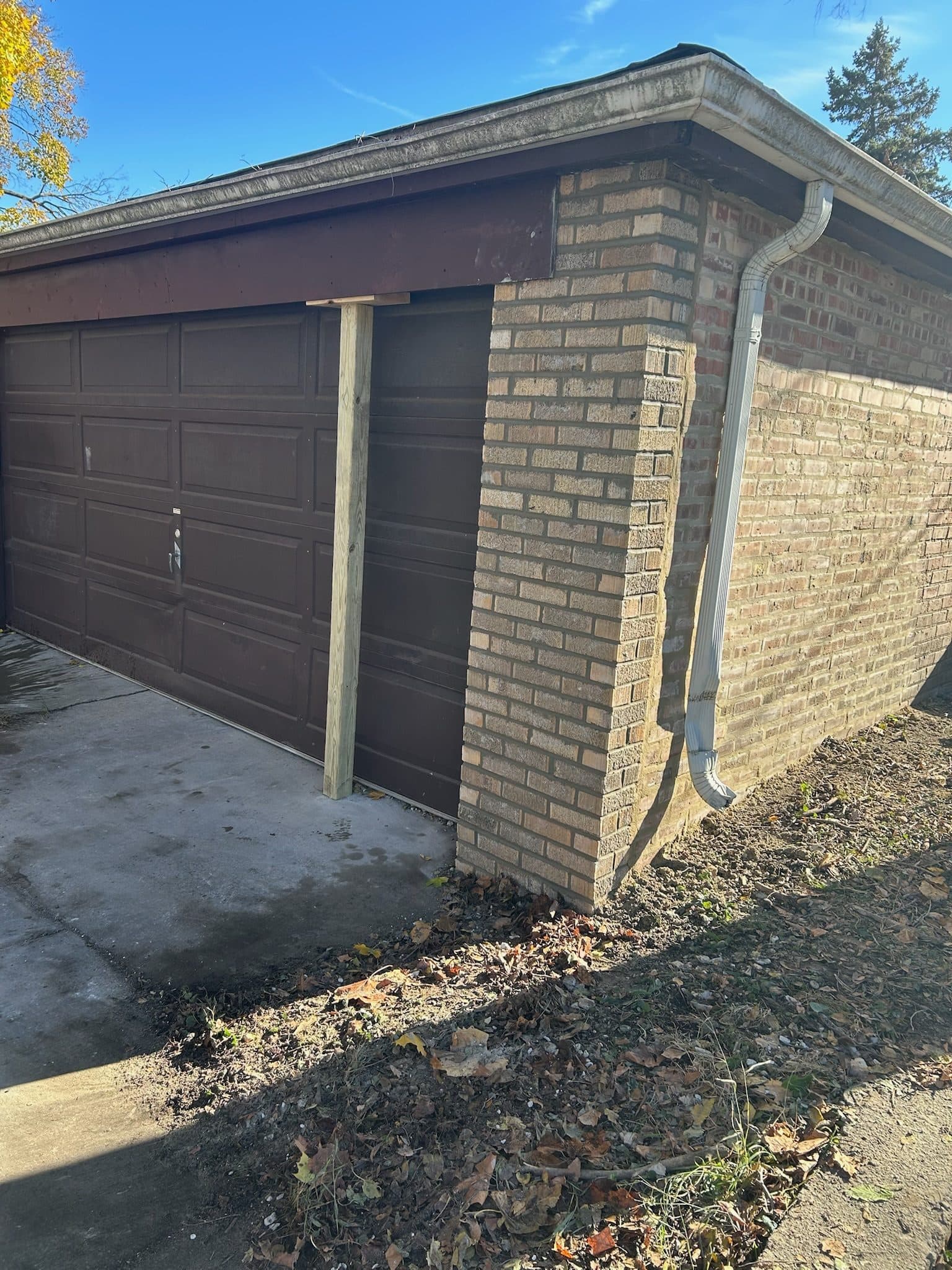
Lemont is one of the few towns in Chicagoland where the buildings and the ground under them are the same material. The village grew up around the quarries that cut the pale dolomitic limestone once sold as "Athens marble," and you can still see it in the church walls, the old canal-era buildings along Illinois Street, and the foundations and trim on houses all over the bluff. Masonry waterproofing in Lemont, IL means protecting brick and limestone in a way that respects how both of them handle water — breathable, penetrating, and applied only after the masonry itself is sound. Paul Lally's Masonry has been doing this work across Chicagoland since 1988.
What masonry waterproofing is — and what it is not
A proper masonry water repellent is a penetrating treatment. It soaks into the pore structure of the brick, stone, and mortar and lines those pores so liquid water beads and sheds, while leaving the pores open enough that water vapor from inside the wall can still get out.
That last clause is the entire discipline. Masonry is not supposed to be sealed shut. It's supposed to get wet and then dry. A wall that absorbs less rain and still dries freely lasts a long time. A wall that has been coated shut is a wall storing water.
What waterproofing is not:
- It is not a repair. It bridges no cracks and fills no open joints.
- It is not a below-grade basement solution.
- It is not permanent. It's maintenance, on a cycle.
- It is not a coating, a paint, or anything that leaves a film.
The Lemont-specific issue: limestone and film-forming sealers
If you own a limestone building or a house with limestone foundation walls, trim, or a stone porch in Lemont, this is the paragraph that matters most.
Limestone is porous, and a film-forming sealer will destroy it.
Here's the mechanism. Film formers — the glossy, "wet look," acrylic-type products sold at big-box stores and pushed by some sealing outfits — lay a skin over the surface. Moisture inside the stone (and there is always moisture inside stone, from rain that got in behind, from ground contact, from vapor moving through the wall) now can't escape through the face. It collects immediately beneath the film. Winter arrives, that water freezes and expands, and it pushes the surface layer off the stone — taking the film and a sheet of stone with it.
You end up with the exact damage you paid to prevent, on a faster schedule, and the failure is not repairable by sealing again.
The same logic applies to soft historic brick, which Lemont also has plenty of. Breathable, penetrating, no film. On Lemont masonry that isn't a preference, it's the requirement.
| | Penetrating repellent (what we use) | Film-forming sealer (what to avoid) | |---|---|---| | Where it works | Inside the pore structure | On the surface, as a skin | | Vapor escape | Preserved | Blocked | | Appearance | Essentially unchanged, matte | Gloss, darkening, "wet look" | | On limestone | Appropriate | Causes surface spalling and delamination | | Failure mode | Wears off gradually; reapply | Traps water; blows the face off the masonry |
The sequence: repair first, seal last
This is where most waterproofing goes wrong, and it's the reason we turn down sealing-only jobs on walls that need work.
Sealer applied over failed masonry is worse than no sealer at all. Water still enters through open joints, cracked brick, a failed sill, a gap at the window head. Now it's behind a treated face, in a wall that dries a bit slower than it did before. You've reduced the drying and done nothing about the entry.
The correct order, every time:
- Diagnose the water path. Where is it actually getting in? Joints, sills, coping, chimney crown, flashing, gutters, grade?
- Repoint failed mortar joints.
- Replace spalled, cracked, and failed brick or stone units.
- Repair the details — sills, lintels, chimney crown, flashing, caulking at openings.
- Correct the water management — gutters, downspout discharge, grade away from the wall.
- Let new mortar cure.
- Clean the substrate appropriately — never by sandblasting or high-pressure washing, both of which strip limestone's weathered surface permanently.
- Then apply the breathable repellent, at the correct rate and coat count for the substrate.
If a contractor offers to seal your wall without looking at any of steps one through six, that tells you what you need to know.
When waterproofing is genuinely worth it
- After tuckpointing or restoration, to slow how fast the newly sound wall reabsorbs water.
- On chimneys, which are exposed on all four sides plus the top and take the worst weathering on the house.
- On exposed elevations — the south and west faces that catch driven rain, and anything on the open bluff side without tree or building shelter.
- On porous brick and stone that visibly darkens and stays dark for a long time after rain.
- Where efflorescence keeps returning after the source has been addressed — reducing absorption reduces the salt transport that causes it.
- On limestone exposed to de-icing salt, at steps, stoops, and grade level.
When it isn't the answer
- The wall has open joints, cracked units, or a failed sill. Fix those.
- The problem is a wet basement. That's drainage and foundation work, not face sealing.
- The masonry has already been coated with a film former. It has to be assessed before anything else goes on it.
- The water is coming from a roof, gutter, flashing, or chimney crown failure. Sealing the wall doesn't touch that.
What drives the cost
- Square footage and the number of elevations
- Substrate — limestone, common brick, face brick, and mortar absorb at very different rates, and absorption drives material consumption
- Coat count the material requires for that substrate
- Height and access — staging a two-story elevation is real work
- Prep and cleaning required beforehand
- Repairs needed first, which are their own scope
- Detail work — masking windows, doors, trim, landscaping
We publish no prices. Absorption rate alone can swing material quantity substantially between two houses on the same street. Paul Lally's Masonry provides a free on-site estimate in writing that separates repairs from sealing so you can see exactly what you're buying.
Timing and season
Water repellents need dry masonry and moderate temperatures to penetrate and cure properly. Late spring through early fall is the productive window in Chicagoland. A wall must be dry through — not just surface-dry after a rain — before treatment, which is why we schedule sealing around the weather rather than around the calendar. Sealing damp masonry going into a freeze is a good way to cause the damage you're trying to prevent.
Lemont specifics
Lemont's masonry is unusually varied for a village its size, and the topography compounds it. There's genuine quarry-era limestone — foundations, churches, canal-era commercial buildings, and stone trim throughout the older village along Illinois and Main Streets. There's soft historic brick from the same period. And there are the newer subdivisions up on the bluff and out toward the Cook–DuPage–Will boundary, mostly brick veneer, where the exposure is what matters: those homes sit high and open with little shelter from driven rain and wind off the Des Plaines valley.
Elevation change is a real factor here in a way it isn't in most of the southwest suburbs. Hillside lots put grade against masonry that was never meant to be buried, downspouts discharge onto slopes that carry water back toward foundations, and the valley's moisture keeps north-facing walls damp far longer. We look at all of that before recommending any treatment — and on a fair number of Lemont properties, the right first recommendation is a downspout extension and a grade correction, not a sealer.
We work the surrounding towns from the same shop — Homer Glen, Palos Park, Palos Heights, Lockport, Willow Springs, Darien, and Woodridge. Related work: tuckpointing and brick replacement before sealing, limestone and sill repair for stone units, chimney repair for crowns and flashing, caulking and joint sealant at openings, and historic masonry restoration for the older stone stock.
Nearby: our tuckpointing work in Lemont and masonry waterproofing in Homer Glen.
Why Lemont calls Paul Lally's
Paul Lally's Masonry Inc. is a family-owned, insured masonry contractor serving Chicago and the Chicagoland suburbs since 1988 — tuckpointing, brick repair and replacement, chimney repair and rebuilds, lintel replacement, masonry restoration, and waterproofing for residential and commercial properties. Built on Craftsmanship. Backed by Experience. Free on-site estimates — call (708) 448-8866.
Sealing is the easiest thing in masonry to sell and one of the easiest to get wrong. We'd rather tell you your wall needs pointing first — and that you shouldn't put a film on your limestone — than take the easy sale.
Get a free on-site estimate for masonry waterproofing in Lemont, IL. Call (708) 448-8866 or request an estimate.
Masonry Sealing / Waterproofing in Lemont, IL — Frequently Asked Questions
What does masonry waterproofing actually do?
A proper masonry water repellent penetrates into the brick, stone, and mortar and lines the pore structure so liquid water beads and runs off, while water vapor from inside the wall can still escape. It does not form a film on the surface. The goal is a wall that stops absorbing rain but keeps its ability to dry.
Why does 'breathable' matter so much on a limestone house in Lemont?
Because limestone is porous and holds moisture, and a film-forming sealer traps that moisture behind a skin. Trapped water freezes, expands, and pushes the surface off the stone in sheets — the same damage you were trying to prevent, only faster. On Lemont's limestone stock, a breathable penetrating repellent is the only appropriate choice.
How much does masonry waterproofing cost in Lemont, IL?
It depends on square footage, the substrate — brick, limestone, and mortar absorb at very different rates — the height and access, the number of coats the material demands, and how much prep and repair the wall needs first. A chimney is a small job; a full two-story elevation in limestone is a project. Paul Lally's Masonry provides a free on-site estimate in writing.
Can you waterproof over cracked mortar joints or spalled brick?
No, and anyone who offers to is selling you a problem. Sealer bridges nothing — water goes straight through an open joint or a cracked unit, gets behind the treated face, and is then harder to dry out. Repointing and repairs come first, always. Sealing is the last step, not the first.
How long does masonry waterproofing last?
A quality penetrating repellent on a properly prepared wall generally protects for several years before it needs renewal, with exposure driving the range — south and west elevations, chimneys, and parapets weather faster than sheltered walls. The honest way to check is a spray test: if water darkens the masonry instead of beading, it's time.
Will a sealer change the look of my brick or stone?
A penetrating repellent should leave the appearance essentially unchanged — no gloss, no darkening once cured. Glossy or 'wet look' coatings are film formers, which is exactly what you don't want on masonry that needs to breathe. We test on an inconspicuous area before treating a whole elevation.
Should I waterproof after tuckpointing?
Often yes, and that's the correct sequence — repair first, seal after the mortar has cured. New tuckpointing restores the joints, and a breathable repellent then reduces how much water the brick and stone faces absorb between maintenance cycles. It's a reasonable add to a repointing job, not a replacement for one.
Will sealing fix my wet basement?
No. Above-grade masonry waterproofing treats the wall faces you can see; it does nothing for below-grade water, hydrostatic pressure, or drainage. Lemont's bluff-and-valley topography puts real groundwater pressure on some properties, and that's a drainage and foundation conversation — a different scope from sealing brick and stone.
Masonry Sealing / Waterproofing in Nearby Areas
Other Masonry Services in Lemont, IL
Learn more about our masonry sealing / waterproofing services across Chicagoland, or view all service areas.
Free on-site estimates across Chicagoland.