
Homeowner Education · Chicagoland, IL
Is a Crack in My Brick Wall Serious? A Field Guide to Brick Crack Types in Chicagoland
Hairline, stair-step, vertical, horizontal, diagonal from a window corner, through the brick or only the mortar — every crack in a brick wall tells you something different. Here is how to read them, monitor them, and know who to call.
2026-10-03
Quick Answer
Most hairline mortar cracks in a brick wall are cosmetic, but horizontal cracks, cracks with offset or bulging, cracks that reopen, and cracks widening from window corners need professional attention. Monitor with dated pencil marks, a crack gauge and scaled photos. Paul Lally's Masonry, an insured Chicagoland brick repair contractor since 1988, assesses cracks free — (708) 448-8866.
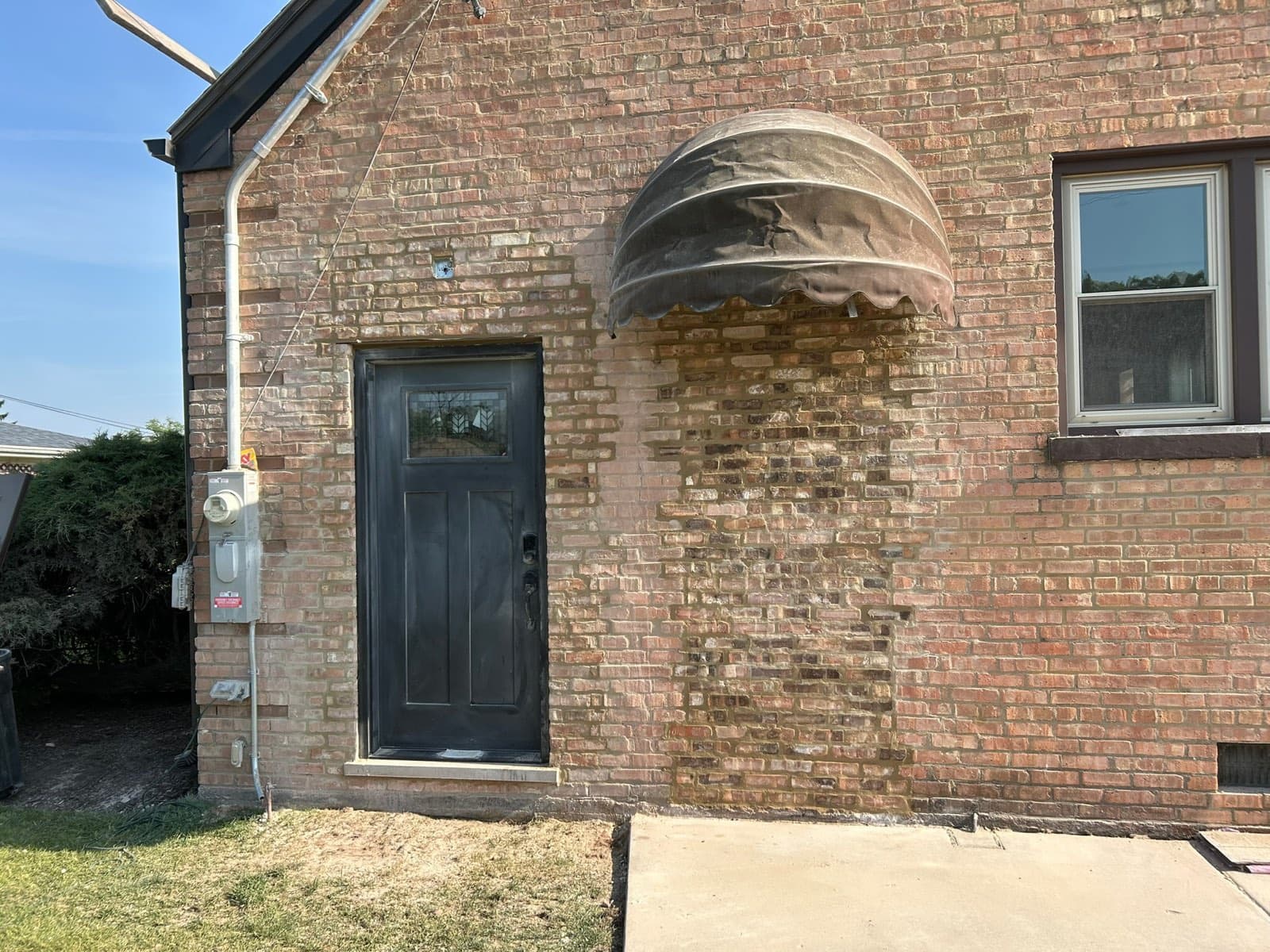
Is a crack in my brick wall serious? Usually the answer depends on three things: its direction, whether it runs through the brick or only the mortar, and whether it is still moving. Most fine hairline cracks in mortar are cosmetic; horizontal cracks, cracks with offset or bulging, and cracks that reopen are not. Paul Lally's Masonry, an insured brick repair contractor serving Chicago and the suburbs since 1988, will look at yours for free — (708) 448-8866.
This post is the field guide. It shows you how to identify each crack type, what usually causes it, how urgent it is, and who to call. Where a crack type has its own detailed article, we point you there rather than repeating it.
Paul Lally's Masonry Inc. is a family-owned, insured masonry contractor serving Chicago and the Chicagoland suburbs since 1988 — tuckpointing, brick repair and replacement, chimney repair and rebuilds, lintel replacement, masonry restoration, and waterproofing for residential and commercial properties. Built on Craftsmanship. Backed by Experience. Free on-site estimates — call (708) 448-8866.
How a brick wall cracks — and why that is useful
A brick wall is two materials: hard fired units and softer mortar. The mortar is supposed to be the weaker of the two. When a wall is stressed — by settlement, temperature, moisture or rusting steel — the crack should run along the joints, because that is the easiest path and the cheapest repair.
That design gives every crack a signature. The path a crack takes tells you the direction of the force. The width tells you how much movement has happened. Offset — one side sitting proud of, or lower than, the other — tells you the wall has shifted, not just separated. And change over time tells you whether the cause is finished or still working.
Read those four things and you can sort almost any crack into "watch it," "call a mason," or "call an engineer."
The crack types, one by one
Hairline mortar cracks
Fine cracks, thinner than a credit card, running along joints, often scattered across a wall. Common causes are mortar shrinkage as it cured, minor seasonal movement, or small temperature cycles. On their own they are usually cosmetic. They become a maintenance item when they let water in — and in a freeze-thaw climate, open joints do eventually let water in. Mark them, watch them, and include them in your next round of tuckpointing.
Stair-step cracks
A crack that zig-zags up or down through the bed and head joints like a staircase. This is the classic sign of differential settlement — one part of the wall moving down relative to another — though it also appears around openings and at corners. Narrow, old and stable stair-steps are often historic. Wide, fresh or growing ones are not. Our full guide: step cracks in brick walls.
Vertical cracks
A straight up-and-down crack, often near a corner or in the middle of a long, uninterrupted wall. Brick expands as it takes on moisture and warms, and a long run of masonry with no control or expansion joint has nowhere to relieve that growth — so it makes its own joint. Vertical cracks near corners are often the wall pushing around the turn. They may also follow settlement at one end of a wall. See brick expansion and control joints.
Horizontal cracks
Take these seriously. A horizontal crack along a bed joint can mean:
- Lateral pressure on a foundation or below-grade wall — soil, water or frost pushing inward.
- A rusting shelf angle or lintel — steel expands as it corrodes and jacks the brick above it upward, opening a horizontal crack along the steel line.
- Wall tie failure — the ties connecting a brick face to the structure behind corrode, and the brick face starts to separate.
A long horizontal crack, especially one with any bulge or lean, belongs in the "call someone soon" category. See bowing and bulging brick walls.
Diagonal cracks from window and door corners
A crack that starts at the corner of an opening and runs up or out at an angle. Openings concentrate stress, so they are where walls crack first. The two usual culprits are a failing lintel — the steel or stone over the opening sagging or rusting — and settlement pulling at the corner. If the crack starts at the end of a lintel, or the brick above the window has dropped, start with failing lintels and cracked brick around windows.
Cracks through the brick units
A crack that runs straight through bricks rather than around them. This means either the mortar is harder than the brick — often from a previous repair with a hard modern mix — or the force was strong enough to break the units. Either way, it deserves closer inspection, and the cracked bricks usually need replacing, not patching.
Cracks that reopen
You repointed it, or someone did, and it came back in the same place. That is the wall telling you the cause is still active. Common reasons: ongoing settlement, seasonal soil movement, roots, thermal movement with no expansion joint, or rusting steel. Re-filling it again will not change the outcome. See tree roots and soil movement.
Cracks with displacement, offset or a bulge
If you can run your hand across the crack and feel one side stepped out from the other, or sight down the wall and see it bow outward, the wall has moved, not merely cracked. This is the most serious category in this guide.
Crack pattern quick reference
| Crack pattern | Likely cause | Urgency | Who to call |
|---|---|---|---|
| Fine hairline cracks in mortar only | Mortar shrinkage, minor seasonal movement | Low — monitor | Mason at next maintenance |
| Stair-step through joints, narrow and stable | Old settlement, now inactive | Low to moderate | Mason to assess and repoint |
| Stair-step, wide or growing | Active differential settlement | High | Mason, likely engineer |
| Vertical, near corner or mid-length of long wall | Thermal and moisture expansion, missing control joint | Moderate | Mason |
| Horizontal along a steel line | Rusting lintel or shelf angle | Moderate to high | Mason |
| Horizontal on foundation or below grade | Lateral soil or water pressure | High | Structural engineer, then mason |
| Diagonal from window or door corner | Failing lintel or settlement | Moderate to high | Mason; engineer if settlement |
| Through the bricks themselves | Hard mortar or strong movement | Moderate | Mason |
| Reopens after repair | Cause still active | Moderate to high | Mason to find cause; engineer if movement |
| Offset, bulge or lean | Active structural movement or tie failure | Urgent | Structural engineer and mason |
For a deeper look at that last column, read mason or structural engineer?.
How to monitor a crack, step by step
Monitoring turns "I think it's getting worse" into evidence — and it makes any assessment faster and more accurate.
- Mark the ends. Draw a short pencil line across each end of the crack, perpendicular to it, and write the date beside it. If the crack grows past the line, you will know.
- Mark the width. Draw a pencil line straight across the crack at its widest point. If the two halves of the line drift apart or out of alignment, the crack is opening or shearing.
- Photograph it with scale. Hold a coin or a ruler against the wall beside the crack and photograph it square-on. Stand in the same spot each time.
- Use a crack gauge if you can. A simple plastic tell-tale gauge fixed across the crack shows movement in both directions. They are simple and very effective.
- Check monthly for a year. Many cracks open in winter and close in summer. A full cycle of seasons separates seasonal breathing from progressive movement.
- Note what else changes. Doors or windows sticking, new gaps at trim, interior plaster cracks on the same wall, water inside. Write those down with dates too.
- Call if anything changes quickly. Growth over weeks rather than seasons, a new offset, falling material or a visible bulge means stop monitoring and get it seen.
How a professional sorts the cause
When we look at a crack, we are working backwards from symptom to cause:
- Assembly first. Is this solid masonry or a brick veneer over a frame? The same crack means different things on each. See brick veneer vs solid masonry.
- Path and width. Joints or units, straight or stepped, tapered or uniform.
- Offset and plane. A straightedge across the crack and down the wall.
- Steel. Lintels, shelf angles and their ends — rust staining is often the giveaway.
- Water. Gutters, downspouts, grade, and whether the area stays wet.
- History. Previous repairs, additions, nearby trees, and how long the crack has been there.
Only then does the repair get chosen. A crack is a symptom; the repair has to address the cause or the crack comes back.
Repair approaches, in brief
Depending on the cause, the masonry repair may be:
- Repointing the cracked joints with mortar softer than the brick.
- Brick replacement where units are split or spalled — see brick replacement.
- Lintel replacement where rusting steel is the driver — see lintel replacement.
- Installing a movement joint where a long wall has nothing to relieve expansion.
- Rebuilding a section where a wall has displaced.
- Foundation repair where the cause is below — see foundation masonry repair.
Structural causes — active settlement, lateral pressure — are diagnosed by an engineer first, and the masonry work follows the engineer's direction.
What drives the cost
We do not publish figures, because the crack itself is rarely what the repair is priced on. The drivers are the cause (a repointing job versus a lintel versus a foundation issue), the length and location of the crack, whether bricks must be sourced and matched, height and access, whether an engineer is involved, and the season. A free on-site estimate, in writing, is the only way to get a number that holds.
DIY vs professional
Monitoring is a homeowner's job — pencil, phone camera and a crack gauge are all it takes, and a year of dated observations is genuinely valuable to whoever assesses the wall.
Repair usually is not. The temptation is to fill the crack with caulk or a tube of mortar repair. On a stable hairline crack at ground level that will not do harm. On anything else, it hides the evidence you need, it will not move with the wall, and a rigid patch over a moving crack simply cracks again beside it. Never patch a crack with offset or bulging — get it seen.
Why Chicagoland walls crack the way they do
Freeze-thaw. A Chicago winter cycles through freezing and thawing dozens of times. An open crack takes in water, the water freezes and expands, and the crack grows. Cracks that would be stable in a dry climate creep here.
Clay soils. Much of Chicagoland sits on clay that swells when wet and shrinks when dry, so foundations move seasonally — especially near large trees.
Old steel lintels. Brick bungalows and post-war ranches carry unprotected steel lintels that have now been rusting for decades, so diagonal and horizontal cracks over openings are extremely common.
Long elevations without joints. Two-flats and older greystones often have long side walls with no movement joints, and veneer suburbs sometimes had them omitted or caulked solid.
Additions. A newer addition tied to an older house frequently cracks at the seam.
Prevention and maintenance
- Keep water away. Clean gutters, extend downspouts, and keep soil sloping away from the walls.
- Keep joints closed. Repoint open mortar before winter rather than after.
- Watch the steel. Rust staining at a lintel end is an early warning; deal with it before it cracks the brick.
- Manage trees. Large trees close to a foundation should be considered when cracks appear nearby.
- Keep movement joints soft. Expansion joints should be sealant, never filled with mortar.
- Inspect each spring. A walk-around after winter catches new cracks while they are small.
Related services
Brick repair, brick replacement, tuckpointing, lintel replacement, foundation masonry repair, and caulking and sealant joints.
The short version
Hairline and through the mortar only: watch it. Stair-step, vertical, diagonal or through the brick: have a mason look. Horizontal on a foundation, offset, bulging, leaning or reopening: get an engineer involved and a mason to carry out the repair.
Paul Lally's Masonry Inc. has been reading cracked Chicagoland walls since 1988 — family-owned, insured, and our name is on every job. We will tell you plainly whether your crack needs a repair, a monitoring plan, or an engineer before anything else.
Built on Craftsmanship. Backed by Experience. Get a free on-site estimate or call (708) 448-8866.
Frequently Asked Questions
Is a hairline crack in my brick wall serious?
Usually not. Fine hairline cracks in the mortar alone are often shrinkage or minor seasonal movement. Mark the ends with a dated pencil line and watch it; if it grows, lengthens or offsets, have it looked at.
Which brick wall cracks are the most serious?
Horizontal cracks, cracks where one side has shifted out of line with the other, cracks with a bulge, and cracks that keep reopening after repair. Those suggest active movement or a structural cause rather than surface wear.
Does it matter if the crack goes through the brick or only the mortar?
Yes. Mortar is meant to be the weaker element, so a crack that follows the joints is the wall behaving as designed. A crack that splits straight through the bricks means the force was strong enough to break the units and deserves closer attention.
How do I monitor a crack in a brick wall?
Draw a pencil line across each end and write the date, photograph it with a coin or ruler for scale from the same spot each time, and use a simple crack gauge if you have one. Check it monthly through a full year of seasons.
When do I need a structural engineer instead of a mason?
When a crack shows ongoing movement, offset, bulging or leaning, or when it runs through the foundation as well as the brick above. An engineer diagnoses the structural cause; a mason carries out the masonry repair.
Can I just fill the crack with caulk or mortar?
Not until you know the cause. Filling a moving crack only hides it, and a rigid patch will crack again. Once the cause is dealt with, the right repair may be repointing, replacing units or installing a proper movement joint.
Are brick cracks worse in Chicago winters?
Freeze-thaw does not usually start a crack, but it widens open ones. Water enters, freezes, expands and pushes, dozens of times a winter, so a crack left open in fall is usually larger by spring.
How much does brick crack repair cost?
It depends on the cause, the length and location of the crack, whether bricks or a lintel must be replaced, wall height and access. Paul Lally's Masonry gives a free on-site estimate in writing after looking at the actual crack.