
Parapet Wall Repair · Chicago, IL
Parapet Wall Repair in Chicago, IL — Rebuilds, Coping, and Roofline Leaks Fixed
The parapet is the most weather-beaten masonry on any Chicago flat-roofed building — exposed on both faces, capped by coping that fails long before the wall does. Paul Lally's Masonry has repaired and rebuilt Chicago parapets since 1988.
Quick Answer
Parapet wall repair in Chicago, IL is the repointing, rebuilding, and re-coping of the brick wall that extends above a flat roofline. Because a parapet is weathered on both sides, it fails decades before the rest of the building. Paul Lally's Masonry has rebuilt Chicago parapets since 1988 — free on-site estimates at (708) 448-8866.
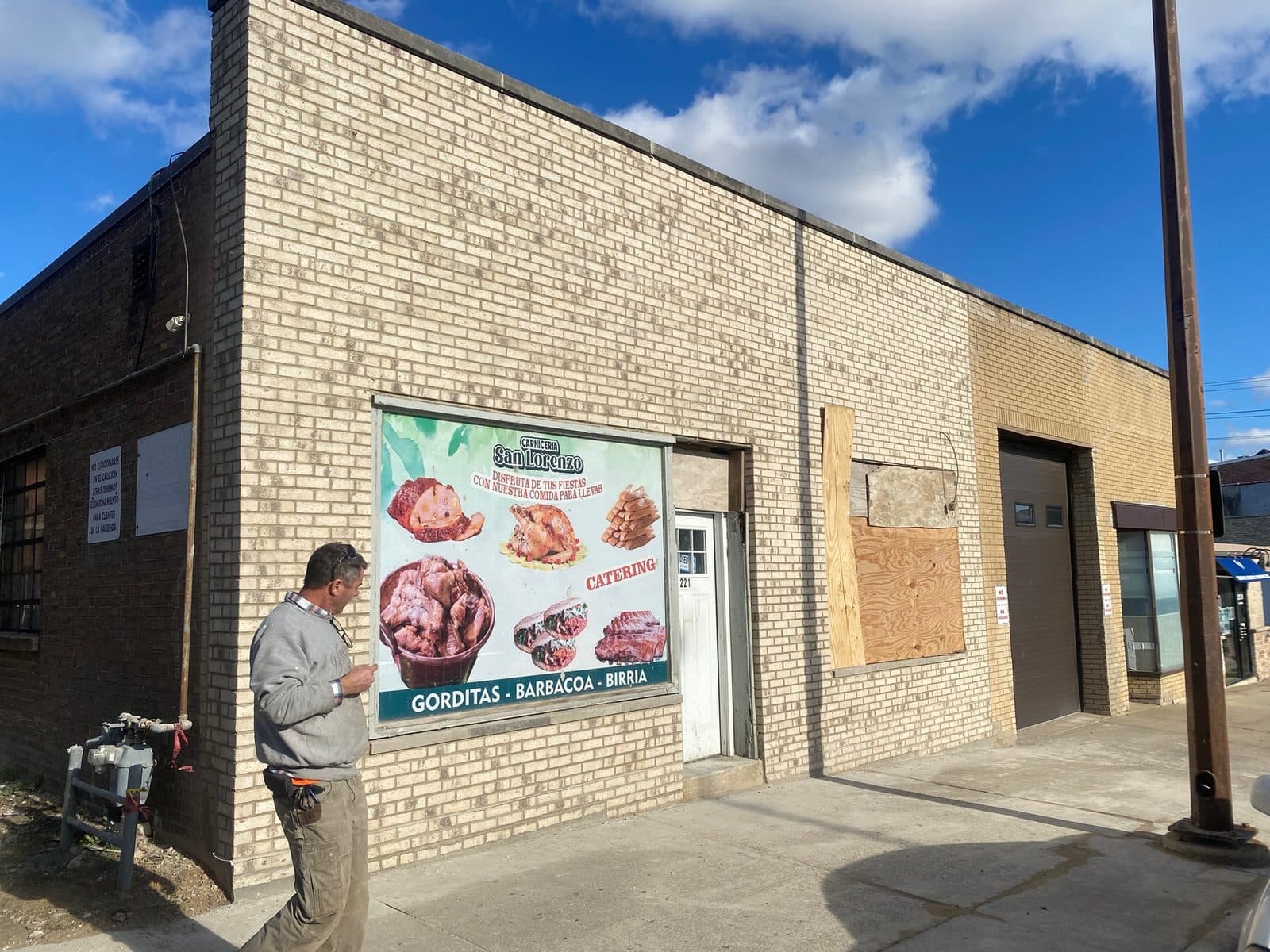
Stand on the roof of almost any flat-roofed building in Chicago and you are standing next to the oldest failing masonry on the property. Parapet wall repair in Chicago, IL is the repointing, partial rebuilding, and re-coping of that brick wall standing above your roofline — the one nobody sees from the street and everybody discovers when the top-floor ceiling starts staining. Paul Lally's Masonry has been going up on Chicago rooflines since 1988, and the story is nearly always the same: the wall didn't fail because the building is bad. It failed because a parapet is the only masonry on the building with weather hitting it from every direction at once.
What a parapet wall is — and why yours is the first thing to go
A parapet is the portion of an exterior masonry wall that continues past the roof deck and stands proud above a flat roof. You'll find them on Chicago two-flats and three-flats, courtyard apartment buildings, greystones, corner storefronts, warehouses, and nearly every commercial building on a commercial strip. Its original jobs were fire separation between attached buildings, a safety edge at the roof, and a clean architectural termination for the facade.
Here's the part most owners never hear: every other wall on your building is insulated on one side by the building itself. The parapet is not. It's exposed on the outside face, the inside face, the top, and the underside of the coping. Rain wets it on both sides. Wind drives water into it. In a Chicagoland winter, that saturated brick goes through freeze-thaw cycling from both directions, expanding and contracting until the mortar gives up its bond and the brick face starts flaking off.
That is why, on a hundred-year-old Chicago building, the wall at eye level can be in decent shape while the top four courses above the roof are soft enough to rake out with a screwdriver.
Signs your Chicago parapet needs attention
- Water stains on the top-floor ceiling or the inside of exterior walls — the single most common symptom, and it's almost never the roof membrane itself.
- Loose, cracked, or missing coping — clay tile or limestone caps that have shifted, opened at the joints, or gone entirely.
- Receding or crumbling mortar joints above the roofline you can dig out by hand.
- Spalling brick — faces flaking or popping off, leaving a rough, sandy surface.
- A leaning or bowing parapet — a wall visibly out of plumb, or bulging along its length.
- Loose brick you can rock by hand, especially at the corners and the top course.
- Efflorescence — chalky white salt deposits, proof water is moving through the wall.
- Debris on the roof — mortar sand, brick chips, or fragments of coping collecting at the base of the wall.
Two of those are urgent on their own. A leaning parapet and loose brick above a sidewalk are safety issues, not maintenance items — a brick from a roofline is not something you wait out.
What happens if you wait
Parapet deterioration is not a slow, linear thing; it accelerates. Once the coping joints open, water gets inside the wall instead of running off it, and now the wall is being saturated from the top down through its full thickness. Every freeze cycle after that does more damage than the last.
The repair also grows. Repointing failing joints and resetting sound coping is a straightforward job. Wait a few more winters and the same wall needs the top courses rebuilt, new coping, replacement brick, and roof flashing coordination — because the water that ran down inside the wall has been quietly rotting roof framing and soaking plaster the whole time. The masonry bill is rarely the expensive part of ignoring a parapet. The interior is.
How Paul Lally's Masonry repairs a Chicago parapet
- Inspect from the roof, not the ground. We look at both faces, sound the brick, check the coping joints, and read where the water is actually getting in — which is often several feet from where the stain shows up inside.
- Determine repair versus rebuild, section by section. A parapet is rarely uniformly bad. Corners and the sun-and-weather-facing side usually go first. We tell you which sections need to come down and which only need repointing, and we don't rebuild what doesn't need rebuilding.
- Protect the roof. Membrane protection goes down before any brick comes off.
- Take down what's unsound and salvage what isn't. Where the original brick is a match worth saving, we save and reuse it — that matters on greystones and older common-brick buildings where a modern brick would stand out badly.
- Rebuild plumb, on the proper mortar. Brick goes back up in a mortar chosen to suit the age and hardness of the original masonry, not a one-size-fits-all mix.
- Grind and repoint the sound sections. Joints are cut back to solid mortar and packed in layers, then tooled to match the original joint profile.
- Reset or replace the coping. Sound caps get reset and the joints repointed and sealed; cracked or missing pieces get replaced. This step is where a lot of cheap parapet jobs quietly fail.
- Coordinate at the flashing line. Where the roof meets the wall, we make sure the masonry work leaves a sound condition rather than burying a problem.
- Clean the roof. Debris off, roof left the way we found it.
Materials we use on Chicago parapets
Mortar selection matters more here than almost anywhere else on the building. Soft, older Chicago common brick paired with a modern high-strength mortar is a bad marriage — the mortar ends up harder than the brick, and the brick sacrifices its own face during expansion instead of the joint doing that work. We match mortar type, color, sand, and joint profile to the original wall: softer, more forgiving mixes on historic and hand-molded brick, standard Type N or, where structure and exposure genuinely call for it, Type S on more modern masonry.
Coping is clay tile, limestone, precast concrete, or metal depending on what's already up there and what the building calls for. Salvaged brick is used where matching matters. Everything above the roofline is built to shed water first — because on a parapet, water management is the structural strategy.
What drives the cost of parapet wall repair
No two rooflines price the same. The honest cost drivers are:
- Height and access — how the crew and material reach the roof, and whether staging or lift equipment is required.
- Linear footage — how much of the perimeter is involved, and how many sides.
- Repair versus rebuild ratio — repointing is a different scope than taking down and relaying courses of brick.
- Coping condition — resetting sound caps versus sourcing and installing replacements.
- Brick matching — salvaging original brick or sourcing a match for an older, discontinued brick takes time.
- Extent of hidden damage — what's found once the top courses come off.
We don't quote parapet work over the phone, and you should be skeptical of anyone who does. Paul Lally's Masonry gives a free on-site estimate in writing after actually getting up on your roof.
Chicago context — why this city's parapets are the way they are
Chicago is a flat-roof city. The bungalow belt, the two-flats and three-flats of the Northwest and Southwest Sides, the courtyard buildings of Rogers Park and Albany Park, the greystones of Bronzeville and Logan Square, the brick storefronts on every neighborhood commercial strip — nearly all of it is masonry-bearing wall with a parapet at the roofline, and most of it was built between roughly 1890 and 1940.
That means two things. First, the mortar in most of these walls is old and soft by design, so the wrong repair mix does real harm. Second, these parapets have absorbed ninety to a hundred and thirty Chicago winters. Lake-driven moisture, hard freeze-thaw swings, and decades of deferred coping maintenance are the exact recipe for the deterioration you're looking at. It is not a defect in your building. It's the predictable end of a maintenance cycle that ran too long.
If you've received a facade inspection report or a violation citing deteriorated masonry above the roofline, bring it with you to the estimate — it tells us exactly what has to be addressed.
Related masonry services
Parapet work rarely stands alone. Homeowners and building owners in Chicago often pair it with tuckpointing and repointing on the upper facade, chimney repair and rebuilds since the chimney is right there and equally exposed, lintel repair and replacement where steel above windows has rusted, brick replacement for spalled units, and masonry waterproofing once the joints are sound. For larger buildings, see our commercial masonry restoration work; for full-facade projects, masonry restoration.
We also handle parapet and roofline masonry throughout the Chicagoland suburbs — including tuckpointing in Oak Lawn and masonry restoration in Evergreen Park.
Get a straight answer on your parapet
Paul Lally's Masonry Inc. is a family-owned, insured masonry contractor serving Chicago and the Chicagoland suburbs since 1988 — tuckpointing, brick repair and replacement, chimney repair and rebuilds, lintel replacement, parapet wall repair, masonry restoration, and waterproofing for residential and commercial properties. Built on Craftsmanship. Backed by Experience.
We'll get on your roof, tell you honestly what needs rebuilding and what only needs repointing, and put it in writing. Our name is on every job we do.
Free on-site estimates — call (708) 448-8866 or request an estimate online.
Parapet Wall Repair in Chicago, IL — Frequently Asked Questions
What is a parapet wall and why does mine keep leaking?
A parapet is the section of brick wall that continues past the roof deck and stands above a flat roof, common on Chicago two-flats, three-flats, courtyard buildings, and storefronts. It leaks because it is exposed to weather on both faces and capped by coping stone or tile whose joints open up over time. Once those cap joints fail, water runs straight down inside the wall and shows up as ceiling stains on the top floor.
How do I know if my parapet needs repair or a full rebuild?
If the mortar is soft and receding but the wall is still plumb and the brick is sound, repointing and re-coping usually solves it. If the wall leans, bows, has lost its bond to the building, or the brick face is spalling through, that section gets taken down and rebuilt. A mason has to get on the roof and look — you cannot judge a parapet from the sidewalk.
Why do parapet walls fail before the rest of the building?
Every other wall on the building is protected on one side by the interior of the structure. A parapet is exposed front and back, top and bottom, so it takes freeze-thaw cycling from all directions and stays wetter longer. That is why the top three or four courses of brick above a Chicago roofline are almost always the worst masonry on the property.
How much does parapet wall repair cost in Chicago, IL?
There is no flat rate. Cost is driven by the height of the building and how the crew reaches the work, the linear footage of wall involved, whether the coping is being reset or replaced, and how many courses of brick have to come down and go back up. Paul Lally's Masonry provides a free on-site estimate in writing after inspecting the roofline.
What is coping and does it have to be replaced?
Coping is the cap on top of the parapet — clay tile, limestone, precast concrete, or metal — and its whole job is to shed water off the top of the wall. Sound coping stones can often be reset and the joints repointed or sealed; cracked, spalled, or missing pieces get replaced. Leaving bad coping in place undoes every other repair below it.
Can parapet work be done without disturbing my roof?
Usually yes, though the roof membrane at the base of the wall gets protected and, where the flashing ties into the masonry, coordinated. We work off the roof carefully and lay down protection before any brick comes down. If the flashing or counterflashing is already failing, we will tell you so it can be addressed at the same time rather than after the masonry closes it up.
Does Chicago require parapet or facade inspections?
Chicago's facade ordinance requires periodic critical examinations of exterior walls on taller buildings, and parapets are one of the most common items written up in those reports. If you have received an inspection report or a violation citing loose or deteriorated masonry above the roofline, bring it to the estimate and we will price the work described in it.
How long does a parapet wall rebuild take?
A partial rebuild on a typical Chicago two-flat or three-flat is usually a matter of days rather than weeks, while a full perimeter rebuild on a larger commercial building runs longer. Weather matters — mortar needs workable temperatures to cure properly. We will give you a realistic window at the estimate, not an optimistic one.
Parapet Wall Repair in Nearby Areas
Other Masonry Services in Chicago, IL
Learn more about our parapet wall repair services across Chicagoland, or view all service areas.
Free on-site estimates across Chicagoland.