
Tuckpointing & Repointing · Bridgeview, IL
Tuckpointing in Bridgeview, IL — Mortar Joints on Homes and Working Buildings
Bridgeview has houses and working buildings on the same blocks, and the masonry on both is roughly the same age. The joints are telling you the same thing either way.
Quick Answer
Tuckpointing in Bridgeview, IL is the replacement of failed mortar joints in a brick wall — old mortar ground out to roughly two to two and a half times the joint width, then repacked with mortar matched in hardness, color, and profile. Paul Lally's Masonry has tuckpointed Chicagoland brick since 1988. Free estimates: (708) 448-8866.
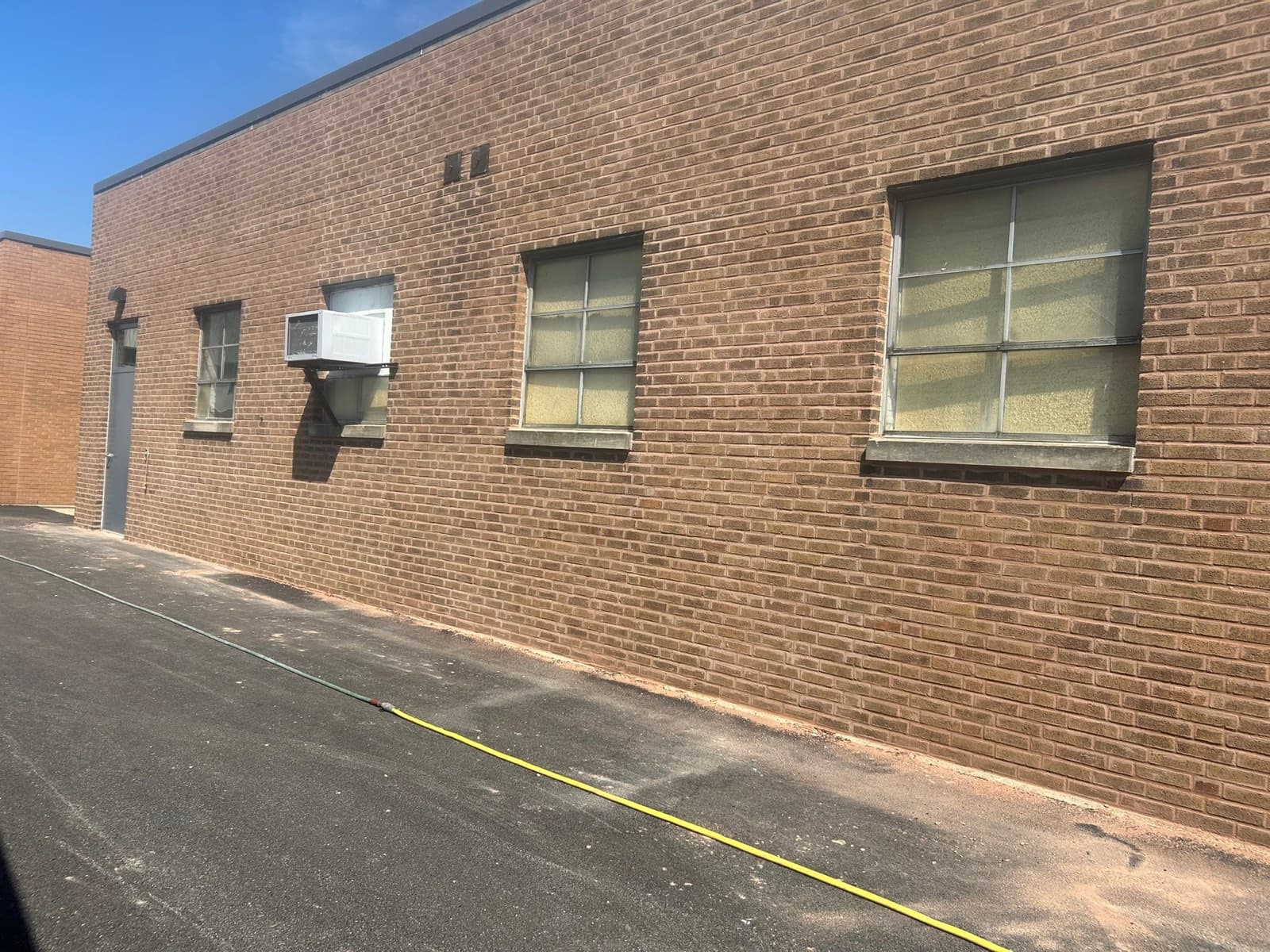
Bridgeview is a village where a brick house, a small shop, and a light industrial building can sit within a block of each other — and where the masonry on all three went up in roughly the same decades.
Tuckpointing in Bridgeview, IL is the same job on all of them: cutting out failed mortar joints and repacking them with a matched mix. Paul Lally's Masonry has been doing that across Chicagoland since 1988, and Bridgeview is a short run from our shop in Palos Heights.
What tuckpointing is, and why joints are meant to wear out
Tuckpointing is the replacement of failed mortar joints. The deteriorated mortar is ground out to a proper depth, and fresh mortar — matched in hardness, color, sand, and profile — is packed in and tooled. The brick stays; only the joints are renewed.
The thing that makes it make sense: mortar is designed to be the weakest part of the wall. It's deliberately softer than the brick so that thermal movement, moisture cycling, and settlement are absorbed by the joint rather than by the masonry units. A joint is cheap and straightforward to replace. A brick face is not.
So failing mortar isn't a defect — it's a maintenance cycle reaching its end.
And the corollary is the important part: mortar must always be softer than the brick beside it. A modern high-strength mix packed against softer brick inverts the design. The joint stops yielding, so the brick face becomes the sacrificial element and spalls along every mortar line. That damage is permanent.
The key test
Take a house key and run it along a mortar joint.
- Skids across a hard surface? Sound.
- Digs in, mortar crumbling out as sand? Failed.
Try it in several places — the north and west elevations, the bottom three courses where snowmelt and splashback sit, around the chimney, and along whichever wall faces the alley or the lot line and never gets looked at.
Other signs the joints have gone
- Receding joints — mortar worn back behind the face of the brick
- Visible gaps, holes, or missing sections
- Sandy, crumbly texture that powders under a thumb
- Mortar debris at the base of the wall or in the gutters
- Efflorescence — white chalky salt bloom, proof water is moving through
- Damp or musty interior walls on an exterior-facing room
- Spalling brick — the problem has already moved past the joints
- Loose bricks you can rock by hand
- On a flat-roofed building: debris on the roof at the base of the parapet
What waiting costs
The joint is the wall's weather barrier — on solid masonry it's the only one. A failed joint is an open channel.
Water enters, saturates the brick, freezes, and expands roughly nine percent with nowhere to go — so it pushes the hard fired face off the brick. That's spalling, and it's permanent. From there water reaches steel lintels and starts them corroding, and interior finishes begin staining.
Repointing is inexpensive. Brick replacement is not, and rebuilding a wall is worse. The right moment is when joints have begun receding, not when brick is coming off.
How Paul Lally's Masonry tuckpoints
- Assess the brick first — age, hardness, and porosity determine which mortar is correct.
- Set up and protect — ladders or staging, and coverings for windows, walks, landscaping, vehicles, and any adjacent lot.
- Grind out the failed joints to roughly two to two and a half times the joint width, back to sound mortar. This is the slow part and the part that matters most.
- Clean the joints — blown and brushed free of dust so new mortar bonds to masonry rather than powder.
- Mix to the matched formula — type, color, and sand chosen to suit the brick.
- Dampen where the substrate calls for it.
- Pack the mortar in layers, not one deep pass, so it compacts and doesn't shrink as it cures.
- Tool the joints at the right stiffness, to the profile the wall already has.
- Clean down and remove debris.
- Cure and protect — fresh mortar needs shielding from freezing, driving rain, and baking sun for the first few days.
Why joint depth isn't negotiable
New mortar needs surface area inside the joint to key into. Skim a quarter inch over soft old mortar and you've made a cosmetic film with nothing gripping it — it crumbles out within a few winters while the original failing joint admits water the whole time.
That's skim pointing, and it's the most common bad masonry job in Chicagoland. It photographs beautifully. See why masonry repairs fail.
Materials
Mortar matched for type, color, sand, and joint profile — standard Type N on most of Bridgeview's post-war brick, softer mixes where masonry is older, Type S only where structure and exposure genuinely call for it. Colour comes primarily from the sand, so matching means matching the aggregate rather than tinting a standard bag.
Salvaged and matched brick where spalled units need replacing alongside the joints. Breathable penetrating sealers only, where sealing is warranted at all.
What drives the cost
- Joint footage — how many elevations, and how much of each
- Height and access — a single-story building off ladders versus staging on a two- or three-story wall
- How deeply eroded the joints are
- Brick condition — spalled units replaced as we go
- Chimney or parapet included or not
- Mortar matching difficulty
- Site constraints — tight lot lines, alley access, keeping a business open
- What's found once the joints are open
Paul Lally's Masonry gives a free on-site estimate in writing.
Local context: Bridgeview's mix
Bridgeview is a compact southwest Cook County village that built out substantially through the 1950s, 1960s, and 1970s, and it has a genuinely mixed character: brick ranches, bungalows, and Cape Cods on the residential streets, alongside small commercial, warehouse, and light industrial masonry along the corridors — Harlem Avenue and the industrial pockets in particular — plus the buildings that came with the village's proximity to Midway and the rail and truck routes.
That mix shapes the work:
On the houses, masonry from those decades is now fifty to seventy-plus years old — exactly where original mortar joints reach the end of their service life. Many are on their first-ever tuckpointing.
On the commercial and industrial buildings, expect flat roofs with parapets. The wall standing above the roofline is exposed on both faces and fails decades before the walls below it — so on those buildings the parapet and its coping usually need attention before the elevations do. See parapet wall repair.
Cook County weather drives all of it: repeated hard freeze-thaw cycling, and de-icing salt at grade from drives, walks, docks, and aprons, which is why the bottom courses so often look decades older than the wall above them.
Related masonry services in Bridgeview
Tuckpointing commonly travels with brick repair and brick replacement for spalled units, chimney repair and rebuilds, lintel repair and replacement above wide openings, parapet wall repair on flat-roofed buildings, foundation masonry repair at grade, caulking and joint sealant, and masonry waterproofing once the joints are sound. For larger scopes see residential or commercial masonry restoration.
Worth reading: what is tuckpointing, how long tuckpointing takes, and how to prioritize masonry repairs.
Nearby: foundation masonry repair in Bridgeview, tuckpointing in Burbank, tuckpointing in Oak Lawn, tuckpointing in Palos Hills, and tuckpointing in Worth.
Do the key test, then call us
Paul Lally's Masonry Inc. is a family-owned, insured masonry contractor serving Chicago and the Chicagoland suburbs since 1988 — tuckpointing, brick repair and replacement, chimney repair and rebuilds, lintel replacement, masonry restoration, and waterproofing for residential and commercial properties. Built on Craftsmanship. Backed by Experience.
We'll walk your walls — house or building — show you which joints have actually failed, and tell you plainly which elevations can wait. Our family name is on every job.
Free on-site estimates — call (708) 448-8866 or request an estimate online.
Tuckpointing & Repointing in Bridgeview, IL — Frequently Asked Questions
How do I know if my Bridgeview building needs tuckpointing?
Run a house key along a mortar joint. If it skids across a hard surface the joint is sound; if it digs in and mortar crumbles out as sand, that joint has failed. Check the north and west walls, the bottom courses, and around the chimney — failure is rarely uniform.
How much does tuckpointing cost in Bridgeview, IL?
There's no square-foot rate that means anything. Cost is driven by joint footage, height and access, how deeply eroded the joints are, mortar matching, and how much brick replacement rides along. Paul Lally's Masonry gives a free on-site estimate in writing after seeing the walls.
How deep do the old joints have to be cut?
Roughly two to two and a half times the width of the joint, cut back until sound mortar is reached — usually around three quarters of an inch on a standard joint. Anything shallower gives the new mortar nothing to key into, and it crumbles out within a few Chicagoland winters.
Do you work on commercial and industrial buildings here?
Yes — Bridgeview has a lot of small commercial, warehouse, and light industrial masonry alongside its housing, and the work is the same trade at a different scale. On flat-roofed commercial buildings the parapet above the roofline usually needs attention before the walls below it do.
How long does tuckpointing last?
A proper repoint on sound brick — joints cut to depth, mortar matched in hardness, packed in layers and tooled correctly — commonly lasts decades here. Work that fails within a few years didn't lose to the weather; a step was skipped, and it's almost always the joint depth.
Do I need all four sides done?
Usually not. Mortar fails by exposure, so the north and west elevations, the bottom courses, and the chimney typically go years ahead of the sheltered sides. We scope what's actually failed and tell you plainly which walls can wait a season or two.
What's the difference between tuckpointing and repointing?
Technically repointing means renewing mortar joints and tuckpointing was historically a decorative two-color technique, but in everyday Chicagoland use they mean the same job. Any local mason will understand tuckpointing to mean renewing your joints.
When is the best time of year for tuckpointing?
Late spring through early fall. Mortar is a chemical reaction that needs moderate temperatures and moisture to cure, and water in curing mortar that freezes disrupts the cure permanently. We'd rather reschedule than install mortar into a hard freeze.
Tuckpointing & Repointing in Nearby Areas
Other Masonry Services in Bridgeview, IL
Learn more about our tuckpointing & repointing services across Chicagoland, or view all service areas.
Free on-site estimates across Chicagoland.