
Chimney Repair & Rebuilds · Chicago Ridge, IL
Chimney Repair in Chicago Ridge, IL — The Masonry Above the Roofline
On a post-war ranch the chimney is often the only masonry anyone has ever had to think about — and it's usually decades overdue for a cap.
Quick Answer
Chimney repair in Chicago Ridge, IL covers the masonry above the roofline — the crown, cap, spalled brick, mortar joints, and flashing. On the village's post-war housing stock the most common findings are a cracked crown, a missing cap, and joints at the end of their service life. Paul Lally's Masonry has served Chicagoland since 1988 — (708) 448-8866.
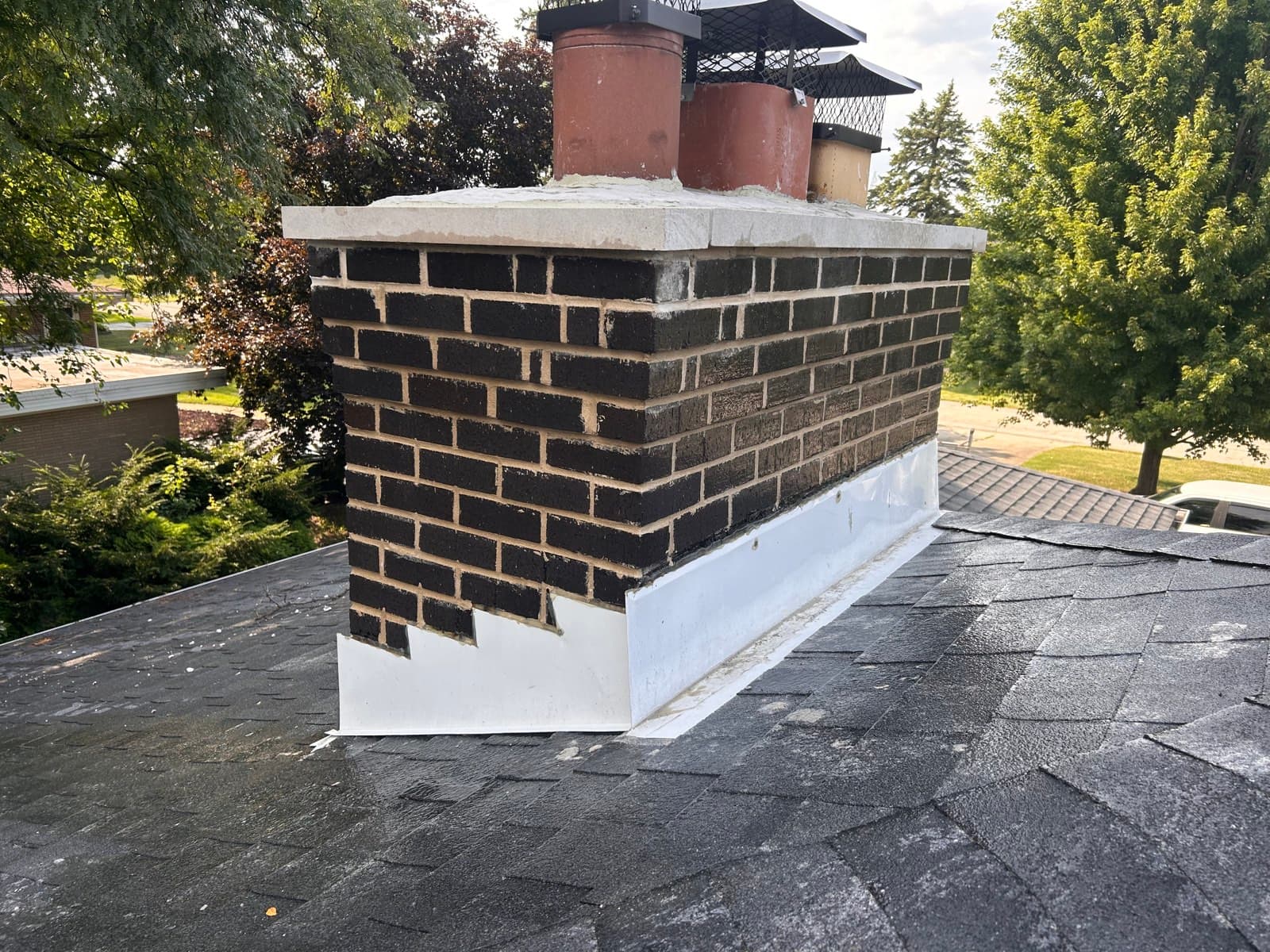
On a Chicago Ridge ranch or split-level, the chimney is frequently the only masonry the owner has ever had to think about. It's also, almost invariably, the masonry in the worst condition — and very often missing a cap it should have had for thirty years.
Chimney repair in Chicago Ridge, IL is work on the masonry above the roofline: the crown, the cap, the brick and joints, and the flashing where it meets the roof. Paul Lally's Masonry has been doing it across Chicagoland since 1988, a few minutes from our Palos Heights shop.
Why the chimney is always the worst masonry on the house
Every other wall on your home is sheltered on one face by the building's interior. A chimney above the roofline is not. Exposed front, back, both sides, and the top — it takes wind-driven rain from every direction and cycles through freeze and thaw harder and longer than anything else you own.
Then add water paths the walls simply don't have:
The crown. The concrete cap across the top. Crowns crack, and a cracked crown lets water directly into the body of the chimney.
The flue. An uncapped flue is an open pipe pointed into your house. Rain, snow, debris, and animals go straight down it.
The flashing. Where the chimney passes through the roof — a classic leak source, and the one most often misattributed to the roof itself.
The cap: the cheapest meaningful repair you can make
Worth its own section because so many homes here are missing one.
A cap costs very little relative to anything else on this page and it stops rain going directly down the flue. On a chimney that no longer gets warm — because the furnace was converted to side-wall venting years ago — that water has no way to dry out, and it soaks the masonry from the inside.
If your chimney is uncapped, that's the first thing to fix regardless of what else is going on.
Signs your chimney needs work
- Water stains on ceilings or walls near the chimney chase
- A cracked or crumbling crown
- No cap on the flue
- Spalled brick — faces flaking, powdering, or popped, especially at the shoulders
- Soft, receding mortar joints you can dig out by hand
- Rust staining or deteriorated flashing at the roofline
- Brick or mortar debris in gutters, on the roof, or on the ground
- White efflorescence on the chimney or the wall below it
- A visible lean — urgent, always
- A damp or musty smell near a fireplace
Repair, or rebuild above the roofline?
| Condition | Usually | |---|---| | Soft joints, sound brick, crown intact | Repoint | | Cracked crown, brick sound | Rebuild the crown | | Missing cap | Cap it — do this first | | Spalled brick, chimney plumb | Replace units + repoint + re-crown | | Brick spalling through, lost bond | Rebuild above the roofline | | Chimney leaning | Assess promptly — safety | | Flashing deteriorated | Coordinate at the roof line |
Only the portion above the roofline normally needs rebuilding. The masonry inside the house is sheltered and usually sound — so ask anyone quoting a "chimney rebuild" exactly where it starts.
What a proper crown looks like
Since a cracked crown is the most common finding here, it's worth knowing what should replace it.
Not a sloped smear of mortar across the top of the brick. A proper crown is cast concrete with:
- An overhang past the brick face, so water sheds clear
- A drip edge cut underneath, so water falls rather than tracking back onto the brick
- A flexible joint at the flue tile, because concrete and clay move at different rates
A mortar wash without those cracks, and then the brick below starts spalling from the inside.
How Paul Lally's Masonry repairs a chimney
- Get up to it. A chimney can't be assessed from the driveway.
- Confirm what still vents through it. If that's unclear, check with a heating professional before we go further — venting safety isn't a masonry judgement.
- Assess all three water paths — crown, masonry, flashing — and find where water is genuinely entering.
- Protect the roof before any brick comes off.
- Take down what's unsound, salvaging brick that matches.
- Rebuild plumb on matched mortar.
- Repoint sound sections, joints cut back to solid mortar and tooled to match.
- Cast a proper crown — overhang, drip edge, flexible joint at the flue.
- Cap the flue and coordinate the flashing condition.
- Clean the roof and gutters and walk the work with you.
Materials
Mortar matched for type, colour, sand, and joint profile — standard Type N on most of Chicago Ridge's post-war chimneys, softer mixes where masonry is older, Type S only where exposure and structure genuinely call for it. Salvaged brick where matching matters. Cast crowns rather than mortar washes. Proper caps sized to the flue.
Mortar must be softer than the brick. A hard mix on softer chimney brick spalls the faces at the joints — permanent damage, on the masonry that takes the worst weather on the house.
Breathable penetrating sealers where sealing is warranted — a chimney is one of the best candidates on any house, but only after the crown, joints, and cap are sound.
What drives the cost
- Height and roof access — pitch, height, and how staging is set
- Scope — repoint, crown rebuild, or above-roofline rebuild
- Crown work — a proper cast crown versus a wash
- Flashing condition and coordination
- Brick matching and salvage
- Debris handling — chimney masonry is heavy
- What's found once the top courses come off
Because a chimney is a small amount of masonry in an awkward place, access is a real share of the cost — which is exactly why bundling other roofline work into the same setup makes sense. See height and access.
Paul Lally's Masonry gives a free on-site estimate in writing after getting up to it.
Local context: Chicago Ridge chimneys
Chicago Ridge is a compact Cook County village that filled in through the 1950s, 1960s, and 1970s — brick ranches, split-levels, Cape Cods, and Georgians, with a commercial corridor around the mall and the main routes.
That produces a consistent chimney profile: masonry chimneys of post-war brick, with clay flue tile and a concrete crown, built for a furnace and water heater venting together. Fifty to seventy years on, three things are typically true at once:
The crown has cracked. Original crowns of that era were frequently mortar washes rather than cast concrete with an overhang and drip edge.
The cap is missing or was never fitted. Extremely common, and the cheapest thing to put right.
The joints have reached the end of their service life — on the most exposed masonry on the house, so they're usually worse than the walls below.
There's a fourth pattern worth naming: a great many of these homes have had high-efficiency furnace conversions that left the chimney venting little or nothing. That masonry still weathers, still leaks, and no longer gets warm enough to dry out. See your furnace doesn't use the chimney anymore.
Cook County weather does the rest — repeated hard freeze-thaw cycling, with absorbed water expanding roughly nine percent each time it freezes.
Related masonry services in Chicago Ridge
Chimney work commonly travels with tuckpointing and repointing on the walls below, brick repair and brick replacement for spalled units, lintel repair and replacement above wide openings, caulking and joint sealant, and masonry waterproofing once the masonry is sound. For whole-house scopes, residential masonry restoration.
Worth reading: chimney crowns, caps, and flashing, signs your chimney needs repair, chimney repair vs. rebuild, and how to prioritize masonry repairs.
Nearby: tuckpointing in Chicago Ridge, masonry waterproofing in Chicago Ridge, chimney repair in Oak Lawn, chimney repair in Worth, and tuckpointing in Worth.
Start with the cap, then look at the crown
Paul Lally's Masonry Inc. is a family-owned, insured masonry contractor serving Chicago and the Chicagoland suburbs since 1988 — tuckpointing, brick repair and replacement, chimney repair and rebuilds, lintel replacement, masonry restoration, and waterproofing for residential and commercial properties. Built on Craftsmanship. Backed by Experience.
We'll get up to your chimney, tell you which of the three water paths is actually leaking, and give you the cheap fix before the expensive one where that's the honest answer. Our family name is on every job.
Free on-site estimates — call (708) 448-8866 or request an estimate online.
Chimney Repair & Rebuilds in Chicago Ridge, IL — Frequently Asked Questions
Why is my chimney in worse shape than the rest of my house?
Because it's the only masonry exposed on four sides above the roofline — no interior warmth behind it, and freeze-thaw cycling from every direction. It also carries a concrete crown that cracks and a flue that's often uncapped, so it has water paths the walls simply don't have.
What does a missing chimney cap actually cost me?
An uncapped flue is an open pipe pointed into your house — rain and snow go straight down it, along with debris and animals. Water sitting in a disused flue soaks the masonry from the inside, and on a chimney that no longer gets warm it never really dries out. Capping is the cheapest meaningful repair on the whole structure.
How much does chimney repair cost in Chicago Ridge, IL?
There's no flat rate. Cost is driven by roof pitch and height, how access is set, whether it's repointing, crown work, or an above-roofline rebuild, how much brick has to be matched, and whether flashing is in scope. Paul Lally's Masonry provides a free on-site estimate in writing after getting up to it.
The roof is new and the ceiling still stains. What's going on?
Almost certainly the chimney. A roofer replaces the covering on the deck; the masonry standing above it isn't part of that job. A cracked crown, an uncapped flue, or failed joints let water in above where the roofer worked, so the stain outlives the new roof.
Can my chimney be repointed instead of rebuilt?
Often, yes. If the brick is sound and only the joints are soft, it gets repointed and re-crowned. Rebuilding becomes the answer when brick is spalling through, the masonry has lost bond, or the chimney leans — and nearly always only the portion above the roofline needs it.
My furnace vents out the side of the house now. Do I still need the chimney?
Only if something still vents through it — a lot of homes here kept an atmospheric water heater on the old flue after the furnace was converted, so confirm that with a heating professional first. If nothing uses it, the masonry still weathers and still leaks, so it needs capping and maintaining or taking down.
Should the chimney be done with the tuckpointing?
Usually worth it. Setting up for roof access separately later costs more than including it while a crew is already on site, and the chimney's joints are almost always in worse shape than the walls — so it's rarely the thing that can wait.
When is the best time of year for chimney work?
Late spring through early fall. Mortar needs workable temperatures to cure properly, and roof work in ice is neither safe nor good practice. Urgent conditions can often be stabilised in the off-season, but a proper rebuild belongs in mild weather.
Chimney Repair & Rebuilds in Nearby Areas
Other Masonry Services in Chicago Ridge, IL
Learn more about our chimney repair & rebuilds services across Chicagoland, or view all service areas.
Free on-site estimates across Chicagoland.