
Brick Replacement · Oak Lawn, IL
Brick Replacement in Oak Lawn, IL — Swapping Failed Brick Without a Patchwork Wall
Replacing brick is easy. Replacing brick so nobody can tell where the repair is — that's the craft. Paul Lally's Masonry has been matching and swapping brick on Oak Lawn homes since 1988.
Quick Answer
Brick replacement in Oak Lawn, IL is the removal of individually failed bricks — spalled, cracked, or crumbling units — and the installation of matched replacements tied into the surrounding wall. Paul Lally's Masonry matches brick size, color, and texture so the repair blends in. Family-owned and serving Chicagoland since 1988. Free on-site estimates: (708) 448-8866.
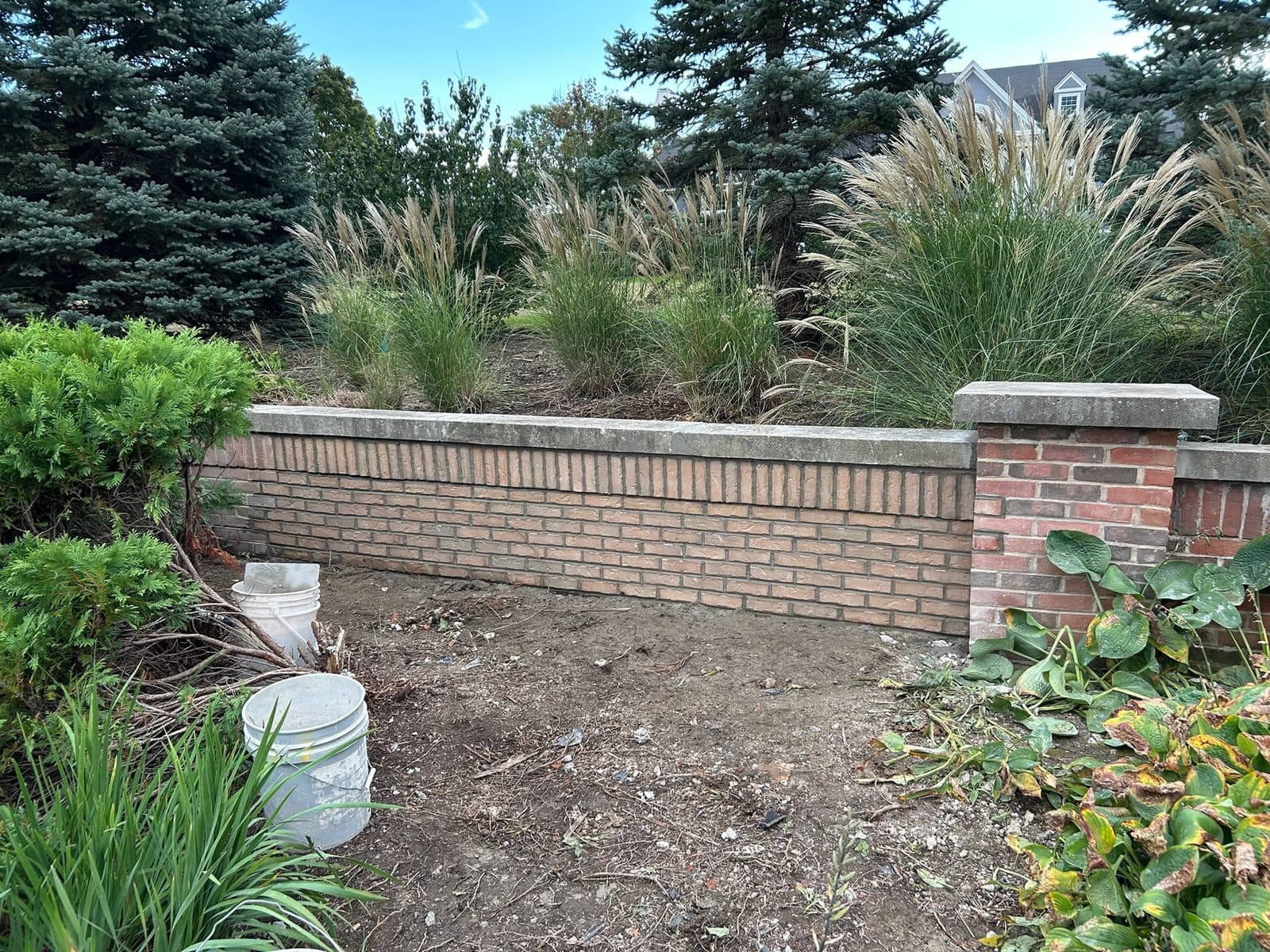
Brick doesn't fail all at once. It fails one unit at a time — a face flaking off here, a cracked-through brick there, a soft crumbling corner under a downspout — and for a while it looks like nothing. Brick replacement in Oak Lawn, IL is the surgical part of masonry work: taking out the individual bricks that have genuinely failed and setting in matched replacements that tie back into the wall. Paul Lally's Masonry has been doing exactly that on Oak Lawn homes since 1988, and the difference between a good job and a bad one is not the removal. It's the match.
Brick replacement vs. tuckpointing — which one do you actually need?
This is the question homeowners in Oak Lawn ask most, and it has a clean answer:
| Symptom | What it means | The fix | |---|---|---| | Mortar is soft, receding, sandy; you can dig it out with a key | The joints have failed, brick is fine | Tuckpointing / repointing | | Brick faces are flaking, popping, or powdering | The bricks have failed (spalling) | Brick replacement | | Individual bricks cracked straight through | Unit failure, often from movement or a lintel | Brick replacement, plus fixing the cause | | Stair-step crack running through joints | Wall movement | Diagnose the movement first, then repoint or rebuild | | Bricks you can rock by hand | Lost bond | Replacement and often localized rebuild |
Most Oak Lawn jobs are a combination. You replace the failed brick, and you repoint the joints around it — because the mortar that let water into that brick in the first place is usually just as tired as the brick was.
Why brick fails in Oak Lawn
Oak Lawn's housing stock is heavily post-war: brick ranches, Georgians, split-levels, and Cape Cods built from roughly the 1940s through the 1970s, with older frame-and-brick stock closer to the older parts of the village and a good deal of brick-veneer construction throughout. That brick has now stood through seventy-plus Chicagoland winters.
The mechanism is always water plus cold:
- Water gets into the brick — through a failed mortar joint, a leaking gutter, splashback where soil or pavement sits too high against the wall, or a chimney with no cap.
- The temperature drops below freezing. The water inside the brick expands about nine percent.
- That expansion pushes the hard, fired outer face of the brick away from the softer core.
- The face pops off. Now the exposed core drinks water even faster, and the next winter does more damage than the last.
That's spalling, and it's the number one reason bricks get replaced around here. The other big one is rust jacking — a steel lintel over a window or door corroding, swelling, and cracking the brick sitting on it. When we see cracked brick in a neat line above an opening, the lintel is the actual patient.
Signs you need brick replacement
- Flaking, powdering, or popped brick faces (spalling) — the classic sign
- Bricks cracked through the unit, not just through the joint
- Loose bricks that move when you push on them
- Missing chunks at corners, sills, steps, and the base of the wall
- A rough, sandy surface where a smooth fired face used to be
- Cracked brick stacked above a window or door — suspect the lintel
- Efflorescence and damp interior walls behind the affected area
- Debris — brick chips and sand collecting on the ground below
How we replace brick without leaving a patch
- Diagnose the cause first. We find out why the brick failed — mortar, gutter, grade, sealer, or lintel. Replacing a brick without fixing the water source just resets the clock.
- Match the brick. Size, color range, texture, and face. We source salvaged brick when a modern unit would read wrong, which matters on older Oak Lawn masonry and any blended brick.
- Cut out the failed unit cleanly. The old brick and its surrounding mortar come out by hand and with careful grinding, without cracking the neighboring bricks — this is the part where speed ruins a job.
- Prep the pocket. Clean, dampened, and ready to take mortar so the new unit actually bonds.
- Set the replacement. Full bed and head joints, aligned to the coursing, plumb with the wall face.
- Match the mortar. Color, sand, and type mixed to blend with the existing joints — not generic gray.
- Tool the joint to match. Concave, weathered, raked, struck — whatever profile the wall already has. This single detail is what makes a repair invisible or obvious.
- Repoint the surrounding joints where they've failed, so the new brick isn't the only sound thing in a tired wall.
- Clean up. Wall washed down as needed, site left clean.
Materials — and why matching is the whole craft
We work with salvaged and new face brick, common brick, and modern brick-veneer units, chosen to match what your house already has. Mortar is matched by type, color, and sand: softer, more forgiving mixes for older, softer brick; standard Type N for most residential work; Type S only where structural conditions and exposure genuinely warrant it.
Here's the rule that governs everything: the mortar should always be softer than the brick. When a modern high-strength mortar is packed against older brick, the joint stops absorbing thermal movement and the brick face takes the abuse instead — so a "stronger" repair actively destroys the wall it was meant to save. That's the mistake we get called in to correct more than any other.
What drives the cost of brick replacement
- How many bricks are actually failing (and how many more turn up once we open the area)
- Location on the wall — ground-level work versus a second story or gable end that requires ladders or staging
- Brick matching difficulty — a common Chicago brick is easy; a discontinued blend takes sourcing
- Whether the cause needs fixing too — a rusted lintel, a bad downspout, grade at the foundation
- Repointing scope around the replacement area
- Access — landscaping, decks, tight side yards
There's no meaningful per-brick number, and you should be wary of one. Paul Lally's Masonry gives a free on-site estimate in writing after looking at the actual wall.
Local context: Oak Lawn brick, and what we usually find
Oak Lawn sits in southwest Cook County, and its brick has a fairly consistent story. Post-war ranches and Georgians with brick veneer over frame, plenty of blended face brick from the fifties and sixties, chimneys that were never capped, and steel lintels over picture windows and garage openings that are now sixty-plus years into their service life.
The failures cluster in predictable places: the north and west elevations that take the weather, the bottom three courses where splashback and snowpack sit against the wall, around and under window sills, at chimney shoulders, and directly above windows and garage doors where lintels rust. If you're seeing damage in those spots, you're seeing normal Oak Lawn wear — not a disaster, but not something to leave another winter either.
Related masonry services in Oak Lawn
Brick replacement is usually part of a slightly larger picture. Most Oak Lawn homeowners pair it with tuckpointing and repointing, general brick repair, lintel repair and replacement where steel above openings has rusted, chimney repair, limestone and sill repair, and masonry waterproofing once the wall is sound. For whole-house work, see residential masonry restoration.
We do the same work nearby — see brick repair in Oak Lawn, brick replacement in Hickory Hills, and masonry restoration in Evergreen Park.
Talk to a mason who'll tell you the truth about your brick
Paul Lally's Masonry Inc. is a family-owned, insured masonry contractor serving Chicago and the Chicagoland suburbs since 1988 — tuckpointing, brick repair and replacement, chimney repair and rebuilds, lintel replacement, masonry restoration, and waterproofing for residential and commercial properties. Built on Craftsmanship. Backed by Experience.
If only a dozen bricks need to come out, we'll tell you that. If the wall needs more, we'll show you why. Our family name is on every job.
Free on-site estimates — call (708) 448-8866 or request an estimate online.
Brick Replacement in Oak Lawn, IL — Frequently Asked Questions
Do I need brick replacement or just tuckpointing in Oak Lawn?
Tuckpointing fixes the mortar joints; brick replacement fixes the bricks themselves. If your joints are soft and receding but the brick faces are intact, you need tuckpointing. If brick faces are flaking off, cracked through, or crumbling, those individual units have to come out and be replaced — and the surrounding joints usually get repointed at the same time.
Can you match the brick on my Oak Lawn house?
Most of the time, yes — and matching is the entire job. We match size, color range, texture, and mortar joint profile, sourcing salvaged brick where a modern equivalent would stand out. On mid-century Oak Lawn homes with common Chicago brick or blended face brick, a good match is usually achievable; on unusual or discontinued brick, we'll tell you honestly how close we can get before you commit.
How much does brick replacement cost in Oak Lawn, IL?
There's no per-brick price that means anything. Cost depends on how many bricks are failing, where they sit on the wall, whether ladders or staging are needed for the height, how hard the matching brick is to source, and whether surrounding joints need repointing too. Paul Lally's Masonry provides a free on-site estimate in writing.
Why are my bricks flaking and crumbling?
That's spalling, and it means water got into the brick and froze. Chicagoland freeze-thaw cycling pops the hard outer face off the softer core, and once that face is gone the brick absorbs water even faster. Common triggers around Oak Lawn are failing mortar joints, a bad gutter or downspout, splashback at grade, and film-forming sealers that trapped moisture inside the wall.
Can you replace just a few bricks, or does the whole wall have to come down?
Individual bricks are replaced routinely — that's the normal repair. A wall only comes down and gets rebuilt when the damage is widespread, the wall is bowing or displaced, or the masonry has lost its structural bond. We always scope the smallest repair that actually solves the problem.
Will the new brick look different from the old brick?
A fresh brick set into a wall that's weathered for fifty years will never be invisible on day one, but a properly matched brick and a properly matched mortar joint blend in quickly and read as part of the wall rather than as a patch. The mistakes that make a repair obvious are the wrong mortar color and the wrong joint profile — both of which we match deliberately.
How long does brick replacement take on a typical Oak Lawn home?
A localized replacement of a handful of bricks is usually a same-visit job once the material is on hand; a larger area or a full elevation runs longer. Sourcing a matching brick can add lead time, and mortar needs workable temperatures to cure. We give you a realistic schedule at the estimate.
What happens if failed brick isn't replaced?
Spalled brick has lost its weather-resistant face, so it soaks up more water every year and accelerates. The damage spreads to neighboring bricks and into the mortar, water reaches the interior wall, and what would have been a handful of replacement units becomes a section rebuild. Brick failure never stays the same size.
Brick Replacement in Nearby Areas
Other Masonry Services in Oak Lawn, IL
Learn more about our brick replacement services across Chicagoland, or view all service areas.
Free on-site estimates across Chicagoland.