
Caulking & Joint Sealant · Oak Lawn, IL
Masonry Caulking & Joint Sealant in Oak Lawn, IL — The Joint That Is Supposed to Move
Masonry has two completely different kinds of joints, and the most expensive mistake in the trade is treating them as the same thing. One is meant to be rigid. The other is meant to move.
Quick Answer
Paul Lally's Masonry Inc. provides masonry caulking and joint sealant work in Oak Lawn, IL — sealing expansion, control, and window and door perimeter joints with backer rod and the correct sealant for each substrate, and repointing mortar joints that were wrongly caulked. Family-owned since 1988, insured. Free on-site estimates — call (708) 448-8866.
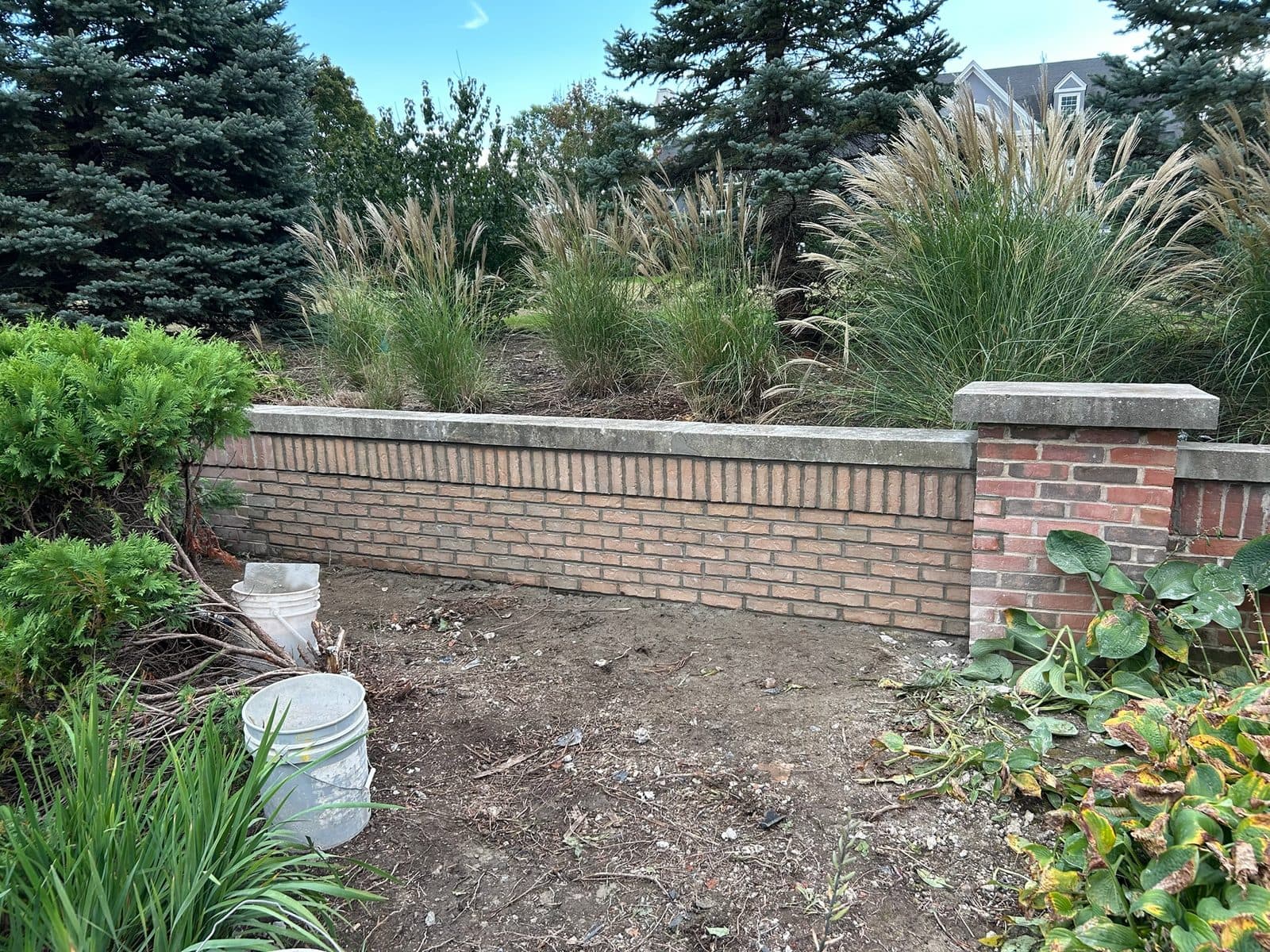
Masonry caulking and joint sealant in Oak Lawn, IL
Masonry caulking in Oak Lawn, IL is the least glamorous line on an estimate and one of the most consequential. Paul Lally's Masonry Inc. provides masonry caulking and joint sealant work in Oak Lawn — sealing expansion, control, and perimeter joints with backer rod and the correct sealant for each substrate, and repointing the mortar joints that should never have been caulked. Family-owned, serving Chicagoland since 1988, insured. Free on-site estimate: (708) 448-8866.
Done right, sealant keeps water out of joints that mortar physically cannot handle. Applied where it never belonged, it traps water inside a wall and quietly does damage for years.
The rule: caulk goes in joints that move
Masonry has two completely different kinds of joints, and confusing them is the most common error in the trade.
| | Mortar joints | Sealant joints | |---|---|---| | What they are | The joints between brick, block, and stone units | Expansion, control, and perimeter joints | | How they behave | Rigid — they hold the wall together | Flexible — they absorb movement | | Correct material | Matched mortar, repointed | Backer rod and elastomeric sealant | | What fails | Erosion, cracking, sandy mortar | Adhesion loss, hardening, splitting | | The classic mistake | Caulked instead of repointed | Filled with no backer rod |
Caulk in a mortar joint is flexible where the wall needs rigidity and impermeable where the wall needs to dry — and it hides deteriorating mortar rather than replacing it. When we find caulked mortar joints in Oak Lawn, and we find them constantly, the caulk has to come out before the wall can be repointed properly.
Where sealant genuinely belongs
- Window and door perimeter joints — where the frame meets the masonry
- Expansion joints in brick veneer, which absorb the brick's thermal movement
- Control joints in block walls
- Dissimilar-material joints — masonry to metal panel, precast, or wood trim
- Coping and cap joints on parapets and freestanding walls
- Through-wall penetrations — vents, conduit, hose bibs, light fixtures, sign anchors
Why sealant work fails early
No backer rod. The big one. Sealant needs to bond to two faces of a joint — the two sides — and stay free at the back so it can stretch. Backer rod sets the depth and breaks that back bond. Gun sealant into a joint with no rod and it bonds on three sides; the first real thermal cycle tears it.
Wrong bead geometry. A bead wants roughly a two-to-one width-to-depth ratio. Too deep and it is stiff and tears; too shallow and there is not enough material to stretch. The backer rod depth sets this, which is why the rod is not optional.
Dirty or damp joint faces. Sealant bonds to what it touches. Old residue, dust, efflorescence, or a damp surface means it bonds to that instead of to the masonry.
Wrong chemistry for the substrate. Sealants are not interchangeable. Urethanes handle abrasion and movement on brick and concrete; porous stone needs a non-staining product, because the wrong chemistry bleeds oils into limestone and leaves a permanent dark halo along every joint.
Sealing before finding the leak. Sealant is not a leak-detection method. Water entering through failed flashing, an open mortar joint above, a cracked sill, or a corroding lintel goes straight past a perimeter bead.
Sealing things that must stay open. Weep holes are drains. Caulking them shut converts a drainage wall into a wall that holds water.
Oak Lawn's two sealant situations
The postwar residential stock. Oak Lawn built out fast through the 1950s and 1960s — brick ranches, Georgians, Cape Cods and bungalows, with a major wave of rebuilding after the 1967 tornado. That housing is solid or early veneer masonry with few designed movement joints in the wall itself, so the legitimate sealant here is at perimeters: windows, doors, penetrations, and where masonry meets another material. Most of what we find is decades of caulk applied over failing mortar and around windows replaced without anyone cutting out the previous bead.
The commercial corridor. The 95th Street retail and medical-office stretch, the buildings near the hospital campus, and the multi-unit property along the arterials bring genuine designed joints — control and expansion joints, precast and panel transitions, storefront perimeters. Those are maintenance assets on a service cycle rather than repairs.
Both sit in the same Cook County climate: wide temperature swings, dozens of freeze-thaw cycles a winter, and driving rain on every west elevation. Masonry moves more here than owners expect, which is exactly why the movement joints exist.
Our process
- Diagnose the actual leak path before choosing a joint to seal.
- Identify every substrate on the elevation — brick, limestone, cast stone, metal, wood — because they do not all take the same product.
- Cut out the old sealant completely and clean residue from both joint faces.
- Repair the masonry where joint faces are spalled or surrounding mortar has failed.
- Install backer rod at the correct depth for the joint width.
- Prime where the substrate requires it.
- Gun and tool the bead so it wets out fully to both faces in the correct profile.
- Verify the details — weeps left open, penetrations sealed, coping joints addressed.
What drives the cost of caulking in Oak Lawn
Linear footage of joint · how stubborn the existing material is to remove · height and access, from ground-floor windows to an upper elevation or a commercial facade · sealant type, including non-staining products where stone is involved · substrate preparation and priming · masonry repairs needed first · season, since sealants have temperature and moisture limits for proper cure. We price it after we look, and the estimate is free — (708) 448-8866.
Paul Lally's Masonry Inc. is a family-owned, insured masonry contractor serving Chicago and the Chicagoland suburbs since 1988 — tuckpointing, brick repair and replacement, chimney repair and rebuilds, lintel replacement, masonry restoration, and waterproofing for residential and commercial properties. Built on Craftsmanship. Backed by Experience. Free on-site estimates — call (708) 448-8866.
Serving Oak Lawn and the southwest suburbs
We handle sealant and caulking work throughout Oak Lawn's 60453 — the ranch and bungalow streets off Cicero and Central, the 95th Street commercial corridor, and the medical and multi-unit property near the hospital campus — and across the surrounding Cook County suburbs. Related work often runs with tuckpointing in Oak Lawn, limestone and sill repair in Oak Lawn, lintel replacement in Oak Lawn, and masonry waterproofing nearby. We do the same work in Evergreen Park, Burbank, Chicago Ridge, Hickory Hills, and Worth.
Why Oak Lawn homeowners and owners call Paul Lally's Masonry Inc.
We tell you which joints on your building should be sealed and which should be repointed — getting that backwards is how walls end up holding water. We use backer rod, match the sealant to the substrate, leave weep holes open, and find the leak before we seal anything. Family-owned since 1988, insured, and the family name is on every job. Built on Craftsmanship. Backed by Experience.
Sealant joints split, pulled away, or leaking around windows? Request a free on-site estimate or call (708) 448-8866.
Caulking & Joint Sealant in Oak Lawn, IL — Frequently Asked Questions
How much does masonry caulking cost in Oak Lawn, IL?
Sealant work is priced by the linear footage of joint, the height and access, how much old material has to be cut out and cleaned off, the sealant type each substrate requires, and whether masonry repair is needed first. Paul Lally's Masonry Inc. gives free on-site estimates in Oak Lawn — call (708) 448-8866.
What is the difference between caulking and tuckpointing?
Tuckpointing replaces failed mortar in the joints between masonry units, which are meant to be rigid and structural. Caulking fills joints designed to move — expansion and control joints, and the perimeters around windows, doors, and where two different materials meet.
Should mortar joints ever be caulked?
No. Caulk in a mortar joint is a cosmetic patch that traps water behind it, and because it is flexible and impermeable it does none of the work mortar does. Failed mortar joints need repointing, and caulked ones usually need the caulk cut out before the wall can be repointed properly.
What is backer rod and why does it matter?
It is a compressible foam rod pressed into the joint before sealant is applied. It sets the sealant's depth, keeps it from bonding to the back of the joint, and gives the bead the right shape to stretch — without it, sealant bonds on three sides and tears the first time the joint moves.
How do I know my sealant joints have failed?
Look for beads that have pulled away from one side of the joint, gone hard and cracked, split down the middle, or turned chalky. Water stains inside near a window head, or damp interior corners after driving rain, are the symptoms that usually get noticed first.
Can you caulk over old caulking?
It should not be done. New sealant applied over failed sealant bonds to a failing surface and pulls away with it, usually inside a season. The old material has to be cut out and both joint faces cleaned so the new bead bonds to sound substrate.
Does the sealant type matter on limestone sills?
Considerably. Some sealant chemistries bleed oils into porous stone and leave a permanent dark halo along the joint that does not wash off. Stone joints need a non-staining sealant selected for that substrate.
Do you seal weep holes?
Never — those are drains, not defects. Caulking weep holes shut converts a brick veneer wall that is designed to let water in and drain it back out into a wall that holds it, which is one of the most damaging things done to modern brick.
Caulking & Joint Sealant in Nearby Areas
Other Masonry Services in Oak Lawn, IL
Learn more about our caulking & joint sealant services across Chicagoland, or view all service areas.
Free on-site estimates across Chicagoland.