
Limestone / Sill Repair · Homer Glen, IL
Limestone Sill Repair in Homer Glen, IL — Small Stones Doing a Big Job
On a Homer Glen custom home, the limestone at every window was chosen for how it looks. Whether the wall below stays dry depends on how it was set.
Quick Answer
Limestone sill repair in Homer Glen, IL fixes cracked, spalled, stained or back-sloped limestone and cast-stone sills, window heads and watertables — by patching, dutchman repair or replacement, and by resealing the end joints that let water in. Paul Lally's Masonry, family-owned and insured since 1988, offers free on-site estimates at (708) 448-8866.
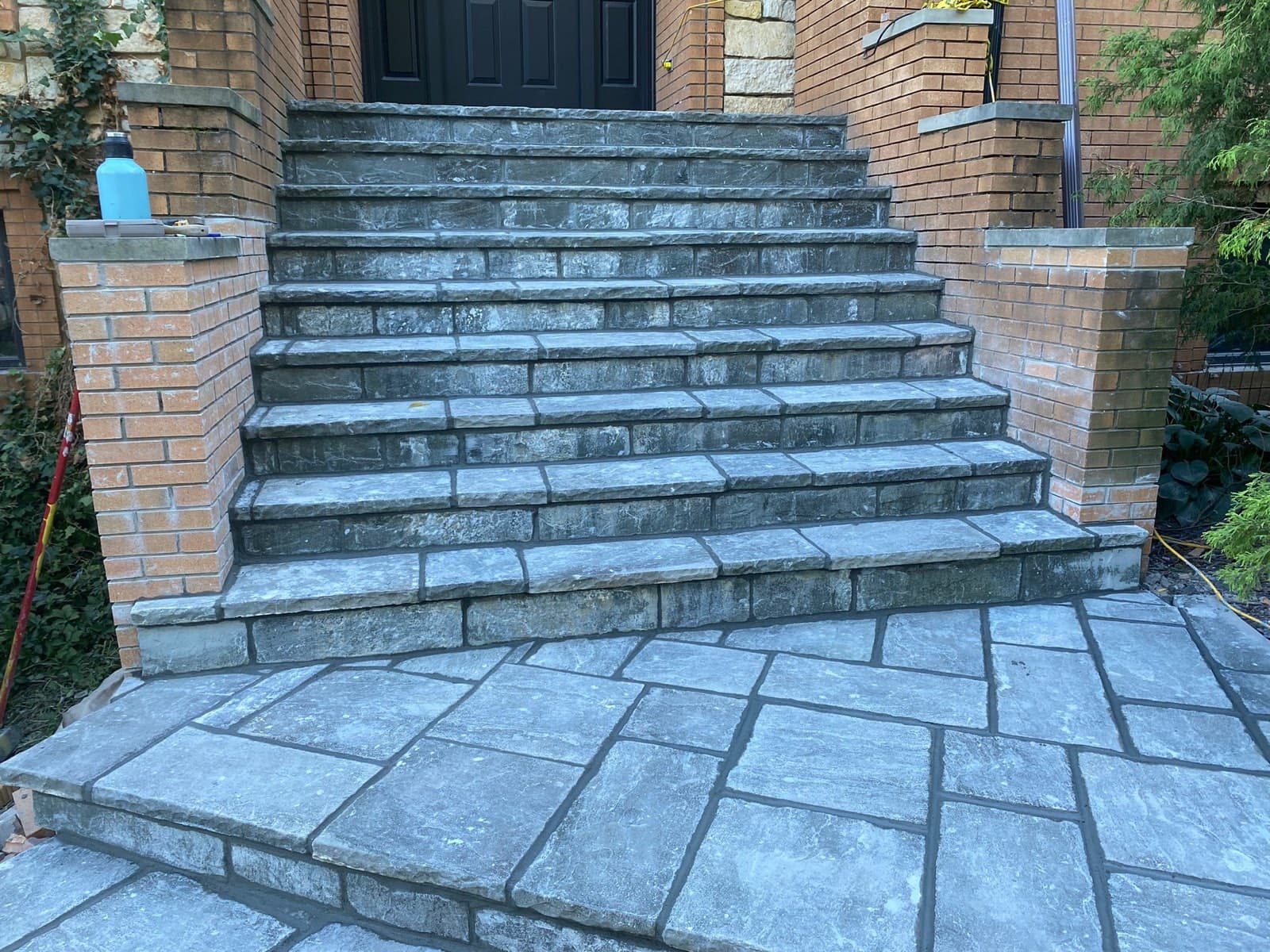
Limestone sill repair in Homer Glen, IL restores the stone at the bottom of each window — and the window heads, watertables and stone trim around it — by patching, dutchman repair or replacement, and by resealing the joints where most of the water gets in. Paul Lally's Masonry repairs limestone and cast-stone sills on Homer Glen homes with free on-site estimates — call (708) 448-8866.
A sill looks like trim. It is actually a drainage component. Every time it rains, it collects the water running off the window and has one job: throw it clear of the wall below. When it stops doing that, the brick or stone underneath starts paying for it.
Paul Lally's Masonry Inc. is a family-owned, insured masonry contractor serving Chicago and the Chicagoland suburbs since 1988 — tuckpointing, brick repair and replacement, chimney repair and rebuilds, lintel replacement, masonry restoration, and waterproofing for residential and commercial properties. Built on Craftsmanship. Backed by Experience. Free on-site estimates — call (708) 448-8866.
Homer Glen homes and their stone
Homer Glen, in Will County's 60491 zip code, is largely a community of larger custom and semi-custom homes built from the 1980s through the 2000s on generous lots. Most of them use stone generously: limestone or cast-stone sills at every window, stone window heads and keystones, a watertable course running around the base of the house, and large areas of stone veneer alongside the brick.
There is real heritage behind that. The Des Plaines valley just north, around Lemont, has quarried dolomite limestone since the canal era, and that pale stone has been part of local building for a century and a half. Many Homer Glen homes echo it — some with natural limestone, many more with cast stone made to resemble it.
What these houses share is age. Thirty to forty years in, the sealant at the sill ends has reached the end of its life, the first freeze-thaw cracks have appeared, and the details that were rushed at construction are showing.
How sills fail
- Cracked sills — often a single crack near the middle of a long sill, or at a bearing end where the stone was set on an uneven bed
- Open end joints where the sill meets the brick or veneer, letting water straight into the wall
- Failed sealant — hardened, shrunken, split or pulled away from one side
- Missing or bridged drip — the groove under the front edge filled with sealant, paint or dirt, or never cut
- Spalling and delamination, with the face of the stone flaking off in layers
- Staining streaking down the wall below
- Sills sloping back toward the window after settlement, sending water into the frame instead of away from it
The last one is worth checking on every window. Lay a level on the sill. If water would run toward the glass, it is going toward the glass.
Repair, dutchman or replacement
Patch and seal. For hairline cracks and small surface losses on otherwise sound stone. Cracks can be pinned, and losses filled with a mineral repair mortar matched to the stone's colour and texture.
Dutchman. For a damaged corner, end or edge on a sill that is otherwise sound. The bad section is cut out square and a new piece of matching stone is fitted, anchored and set in. On a long natural limestone sill, this preserves most of the original.
Replacement. For a sill cracked through its full section, delaminating, spalled across its face, or set at the wrong slope. The old unit is cut out, the bed is corrected, a new sill is set with proper slope and a clean drip, and the end joints are detailed correctly.
We will tell you which applies to each window, and which windows do not need anything yet.
Why it should not wait
Water from a failed sill goes straight into the wall below it. In brick veneer, that means wet sheathing, wet framing around the window rough opening, and eventually rot you only find when the window comes out. In masonry, it means freeze-thaw damage to the brick and mortar under every bad sill.
Sealant at the sill ends is the cheapest maintenance item on the house and the most neglected. Caught early, it is a resealing visit. Left, it is stone repair, brick repair and interior repair.
How we work
- Inspect every sill, head and watertable, checking cracks, slope, drips, end joints and the wall below.
- Separate stone types — natural limestone and cast stone are repaired with different materials.
- Repair or replace each unit as its condition calls for.
- Correct the slope so every sill sheds water away from the window.
- Cut or clear the drip so water drops clear of the wall.
- Seal the end joints with a flexible sealant over backer rod, and repoint adjacent mortar joints where they have failed.
- Repair the masonry below where water has already done damage.
Materials
Natural limestone matched for colour and bed, or cast stone matched to the existing units. Mineral repair mortars compatible with the stone, not cementitious patches that trap moisture and fall out. Stainless pins and anchors. A high-quality, flexible sealant at sill ends — see our caulking service — and mortar matched to the surrounding brick.
What drives the cost
The number of sills, heads and watertable runs involved. Patch versus dutchman versus replacement on each. Natural limestone versus cast stone. Sill length and profile. Height and access on two-storey elevations. Repairs to the brick or veneer below. The estimate is free, on-site and in writing, with each window listed — call (708) 448-8866.
Serving Homer Glen and the surrounding area
We work throughout Homer Glen and the nearby towns, including Lemont limestone and sill repair and Orland Park limestone and sill repair. In Homer Glen we also handle caulking, lintel replacement and tuckpointing. Related reading: our limestone sill repair guide and terra cotta, cast stone and sandstone. Service hub: limestone and sill repair.
Keep the stone shedding water
Family-owned since 1988, insured, and our name is on every job.
Get a free on-site estimate — or call (708) 448-8866. Built on Craftsmanship. Backed by Experience.
Limestone / Sill Repair in Homer Glen, IL — Frequently Asked Questions
How much does limestone sill repair cost in Homer Glen, IL?
It depends on how many sills are involved, whether each needs patching, a dutchman or full replacement, natural limestone versus cast stone, sill length, height and access, and whether the brick below needs repair. Paul Lally's Masonry provides a free on-site estimate with each sill listed.
Can a cracked limestone sill be repaired, or does it need replacing?
A hairline crack in a sound stone can often be pinned and sealed, and a damaged corner or edge can be fixed with a dutchman. A sill broken through its full section, delaminating in layers, or sloping back toward the window is usually better replaced.
What is a dutchman repair?
A dutchman cuts out a damaged section of stone and fits in a new piece of matching stone, anchored and set in place. It preserves the rest of the original sill and is often the right choice for a damaged end or corner on a long sill.
Should the joints at the ends of my sills be caulked or mortared?
On most sills the end joints should be sealed with a flexible sealant over backer rod, because the stone moves differently from the brick around it and rigid mortar there cracks open. That sealant has a service life and needs replacing when it hardens, shrinks or pulls away.
Why is water staining the brick under my window sill?
Usually the sill has lost its drip, the drip is bridged by dirt or sealant, or the sill no longer slopes away from the window. Water runs back along the underside and down the face of the wall instead of dropping clear.
Is cast stone repaired the same way as natural limestone?
Similar principles, different materials. Cast stone is a manufactured concrete product, so patching materials and replacement units are matched to it rather than to quarried limestone, and the two weather differently over time.
Limestone / Sill Repair in Nearby Areas
Other Masonry Services in Homer Glen, IL
Learn more about our limestone / sill repair services across Chicagoland, or view all service areas.
Free on-site estimates across Chicagoland.