
Chimney Repair & Rebuilds · La Grange, IL
Chimney Repair in La Grange, IL — Old Chimneys Need Soft Mortar, Not Strong Mortar
La Grange has a lot of genuinely old brick, and old brick is soft. Rebuild one of these chimneys with a strong modern mortar and you have not strengthened it — you have made the brick the sacrificial part instead of the mortar, and it will spall within a few winters.
Quick Answer
Paul Lally's Masonry Inc. provides chimney repair and rebuilds in La Grange, IL — repointing and rebuilding deteriorated stacks, forming proper crowns, addressing flashing and caps, using mortar matched softer than the brick it holds. Family-owned since 1988, insured. Free on-site estimates — call (708) 448-8866.
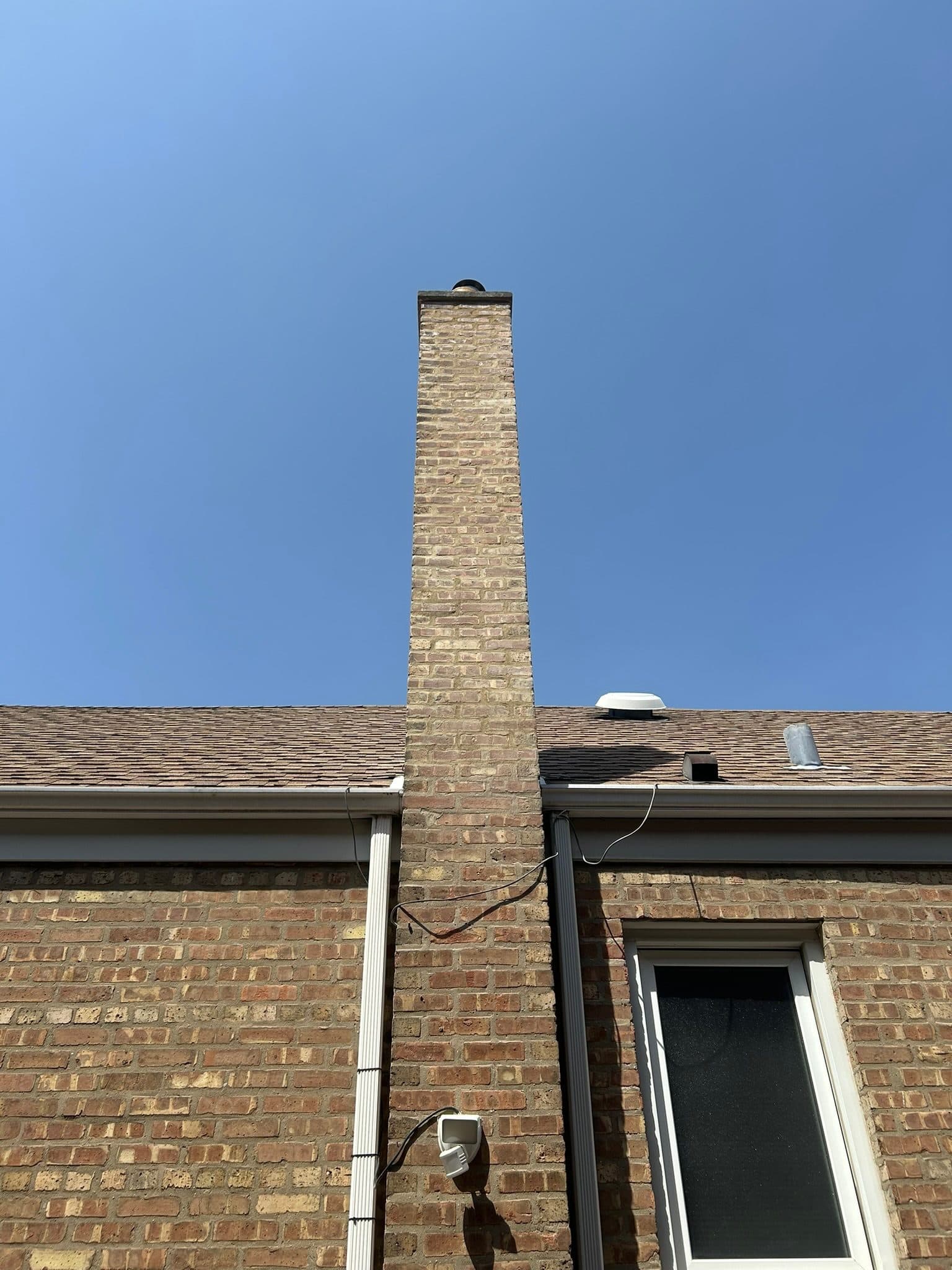
Chimney Repair in La Grange, IL
Chimney repair in La Grange, IL runs into a problem that does not come up much in newer towns: a lot of this brick is genuinely old, and old brick is soft. Paul Lally's Masonry Inc. repairs and rebuilds chimneys throughout La Grange and the western suburbs. Family-owned since 1988, insured, free on-site estimates. Call (708) 448-8866.
That single fact decides whether a chimney rebuild here lasts fifty years or ruins the brick within five.
The Rule That Governs Old Chimneys
Mortar must be softer than the brick it sits against.
Mortar is the sacrificial component of any masonry wall. It is supposed to be the part that gives — because when a joint fails you rake it out and replace it, and when a brick face fails you cannot put it back.
Now take a chimney built with soft, early machine-made or hand-made brick, laid in a lime-rich mortar, and repoint it with a strong modern Portland-heavy mix. You have inverted the relationship. Movement, moisture and freeze pressure that should be relieved in the joint now get forced into the brick faces instead.
The result is unmistakable once you know it: crisp grey joints standing slightly proud of brick faces that are crumbling away. That is not weather damage. That is a repair that has begun eating the chimney.
"Stronger mortar" is the single most expensive mistake made on old La Grange chimneys.
La Grange's Chimneys Are Not All the Same Age
The village's building stock spans a wide range, and the right mortar changes with it.
The older stock — the pre-1930 homes through the village's established residential neighbourhoods, the Victorians and early-century houses, and the older masonry near the downtown and the Metra corridor — carries tall, slender chimneys in soft brick and lime mortar, often with corbelled detailing at the top. These want soft, lime-rich mixes and careful hand work.
The mid-century and later stock uses denser machine-made brick laid in Portland-based mortar, which is more weather-tolerant and takes a Type N mix.
And a modern wrinkle affects both. Many of these chimneys were built to serve a coal or early gas furnace and now vent almost nothing, because a high-efficiency furnace was installed and vented out a sidewall. A cooler, wetter, much smaller exhaust in an oversized flue condenses inside the chimney, wetting the masonry from the inside while weather works on the outside — which is why an under-used chimney often deteriorates faster than a hard-working one.
Why Chimneys Fail Before Walls
Whatever the era, a chimney is the hardest-working masonry on a house. Above the roofline it has four weather faces plus the top, no roof over it, and no heated interior behind it to drive moisture out. It stands in full wind exposure, so it takes more driven rain and loses heat faster than any wall.
Then Chicagoland freeze-thaw does the rest — water in saturated brick and mortar freezes, expands, and levers the material apart, dozens of times each winter.
That is why chimney deterioration is never even. It is worst at the top and improves on the way down, and that gradient tells a mason how deep the repair has to go.
Signs of Chimney Damage
From the ground, with binoculars:
- A cracked, spalled or missing crown, or a thin mortar wash instead of a real sloped crown
- Mortar joints receding, dark or open in the top courses
- Spalling brick — faces flaked or sheeted off
- Missing brick or visible gaps in the upper courses
- A missing, rusted or dislodged cap
- Clay flue tile cracked or sitting proud of a broken crown
- Dark saturation staining or white efflorescence on the stack
- A visible lean, or a gap opening between chimney and house
- Debris in the firebox — sand, mortar crumbs or tile fragments
Inside, check the attic where the chimney passes through, and the top-floor ceiling nearby.
Risks of Waiting
Chimney damage accelerates itself. Once the crown cracks, water enters the top of the stack directly rather than running off it, saturating the masonry and speeding up freeze-thaw. Open joints admit more water, which opens them further, while that water runs down into flashing, framing and finishes.
Structurally, a chimney that has lost its mortar is loose brick standing several feet above your roof. And where anything still vents into it, a cracked or spalled flue becomes a combustion-safety question that warrants a qualified inspection rather than a wait-and-see.
Our Process
- Inspect from the roof, plus the flue and the interior — not from the driveway.
- Identify the era and the materials, because that sets the mortar and the method.
- Sound the masonry to find where sound material actually begins.
- Establish the rebuild depth and confirm it with you before demolition.
- Set up access and protection — staging or roof jacks, roof membrane and ground protection.
- Take down the deteriorated section, salvaging brick worth reusing.
- Inspect the flue and advise where relining is warranted.
- Rebuild in matched brick and compatible mortar, holding original coursing, bond and any corbelled top.
- Form a proper crown — sloped, with a bond break at the flue tile and an overhang with a drip edge past the brick face.
- Repoint the sound masonry below, address flashing and counterflashing, fit a cap sized to the flue, and walk the finished work with you.
Materials
Lime-rich and softer mixes for the village's older soft brick. Type N for most twentieth-century chimney brick. Type S only where conditions genuinely warrant it. Salvaged original brick wherever it is sound, since it matches better than anything new.
A formed concrete crown with an overhang and drip edge — not a troweled mortar wash — is a small share of the cost and most of the service life.
Related work runs alongside: tuckpointing, brick repair and brick replacement, masonry restoration, and caulking at flashing transitions.
What Drives the Cost
- How far down sound masonry is found — the single largest variable
- Roof pitch, height and access, and whether staging is required
- Chimney size — a tall multi-flue stack is a different job than a single flue
- Crown and cap scope, and flue condition
- Brick matching, especially on older material
- Flashing coordination with roofing
- Season, since mortar has curing temperature limits
Nobody can price this honestly over the phone. Expect a free on-site inspection and a written scope naming the expected rebuild depth.
Serving La Grange and the Western Suburbs
Paul Lally's Masonry Inc. is a family-owned, insured masonry contractor serving Chicago and the Chicagoland suburbs since 1988 — tuckpointing, brick repair and replacement, chimney repair and rebuilds, lintel replacement, masonry restoration, and waterproofing for residential and commercial properties. Built on Craftsmanship. Backed by Experience. Free on-site estimates — call (708) 448-8866.
We work throughout La Grange and neighbouring Western Springs, Hinsdale, Willowbrook and Downers Grove.
Get a Free La Grange Chimney Assessment
If your crown is cracked or your top courses are crumbling, have the stack looked at by someone who will match the mortar to your brick rather than overpower it. Call (708) 448-8866 or request a free estimate.
Chimney Repair & Rebuilds in La Grange, IL — Frequently Asked Questions
How much does chimney repair cost in La Grange, IL?
The dominant variable is how far down sound masonry begins, and nobody can determine that from the ground. Beyond that it is roof pitch and access, chimney size, whether the crown and flue need work, and how hard the brick is to match. Paul Lally's Masonry Inc. inspects from the roof and puts the estimate in writing — call (708) 448-8866.
Why does an old chimney need softer mortar?
Because mortar must always be softer than the brick it sits against. Mortar is the sacrificial part — it is meant to give first, since a joint can be replaced and a brick face cannot. A hard modern mix on soft older brick reverses that, forcing stress into the brick faces until they spall.
Does my chimney need repointing or a full rebuild?
Repointing works while the brick itself is sound and only the joints have eroded. Once faces have spalled through, units have lost bond, or the top courses move by hand, there is nothing solid to pack mortar against and the deteriorated section has to come down and be rebuilt.
My roof is new and the chimney still leaks. Why?
Because most chimney leaks are not roof leaks. Water enters through a cracked crown, open mortar joints or saturated brick and runs down inside the chimney, appearing at a ceiling well away from where it got in. Flashing is the third path and the one most often blamed for the other two.
What is the difference between a chimney crown and a cap?
The crown is the sloped slab across the top of the masonry that sheds water off the chimney; the cap is the cover over the flue opening keeping out rain, animals and debris. A chimney needs both, and a proper crown overhangs the brick with a drip edge rather than being troweled flush.
My chimney is leaning away from the house. Is that urgent?
Yes, treat it as urgent. A leaning stack has already lost its mortar bond or has a problem beneath it, and it cannot be pushed back into position. It should be assessed promptly, because a chimney separating from the structure is a falling-masonry hazard.
Do you work on older and historic homes in La Grange?
Yes — a good share of our La Grange work is on the village's older stock, where soft brick and lime-rich original mortar need matching rather than overpowering. Paul Lally's Masonry Inc. has been doing this since 1988. Free on-site estimates — call (708) 448-8866.
Chimney Repair & Rebuilds in Nearby Areas
Other Masonry Services in La Grange, IL
Learn more about our chimney repair & rebuilds services across Chicagoland, or view all service areas.
Free on-site estimates across Chicagoland.