
Brick Repair · La Grange, IL
Brick Repair in La Grange, IL — Century-Old Brick Needs a Century-Old Approach
A lot of masonry advice written for La Grange isn't really written for La Grange. This village's brick is older and softer than the template assumes, and that changes the repair.
Quick Answer
Brick repair in La Grange, IL covers spalled, cracked, and loose brick on the village's largely pre-1930s housing stock. The decisive factor is mortar hardness — soft historic brick requires a soft lime-rich mix, or the brick face spalls at the joints. Paul Lally's Masonry has repaired Chicagoland brick since 1988. Free estimates: (708) 448-8866.
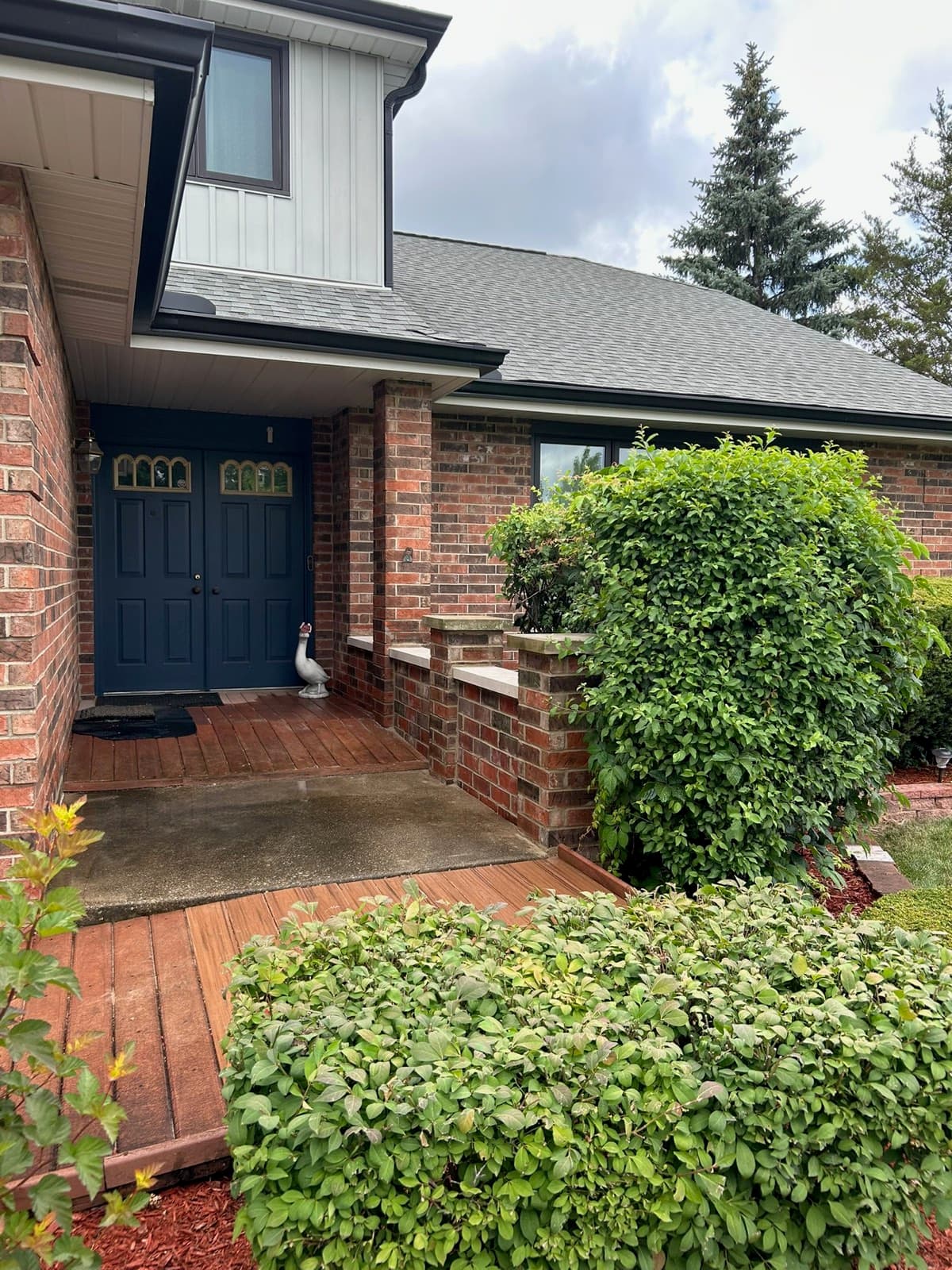
Search for a mason in La Grange and you'll find a lot of pages that mention La Grange exactly as often as required and never once describe it. Same copy, different village name, generic advice about cracks and moisture.
That matters here more than it would in most places, because La Grange's brick is genuinely different from the template's assumptions. A great deal of it predates 1930 — softer, more porous, laid in lime mortar — and brick repair in La Grange, IL done to a modern spec will damage it. Paul Lally's Masonry has been repairing Chicagoland brick since 1988. Here's what this village's masonry actually needs.
Brick repair or tuckpointing? The clean test
| Symptom | What failed | The fix | |---|---|---| | Mortar soft, sandy, receding | The joints | Tuckpointing / repointing | | Brick faces flaking, powdering, popping | The bricks — spalling | Brick repair / replacement | | Bricks cracked through the unit | Unit failure | Replacement + fix the cause | | Spalling concentrated at the joint edges | Mortar too hard for the brick | Repoint correctly; damage is permanent | | Cracked brick in a line above an opening | Rusting lintel | Lintel replacement | | Stair-step crack through joints | Wall movement | Diagnose first | | Bricks that rock by hand | Lost bond | Replacement, often localized rebuild |
Most jobs here are a combination — repair the failed units, repoint the joints around them.
The decision that matters most on a La Grange house
Mortar must always be softer than the brick beside it.
Mortar is the sacrificial element in a wall. It's deliberately weaker than the brick so that thermal movement, moisture cycling, and settlement are absorbed by the joint — cheap and straightforward to replace. That's why century-old walls are still standing.
Pack a modern, Portland-rich mortar against soft pre-1930s brick and the physics invert. The joint no longer yields, so the brick face becomes what gets sacrificed and spalls along every mortar line.
A "stronger" repair destroys the wall it was sold to protect, and it isn't reversible. Repointing can be redone; brick faces cannot be put back.
How to spot it on your own house: look for crisp, hard, grey modern joints sitting against brick that's flaking specifically at the joint edges. That's a previous repointing actively eating the masonry — and it's the most common thing we're called to correct in the western suburbs.
Signs your brick needs repair
- Flaking, powdering, or popped faces — the spalling signature
- Bricks cracked through the unit, not just the joint
- Loose bricks that move under hand pressure
- Missing chunks at corners, sills, steps, and the base of the wall
- A rough, sandy surface where a smooth fired face used to be
- Spalling at the joint edges — mortar hardness, see above
- Cracked brick stacked above a window or door — suspect the lintel
- Efflorescence and damp interior walls behind the affected area
- Brick chips and sand collecting on the ground below
- A uniformly rough, matte surface across an elevation — likely blast-cleaned at some point, and now absorbing badly
What waiting costs
Spalled brick has lost its weather-resistant fired face permanently. It absorbs more water every year, so damage compounds rather than holding steady — it spreads into neighbouring units and the mortar, water reaches the interior, and a scattered handful of failed bricks becomes a section rebuild.
On a period home there's a second cost: original brick, once gone, can only be approximated. Matching gets you close; it doesn't get you back what was there.
How Paul Lally's Masonry repairs brick here
- Read the building first. Era, brick hardness, mortar type. On a pre-1930s home this comes before any scope discussion, because it determines the mortar.
- Diagnose the cause. Joints, gutter, grade, sill, lintel, or a previous bad repair. Replacing brick without closing the water path just resets the clock.
- Match the brick — size, colour range, texture, and face. Original units salvaged from your own wall first; reclaimed stock second.
- Cut out the failed unit cleanly, by hand and with careful grinding, without cracking neighbours. On soft brick this is slow work, and speed permanently chips the arrises.
- Prep the pocket — clean, dampened, ready to take mortar so the new unit genuinely bonds.
- Set the replacement with full bed and head joints, aligned to the coursing and plumb with the wall face.
- Match the mortar — soft, lime-rich on historic brick, matched for colour, sand, and texture.
- Tool the joint to the profile the wall already has.
- Repoint surrounding joints where they've failed.
- Clean gently, if at all — never sandblasting, never high pressure — and walk the work with you.
Materials
Salvaged and reclaimed brick matched for size, colour range, and texture. Mortar matched for type, colour, sand, and joint profile — soft lime-rich or low-Portland mixes on pre-1930s masonry, standard Type N on later work, Type S only where structure and exposure genuinely call for it. Matched Indiana and Illinois limestone and tinted stone repair mortars where sills, lintels, or trim are involved.
What we don't use on a La Grange period home: hard modern high-strength mortar, sandblasting, high-pressure washing, film-forming sealers, or masonry paint.
What drives the cost
- How many bricks are actually failing — and how many more appear once the area is opened
- Location on the building — ground level versus an upper storey or gable requiring staging
- Brick matching difficulty and salvage sourcing lead time
- Whether the cause needs fixing too — a rusted lintel, a bad downspout, an eroded sill
- Repointing scope around the repair
- Stone involvement where sills or trim are also failing
- Undoing previous bad work — hard mortar or blast damage from an earlier repair
- Access — mature landscaping, tight side yards
Be wary of hourly rates or per-brick figures quoted before anyone has seen the wall. Paul Lally's Masonry gives a free on-site estimate in writing.
Local context: what's actually standing in La Grange
The village grew as a rail suburb from the 1870s onward and retains an unusually intact period housing stock, including substantial historic districts. That produces a specific masonry profile that generic advice misses entirely:
Victorians and Queen Annes — the oldest brick, softest mortar, and the most decorative detail to lose.
American four-squares and bungalows — solid multi-wythe brick, limestone sills and trim, masonry chimneys.
Tudors and Colonial Revivals — brick with substantial stone accents, quoins, and trim, and often more complex elevations.
Mid-century and later stock — harder brick, some veneer, and a genuinely different repair approach.
Across the older stock the failures cluster predictably: north and west elevations taking wind-driven rain; the bottom three courses where snowpack, splashback, and de-icing salt sit; around and under limestone sills where drip edges have eroded; at chimney shoulders above the roofline; and anywhere a previous repointing job locked soft brick into hard modern mortar.
None of that is a defect. It's a hundred-plus Cook County winters arriving on schedule on houses built to be maintained.
Related masonry services in La Grange
Brick repair here commonly travels with tuckpointing and repointing, brick replacement for units past saving, limestone and sill repair, lintel repair and replacement, chimney repair and rebuilds, caulking and joint sealant, and masonry waterproofing once the wall is sound. For whole-house scopes see residential masonry restoration or, on a period home, historic masonry restoration.
Worth reading: why masonry repairs fail, reading a building's age from its brick and mortar, why your brick repair doesn't match, and historic masonry restoration and lime mortar.
Nearby: tuckpointing in La Grange, masonry restoration in La Grange, limestone and sill repair in La Grange, brick repair in Western Springs, and masonry restoration in Hinsdale.
Talk to a mason who reads the building first
Paul Lally's Masonry Inc. is a family-owned, insured masonry contractor serving Chicago and the Chicagoland suburbs since 1988 — tuckpointing, brick repair and replacement, chimney repair and rebuilds, lintel replacement, masonry restoration, and waterproofing for residential and commercial properties. Built on Craftsmanship. Backed by Experience.
We'll tell you what era your brick is, which mortar it actually wants, and how small a repair we can get away with. Our family name is on every job.
Free on-site estimates — call (708) 448-8866 or request an estimate online.
Brick Repair in La Grange, IL — Frequently Asked Questions
Why does my La Grange brick need different treatment than a newer house?
Because it's softer. Much of the village's housing predates 1930 and was built with lower-fired brick laid in lime-based mortar, and mortar must always be softer than the brick beside it. A modern high-strength mix packed against that brick makes the brick face the sacrificial element, and it spalls along every joint line — permanently.
Do I need brick repair or tuckpointing?
Tuckpointing fixes the mortar joints; brick repair fixes the bricks themselves. If your joints are soft and receding but the brick faces are intact, you need tuckpointing. If faces are flaking, cracked through, or crumbling, those units need repair or replacement — and the joints around them almost always need repointing too.
How much does brick repair cost in La Grange, IL?
There's no per-brick or hourly figure worth quoting. Cost depends on how many units are failing, where they sit on the building, staging and access, how hard the brick is to match, and whether the cause — a lintel, a gutter, a sill — has to be addressed too. Paul Lally's Masonry provides a free on-site estimate in writing.
Can you match brick on a period home?
Usually. Pre-1930s Chicago-area brick was produced in enormous quantities, so salvaged stock is genuinely available, and original brick removed from your own wall is the best match of all. On unusual or specialty units we'll show you how close the match will be before you commit rather than promise invisible.
My home is in a historic district. Does that change anything?
It can affect what approvals are required and which materials and finishes are acceptable, and that depends on the specific designation — a question for the village and your architect rather than your mason. What we can say is that period-appropriate practice is how we'd approach century-old masonry regardless: matched materials, soft mortar, original fabric preserved.
Why is my brick flaking and crumbling?
That's spalling — water absorbed into the brick froze, expanded about nine percent, and pushed the hard fired face off the softer core. On soft older brick it happens faster, and the usual triggers here are failed mortar joints, a leaking gutter, splashback at grade, or a previous repair done in mortar that was too hard.
Should old brick be pressure washed or sandblasted?
Neither. Fired brick has a hard outer face and a much softer interior, and both methods strip that face away — leaving porous brick that absorbs far more water and deteriorates on a much shorter clock. Historic masonry gets the gentlest effective cleaning method, never the fastest.
Can a few damaged bricks be replaced without redoing the wall?
Almost always, and that's the normal repair. A section only comes down and gets rebuilt when damage is widespread, the wall is bowing or displaced, or the masonry has lost its bond. We scope the smallest repair that genuinely solves the problem.
Brick Repair in Nearby Areas
Other Masonry Services in La Grange, IL
Learn more about our brick repair services across Chicagoland, or view all service areas.
Free on-site estimates across Chicagoland.