
Chimney Repair & Rebuilds · Chicago, IL
Chimney Repair in Chicago, IL — Crowns, Crumbling Mortar, and Rebuilds Done Right
A Chicago chimney takes more weather than any other masonry on the house. Paul Lally's Masonry Inc. repairs and rebuilds them — crown, cap, flashing, and joints — so water stops finding its way into your ceilings.
Quick Answer
Paul Lally's Masonry Inc. provides chimney repair in Chicago, IL — tuckpointing failed joints, rebuilding spalled or leaning brick above the roofline, and repairing crowns, caps, and flashing so the chimney sheds water again. Family-owned, serving Chicagoland since 1988, insured. Free on-site estimates — call (708) 448-8866.
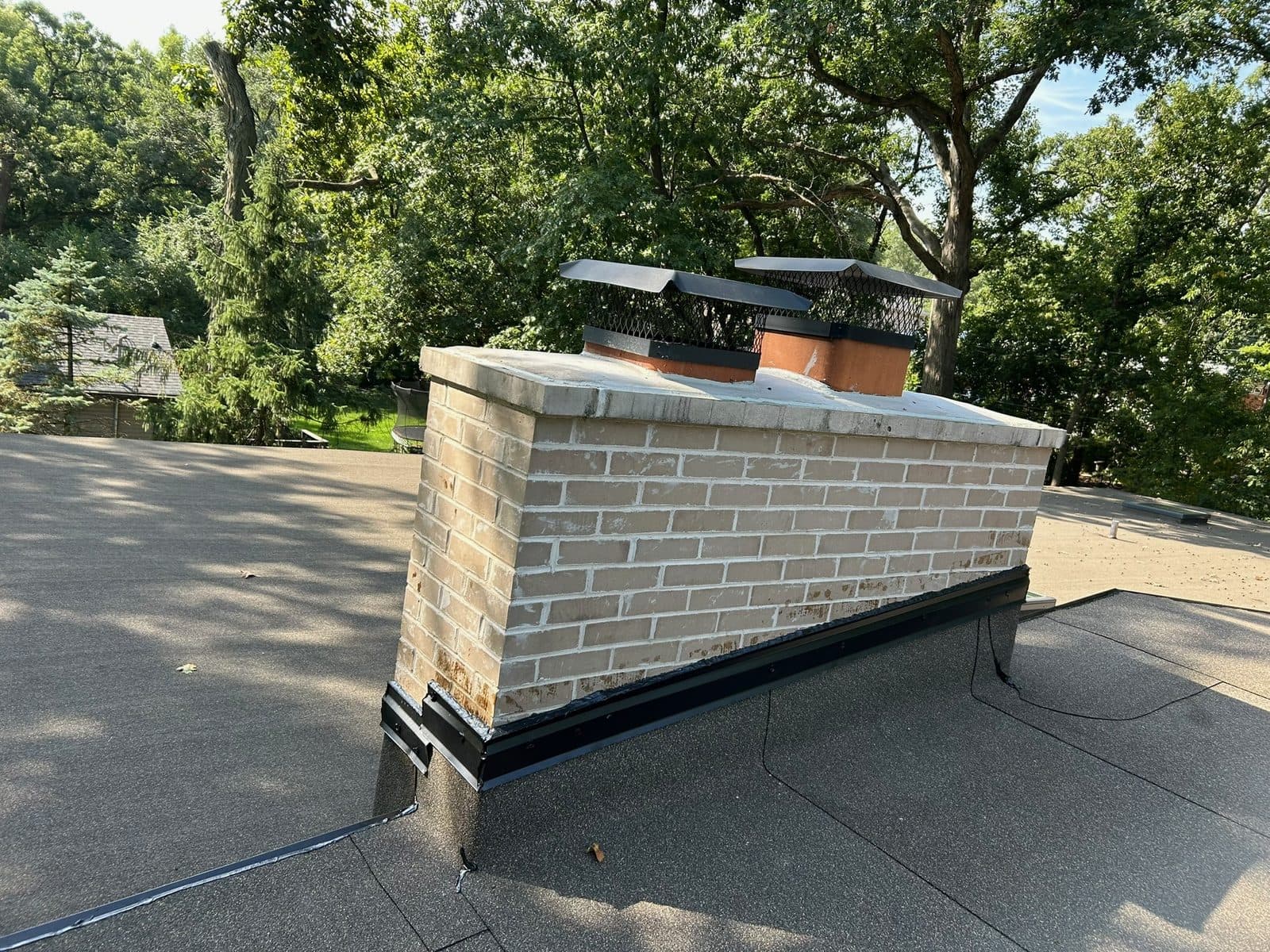
Stand across the street from your house and look at the chimney against the sky. If the top courses look darker, rougher, or slightly out of plumb compared to the brick below the roofline, that's not a trick of the light — that's the part of your masonry that's been taking Chicago weather on all four sides for a hundred years.
Paul Lally's Masonry Inc. provides chimney repair in Chicago, IL — tuckpointing failed joints, replacing spalled brick, rebuilding the section above the roofline, and repairing crowns, caps, and flashing so water stops getting in. We're family-owned and have worked Chicagoland brick since 1988. For a free on-site estimate, call (708) 448-8866.
Why Chicago chimneys fail before the rest of the house
Every other wall on your house has a roof over it. Your chimney doesn't. It's a freestanding masonry column exposed on four sides and from above, and it's built out of the same common brick and lime-based mortar as the rest of a century-old Chicago house — brick that was never meant to be a rain screen.
Add the local climate to that. Lake-effect moisture keeps the masonry damp; then a Chicago winter runs the wall through dozens of freeze-thaw cycles. Water sitting in an open mortar joint or a porous brick freezes, expands, and pries the masonry apart a fraction of a millimeter at a time. Do that for enough winters and the joints rake out, the brick faces spall off, and the whole stack starts to loosen.
That's why, on the bungalow belt, on greystones, and on two-flats across the North, West, and South Sides, the chimney is almost always the first masonry on the house to need real work.
The Chicago housing stock this happens to
- Brick bungalows. Short, wide chimneys on the side or rear, often original common brick with soft mortar. Joints go first, then the crown.
- Greystones. The limestone front gets the attention, but the chimney is common brick and takes the same beating as any other.
- Two-flats and three-flats. Taller stacks, sometimes tall unlined or clay-tile-lined flues, and sometimes a shared or party-wall chimney where two buildings meet. Those need care — the repair affects a neighbor's building too.
- Older frame-and-brick housing. A masonry chimney rising through a frame structure puts all the weather load on the chimney itself.
What we actually repair on a Chicago chimney
Most "chimney problems" are really water problems. Water gets in at one of a handful of predictable places, and the fix depends on which one:
- The crown — the sloped concrete slab on top. When it cracks, water pours straight down into the brick. A cracked crown is one of the most common causes of a leaking chimney.
- The cap — the metal or masonry cover over the flue. Missing or rusted-through caps let rain fall directly down the flue.
- The flashing — where the chimney meets the roof. Failed or improperly set flashing is the single most common source of ceiling stains near a chimney.
- The mortar joints — decades of freeze-thaw rake them out. Chimney tuckpointing renews them so the stack sheds water again.
- The brick itself — once a brick face has spalled off, that unit can't shed water anymore and has to be replaced with a match.
Chimney repair vs. a rebuild in Chicago
This is the question homeowners actually want answered, and it's the one most contractors skip.
If the masonry below the roofline is sound and the damage is concentrated in the exposed top section — crumbling joints, spalled faces, a leaning top few courses — the honest answer is usually a partial rebuild above the roofline: take it down to sound brick, relay it with matched brick and the correct mortar, and pour a new crown. That's a far smaller job than a full teardown, and it's what most Chicago chimneys need.
A full rebuild is warranted when the deterioration runs down into the chase, when the chimney is moving because of something structural below it, or when the brick is so far gone that there's nothing sound to build on. We'll tell you which of those you have — we don't sell rebuilds to houses that need tuckpointing. If you want to think it through before we come out, our guide to chimney repair vs. rebuild walks through the same call, and the signs a chimney needs repair covers what to look for from the ground.
What drives the cost of chimney repair in Chicago
We don't quote chimneys over the phone, and you should be skeptical of anyone who does — the number depends entirely on what we find. The real drivers:
- Height and roofline access. A chimney on a steep, tall two-flat roof is a different job than one on a bungalow's low slope, and access determines the setup.
- Scaffolding and staging. Some chimneys can be reached safely off the roof; others need staging built to work on them properly.
- How far the damage runs. Joints only, versus spalled brick, versus a section that has to come down and be relaid.
- Repair vs. rebuild scope. Rebuilding above the roofline is a bounded job; a full rebuild is not.
- Matching. Sourcing brick that matches century-old Chicago common brick, and mixing mortar to the right color, sand, and — critically — the right strength for soft old brick, takes skill and time.
Get a free on-site estimate and you'll get an actual number based on your actual chimney, in writing, with an explanation of what's failing and why.
Why Chicago homeowners call Paul Lally's Masonry Inc.
Paul Lally's Masonry Inc. is a family-owned, insured masonry contractor serving Chicago and the Chicagoland suburbs since 1988 — chimney repair and rebuilds, tuckpointing, brick repair and replacement, lintel replacement, masonry restoration, and waterproofing, residential and commercial. Built on Craftsmanship. Backed by Experience. Free on-site estimates — call (708) 448-8866.
The family name is on every job, which is the whole reason we don't cut the corners that are easy to cut on a chimney: skimming mortar over failed joints instead of grinding them out, laying hard modern mortar against soft old brick, or leaving a cracked crown because nobody can see it from the ground.
For related work, see our chimney repair and rebuild services, our approach to tuckpointing across Chicagoland, and full-scale masonry restoration. If your walls need attention alongside the chimney, we also cover tuckpointing in Chicago.
Ready for a straight answer on your chimney? Call (708) 448-8866 or request a free estimate.
Chimney Repair & Rebuilds in Chicago, IL — Frequently Asked Questions
How do I know if my Chicago chimney needs repair?
Look for mortar joints you can rake out with a key, brick faces flaking or popping off above the roofline, a cracked or missing crown, rust stains or gaps at the flashing, and water stains on the ceiling near the chimney chase. On Chicago's century-old common-brick chimneys, the section above the roof almost always fails first because it takes weather on all four sides.
What is the difference between chimney repair and a chimney rebuild?
Repair means renewing what's failing — tuckpointing the joints, replacing spalled brick, rebuilding the crown, resetting flashing. A rebuild means taking the chimney down to sound masonry and relaying it with new or salvaged brick. Most Chicago chimneys we see need a partial rebuild above the roofline, not a full teardown.
Why does the top of my chimney look so much worse than the rest?
Because it is exposed on every side and from above, while the rest of the chimney is sheltered by the house. Rain, snow, and lake-effect moisture soak into that brick, then freeze-thaw cycles pry it apart. That's why the section above the roofline is usually the first — and sometimes only — part that needs rebuilding.
I see daylight inside my chimney. Is that serious?
Yes. Daylight visible through the chimney means the mortar joints have opened all the way through the wythe of brick, which lets water and combustion gases move where they shouldn't. It's a sign the masonry has gone past routine tuckpointing and needs a proper evaluation before the next winter.
My ceiling is stained near the chimney — is the chimney the cause?
Very often, yes. Water entering through a cracked crown, a missing cap, failed flashing, or open mortar joints runs down inside the chase and shows up as a ceiling stain. Chasing the stain without finding the actual entry point on the masonry is why these leaks come back.
Can you repair a leaning chimney, or does it have to come down?
It depends on why it's leaning. If the lean comes from deteriorated mortar and spalled brick above the roofline, a rebuild of that section usually solves it. If the chimney is moving because of a settling foundation or a failing support below, that has to be addressed first — we'll tell you honestly which one you have.
Do you offer free chimney estimates in Chicago?
Yes. Paul Lally's Masonry Inc. provides free on-site estimates throughout Chicago and the surrounding suburbs. We get eyes on the actual chimney, explain what's failing and why, and put it in writing — call (708) 448-8866.
Chimney Repair & Rebuilds in Nearby Areas
Other Masonry Services in Chicago, IL
Learn more about our chimney repair & rebuilds services across Chicagoland, or view all service areas.
Free on-site estimates across Chicagoland.