
Masonry Sealing / Waterproofing · Palos Heights, IL
Masonry Waterproofing in Palos Heights, IL — Sealing Is the Last Step, Not the First
Sealing brick is one of the few masonry jobs that can make things measurably worse. Do it on a wall that is already holding water, or with the wrong product, and you trap moisture inside masonry that then freezes — which is why we will sometimes tell a homeowner not to seal at all.
Quick Answer
Paul Lally's Masonry Inc. provides masonry waterproofing and brick sealing in Palos Heights, IL — applying breathable, vapor-permeable water repellents to sound masonry after the water sources are corrected and repairs are complete. Family-owned since 1988, insured. Free on-site estimates — call (708) 448-8866.
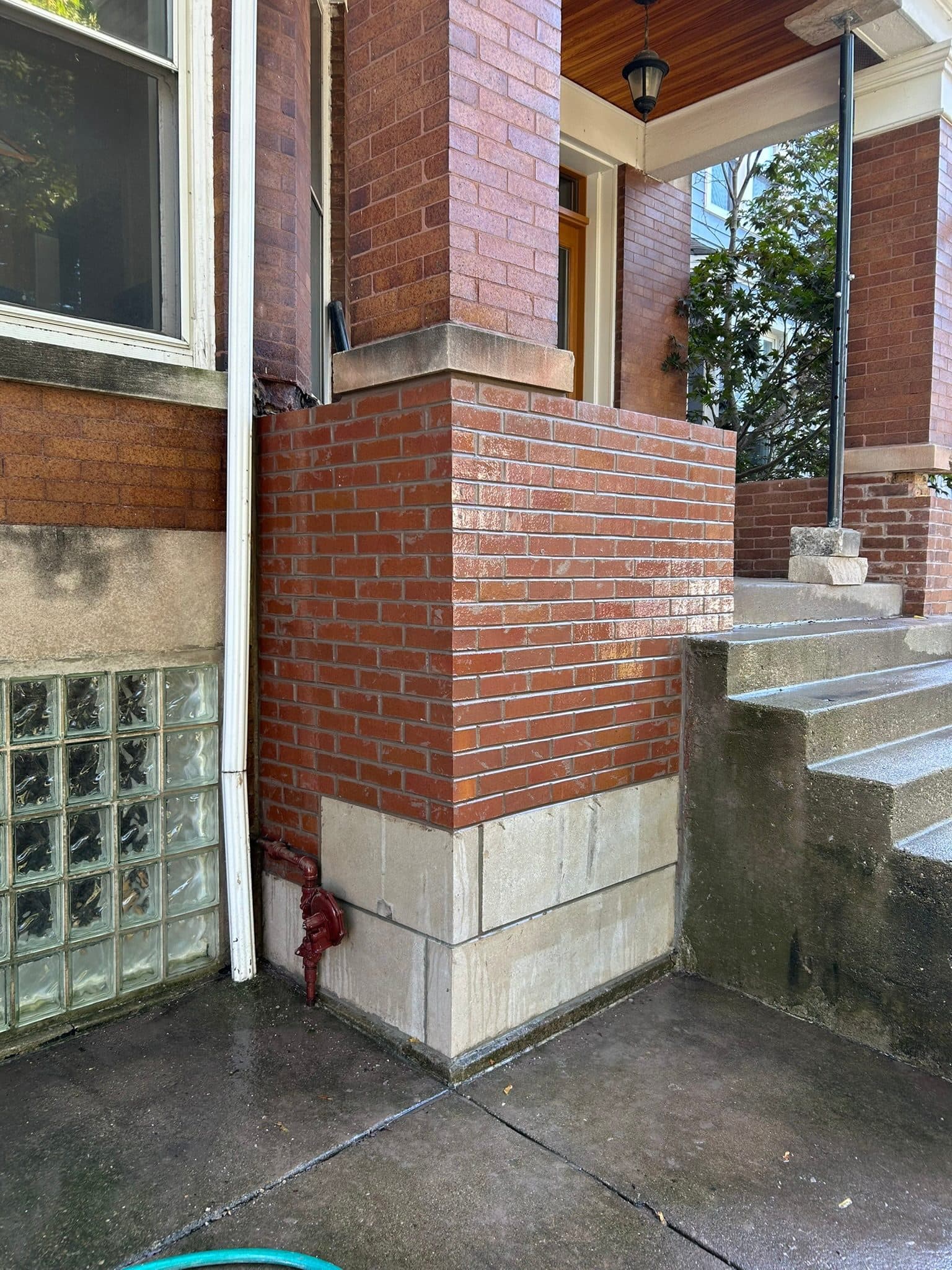
Masonry Waterproofing in Palos Heights, IL
Masonry waterproofing in Palos Heights, IL is the one service we regularly talk homeowners out of. Paul Lally's Masonry Inc. seals brick, block and stone on homes and commercial buildings throughout the village and the surrounding southwest suburbs — when it is the right answer. Family-owned since 1988, insured, free on-site estimates. Call (708) 448-8866.
Because sealing masonry is one of the very few repairs in this trade that can leave a wall worse than it was.
The Thing Nobody Tells You About Sealing Brick
A masonry wall is not supposed to be airtight. It is supposed to breathe.
Brick, block, stone and mortar are porous by design. They take on some water and they release it again — vapor moves out through the material as the wall dries between wettings. That cycle is how masonry survives a hundred Chicagoland winters.
Now put a film-forming coating on the outside of it. Masonry paint, most products sold as "waterproofing," anything that leaves a skin on the surface.
That skin slows water going in. It also stops moisture already inside the wall from getting out.
So the water that gets in anyway — through the top of the wall, around a window, up from the ground, past a failed sill — arrives, and cannot leave. In January it freezes. Water expands roughly nine percent when it freezes, and it pushes outward against whatever is holding it in.
What comes off is the face of your brick, with the coating still attached to it.
We see this on painted brick constantly, and we see it on houses that were "waterproofed" by someone selling a product rather than diagnosing a wall.
The Right Product Does the Opposite
What belongs on above-grade masonry is a breathable, vapor-permeable water repellent — typically a penetrating silane or siloxane. It soaks into the masonry rather than sitting on top of it, lines the pores so liquid water beads and runs off, and still lets water vapor pass outward.
| | Breathable water repellent | Film-forming coating | | --- | --- | --- | | Where it sits | Penetrates into the masonry | Forms a skin on the surface | | Liquid water in | Substantially reduced | Reduced | | Vapor out | Still passes | Blocked | | Appearance | Essentially unchanged | Visibly coated or glossy | | Failure mode | Wears off over years, reapply | Blisters and peels, taking brick with it | | Right for a Chicagoland wall | Yes, in the right situation | Almost never |
The test of a good masonry sealer is not how much water it keeps out. It is how much vapor it lets out.
Sealing Is the Last Step in a Sequence
Here is the order that actually protects a house, and sealing is fifth.
- Stop the water getting in at the top and the sides. Gutters, downspouts and extensions, grade and mulch against the wall, chimney crown, roof edge, flashing, window wells.
- Address corroding steel — lintels and anchors — because rust keeps expanding regardless of what goes on the surface.
- Repair the masonry. Tuckpointing, brick repair and brick replacement, limestone and sill repair.
- Rebuild the sealant joints — caulking at windows, doors and transitions.
- Then, if the exposure warrants it, seal.
Doing step five without steps one through four is sealing a problem inside a wall. It is also, not coincidentally, the version that gets sold door to door.
When Sealing Is Genuinely Worth Doing
It is a real service with real uses. It makes sense on:
- Sound masonry with tight joints that simply faces hard weather exposure
- Chimneys, which are wet on every face with nothing over them — one of the best candidates on any house
- Highly absorptive brick that takes on water quickly
- Severely exposed elevations — the north and west faces taking wind-driven rain
- Parapets, garden walls and freestanding masonry wet from multiple faces
- After repairs are complete and cured, as protection for work you have just paid for
And it is the wrong answer on a wall with open joints, spalled faces, an active leak, or a water source nobody has found yet.
Signs Water Is Getting Into Your Masonry
- Efflorescence — white powdery bloom on the brick, proof water is moving through
- Dark saturation patches that stay damp long after rain
- Spalled or flaking brick faces, especially near grade
- Mortar joints eroded, receding or crumbling
- Damp interior walls, or musty smell along an exterior wall
- Staining below sills, lintels and the roof line
- Moss or algae on a face that never dries
- Peeling paint or a blistering previous coating
Palos Heights Specifics
The village built out largely from the late 1950s through the 1970s — split-levels, tri-levels, ranches and Georgians, most of them brick or brick veneer, plus later infill and some older stock.
That produces a fairly consistent picture for this service. The walls are generally not century-old soft brick; they are denser mid-century and later brick that seals reasonably well when it is sound. What tends to be wet is not the field of the wall but the specific places water concentrates:
- The grade line and lowest courses, hit by splash-back off drives, walks and patios plus winter salt
- Chimneys, wet on four sides with no roof over them
- Under sills, where an entire window's runoff lands on one joint
- The weather elevation, generally north and west
- Around openings where sealant has aged out
And the climate does the rest. Chicagoland cycles above and below freezing many times each winter rather than freezing once — which is precisely the pattern that punishes any water trapped in masonry.
Our Process
- Find the water first. Gutters, downspouts, grade, roof edge, flashing, sills, chimney, sealant. If there is a source, sealing is not the conversation.
- Assess the masonry. Joint condition, brick condition, absorption, and any previous coating.
- Tell you honestly whether sealing is appropriate, including when the answer is no or not yet.
- Complete the repairs first and let fresh mortar cure.
- Clean the surface appropriately — never by sandblasting or aggressive pressure, which erodes the brick face and makes absorption worse.
- Test an inconspicuous area for appearance and absorption before doing an elevation.
- Apply the repellent at the correct rate and coverage, in suitable temperature and dry conditions, working top down.
- Protect windows, trim, plantings and walks throughout.
- Review the finished elevation with you and tell you what to expect over time.
What Drives the Cost
- Wall area and how many elevations
- Height and access — ladder, staging or lift
- Masonry porosity, which decides how much product a wall takes
- Surface preparation required
- Whether repairs and drainage corrections come first — usually the bigger part of the scope
- Previous coatings that complicate application
We do not sell sealing as a standalone fix over the phone. The look is free and the estimate is written.
Palos Heights Is Our Home Town
Paul Lally's Masonry Inc. is a family-owned, insured masonry contractor serving Chicago and the Chicagoland suburbs since 1988 — tuckpointing, brick repair and replacement, chimney repair and rebuilds, lintel replacement, masonry restoration, and waterproofing for residential and commercial properties. Built on Craftsmanship. Backed by Experience. Free on-site estimates — call (708) 448-8866.
We are based here, and we work throughout Palos Heights and neighbouring Palos Hills, Palos Park, Worth and Oak Lawn.
Get a Free Palos Heights Masonry Assessment
If someone has told you your house needs sealing, get a second opinion from a mason who will tell you when it does not. Call (708) 448-8866 or request a free estimate.
Masonry Sealing / Waterproofing in Palos Heights, IL — Frequently Asked Questions
How much does masonry waterproofing cost in Palos Heights, IL?
It depends on the wall area, the height and access, the porosity of the masonry and how much product it will take, and — most of all — whether repairs and drainage corrections have to happen first. Sealing a sound wall is a small job; sealing is not what a deteriorated wall needs. Paul Lally's Masonry Inc. gives free on-site estimates — call (708) 448-8866.
Should I seal my brick house?
Sometimes, and sometimes definitely not. Sealing is appropriate on sound masonry with tight joints, in an exposure that warrants it, after the water sources have been corrected. On a wall with open joints, spalled brick or an active leak, sealing traps the problem inside instead of fixing it.
What is the difference between waterproofing and a water repellent?
A breathable water repellent reduces how much liquid water the masonry absorbs while still letting water vapor escape from inside the wall. True waterproofing implies a barrier, and a barrier on an above-grade masonry wall is usually the wrong idea because the wall needs to dry outward.
Can sealing brick actually cause damage?
Yes, and this is the part most homeowners are never told. A film-forming coating slows water going in but also stops moisture already inside the wall from getting out, and in a Chicagoland winter that trapped water freezes and takes the face off the brick. Product choice is not a detail here.
Do I need to seal after tuckpointing?
Not automatically. Properly matched and properly packed mortar joints are themselves the primary weather barrier, and fresh mortar needs time to cure before anything goes on it. Sealing is worth considering afterward in specific exposures — it is not a required finishing step on every job.
What is the white powder on my brick, and will sealing fix it?
That is efflorescence — salts carried out of the masonry by water moving through it and left behind as it evaporates. It is proof that water is moving through the wall, so sealing over it treats the symptom and hides the evidence while the source keeps running.
Do you do masonry sealing in Palos Heights?
Yes — Palos Heights is our home town, and we have worked on masonry throughout the village since 1988. We will also tell you when sealing is not what your wall needs, because our name is on the job either way. Free on-site estimates — call (708) 448-8866.
Masonry Sealing / Waterproofing in Nearby Areas
Other Masonry Services in Palos Heights, IL
Learn more about our masonry sealing / waterproofing services across Chicagoland, or view all service areas.
Free on-site estimates across Chicagoland.