
Foundation Masonry Repair · Palos Heights, IL
Foundation Masonry Repair in Palos Heights, IL — Most "Foundation Problems" Here Aren't Structural
Most of what Palos Heights homeowners call a foundation problem is masonry deterioration at the grade line, not the house moving. Those two things look similar from the driveway, they cost wildly different amounts to fix, and knowing which one you have is the entire job.
Quick Answer
Paul Lally's Masonry Inc. provides foundation masonry repair in Palos Heights, IL — repointing and rebuilding deteriorated block and brick foundation walls, brick ledges, and grade-line masonry, and telling you plainly when a problem is structural rather than masonry. Family-owned since 1988, insured. Free on-site estimates — call (708) 448-8866.
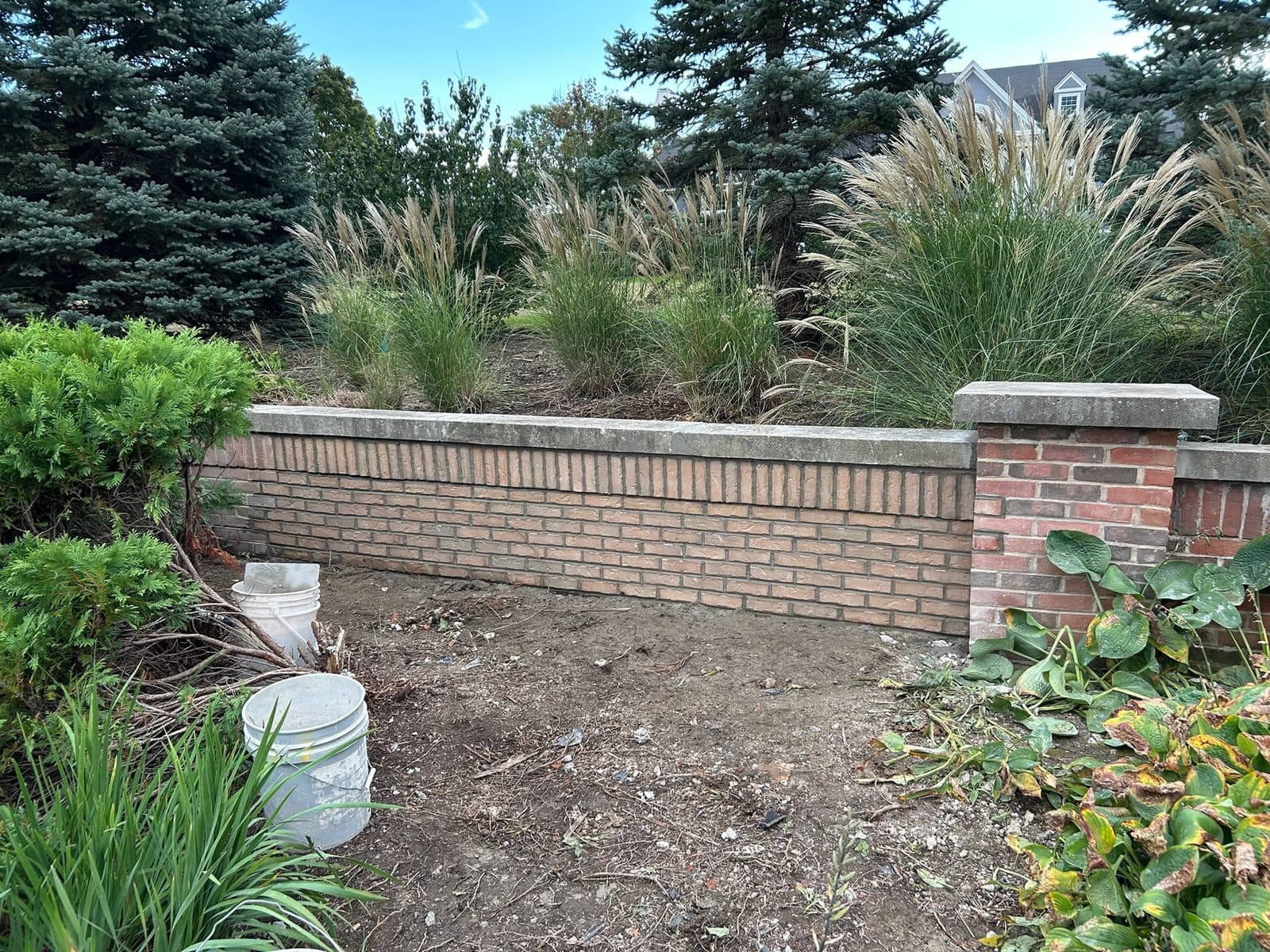
Foundation Masonry Repair in Palos Heights, IL
Foundation masonry repair in Palos Heights, IL starts with a question almost nobody asks out loud: is your house actually moving, or is the masonry just wearing out? Paul Lally's Masonry Inc. has been answering that question for Palos Heights homeowners since 1988. Family-owned, insured, free on-site estimates. Call (708) 448-8866.
It matters more than any other question on this page, because the two problems look similar from the driveway and they are nothing alike to fix.
Erosion Is Not Movement
Here is the distinction, in plain terms.
Erosion. The mortar is failing where it sits. Joints crumble and recede, block or brick faces spall and flake, grit collects along the base of the wall in the basement. But the wall is still straight, the courses are still lined up, and nothing has shifted. This is masonry deterioration. It is a mason's job, it is repairable, and it is the most common thing we find.
Movement. Something has shifted. The wall bows inward when you sight along it, courses are stepped out of line, doors and windows have gone out of square, a crack keeps opening wider month after month. This is structural, and it needs a structural engineer to look at it before anybody quotes masonry.
If your wall is eroding, you have a masonry problem. If your wall is moving, you have a structural problem that will also need masonry work afterward.
We will tell you which one you have, including when the answer means the first call should not be to us. That is what our name being on the job is worth.
What You're Actually Looking At in Palos Heights
Palos Heights built out mostly from the late 1950s through the 1970s — split-levels, tri-levels, ranches and Georgians on generous lots, with a good deal of later infill. That build era tells us most of what we need to know before we arrive.
Concrete block is the dominant foundation material in this village, often with a brick ledge carrying the veneer above it. Later homes are more often poured concrete. Block and poured walls fail differently, so identifying which you have is step one.
And here is the part that surprises people: what most homeowners point at when they say "my foundation" is not the structural foundation at all. It is the exposed band of block and brick between the ground and the first floor — the grade line. That band is the wettest masonry on your house, and it takes a beating that the wall six feet below it never sees.
Why the grade line goes first
- Splash-back. Rain off the roof edge hits the driveway, walk or patio and bounces straight back onto the lowest courses.
- Winter salt. De-icer from drives and walks dissolves into meltwater, soaks into the masonry, and crystallizes inside it as it dries — which flakes faces off from within.
- Soil and mulch piled against the wall wick moisture upward and hold it there.
- Freeze-thaw. Water in saturated masonry freezes, expands, and levers the material apart, over and over through a Chicagoland winter.
That is a maintenance problem with a real fix. It is not your house failing.
Signs You Need Foundation Masonry Repair
- Mortar you can rake out of a joint with a screwdriver or a key
- Sand or grit accumulating on the basement floor along the base of the wall
- Block or brick faces flaking, spalling, or crumbling near grade
- Efflorescence — the white powdery bloom that proves water is moving through the wall
- Parge coat blistering, sounding hollow, or falling off in sheets
- Damp patches on a basement wall that never fully dry
- Open joints or gaps where a stoop, slab or patio meets the house
- Active water entry at a specific joint or crack
Signs that need a structural engineer first: a wall bowing or leaning inward, block courses displaced out of line, a horizontal crack running the length of a block wall, doors and windows suddenly out of square, or a crack you have marked that keeps growing.
Risks of Waiting
A foundation wall does two jobs — it carries the house and it holds back soil. Eroded joints reduce how well it does both, and water running through a wall carries fine material out with it, undermining what is behind it.
Practically, the escalation is straightforward and expensive: repointing becomes section rebuilding, and section rebuilding can become excavation. The grade-line brick that is flaking today takes the units around it next winter. Water that keeps reaching a wall keeps working on it, and Chicagoland gives it dozens of freeze cycles a year to work with.
Our Process
- Identify the material — block, poured, or brick — and how hard the existing mortar is.
- Find the water. Downspouts, grade, window wells, sump discharge, gutters, irrigation, and anything indoors.
- Judge erosion versus movement, and say so plainly.
- Correct the water source where it is ours to correct, and point it out clearly where it is not.
- Rake the joints back to sound material without over-cutting or fracturing block webs.
- Repoint with a compatible mix, packed in lifts rather than skimmed over the surface.
- Rebuild deteriorated sections, resetting displaced units on a sound bed.
- Replace spalled brick at the ledge and grade line with matched units.
- Parge only where the wall warrants it, with a coating compatible with what is underneath.
- Address the transitions at stoops, slabs, window wells and utility penetrations.
- Walk the finished work with you and tell you what still needs watching.
Materials
The rule that governs all of it: the mortar has to be softer than the unit it sits against. Mortar is the sacrificial part — it is meant to give first, because a joint can be replaced and a block or brick face cannot. Type N covers most of what we see on Palos Heights foundations; Type S has its place where loading or below-grade conditions genuinely call for it, and it is the wrong default.
Related work often runs alongside: tuckpointing and repointing on the exposed foundation and lower wall, brick repair and brick replacement at the ledge, waterproofing and masonry sealing where genuinely appropriate, and caulking and joint sealant at penetrations and transitions.
What Drives the Cost
- What the wall is made of, and how fragile it is to work on
- Access — interior only, or excavation to reach the outside face
- How much wall needs work, in length and height
- Repointing versus rebuilding sections
- Water correction included in the scope
- Site conditions — landscaping, decks, walks, utilities, tight side yards
We do not price foundation work over the phone or off a photograph. The look is free, and the estimate is written.
Palos Heights Is Our Home Town
Paul Lally's Masonry Inc. is a family-owned, insured masonry contractor serving Chicago and the Chicagoland suburbs since 1988 — tuckpointing, brick repair and replacement, chimney repair and rebuilds, lintel replacement, masonry restoration, and waterproofing for residential and commercial properties. Built on Craftsmanship. Backed by Experience. Free on-site estimates — call (708) 448-8866.
We are based here, and we work throughout Palos Heights and neighbouring Palos Hills, Palos Park, Worth and Orland Park.
Get a Free Palos Heights Foundation Assessment
If mortar is falling out of your foundation wall or the brick above it is flaking, get it looked at by someone who will tell you honestly which problem you have. Call (708) 448-8866 or request a free estimate.
Foundation Masonry Repair in Palos Heights, IL — Frequently Asked Questions
How much does foundation masonry repair cost in Palos Heights, IL?
There is no rate for this, because the scope depends on what is actually wrong — how much wall is deteriorated, whether it is reachable from inside or needs excavation, whether sections have to be rebuilt rather than repointed, and whether water sources have to be corrected first. Paul Lally's Masonry Inc. gives free on-site estimates in Palos Heights — call (708) 448-8866.
How do I know if my foundation problem is structural or just masonry?
Masonry deterioration is erosion in place — crumbling joints, spalling faces, grit on the basement floor — with the wall still straight and the units still lined up. Structural movement shows as displacement: a wall bowing inward, courses stepped out of line, doors and windows out of square, or a crack that keeps widening. Erosion is our work; active displacement needs a structural engineer first.
What kind of foundation does a Palos Heights house usually have?
Most of the village was built out from the late 1950s through the 1970s, so concrete block is by far the most common, often with a brick ledge carrying veneer above it. Some later homes are poured concrete. Block and poured walls fail in different ways, so the first thing we do is identify what you actually have.
Why is the brick right above my foundation flaking off?
That is the grade line, and it is the wettest band of masonry on your house. Splash-back off the driveway and walks, salt in winter, soil and mulch holding moisture against the wall, and freeze-thaw all concentrate right there. It is very common in Palos Heights and it is repairable masonry work, not a structural problem.
Should I parge or seal my foundation wall?
Only if it is the right wall for it. A hard cement parge coat over masonry that is already holding moisture traps the water behind it and blows off in sheets, taking material with it. Parging has a place on sound block; it is not a fix for a wall that is wet for a reason nobody has found yet.
There is water coming through my basement wall. Is that a masonry repair?
Partly, but drainage comes first. If a downspout discharges at the wall, grade slopes back toward the house, or a window well holds water, repointing the inside face will not stop it. We identify the water source as part of the estimate rather than pointing over an active leak.
Do you do foundation masonry work in Palos Heights?
Yes — Palos Heights is our home town. Paul Lally's Masonry Inc. has worked on masonry throughout the village and the surrounding southwest suburbs since 1988, and our name is on every job we do here. Free on-site estimates — call (708) 448-8866.
Foundation Masonry Repair in Nearby Areas
Other Masonry Services in Palos Heights, IL
Learn more about our foundation masonry repair services across Chicagoland, or view all service areas.
Free on-site estimates across Chicagoland.