
Chimney Repair & Rebuilds · Lisle, IL
Chimney Repair in Lisle, IL — A Chimney Under Trees Never Gets to Dry Out
Masonry survives Chicagoland winters by drying out between wettings. Put a chimney under a mature canopy where it sees almost no sun and gets showered with debris, and you have removed the drying half of that cycle — which is why shaded stacks in Lisle fail faster than the ones two streets over.
Quick Answer
Paul Lally's Masonry Inc. provides chimney repair and rebuilds in Lisle, IL — repointing and rebuilding stacks, repairing crowns and flashing, and addressing the persistent saturation that shaded, tree-covered chimneys suffer. Family-owned since 1988, insured. Free on-site estimates — call (708) 448-8866.
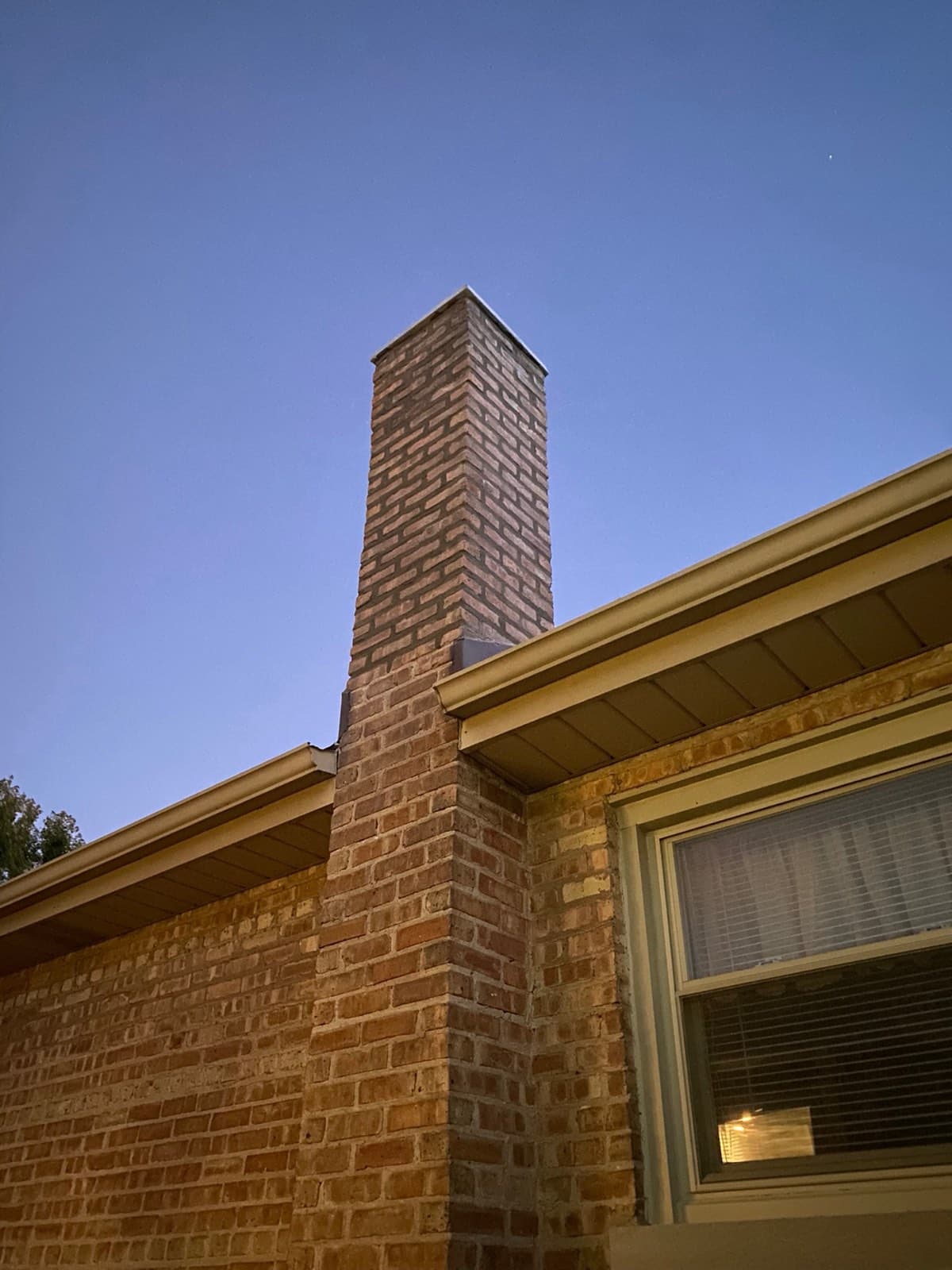
Chimney Repair in Lisle, IL
Chimney repair in Lisle, IL comes with a variable that most towns do not have in the same concentration: shade. Paul Lally's Masonry Inc. repairs and rebuilds chimneys throughout Lisle and DuPage County. Family-owned since 1988, insured, free on-site estimates. Call (708) 448-8866.
It sounds like a small thing. It is not — and it explains why two identical chimneys a hundred feet apart can be twenty years apart in condition.
Masonry Survives by Drying
Here is the mechanism the whole page rests on.
Brick and mortar are porous. They take on water, and in a Chicagoland winter that water freezes, expands roughly nine percent, and pushes against the surrounding material. Each cycle does a very small amount of damage.
The reason masonry lasts a century anyway is that it dries out between wettings. Sun and moving air pull the moisture back out, so the wall goes into most freeze events considerably drier than it was after the last rain.
Take away the drying and you have not changed how often it rains. You have changed how wet the masonry is every time it freezes.
That is what a mature canopy does to a chimney.
Why This Hits Lisle Particularly
Lisle is a genuinely tree-heavy village — long-established neighbourhoods with mature canopy, wooded lots, the Morton Arboretum on its doorstep and the East Branch of the DuPage River running through it. It is one of the pleasanter things about living here, and it is hard on chimneys.
A stack standing under and among mature trees gets:
- Very little direct sun, so it dries slowly after every rain
- Reduced airflow, because the canopy blocks the wind that would otherwise help
- A constant supply of debris — leaves, needles, seeds and twigs landing on the crown, packing into the flue and collecting at the flashing
- Prolonged dampness that shows up as moss, algae and dark staining on the brick
- Extra water, because overhanging limbs shed onto the stack long after the rain has stopped
Add roughly the same freeze-thaw exposure everything else in DuPage County gets, and the shaded chimney simply enters each cycle wetter than the sunny one.
Moss on your chimney is not the problem. It is the report. It grows where masonry stays damp, so it is telling you the stack is not drying — which is the actual issue.
What Fails, and In What Order
Whatever the shade situation, a chimney is the hardest-working masonry on a house — four weather faces plus the top, no roof over it, and no heated interior behind to drive moisture out. It fails from the top down, and the gradient tells a mason how deep to go.
- The crown cracks or was never more than a mortar wash, and water starts entering the top of the chimney directly
- The top courses lose mortar and the brick faces begin to spall
- The flue takes water and, on many homes, condensation from an oversized flue as well
- The flashing at the roof line fails or was surface-caulked rather than set into a cut joint
- Debris packs the flue and the crown, holding water where it sits
Signs of Chimney Damage
From the ground, with binoculars:
- A cracked, spalled or missing crown, or a thin mortar wash instead of a formed one
- Mortar joints receding, dark or open in the top courses
- Spalling brick — faces flaked or sheeted off
- Moss, algae or persistent dark staining — the drying signal
- A missing, rusted or dislodged cap
- Clay flue tile cracked or sitting proud of a broken crown
- Debris visibly collected on the crown or at the flashing
- White efflorescence on the stack
- A visible lean, or a gap between chimney and house — treat as urgent
Inside, check the attic where the chimney passes through, and the top-floor ceiling nearby.
Risks of Waiting
Once the crown cracks, water enters the top of the stack directly rather than running off it. On a shaded chimney that water then has the least opportunity of anywhere on the house to leave again, so it saturates the masonry and each winter does more damage than the last.
Open joints admit more water, which opens them further, while the same water runs down into flashing, framing and interior finishes. A stack that has lost its mortar is loose brick above your roof. And where anything vents into it, a cracked or spalled flue becomes a combustion-safety question warranting a qualified inspection.
Our Process
- Inspect from the roof, plus the flue and the interior — not from the driveway.
- Note the exposure. Canopy, orientation and how much sun the stack actually gets inform both the diagnosis and the advice.
- Sound the masonry to find where sound material begins.
- Establish the rebuild depth and confirm it with you before demolition.
- Set up access and protection — roof jacks or staging, membrane and ground protection.
- Clear debris from the crown, flue opening and flashing.
- Take down the deteriorated section, salvaging brick worth reusing.
- Rebuild in matched brick and compatible mortar, holding original coursing and bond.
- Form a proper crown — sloped, with a bond break at the flue tile and an overhang with a drip edge past the brick face.
- Repoint the sound masonry below, address flashing and counterflashing, fit a cap sized to the flue, and walk the finished work with you.
Materials
Type N mortar suits most twentieth-century chimney brick here, and softer, lime-rich mixes belong on older stock near the village's earlier core. The governing rule holds regardless: mortar must be softer than the brick it sits against, because a joint can be replaced and a brick face cannot.
A formed concrete crown with an overhang and drip edge — not a troweled wash — is a small share of the cost and most of the service life. A cap sized to the flue is the cheapest protection available, and on a tree-covered lot it earns its keep faster than anywhere else.
Related work: tuckpointing, brick repair and brick replacement, waterproofing where a breathable repellent genuinely suits a chronically damp stack, and masonry restoration.
What Drives the Cost
- How far down sound masonry is found — the largest variable
- Roof pitch, height and access
- Chimney size and number of flues
- Crown and cap scope, and flue condition
- Brick matching
- Flashing coordination with roofing
- Season, since mortar has curing temperature limits
Nobody can price this honestly over the phone. Expect a free on-site inspection and a written scope naming the expected rebuild depth.
Serving Lisle and DuPage County
Paul Lally's Masonry Inc. is a family-owned, insured masonry contractor serving Chicago and the Chicagoland suburbs since 1988 — tuckpointing, brick repair and replacement, chimney repair and rebuilds, lintel replacement, masonry restoration, and waterproofing for residential and commercial properties. Built on Craftsmanship. Backed by Experience. Free on-site estimates — call (708) 448-8866.
We work throughout Lisle and neighbouring Downers Grove, Naperville, Darien and Westmont.
Get a Free Lisle Chimney Assessment
If your chimney has gone green and your neighbour's has not, that is worth looking at properly before another freeze season. Call (708) 448-8866 or request a free estimate.
Chimney Repair & Rebuilds in Lisle, IL — Frequently Asked Questions
How much does chimney repair cost in Lisle, IL?
The largest variable is how far down sound masonry begins, which cannot be judged from the ground. Beyond that it is roof pitch and access, chimney size, crown and flue condition, and brick matching. Paul Lally's Masonry Inc. inspects from the roof and puts the estimate in writing — call (708) 448-8866.
Why is my chimney worse than my neighbour's identical one?
Very often it is shade. Masonry survives freeze-thaw by drying out between wettings, and a chimney under a mature canopy gets far less sun and wind to dry it. Two identical stacks a hundred feet apart can be decades apart in condition purely because one of them dries and the other does not.
There is green growth on my chimney. Does that matter?
Moss and algae are not themselves destroying the brick, but they are a reliable sign the masonry is staying damp — they only grow where it does. Treat the growth as a symptom telling you the stack is not drying, and look at why.
Should I cut back the branches over my chimney?
Trimming back the canopy directly over and around a chimney genuinely helps, because it lets sun and air reach the masonry and reduces the debris landing on it. Keeping limbs clear of the flue opening also reduces what falls in.
Do leaves and debris in the flue cause damage?
They restrict draft and hold moisture inside the flue, and a properly fitted cap is the simple prevention. A blocked or partially blocked flue is also a combustion-safety issue for anything venting into it, so it should be inspected rather than assumed clear.
Does my chimney need repointing or a rebuild?
Repointing works while the brick is sound and only the joints have eroded. Once faces have spalled through, units have lost bond, or the top courses move by hand, there is nothing solid to pack against and the deteriorated section has to come down and be rebuilt.
Do you work on chimneys in Lisle and DuPage County?
Yes, throughout Lisle and the surrounding DuPage and Cook County suburbs, residential and commercial. Paul Lally's Masonry Inc. has been doing this since 1988. Free on-site estimates — call (708) 448-8866.
Chimney Repair & Rebuilds in Nearby Areas
Other Masonry Services in Lisle, IL
Learn more about our chimney repair & rebuilds services across Chicagoland, or view all service areas.
Free on-site estimates across Chicagoland.