
Commercial Masonry Restoration · Lisle, IL
Commercial Masonry Restoration in Lisle, IL — Office Buildings, Campuses and the Façade as a System
Most commercial buildings in Lisle aren't solid brick. They're brick veneer, precast and glass hung on a frame — and their failures start at the joints, angles and ties, not the face of the brick.
Quick Answer
Paul Lally's Masonry provides commercial masonry restoration in Lisle, IL — tuckpointing, brick replacement, shelf angle and lintel repair, sealant replacement, parapet and coping work on office buildings, campuses, retail and downtown storefronts. Family-owned, insured and serving Chicagoland since 1988. Free on-site estimates: (708) 448-8866.
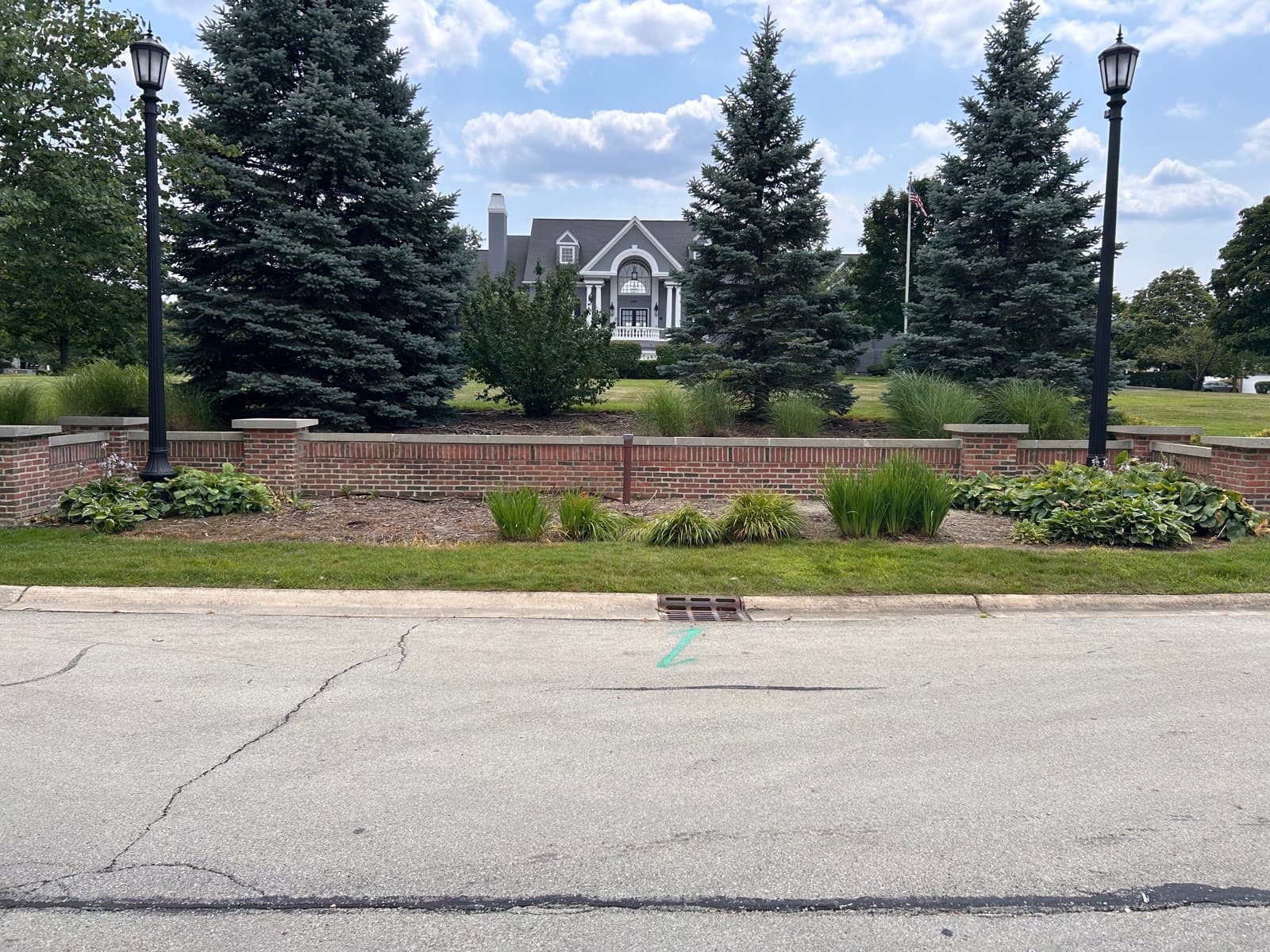
Commercial Masonry Restoration in Lisle, IL
Paul Lally's Masonry provides commercial masonry restoration in Lisle, IL — tuckpointing, brick and block replacement, shelf angle and lintel repair, sealant joint replacement, and parapet and coping work on office buildings, campus and institutional buildings, retail centers and downtown storefronts. We're family-owned, insured and have served Chicagoland since 1988. For a free on-site estimate, call (708) 448-8866.
Lisle's commercial building stock is not the old city building most masonry pages describe. Along the I-88 corridor the office buildings are mostly from the 1970s to the 2000s: brick veneer, precast panels and glass hung on a steel or concrete frame. The retail along Route 53 and Ogden Avenue is mostly one- and two-storey brick and block. The older brick is concentrated around downtown Lisle near Main Street and the Metra station, plus institutional buildings such as the Benedictine University campus. Each has different failure points, and a good restoration scope starts by knowing which building you have.
On a veneer office building, the brick is rarely the problem. The joints, the steel and the ties behind the brick wear out first. Commercial masonry restoration in Lisle is mostly about finding those before they push the face of the building out.
Why commercial masonry restoration in Lisle is different
A solid masonry wall is thick, carries its own load and dries through its mass. A brick veneer façade on a framed building is a thin skin with an air space behind it. It's tied back to the structure and carried at each floor on a steel shelf angle. It's designed to let some water in and drain it out through flashing and weep holes. That changes what goes wrong:
| Component | What it does | How it fails on Lisle office and campus buildings | |---|---|---| | Shelf angles | Carry the brick at each floor line | Rust, expand and crack or bulge the brick in a horizontal line at the same height | | Soft joints (under shelf angles) | Let the frame and brick move independently | Filled with hard mortar during past repairs, so the brick gets crushed as the frame moves | | Sealant joints | Close vertical expansion joints, precast joints and window perimeters | Crack, pull away or harden at the end of their service life, usually first on south and west faces | | Through-wall flashing and weeps | Collect water in the cavity and drain it out | Weeps get mortared shut or covered by landscaping, and flashing laps open, so water stays in the wall | | Brick ties | Hold the veneer to the backup wall | Corrode over decades, and the veneer can bow away from the building | | Lintels over openings | Span windows, doors and storefronts | Rust jacking cracks the brick above and opens the joints |
Our scope for a Lisle office building starts with these, not with a square-footage number for tuckpointing.
Signs your Lisle building needs masonry restoration
- Horizontal cracking or bulging in the brick along each floor line.
- Cracked, missing or hardened sealant at expansion joints, precast joints and window perimeters.
- Stair-step or vertical cracks at building corners and long runs without control joints.
- Rust staining below lintels, shelf angles or coping fasteners.
- Efflorescence (white salt deposits) or dark wet patches that stay after rain.
- Leaks at window heads or along a floor line inside the building.
- Loose brick, cracked coping or failed caps at the parapet over entrances and walkways.
- Spalling or crumbling units on retail and campus buildings at grade, where salt and splash-back hit hardest.
The risks of waiting
Masonry problems on framed buildings are often hidden behind the face of the wall. A rusting shelf angle that is visible as a hairline crack this year is a displaced course in a few winters. Wet cavities damage interior finishes, corrode ties and feed mold complaints from tenants. On any building where people walk below, loose masonry is a falling-hazard and liability issue first and a maintenance issue second. Early repairs are usually more limited than later ones.
Our commercial restoration process in Lisle
- Walk every elevation, plus the roof and parapet, and photograph conditions by location so property managers and boards can see exactly what they're paying for.
- Rank the work by risk: overhead hazards and structural items first, then active water entry, then deterioration, then appearance.
- Plan access and protection: lift, scaffold or swing stage by elevation, with covered walkways at entrances and staging that keeps the parking lot and loading areas usable.
- Shelf angle and lintel work: shore the brick above, expose and treat or replace the steel, install new flashing with end dams, and rebuild with matched brick, restoring the soft joint where one belongs.
- Tuckpointing and brick replacement: grind out failed joints to a proper depth and repoint with mortar matched to the existing color, texture and strength.
- Sealant last: cut out old sealant, prime, install backer rod and new sealant once the masonry around it is sound.
- Walk the finished work with you. We stand behind our work, because our name is on every job.
Materials we use
Face brick and block matched to the existing building; Type N or Type S mortar chosen for the wall, with softer lime-rich mixes on older brick; galvanized or primed and painted steel for replacement lintels and shelf angles; through-wall flashing with end dams and drip edges; commercial-grade sealant with backer rod; and stone or metal coping matched to the building. We don't caulk over a crack that needs real masonry repair.
What drives the cost of commercial masonry restoration
We don't publish prices, because no two commercial buildings are scoped alike. Cost is driven by:
- Building height and access method: lift, scaffold or swing stage.
- How many shelf angles, lintels and openings need steel work.
- Linear footage of sealant joints to cut out and replace.
- Square footage of repointing and number of brick or block units to replace.
- Protection and phasing: covered walkways, after-hours work and staging around tenants.
- Mortar and brick matching on older or discontinued materials.
Call (708) 448-8866 for a free on-site estimate and an itemized written scope you can take to your board or ownership.
Commercial masonry restoration across Lisle and DuPage County
Lisle sits at the crossroads of I-88 and Route 53. Office parks and corporate buildings line the tollway, retail runs along Ogden Avenue and Route 53, and the older storefronts are near the Metra station downtown. Open parking fields around many office buildings leave their west and south elevations fully exposed to wind-driven rain and summer sun, so those faces usually fail first.
We also handle commercial masonry restoration in Naperville and Downers Grove, along with tuckpointing in Lisle for residential and smaller commercial buildings. For the whole picture, read our commercial masonry restoration guide for Chicagoland and our explainer on brick expansion and control joints.
Why Lisle property managers call Paul Lally's Masonry
Paul Lally's Masonry Inc. is a family-owned, insured masonry contractor serving Chicago and the Chicagoland suburbs since 1988. We handle tuckpointing, brick repair and replacement, lintel replacement, parapet repair, caulking, masonry restoration and waterproofing for commercial and residential properties. Built on Craftsmanship. Backed by Experience. Free on-site estimates — call (708) 448-8866.
- Serving Chicagoland since 1988, on commercial and residential buildings.
- Insured, with a certificate of insurance before work starts.
- Itemized scopes by elevation and component, so bids can be compared fairly.
- Family-owned and accountable: we stand behind our work.
Related services: commercial masonry restoration, lintel repair and replacement, caulking and joint sealant, tuckpointing, brick replacement and parapet wall repair.
Get your Lisle building assessed
Request a free on-site estimate or call (708) 448-8866. Built on Craftsmanship. Backed by Experience.
Commercial Masonry Restoration in Lisle, IL — Frequently Asked Questions
Who does commercial masonry restoration in Lisle, IL?
Paul Lally's Masonry, a family-owned, insured masonry contractor serving Chicagoland since 1988, restores brick, block and stone on office buildings, campus buildings, retail centers and storefronts in Lisle and across DuPage, Cook and Will County. Call (708) 448-8866 for a free on-site estimate.
Our office building is only 30 or 40 years old. Why does the masonry need work already?
Because the parts with the shortest lives aren't the brick — they're the sealant joints, the steel shelf angles and lintels, the flashing and the ties. Those reach the end of their first service life well before the brick does, and that's the work most suburban office buildings of that age need.
What is a shelf angle, and why does it crack the brick?
A shelf angle is a steel angle bolted to the building frame that carries the brick at each floor line. When water reaches it, the steel rusts and expands, cracking and pushing out the brick in a horizontal line at the same height across the façade.
Is a horizontal crack along each floor line serious?
It should be looked at promptly. A consistent horizontal crack or bulge at floor level usually points to a corroding shelf angle or a missing or filled-in soft joint below it, and both get worse with every freeze-thaw season.
Can you work on our building while tenants are in it?
Yes. Commercial restoration in Lisle is almost always done on occupied buildings, so we phase by elevation, protect entrances and walkways, keep loud grinding away from occupied hours where we can, and coordinate the schedule with property management.
How much does commercial masonry restoration cost in Lisle?
It depends on building height and access method, how many shelf angles, lintels and sealant joints are involved, the square footage of repointing, protection over entrances and phasing around tenants. We don't publish prices — you get an itemized written scope after a free on-site estimate.
Do you work on campus buildings with several structures?
Yes. For campuses and multi-building properties we survey each building, rank the work by risk, and lay it out as a program across seasons or budget years so the most urgent items go first.
Is Paul Lally's Masonry insured?
Yes. We're family-owned and insured, and we provide a certificate of insurance before work starts. We stand behind our work — our name is on every job.
Commercial Masonry Restoration in Nearby Areas
Other Masonry Services in Lisle, IL
Learn more about our commercial masonry restoration services across Chicagoland, or view all service areas.
Free on-site estimates across Chicagoland.