
Foundation Masonry Repair · Lisle, IL
Foundation Masonry Repair in Lisle, IL — Clay Soil Moves, and Your Wall Reports On It
DuPage clay swells when it's wet and shrinks when it's dry, and it does that against your foundation wall every year. Whether that shows up as a wall you repoint or a wall that needs an engineer comes down to one distinction — and it's readable from your basement.
Quick Answer
Paul Lally's Masonry Inc. provides foundation masonry repair in Lisle, IL — repointing and rebuilding deteriorated block and brick foundation walls, brick ledges and grade-line masonry, and identifying honestly when a wall has moved rather than simply eroded. Family-owned since 1988, insured. Free on-site estimates — call (708) 448-8866.
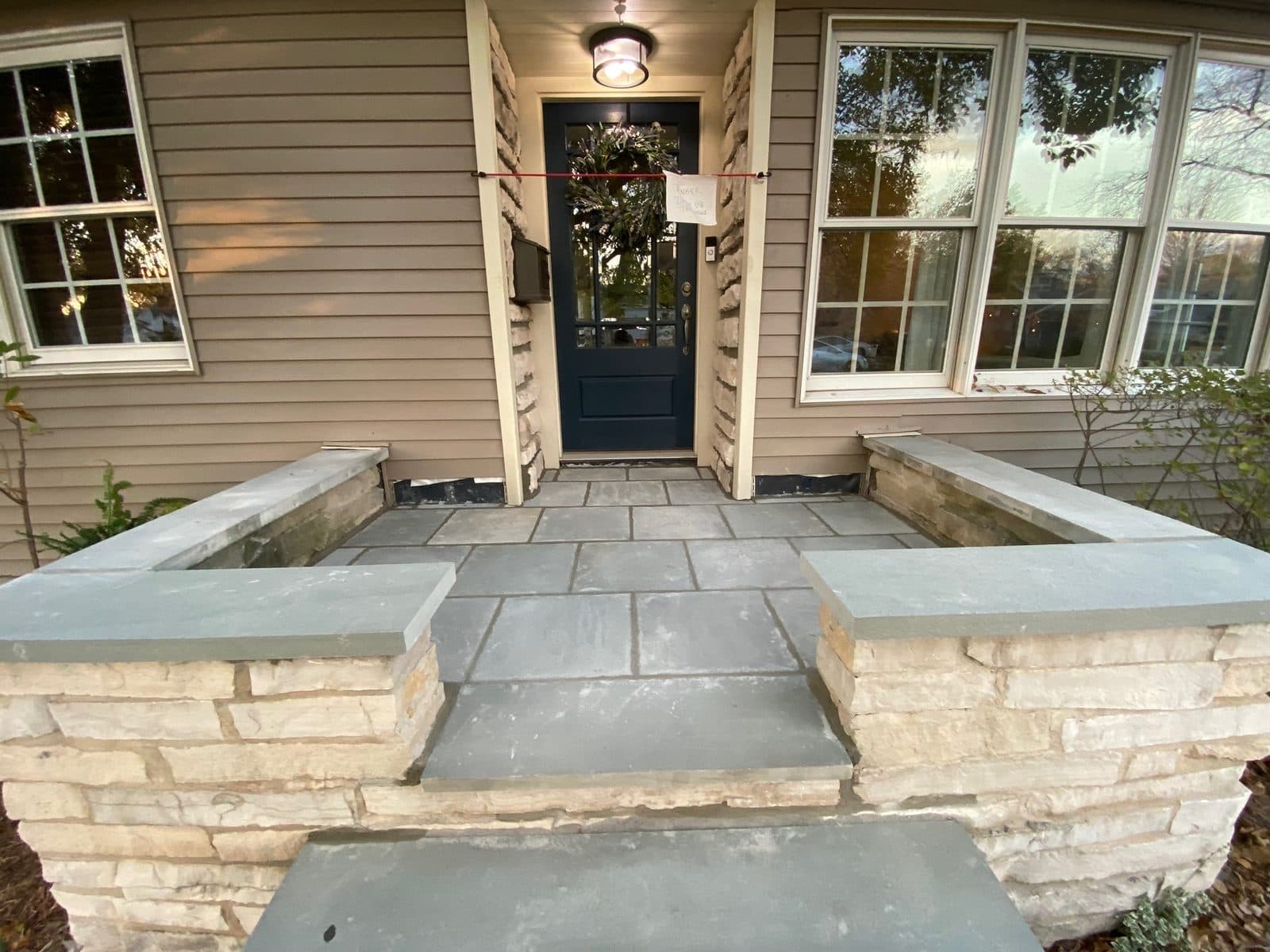
Foundation Masonry Repair in Lisle, IL
Foundation masonry repair in Lisle, IL nearly always comes down to one distinction, and a homeowner can read it in their own basement: is the wall wearing out, or has it moved? Paul Lally's Masonry Inc. repairs block and brick foundation walls throughout Lisle and DuPage County. Family-owned since 1988, insured, free on-site estimates. Call (708) 448-8866.
Those two conditions produce similar-looking damage, cost dramatically different amounts, and need different people. Sorting them out is the first thing we do.
Erosion and Movement Are Not the Same Problem
Erosion. The masonry is deteriorating where it sits. Mortar joints crumble and recede, block faces spall, grit collects along the base of the wall. But the wall is still straight, the courses are still lined up, and nothing has shifted position. This is a masonry job, it is repairable, and it is the most common thing we find.
Movement. Something has shifted. The wall bows inward when you sight down it. A horizontal crack runs along it. Courses are displaced out of line. Doors and windows have gone out of square upstairs. A crack keeps widening month after month. This is structural, and it needs a structural engineer to assess it before anyone quotes masonry.
Straight wall, bad mortar: call a mason. Wall that has moved: call an engineer first.
We will tell you which one you have, including when that means we are not the first call. That is what having the family name on the job is worth.
Why Lisle Foundations Get Pushed
DuPage County sits on heavy clay, and clay is not a passive material.
Clay changes volume with moisture. Saturate it and it swells; dry it out and it shrinks. That means the soil against your foundation wall pushes harder in a wet spring than it does in a dry August, and it does that every single year.
A foundation designed for that cycle handles it. What tips a wall over the edge is when the soil beside it stays saturated:
- Downspouts discharging at the wall — still the single most common cause of foundation masonry trouble we find anywhere
- Negative grade, where decades of added mulch, raised beds and settled soil have reversed the slope back toward the house
- Window wells without drainage, holding a column of water directly against the wall
- Sump discharge looped back beside the foundation
- Mature tree canopy, drawing moisture unevenly under one side of a footing — very much a Lisle condition, with the older wooded neighbourhoods and the Morton Arboretum corridor nearby
Then freeze-thaw finishes it. Water saturating the masonry freezes, expands, and levers material apart, dozens of times each Chicagoland winter — which is how a damp joint becomes an open joint and an open joint becomes a missing one.
What Lisle Foundations Are Made Of
Lisle spans several build eras, and the material tracks them.
Concrete block dominates the post-war and mid-century stock, frequently with a brick ledge carrying the veneer above. Block fails characteristically at the mortar joints, at the grade line, and — where lateral pressure is involved — with horizontal cracking at mid-height.
Poured concrete is more common on later construction, including the substantial subdivision and townhome growth from the 1970s onward.
Older brick foundations turn up on the village's earlier stock near the original core.
And here is what surprises people: the part most homeowners point at when they say "my foundation" is often not the structural wall. It is the exposed band of block and brick between the ground and the first floor — the grade line — which takes splash-back off drives and walks, winter salt, and moisture wicking up from soil and mulch. That band is the wettest masonry on the house, and its deterioration is a maintenance problem, not a structural one.
Signs You Need Foundation Masonry Repair
- Mortar you can rake out of a joint with a screwdriver or a key
- Sand or grit accumulating on the basement floor along the base of the wall
- Block or brick faces flaking, spalling or crumbling near grade
- Efflorescence — the white powdery bloom that proves water is moving through the wall
- Parge coat blistering, sounding hollow, or coming off in sheets
- Damp patches that never fully dry
- Open joints where a stoop, slab, patio or window well meets the house
- Active water entry at a specific joint or crack
Signs that need an engineer first: a wall bowing or leaning inward, a horizontal crack running along a block wall, courses displaced out of line, doors and windows out of square, or a crack you have marked that keeps growing.
Risks of Waiting
A foundation wall carries the house and holds back soil, and eroded joints reduce how well it does both. Water running through a wall also carries fine material out with it, undermining what sits behind it.
The escalation is predictable: repointing becomes section rebuilding, and section rebuilding can become excavation. Meanwhile the grade-line brick that is flaking this year takes the units around it next winter, because a spalled face has lost the hard fired skin that was protecting the softer material behind it.
Our Process
- Identify the material — block, poured or brick — and how hard the existing mortar is.
- Find the water. Downspouts, grade, window wells, sump discharge, gutters, irrigation.
- Judge erosion versus movement, and say so plainly.
- Correct the water source where it is ours to correct, and name it clearly where it is not.
- Rake the joints back to sound material without over-cutting or fracturing block webs.
- Repoint with a compatible mix, packed in lifts rather than skimmed across the surface.
- Rebuild deteriorated sections, resetting displaced units on a sound bed.
- Replace spalled brick at the ledge and grade line with matched units.
- Parge only where the wall warrants it, with a coating compatible with the substrate.
- Address the transitions at stoops, slabs, window wells and utility penetrations.
- Walk the finished work with you and flag what still needs watching.
Materials
Mortar must be softer than the unit it sits against. Mortar is the sacrificial part — meant to give first, because a joint can be replaced and a block or brick face cannot. Type N covers most of what we see on Lisle foundations; Type S has genuine below-grade and structural uses and is the wrong default everywhere else.
Related work often runs alongside: tuckpointing on the exposed foundation and lower wall, brick repair and brick replacement at the ledge, waterproofing where genuinely appropriate, and caulking and joint sealant at penetrations.
What Drives the Cost
- What the wall is made of, and how fragile it is to work on
- Access — interior only, or excavation to reach the exterior face
- How much wall needs work, in length and height
- Repointing versus rebuilding sections
- Water correction included in the scope
- Site conditions — landscaping, decks, walks, utilities, tight side yards
We do not price foundation work over the phone or from a photo. The look is free and the estimate is written.
Serving Lisle and DuPage County
Paul Lally's Masonry Inc. is a family-owned, insured masonry contractor serving Chicago and the Chicagoland suburbs since 1988 — tuckpointing, brick repair and replacement, chimney repair and rebuilds, lintel replacement, masonry restoration, and waterproofing for residential and commercial properties. Built on Craftsmanship. Backed by Experience. Free on-site estimates — call (708) 448-8866.
We work throughout Lisle and neighbouring Downers Grove, Westmont, Darien and Naperville.
Get a Free Lisle Foundation Assessment
If mortar is falling out of your basement wall, get it looked at by someone who will tell you honestly whether it is a masonry problem or something bigger. Call (708) 448-8866 or request a free estimate.
Foundation Masonry Repair in Lisle, IL — Frequently Asked Questions
How much does foundation masonry repair cost in Lisle, IL?
It depends on what is actually wrong — how much wall has deteriorated, whether it can be reached from inside or needs excavation, whether sections must be rebuilt rather than repointed, and whether drainage has to be corrected first. Paul Lally's Masonry Inc. gives free on-site estimates in Lisle — call (708) 448-8866.
What does a horizontal crack in my block wall mean?
A horizontal crack running along a block wall, usually around mid-height, generally means lateral soil pressure has pushed on the wall. That is a movement issue rather than simple mortar deterioration, and it should be evaluated by a structural engineer before any masonry is quoted.
Is my foundation problem structural or just deteriorated mortar?
Erosion means the wall is wearing in place — crumbling joints, spalling faces, grit on the floor — while staying straight and true. Movement means displacement: bowing, courses out of line, doors and windows out of square, or a crack that keeps widening. The first is our work; the second needs an engineer first.
Why does clay soil cause foundation problems?
DuPage clay changes volume with moisture. It swells when saturated and shrinks as it dries, so it pushes against a foundation wall in wet seasons and pulls away in dry ones. Repeated over decades, that cycle works on mortar joints and, where drainage is poor, on the wall itself.
Water is coming through my basement wall. Do I repoint it?
Not first. If a downspout discharges at the wall, grade slopes toward the house, or a window well holds water, repointing the inside face will not stop it and may just move the leak. The water source has to be found and corrected before the masonry repair means anything.
Should I parge or seal my foundation wall?
Only on the right wall. A hard cement parge coat over masonry that is already holding moisture traps water behind it and comes off in sheets, taking material with it. Parging has a legitimate place on sound block; it is not a fix for a wall that is wet for an unaddressed reason.
Do you work on foundations in Lisle and DuPage County?
Yes. Paul Lally's Masonry Inc. serves Lisle and the surrounding DuPage and Cook County suburbs, residential and commercial, and has since 1988. Free on-site estimates — call (708) 448-8866.
Foundation Masonry Repair in Nearby Areas
Other Masonry Services in Lisle, IL
Learn more about our foundation masonry repair services across Chicagoland, or view all service areas.
Free on-site estimates across Chicagoland.