
Commercial Masonry Restoration · Naperville, IL
Commercial Masonry Restoration in Naperville, IL — Offices, Retail, and Multi-Tenant Buildings
Naperville's commercial masonry is younger than the city's, and it fails differently — veneer walls, shelf angles, and control joints rather than century-old solid brick.
Quick Answer
Commercial masonry restoration in Naperville, IL covers offices, retail and multi-tenant buildings, and mixed-use property — parapets and coping, lintels over wide openings, control-joint sealant, and brick-veneer repair, sequenced by risk and phased to a budget. Paul Lally's Masonry has restored Chicagoland commercial masonry since 1988. Free estimates: (708) 448-8866.
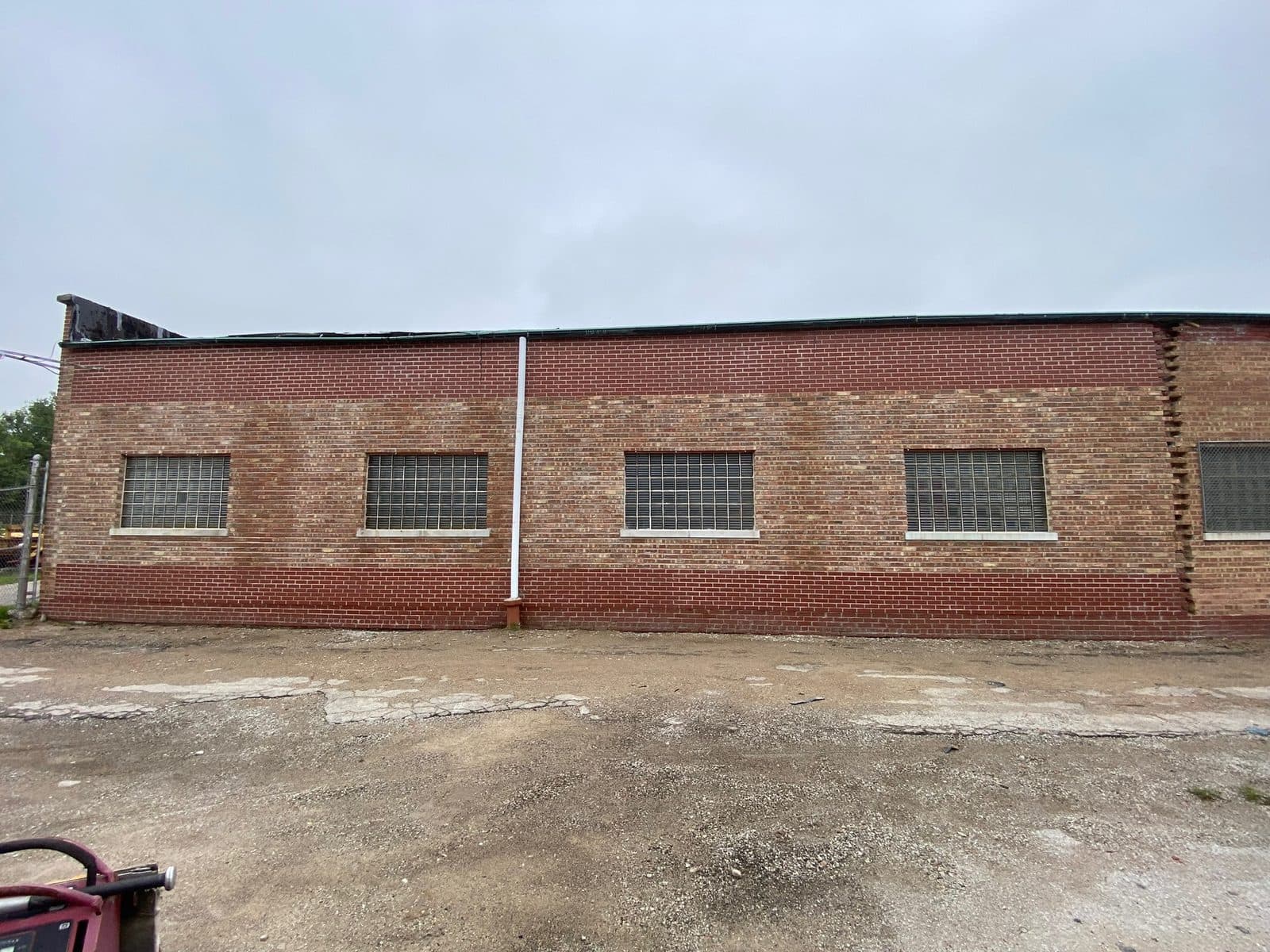
Naperville's commercial masonry is a good deal younger than Chicago's, and that changes almost everything about how it fails and what restoring it involves.
Where the city's commercial stock is century-old solid load-bearing brick, most of Naperville's is brick veneer over block or steel frame — built from roughly the 1970s onward, with designed control joints, shelf angles, flashing, and weep holes. Commercial masonry restoration in Naperville, IL means diagnosing that assembly correctly, because sealing a veneer wall the way you'd seal a solid one makes it worse. Paul Lally's Masonry has been restoring Chicagoland commercial masonry since 1988.
What we restore — and what we don't
We work on offices, retail and strip centers, multi-tenant and mixed-use buildings, apartment buildings, small institutional property, and mid-size commercial.
Two honest limits:
We're a family-owned masonry contractor, not a high-rise swing-stage restoration firm. If a building is genuinely outside what we take on, we'll say so at the estimate rather than stretch to fit it.
We don't do EIFS or stucco. A good many Naperville commercial buildings combine brick veneer with EIFS or stucco panels. That's a different trade, and we'll tell you plainly which elevations or elements need a different specialist rather than take on work we're not the right people for.
What a commercial restoration scope covers
- Parapet wall repair and rebuilds — the wall above the flat roofline
- Coping replacement and resetting
- Tuckpointing and repointing across the facade and side elevations
- Control and expansion joint sealant — a bigger part of the scope here than on older buildings
- Lintel repair and replacement over storefront, service, and overhead openings
- Brick and block replacement — spalled, cracked, or displaced units
- Veneer anchorage issues, assessed and coordinated
- Foundation and base-course masonry at grade
- Waterproofing — breathable sealers, last, once the wall is sound
The failure order on a Naperville commercial building
First, the parapet and coping. On a flat-roofed building the wall continues above the roof deck, exposed to weather on both faces plus the top — so it deteriorates decades ahead of everything below. When the coping joints open, water stops running off the wall and starts running down inside it.
This is why so many "the roof is leaking" calls have nothing to do with the roof membrane. A roofer replaces the deck covering; the masonry standing above it isn't part of that job.
Second, the sealant in the control joints. This is where a newer building differs from an old one. Veneer construction has designed vertical control joints meant to be sealed, plus perimeter joints at every window and storefront. That sealant is now on its second or third lifetime, and when it fails, water enters an assembly that depends on drainage to work.
Third, the lintels. Wide storefront glass, service doors, and overhead openings mean long spans of steel under real load. As it corrodes it expands to several times its thickness and lifts the masonry above — a horizontal crack along the joint above an opening, often with rust staining below.
Fourth, the veneer anchorage. Ties and shelf angles corrode. A bulging or bowing veneer panel has lost its anchorage, not its mortar, and that's a different diagnosis and a different repair.
Fifth, the base course at grade — de-icing salt from the parking lots, plowed snowpack, and splashback.
Signs your building needs attention
- Tenant complaints of ceiling stains, damp walls, or musty smells
- Loose or cracked coping, or missing pieces
- Failed, split, or missing sealant in the vertical control joints
- Mortar sand, brick chips, or coping fragments on the roof
- A horizontal crack above a storefront or overhead door, with or without rust staining
- Spalling brick or block — faces flaking, powdering, popped
- A bulging or bowing veneer panel — anchorage, not mortar
- Efflorescence — white chalky deposits signalling water moving through
- Blocked or sealed-over weep holes at the base course
- Loose brick above an entrance or walkway — a safety item, not maintenance
- Deteriorated masonry at grade where salt and snow sit
How we prioritize against a finite budget
| Priority | What | Why | |---|---|---| | 1 — Immediate | Anything that could fall near an entrance, walkway, or parking area; any bulging veneer panel | Public safety and liability | | 2 — This season | Active water entry into tenant space; failed parapet coping | Interior damage and tenant relations compound fast | | 3 — This season if possible | Rust-jacked lintels; failed control-joint sealant | Actively admitting water into a drained assembly | | 4 — Next phase | Repointing weather elevations; brick and block replacement | Real deterioration, not yet emergency | | 5 — Preventive | Remaining elevations, sealing | Protects everything already done |
The sequencing mistake we see most: spending category-5 money on the street elevation while a category-2 parapet quietly pours water down inside the wall.
Our process
- Inspect the whole envelope, including the roof. Nobody scopes a parapet from the parking lot.
- Identify the wall assembly — veneer over block, veneer over frame, or solid. This determines the diagnosis.
- Check the drainage path — flashing, weep holes, and whether anything has been sealed shut.
- Document the condition in writing, in a form usable for budgeting and ownership discussions.
- Separate safety, structural, water-entry, and cosmetic items so priorities are obvious.
- Plan access and staging around your operations — entrances, drive lanes, parking, tenant hours.
- Protect the site — roof membrane, glass, storefront finishes, walkways, landscaping.
- Work in order: cause before symptom, top of the building before the bottom, structure before surface.
- Match materials — mortar type, color, sand, and joint profile; brick and block matched.
- Clean up daily, and walk the finished work with you.
Materials
Mortar matched for type, color, sand, and joint profile — Type N across much of this work, Type S where structure and exposure genuinely call for it. Coping in precast, limestone, clay tile, or metal to suit the building. New lintels sized for the span with proper bearing and corrosion protection. Brick and block matched to existing.
Sealants specified per joint condition with backer rod setting bead depth — a larger share of the scope on veneer buildings than on older solid masonry. Breathable penetrating sealers only, never a film-forming coating. And weep holes stay open — they're the drain on a veneer wall.
What drives the cost
- Building height and access — staging, lifts, and how material reaches the work
- Linear footage of parapet and coping, and how many sides
- Repair-to-rebuild ratio on the parapet
- Linear footage of control and perimeter joint to be resealed
- Number of failing lintels and the width of the openings
- Extent of veneer repair, and whether anchorage is involved
- Grade-level masonry condition
- Operational constraints — restricted hours, phased access, keeping entrances open
- What's found once the top courses come off
Paul Lally's Masonry gives a free on-site estimate in writing, and a real commercial estimate includes getting on the roof.
Local context: Naperville's commercial stock
Naperville's commercial building went up alongside its enormous residential growth — the office and corporate campuses along the corridors, retail centers and strip malls, medical and professional buildings, mixed-use development around downtown and the Metra stations, and light industrial and flex space toward the edges. Most of it dates from roughly the 1970s through the 2000s, with older masonry in and around the historic downtown.
That produces a specific profile: brick veneer over block or frame, designed control joints, flat roofs with parapets and precast or metal coping, wide storefront and service openings on steel lintels, stone and EIFS accents, and large parking areas that get salted heavily every winter.
The buildings are now twenty-five to fifty years old — which is exactly where original sealant has failed two lifetimes over, coping joints have opened, ties and shelf angles have begun corroding, and the first generation of lintels is rust-jacking.
DuPage County weather does the rest: repeated hard freeze-thaw cycling, wet springs, and wind-driven rain from the west and northwest hitting largely unsheltered elevations on open sites.
Related masonry services in Naperville
Commercial scopes draw on commercial masonry restoration, parapet wall repair, tuckpointing and repointing, caulking and joint sealant, lintel repair and replacement, brick repair and brick replacement, foundation masonry repair, limestone and sill repair, and masonry waterproofing.
Worth reading: our commercial masonry restoration guide for Chicagoland and brick veneer vs. solid masonry. Nearby: tuckpointing in Naperville, masonry caulking in Naperville, masonry waterproofing in Naperville, and commercial masonry restoration in Downers Grove.
Get a scope you can take to ownership
Paul Lally's Masonry Inc. is a family-owned, insured masonry contractor serving Chicago and the Chicagoland suburbs since 1988 — tuckpointing, brick repair and replacement, chimney repair and rebuilds, lintel replacement, parapet wall repair, masonry restoration, and waterproofing for residential and commercial properties. Built on Craftsmanship. Backed by Experience.
We'll walk the building including the roof, tell you what's a safety item and what can be phased, and be straight about where masonry scope ends and another trade begins. Our family name is on every job.
Free on-site estimates — call (708) 448-8866 or request an estimate online.
Commercial Masonry Restoration in Naperville, IL — Frequently Asked Questions
What kinds of commercial buildings do you work on?
Offices, retail and strip centers, multi-tenant and mixed-use buildings, small institutional property, and apartment buildings. We're a family-owned masonry contractor rather than a high-rise swing-stage restoration firm, and we'll tell you plainly at the estimate if a building is outside what we take on.
What fails first on a Naperville commercial building?
Usually the parapet and its coping, then the sealant in the control joints, then lintels over wide storefront and service openings. Most of the local commercial stock is brick veneer over block or frame, so shelf angles and wall ties matter too — a veneer wall that bulges has lost its anchorage, not its mortar.
How much does commercial masonry restoration cost in Naperville, IL?
There's no square-foot rate that means anything on commercial work. Cost is driven by building height and access, linear footage of parapet and coping, the number of failing lintels, the extent of veneer repair, staging requirements, and whether work must happen outside business hours. Paul Lally's Masonry provides a free on-site estimate in writing after inspecting the building including the roof.
Can the work be phased across budget years?
Yes, and on commercial property it usually should be. We sequence by risk — anything that could fall near an entrance or walkway first, then active water entry into tenant space, then the roofline, then weather elevations, then preventive work. You get a phased scope you can take to ownership.
How disruptive is the work to tenants?
Suites and storefronts stay occupied — this is exterior work. Expect grinder noise during working hours, staging along the building, dust control measures, and restricted access directly below the work area. We confirm the schedule before mobilizing so you can give tenants proper notice.
My building's walls are brick veneer, not solid masonry. Does that change things?
Significantly. A veneer wall is a non-structural skin over block or frame with a drainage cavity behind it, so leaks are frequently about flashing, blocked weep holes, or corroded ties rather than the brick face. A bulging veneer panel means the anchorage failed, and that's assessed differently than mortar deterioration.
Do you work on EIFS or stucco facades?
Those are a different trade and we don't take them on — a good many Naperville commercial buildings combine brick veneer with EIFS or stucco panels, and we'll be straight with you about where our scope ends. We handle the masonry portion and will say plainly which elevations or elements need a different specialist.
How long does a commercial masonry project take?
A partial parapet rebuild and repointing on a single-story retail building is commonly days to a couple of weeks; a full perimeter on a larger office building runs longer, and phased work spreads across seasons. Weather moves schedules because mortar needs workable temperatures to cure.
Commercial Masonry Restoration in Nearby Areas
Other Masonry Services in Naperville, IL
Learn more about our commercial masonry restoration services across Chicagoland, or view all service areas.
Free on-site estimates across Chicagoland.