
Masonry Restoration · Hinsdale, IL
Masonry Restoration in Hinsdale, IL — Period Homes, Done the Slow Way
On a Hinsdale period home the masonry is usually the most valuable material on the building — and the easiest to ruin with a repair that was meant to help.
Quick Answer
Masonry restoration in Hinsdale, IL is the whole-building repair of century-old brick and stone on period homes using soft lime-based mortar matched to the original, salvaged brick, Dutchman stone repairs, and gentle cleaning. The governing rule is that mortar must be softer than the masonry. Paul Lally's Masonry has restored Chicagoland masonry since 1988 — (708) 448-8866.
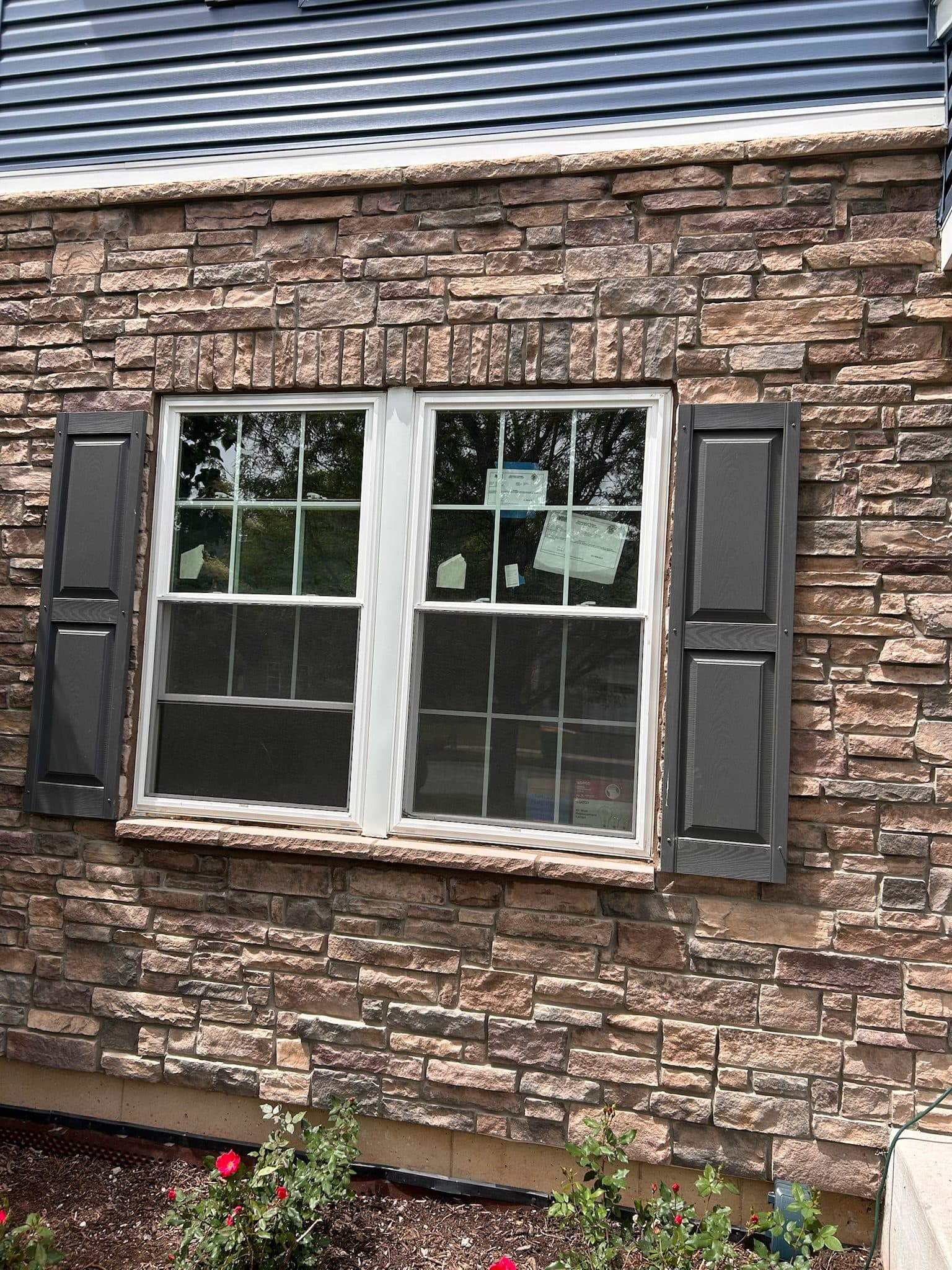
Hinsdale has one of the best-preserved collections of period housing in DuPage County — Victorians and Queen Annes, four-squares, Tudors, Colonial Revivals, and Prairie-influenced homes, much of it inside historic districts, much of it more than a century old.
On those houses, the masonry is usually the most valuable material on the building. It's also the easiest thing to ruin with a repair that was meant to help. Masonry restoration in Hinsdale, IL means working the way the building was built — soft mortar, matched materials, original fabric preserved wherever it can be. Paul Lally's Masonry has been restoring Chicagoland brick and stone since 1988.
Repair, or restoration?
A repair fixes one failed element on an otherwise sound building. That's plenty of jobs, and we'll say so when that's all you need.
Restoration is the right frame when:
- The house is pre-1930s and has never had comprehensive masonry work
- Mortar is soft across whole elevations rather than in patches
- Several components are failing at once — joints, brick, stone, chimney, lintels
- Previous work used the wrong mortar and is now damaging the brick
- Original brick and limestone are worth preserving rather than replacing
- Water is getting in and nobody has been able to say definitively where
The rule that governs a period home
Mortar must always be softer than the masonry beside it.
Mortar is the sacrificial element in a wall. It's meant to be weaker than the brick so thermal movement, moisture cycling, and settlement are absorbed by the joint — which is inexpensive and straightforward to replace. That's why hundred-year-old walls are still standing.
Pack a modern, high-strength, Portland-rich mortar into that wall and the physics invert. The joint is now harder than the brick. All that movement has to go somewhere, and it goes into the brick — which spalls and crumbles along every mortar line.
A "stronger" repair destroys the building it was sold to protect, and it isn't reversible. Repointing can be redone. Brick faces and carved stone cannot be put back.
On Hinsdale homes this is the single most common thing we're called in to correct — usually the work of a well-meaning contractor from the last twenty years who reached for the strongest bag on the shelf.
What restoration covers
- Repointing with matched mortar — joints cut to depth and repacked with a mix suited to the original masonry
- Brick repair and replacement — spalled and cracked units, matched or salvaged
- Limestone and stone restoration — sills, lintels, water table, steps, porch piers, quoins, carved trim
- Chimney repair and rebuilds above the roofline
- Lintel repair and replacement where steel has rusted, or stone lintels have cracked
- Gentle cleaning — never sandblasting, never aggressive pressure
- Caulking and joint sealant at movement joints and window perimeters
- Waterproofing — breathable penetrating sealers only, last, and only where warranted
Signs a Hinsdale home is ready
- Mortar you can rake out by hand across whole elevations
- Spalling brick — faces flaking, powdering, or popped off
- Spalling concentrated at joint edges — the signature of hard mortar against soft brick
- Delaminating limestone — stone coming away in flat sheets
- Eroded sills with the drip edge worn away
- Deteriorated stone steps, stoops, and water table at grade, where de-icing salt works hardest
- A cracked chimney crown, missing cap, or soft joints above the roofline
- A horizontal crack above a window with rust staining — a corroding lintel
- Step cracks climbing through the joints
- Efflorescence and damp interior walls
- Previous repointing that looks grey and hard against softer brick
How we restore a period home
- Read the building first. Its era, its brick, its mortar, its stone. This determines the whole approach and comes before any scope discussion.
- Test the mortar and brick hardness so the replacement mix is genuinely softer than the masonry.
- Walk the whole envelope — all elevations, chimney, stone, and the base course at grade.
- Diagnose the water. Nearly every failure traces back to water reaching somewhere it shouldn't.
- Sequence the work — cause before symptom, top of the house before the bottom, structure before surface, sealing last.
- Cut joints to depth — roughly two to two and a half times the joint width, back to sound mortar. On very soft brick, joints are hand-raked rather than power-ground to protect the arrises.
- Repoint with matched mortar — lime-rich or low-Portland, matched for color, sand, and joint profile, packed in layers and tooled to the existing profile.
- Save original material. Brick removed during the work is cleaned and relaid. Stone gets patched or Dutchman-repaired rather than replaced.
- Clean gently, if at all.
- Walk the finished house with you, with a maintenance cadence.
Materials
Lime-based and low-Portland mortars for historic work, matched for color, sand grain, and joint profile. Type N where the masonry is later and harder; Type S only where structure and exposure genuinely warrant it. Salvaged brick where matching matters. Matched Indiana and Illinois limestone and tinted stone repair mortars. Breathable penetrating sealers only.
What we don't use on a century-old Hinsdale home: hard modern high-strength mortar, sandblasting, high-pressure washing, film-forming sealers, or masonry paint.
What drives the cost
- Number of elevations and whether the work is phased
- Height and access — staging on a large period home is a real portion of the job
- Ratio of repointing to brick and stone replacement
- Stone scope — patching, Dutchman repairs, or replacement, plus fabrication lead time
- Chimney condition — repoint, crown work, or an above-roofline rebuild
- Matching difficulty and salvage sourcing
- How much previous bad work has to be undone — a genuine cost driver on homes repointed with hard mortar
- Hand-work requirements where the brick is too soft to power-grind
- What's found once the joints are open
Paul Lally's Masonry gives a free on-site estimate in writing after walking the house.
Local context: Hinsdale's period masonry
Hinsdale developed as a rail suburb from the 1860s onward and retains a great deal of its original architecture, including substantial historic districts. On those homes limestone appears everywhere it can: sills and lintels at every opening, a water table course near grade, steps and stoops, porch piers and balustrades, quoins at the corners, and carved banding and trim.
The brick is generally soft and, on the oldest stock, laid in lime mortar that was softer still.
The failures cluster where you'd predict:
- At grade — de-icing salt on walks and drives, plowed snowpack, and splashback attacking the water table, steps, and stoops. Salt draws into porous stone and crystallizes as it dries, expanding much like ice.
- At the front edge of sills, where water sits longest and the drip edge erodes.
- On north and west elevations, taking DuPage County's wind-driven rain.
- At chimney shoulders above the roofline.
- Anywhere a previous repointing job locked soft masonry into hard modern mortar.
None of that is a defect. It's a hundred-plus winters arriving on schedule on a house built to be maintained — and it responds very well to the right repair, provided the repair respects the material.
Related masonry services in Hinsdale
Restoration draws on tuckpointing and repointing, brick repair, brick replacement, limestone and sill repair, chimney repair and rebuilds, lintel repair and replacement, foundation masonry repair, caulking and joint sealant, masonry waterproofing, and residential masonry restoration.
Worth reading: historic masonry restoration and lime mortar, why masonry repairs fail, and should you paint your brick.
Nearby: tuckpointing in Hinsdale, chimney repair in Hinsdale, lintel replacement in Hinsdale, limestone and sill repair in Hinsdale, and masonry restoration in La Grange.
Restore it the way it was built
Paul Lally's Masonry Inc. is a family-owned, insured masonry contractor serving Chicago and the Chicagoland suburbs since 1988 — tuckpointing, brick repair and replacement, chimney repair and rebuilds, lintel replacement, masonry restoration, and waterproofing for residential and commercial properties. Built on Craftsmanship. Backed by Experience.
We'll read your house before we price it, tell you which mortar it actually wants, and save every piece of original brick and stone we can. Our family name is on every job.
Free on-site estimates — call (708) 448-8866 or request an estimate online.
Masonry Restoration in Hinsdale, IL — Frequently Asked Questions
What's the difference between masonry repair and restoration on a period home?
A repair fixes one failed element. Restoration treats the whole exterior as one system, uses materials matched to the original construction, and prioritizes preserving original brick and stone rather than replacing it. On a century-old Hinsdale home, restoration is almost always the right frame.
Why does my old brick need a different mortar?
Because it's soft. Pre-1930s brick was fired at lower temperatures and laid in lime-based mortar, and mortar must always be softer than the masonry beside it so the joint absorbs movement. Pack a hard modern Portland-rich mix against that brick and the brick face becomes the sacrificial element instead, spalling along every joint line — permanently.
How much does masonry restoration cost in Hinsdale, IL?
There's no square-foot rate — no two period homes need the same scope. Cost is driven by how many elevations are involved, height and access, the ratio of repointing to brick and stone replacement, chimney condition, and how difficult the original materials are to match. Paul Lally's Masonry provides a free on-site estimate in writing.
My home is in a historic district. Does that change the work?
It can change what approvals are required and which materials and finishes are acceptable, and those requirements depend on the specific district and designation — a question for the village and your architect rather than your mason. What we can say is that landmark-appropriate practice is how we'd approach century-old masonry regardless: matched materials, soft mortar, and preserving original fabric.
Can original limestone be saved rather than replaced?
Usually, and that's always the goal. Sound stone with localized damage is patched with matched stone repair mortar, and partial failures take a Dutchman repair — cutting out only the failed portion and letting in a matching piece of new limestone. Full replacement is the last resort, because original stone can only ever be approximated.
Should historic brick be cleaned or sealed?
Cleaned gently if at all, and sealed rarely. Sandblasting and high-pressure washing strip the fired face off brick and the weathered skin off limestone, leaving porous material that deteriorates far faster. If sealing is warranted, only a breathable penetrating product over sound joints — never a film-forming coating on historic masonry.
Why is restoration work slower than ordinary repointing?
Because the material demands it. On very soft brick, joints are sometimes hand-raked rather than power-ground to avoid chipping the arrises, stone repairs are cut and fitted individually, and matched mortar often needs test batches that cure before the wall is committed. Speed is what damages historic masonry.
How long does a full restoration take?
A single elevation can run days to a couple of weeks; a full building including chimney, stone, and lintels commonly runs several weeks and is often phased across seasons. Mortar needs workable temperatures to cure properly, so weather moves the schedule. We give a realistic window at the estimate.
Masonry Restoration in Nearby Areas
Other Masonry Services in Hinsdale, IL
Learn more about our masonry restoration services across Chicagoland, or view all service areas.
Free on-site estimates across Chicagoland.