
Limestone / Sill Repair · Naperville, IL
Limestone & Sill Repair in Naperville, IL — Why the Stone Fails Before the Brick Does
A window sill is not trim. It is the piece of stone that throws water clear of your wall — and when it stops doing that, the damage shows up in the brick below long before anyone looks up.
Quick Answer
Limestone and sill repair in Naperville, IL restores cracked, spalling, delaminating or deflected stone and cast sills, water tables and caps that have stopped shedding water off the wall — through repointing, patching, Dutchman inserts, resetting or replacement. Paul Lally's Masonry has worked Chicagoland stone since 1988 — free on-site estimates, (708) 448-8866.
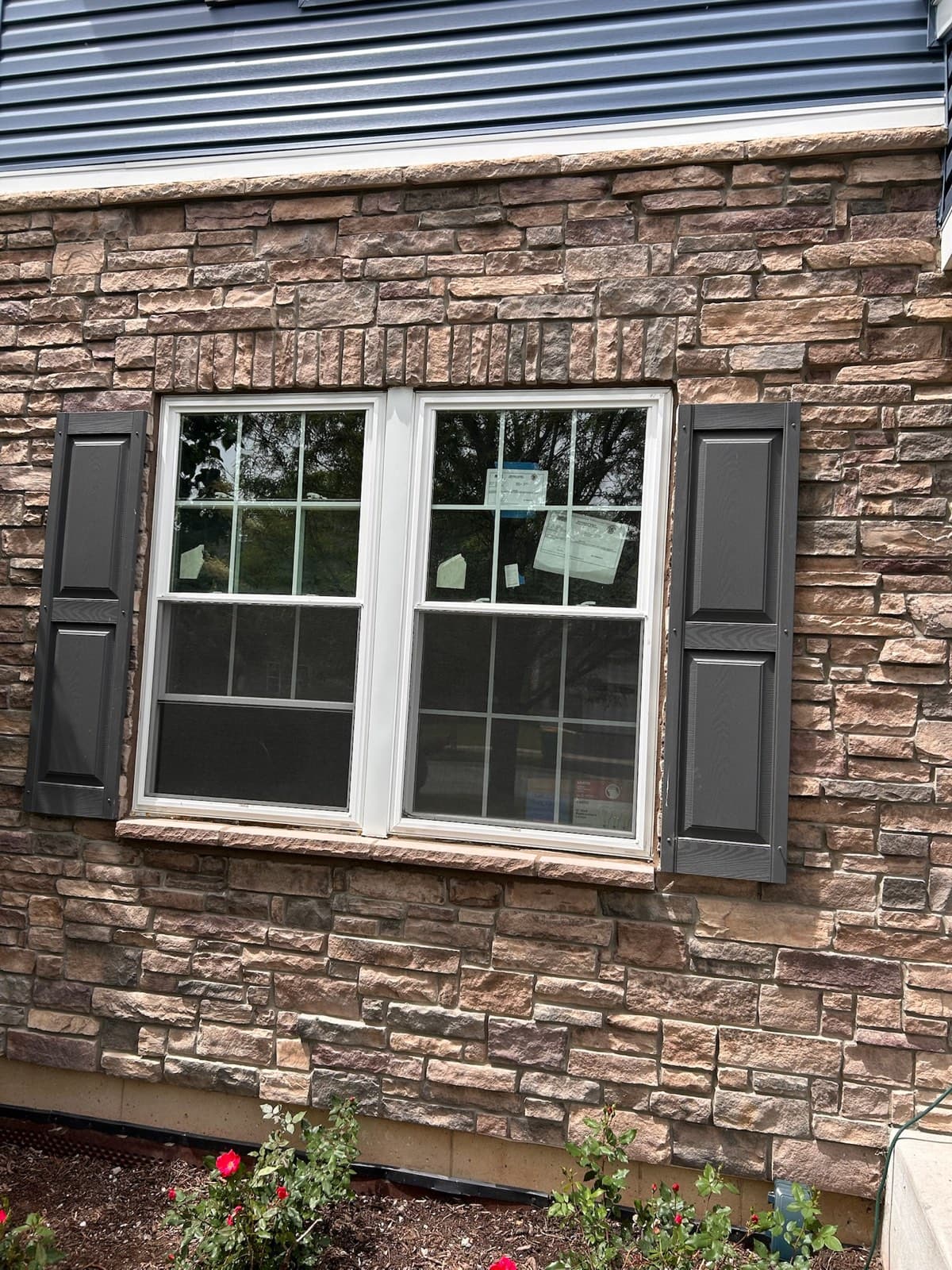
Look at the wall directly beneath a window on a brick house. If the brick there is spalled, stained and eaten away while the brick two feet to either side is sound, you are not looking at a brick problem.
You are looking at a sill that has stopped working, and the brick is the casualty.
Limestone and sill repair in Naperville, IL is one of the most under-diagnosed repairs in this trade, because homeowners see the damage and assume the damaged thing is the thing to fix. It rarely is.
Paul Lally's Masonry Inc. is a family-owned, insured masonry contractor serving Chicago and the Chicagoland suburbs since 1988 — tuckpointing, brick repair and replacement, chimney repair and rebuilds, lintel replacement, masonry restoration, and waterproofing for residential and commercial properties. Built on Craftsmanship. Backed by Experience. Free on-site estimates — call (708) 448-8866.
What a sill is actually for
Two jobs, both about water.
It sheds. The stone is pitched outward so water runs off rather than sitting on it or tracking back toward the window.
It breaks the flow. A properly detailed sill has a drip edge — a groove or a projecting lip on the underside — that stops water wrapping around and running back onto the wall beneath. Water will not cross a clean drip edge. It lets go and falls clear.
Lose either function and every drop that hits that window head starts going somewhere it was never meant to go. That is the whole mechanism, and almost every sill failure on this page traces back to it.
The six ways sills fail
Delamination
Limestone is sedimentary — laid down in beds. Water gets between those beds, freezes, and lifts the stone apart in sheets. You see a flaking, layered face rather than a clean break.
It is far worse on a unit that was face-bedded — set with its bedding planes running vertically instead of horizontally, exposing the layers directly to weather. That is a nineteenth- and early-twentieth-century installation error that shows up a century later as one sill falling apart while the one beside it is fine.
Spalling
The face pops off in patches, usually where water has been sitting longest.
Cracking through the section
Often across the middle of a longer sill, and frequently accelerated by a steel lintel corroding nearby or by settlement beneath.
Lost slope
Old sills settle, and a well-meant repointing with a fat bed of mortar can level one out entirely. A flat sill is a shelf that holds water.
Bridged drip edge
Repeated painting, a heavy parge coat, or a bead of caulk run along the underside will bridge the drip groove and route water straight back to the brick. Completely avoidable, and extremely common.
Open end joints
Where the sill meets the brick jamb at either end is the single most common water entry point on the whole assembly — and the easiest thing for anyone to overlook.
Naperville, specifically
Naperville's building stock spans well over a century, and the stone on it belongs to three different worlds.
The historic downtown and the older streets around it. Late-nineteenth and early-twentieth-century commercial and residential masonry along the Main, Washington and Jefferson corridors and out toward the Riverwalk and Naper Settlement — cut limestone sills, water tables, hood moulds and entry surrounds in soft, lime-rich original mortar. This stone is not fragile; it has stood for a hundred and twenty years. It is, however, intolerant of hard modern mortar and aggressive cleaning, and historic district requirements frequently apply.
The post-war ranches and split-levels. Wide picture windows on long sills, and a great deal of what people call "the limestone" here is actually cast stone — a moulded concrete product that looks convincing and fails like concrete, sometimes exposing internal reinforcement as it spalls. Identifying it correctly is the whole job.
The 1980s-onward subdivisions out along Route 59, 75th Street and Ogden. Brick and stone veneer over frame, where the sill is often precast and the failures are as much about flashing, end joints and sealant as about the stone itself.
Three eras, three repair vocabularies — and a scope that treats them the same is a scope that produces surprises.
What the competing pages leave out
Worth saying plainly, because it explains why this page exists.
The best local masonry pages in this market are genuinely good on tuckpointing — real neighbourhoods, real mortar types, real freeze-thaw detail — and say nothing at all about stone sills. The pages that do sell stone sill work describe it in general terms: rain, snow, ice, cracks, "restore the stone." They do not explain slope, drip edge, delamination, face-bedding or end joints, they do not distinguish limestone from cast stone, and they do not describe what a repair actually consists of.
That gap matters, because the repair you need is determined entirely by which of those six failures you have.
How we repair a stone sill
We do the smallest repair that genuinely solves it.
- Assess the stone and the water path. Is the pitch intact, is the drip edge clear, are the end joints open, and what has the brick below been taking?
- Repoint the end and bed joints with matched mortar, where the joints are the failure.
- Patch localised spalling with a stone-appropriate repair mortar, tinted and textured on site, where the unit is otherwise sound.
- Dutchman repair where one portion has failed but the rest of the stone is good — the damaged section is cut out and a matched piece let in.
- Reset a deflected or settled sill that is otherwise intact, correcting the bed and restoring proper pitch.
- Replace where the stone has cracked through or delaminated across its depth, setting the new unit with real pitch and a real drip edge.
- Repair the brick below that the failed sill has been feeding — usually the reason you called.
- Repoint and clean down, gently. No sandblasting and no high-pressure washing on historic stone; both strip the weather-resistant outer skin permanently.
Materials
Limestone matched in colour and finish on limestone buildings. Cast or precast units where that is what is there. Repair mortars formulated for stone rather than generic patching compound. Mortar matched in type, colour and joint profile — and, on older masonry, softer than the stone around it, because mortar harder than the unit drives stress into the unit and spalls it. Sealant only where sealant belongs, never run across a drip edge.
What drives the cost
Size and number of stone units. Whether the work is repointing, patching, a Dutchman, a reset or replacement. How much brick must come down and go back up. Height and access. Whether the stone can be matched from stock or must be cut. Whether the brick below needs replacement too. Whether historic district requirements apply.
We do not publish rates, because no honest figure exists before someone looks at the stone. Free on-site estimate, in writing — call (708) 448-8866.
Serving Naperville and the surrounding DuPage and Will suburbs
We work throughout Naperville and the communities around it — Lisle, Downers Grove, Woodridge, Bolingbrook, Warrenville and Plainfield. Related services: limestone and sill repair, brick repair, tuckpointing and repointing, lintel repair and replacement, and masonry restoration.
For the wider picture of what happens above and below an opening, read masonry around windows and openings, and for the material itself, limestone sill repair in Chicago.
Fix the sill, and the wall below stops losing ground
Family-owned since 1988, insured, and straight with you about what the stone actually needs. Our name is on every job.
Get a free on-site estimate — or call (708) 448-8866. Built on Craftsmanship. Backed by Experience.
Limestone / Sill Repair in Naperville, IL — Frequently Asked Questions
How much does limestone sill repair cost in Naperville, IL?
It depends on the size and number of stone units, whether the work is repointing, patching, a Dutchman insert, resetting or full replacement, how much brick has to come down and go back up, and access. Paul Lally's Masonry provides a free on-site estimate in writing.
Why is the brick under my window damaged when the rest of the wall is fine?
Because the sill above it has stopped shedding water. A sill exists to carry water clear of the face of the wall, and once it cracks, loses its pitch or loses its drip edge, that water runs straight down onto one concentrated area of masonry.
Is my sill limestone or cast stone?
Look for uniformity. Natural limestone varies unit to unit and often shows fine fossil texture; cast stone is a moulded concrete product, so every piece is identical and a damaged area frequently reveals aggregate or, occasionally, reinforcement. The repair differs between them.
What is a Dutchman repair?
Cutting out the failed portion of a stone unit and setting a matched piece of new stone into the void, so the repair reads as part of the original. It saves a unit that is mostly sound and is far less invasive than replacing the whole sill.
Why is my stone flaking apart in layers?
That is delamination. Limestone is a sedimentary stone laid down in beds, and when water freezes between those beds it splits the stone apart in sheets. It gets dramatically worse on a unit that was face-bedded — set with its layers running the wrong way.
My sill has dropped at one end. Can it be reset?
Often, yes. A deflected or settled sill that is otherwise sound can be taken up, the bed corrected, and the unit reset with proper pitch — which is a smaller job than replacement and keeps the original stone in the wall.
Should the sill be sealed after repair?
A breathable penetrating sealer can help a repaired sill shed water, but only after the stone and mortar have cured and only where it will not trap moisture. Sealing stone that is still cracked or still holding water accomplishes nothing.
Do you work on historic district properties in Naperville?
Yes. Older stone needs soft, compatible mortar and gentle cleaning, and historic districts frequently regulate mortar, joint profile and method. We match what is there and confirm requirements with the city before work begins rather than after.
Limestone / Sill Repair in Nearby Areas
Other Masonry Services in Naperville, IL
Learn more about our limestone / sill repair services across Chicagoland, or view all service areas.
Free on-site estimates across Chicagoland.