
Caulking & Joint Sealant · Naperville, IL
Masonry Caulking & Joint Sealant in Naperville, IL — Window Perimeters and Movement Joints
Most Naperville caulking failures trace back to two invisible details: no backer rod, and the wrong bead depth. Paul Lally's Masonry has sealed Chicagoland masonry since 1988.
Quick Answer
Masonry caulking in Naperville, IL is the replacement of flexible joint sealant at window and door perimeters, expansion and control joints, coping, and where brick meets stone or metal. Mortar belongs in static joints; sealant belongs in moving ones. Paul Lally's Masonry has sealed Chicagoland masonry since 1988. Free estimates: (708) 448-8866.
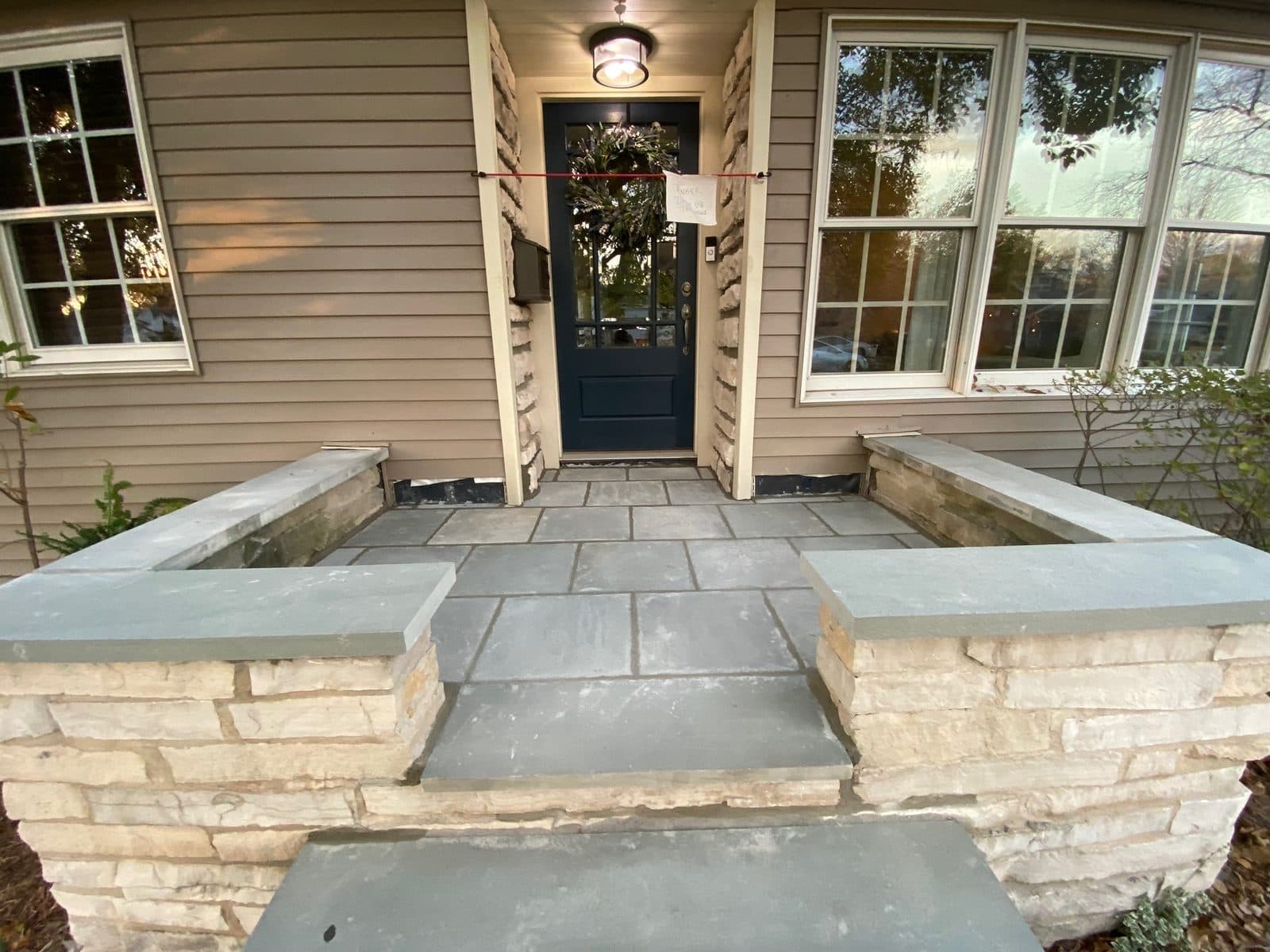
Caulking looks like the simplest work on a masonry building. A tube, a gun, a steady hand. That impression is exactly why so much of it fails within a couple of seasons.
Masonry caulking in Naperville, IL comes down to two details you can't see once the job is finished — whether backer rod was installed, and whether the bead was sized correctly. Get those right and a sealed joint lasts many years. Get them wrong and it tears itself apart the first winter. Paul Lally's Masonry has been sealing Chicagoland masonry since 1988.
Which joints get sealant, and which get mortar
Start here, because it's the decision that matters most:
| Joint | What belongs there | |---|---| | Bed and head joints between bricks | Mortar — tuckpointing | | Window and door perimeters | Sealant | | Expansion and control joints | Sealant | | Coping and cap joints | Sealant | | Brick to limestone, metal, or wood | Sealant | | Vents, hose bibs, conduit, penetrations | Sealant | | Where masonry meets a slab, stoop, or step | Sealant |
The principle: mortar goes in joints designed to hold still. Flexible sealant goes in joints designed to move. Brick expands and contracts with temperature. Aluminum and steel window frames move more, and at a different rate. Where two materials with different movement meet, the joint has to stretch and compress thousands of times without tearing — and hard mortar has almost no elasticity to give.
If anyone proposes caulking your brick joints instead of repointing them, that's a warning sign about everything else in the bid. Sealant smeared into failed mortar joints looks finished for a year, then sheets off — and in the meantime it holds water against the brick rather than letting the wall dry.
The two invisible details that decide whether it lasts
Backer rod
Backer rod is a foam rope pressed into the joint behind the sealant. It does two things, both essential:
- It sets the depth of the bead, so the sealant is the right thickness to stretch.
- It stops the sealant bonding to the back of the joint. A bead that grips three surfaces — both sides and the back — can't stretch. It's locked. The first real movement tears it, either down the middle or away from one face.
Three-sided adhesion is the most common cause of premature caulk failure, and it's entirely preventable. A joint sealed without backer rod will fail early no matter how good the product was.
Bead geometry
A sealant bead needs a proper width-to-depth relationship to accommodate movement. Too deep is as damaging as too thin — an over-deep bead is stiff, can't elongate, and splits. That's why joint sizing is a deliberate step and not something judged by eye while the gun is running.
Neither detail is visible once the job is tooled and cleaned. Which is exactly why cheap sealant work is so easy to sell and so predictable in how it fails.
Signs your Naperville joint sealant has failed
- Cracked, split, hardened, or chalky beads
- Sealant pulling away from one face of the joint
- A bead torn down its middle — usually a sizing or backer rod problem
- Gaps at window and door corners, the first place a perimeter seal lets go
- Water stains on interior walls near windows after wind-driven rain
- Drafts at window perimeters in winter
- Daylight visible through a perimeter joint from inside
- Missing sections of bead
- Dark saturation streaks on the brick below a joint
- Oily halos in limestone sills or trim — a staining sealant was used
South and west elevations go first, every time — the UV load plus the widest temperature swings.
What waiting costs
A failed sealant joint is an open funnel aimed into your wall. Water entering a movement joint doesn't run down the face where you'd see it — it goes inside, wetting the back of the brick, reaching steel lintels and shelf angles and starting them corroding, soaking sheathing and framing, and eventually showing up on interior finishes.
Then winter arrives, that trapped water freezes and expands, and the damage compounds. What was a straightforward resealing becomes resealing plus spalled brick, plus a rusted lintel, plus drywall and trim repairs. Sealant is one of the cheapest elements on a building and one of the most consequential when it's gone.
How Paul Lally's Masonry does joint sealant work
- Find where the water is actually entering. Caulk is blamed for plenty of leaks it didn't cause. We trace the path first, because sealing the wrong joint just hides the real one.
- Remove the old material completely — sealant and backer rod both. New sealant does not bond to old sealant, and layering over a failed bead is the defining shortcut of bad caulk work.
- Prepare the joint faces, cleaned back to sound, dry substrate. Dust, residue, and moisture are the three reliable ways to guarantee a bond failure.
- Size the joint for correct bead geometry.
- Install backer rod to set depth and prevent three-sided adhesion.
- Prime where the substrate requires it — some stone and metals need it to hold a bond.
- Gun a continuous bead with full contact to both faces.
- Tool the joint, pressing the sealant into firm contact with both sides and leaving a slightly concave profile that sheds water.
- Clean the masonry and let it cure undisturbed.
Materials — specified per joint, not per job
- Polyurethanes — excellent adhesion to masonry, tough, paintable; the workhorse for most vertical wall joints.
- Silicones — outstanding UV and weather resistance and long service life, ideal at glass and metal and on highly exposed conditions; not paintable, and staining-sensitive on porous stone.
- Non-staining formulations — essential on limestone sills, trim, and accents, where the wrong product bleeds a permanent oily halo into the stone.
- Hybrids and polysulfides — where specific movement capability or chemical resistance is called for.
- Backer rod — closed-cell or open-cell depending on the joint, sized to compress properly.
Matching the chemistry to the substrate is part of doing the work correctly, not an upsell.
What drives the cost
- Linear footage of joint in scope
- Number of window and door perimeters — slower than straight runs
- Removal effort — how stubborn the old sealant and rod are
- Height and access — ground floor versus upper elevations needing staging
- Sealant specified — a non-staining silicone at limestone is a different material than a standard urethane
- Substrate prep — cleaning, priming, and any masonry repairs needed first
Paul Lally's Masonry gives a free on-site estimate in writing after walking the joints.
Local context: Naperville masonry and why sealant work comes up here
Naperville spans an unusually wide range of masonry ages, and the sealant work follows the split.
The historic district and older streets near downtown hold genuine nineteenth-century brick and limestone. Buildings of that era were generally constructed without designed expansion joints — that's a later development in masonry practice — so on those homes sealant work concentrates at window and door perimeters, coping, penetrations, and at the transitions created later by additions and replacement windows. The stone on those homes also demands non-staining products.
The large stock from the 1970s through the 2000s is a different animal: brick-veneer fronts over frame with proper control and expansion joints, stone accents, and wide window openings. Those joints are typically on their second or third sealant lifetime by now.
Across both, replacement windows are the single most common trigger. A new frame set into an existing masonry opening creates a fresh perimeter joint between materials that move at different rates, and how well that joint is sealed decides whether water and drafts get in. Naperville has seen an enormous amount of window replacement, and the masonry side of that detail is handled very unevenly.
DuPage County weather supplies the stress: annual swings well over a hundred degrees working every movement joint, wind-driven rain from the west and northwest, and repeated freeze-thaw cycling.
Related masonry services in Naperville
Sealant work is usually scoped alongside the repairs that actually stop water: tuckpointing and repointing for the mortar joints, brick repair and brick replacement, lintel repair and replacement where steel has rusted behind a leaking joint, limestone and sill repair, and masonry waterproofing once everything is sound. For whole-house scopes see residential masonry restoration.
Worth reading: caulking vs. tuckpointing. Nearby: tuckpointing in Naperville, brick repair in Naperville, masonry waterproofing in Naperville, lintel replacement in Naperville, and masonry caulking in Chicago.
Get the joints sealed by someone who uses backer rod
Paul Lally's Masonry Inc. is a family-owned, insured masonry contractor serving Chicago and the Chicagoland suburbs since 1988 — tuckpointing, brick repair and replacement, chimney repair and rebuilds, lintel replacement, caulking and joint sealant, masonry restoration, and waterproofing for residential and commercial properties. Built on Craftsmanship. Backed by Experience.
We'll tell you which of your joints want mortar and which want sealant — and if the leak you're chasing isn't coming from the joint at all, we'll tell you that too. Our family name is on every job.
Free on-site estimates — call (708) 448-8866 or request an estimate online.
Caulking & Joint Sealant in Naperville, IL — Frequently Asked Questions
Why does the caulk around my Naperville windows keep failing?
Usually because it was installed without backer rod, at the wrong depth, or over a dirty or damp surface. A sealant bead needs to bond to just the two side faces of the joint so it can stretch; when it also grips the back, it tears itself apart the first time the joint moves. Layering fresh caulk over an old failed bead guarantees the same result.
What is backer rod and why does it matter so much?
Backer rod is a foam rope pressed into the joint behind the sealant. It sets the depth of the bead so the sealant can stretch properly, and it prevents the sealant from bonding to the back of the joint — three-sided adhesion, which is the single most common cause of premature caulk failure. A joint sealed without it will fail early no matter how good the product was.
Should my brick mortar joints be caulked?
No. The bed and head joints between bricks are static and want mortar — that's tuckpointing. Sealant belongs only in joints designed to move: window and door perimeters, expansion and control joints, coping joints, penetrations, and where masonry meets a different material. Caulk in brick joints holds water against the wall and sheets off within a season or two.
I just had replacement windows installed. Does the masonry need resealing?
Almost always, yes, and it's one of the most common reasons we're called in Naperville. A new frame set into an existing masonry opening creates a fresh perimeter joint between two materials that move at different rates, and how well that joint is sealed decides whether water and drafts get in. Window installers vary widely in how they handle the masonry side of that detail.
How much does masonry caulking cost in Naperville, IL?
There's no flat rate. Cost is driven by the linear footage of joint, the number of window and door perimeters, how stubborn the old sealant and backer rod are to remove, height and access, and which sealant each condition calls for. Paul Lally's Masonry provides a free on-site estimate in writing.
How long should joint sealant last?
A properly specified sealant installed on clean, dry substrate with correct backer rod lasts many years, but DuPage County is hard on it — wide temperature swings, UV load, and constant freeze-thaw movement. South and west elevations almost always fail first. We'll give you a realistic re-seal interval for your home at the estimate.
Water is coming in around a window even though it looks caulked. Why?
Often because the bead has lost adhesion behind a surface that still looks intact, or because the water is entering above the window and only appearing at the opening. Caulk gets blamed for a lot of leaks it didn't cause — a rusting lintel, a failed mortar joint, or a deteriorated sill above will all show up at the window. We trace the actual path before sealing anything.
Can you caulk limestone without staining it?
Yes, with a non-staining formulation chosen specifically for porous stone. Standard sealants can bleed a permanent oily halo into limestone that no cleaning removes, which is a real risk on Naperville homes with stone sills, trim, and accents. Matching the sealant chemistry to the substrate is part of the job, not an upgrade.
Caulking & Joint Sealant in Nearby Areas
Other Masonry Services in Naperville, IL
Learn more about our caulking & joint sealant services across Chicagoland, or view all service areas.
Free on-site estimates across Chicagoland.