
Parapet Wall Repair · Naperville, IL
Parapet Wall Repair in Naperville, IL — The Most Exposed Masonry on Any Flat-Roof Building
A parapet is weathered on both faces and on top, sits above the sidewalk, and is the one piece of masonry nobody looks at until something falls off it.
Quick Answer
Parapet wall repair in Naperville, IL covers repointing, rebuilding, coping replacement, and through-wall flashing on the roof-edge masonry of flat-roofed commercial and multi-unit buildings. Parapets weather on both faces and sit above public walkways, making them the highest-priority masonry on most buildings. Paul Lally's Masonry, insured and family-owned since 1988 — (708) 448-8866.
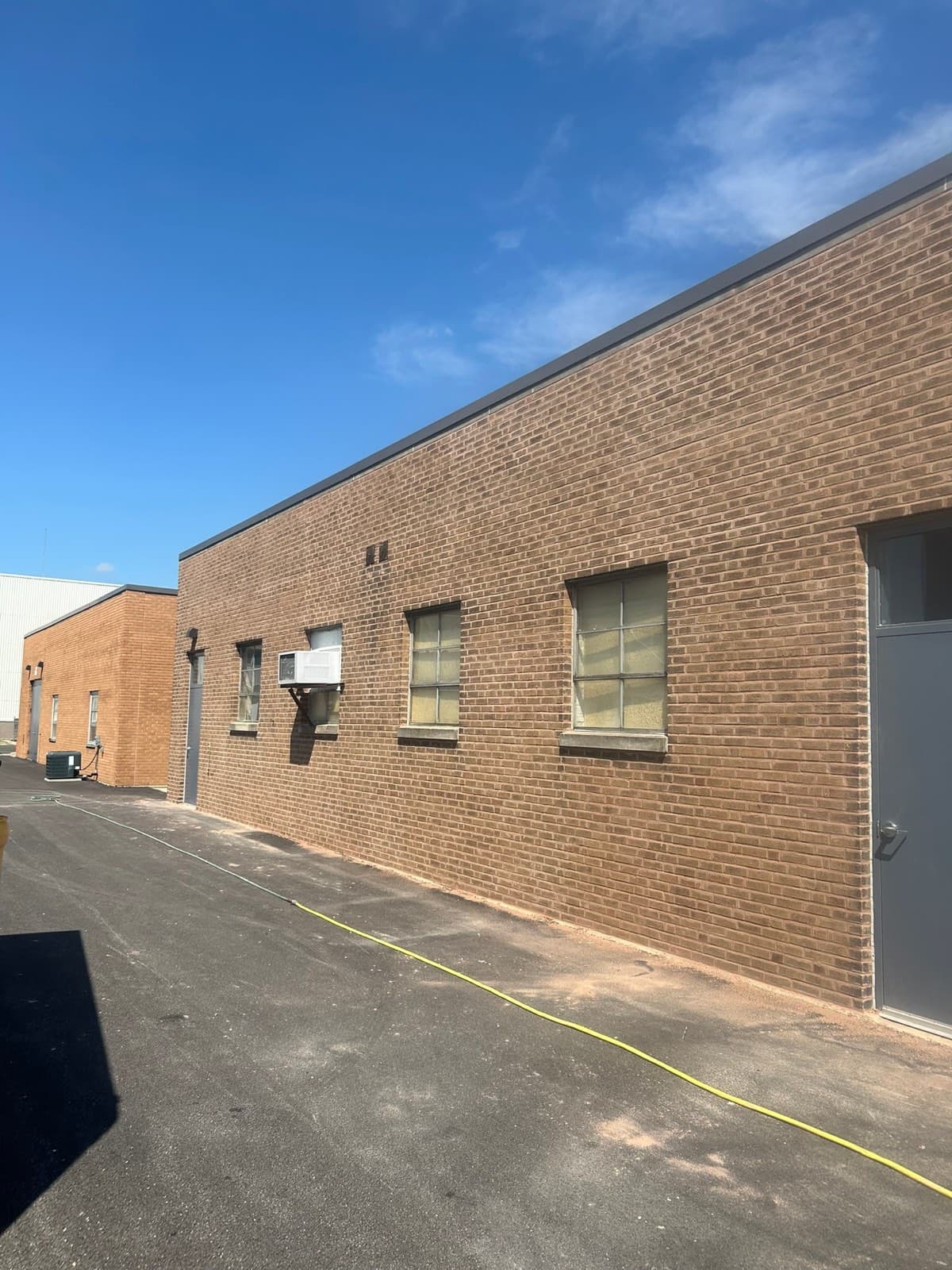
Ask a building owner what the oldest, most weathered, most neglected masonry on their property is, and most will point somewhere at ground level.
It is almost always the top of the wall.
Parapet wall repair in Naperville, IL deals with the one section of masonry that gets weathered on three surfaces at once, has no roof protecting it, no heated interior behind it, and sits directly above a public sidewalk. It is simultaneously the most exposed masonry on a building and the least inspected.
Paul Lally's Masonry Inc. is a family-owned, insured masonry contractor serving Chicago and the Chicagoland suburbs since 1988 — tuckpointing, brick repair and replacement, chimney repair and rebuilds, lintel replacement, masonry restoration, and waterproofing for residential and commercial properties. Built on Craftsmanship. Backed by Experience. Free on-site estimates — (708) 448-8866.
Why a parapet is a different animal
Every other wall on a building has help. It has a roof over it, conditioned space behind it, and one face exposed to weather.
A parapet has none of that:
- The exterior face takes driving rain, sun, and freeze-thaw like any wall
- The interior roof-side face takes weather too, plus heat radiating off a dark roof membrane in summer and standing water at the base in winter
- The top takes everything falling out of the sky, straight down into the wall
So a parapet is being weathered from three directions with no thermal buffer, and it moves more than the wall below it because it is heating and cooling on both sides. That movement opens joints. Open joints let water into the core of the wall. Water in the core freezes.
This is why the top four feet of a masonry building is almost always in worse condition than the forty feet beneath it.
How parapets fail
Coping failure
The cap on top — stone, cast stone, precast, or metal — is the parapet's roof. When coping joints open, when a coping stone cracks, or when metal coping loses its seal, water goes directly into the top of the wall and works downward through the whole assembly. Failed coping is the origin of the majority of parapet problems we are called for.
Through-wall flashing failure
Older parapets often have through-wall flashing meant to intercept water and direct it back out. When it deteriorates, corrodes, or was never properly installed, water that gets in has nowhere to go but down into the wall and the building.
Joint deterioration on both faces
Mortar erodes on the roof side as fast as the street side, and nobody sees the roof side.
Leaning and displacement
A parapet that has been taking water for decades will start to move — bowing outward toward the street, or racking along its length. This is the point at which it stops being maintenance and becomes urgent.
Spalling and unit loss
Freeze-thaw taking the faces off brick or the corners off coping. On a parapet, spalled material has somewhere to fall.
Naperville, specifically
Naperville has an unusually broad mix of masonry buildings for a suburb its size, and each type presents parapets differently.
Downtown — Jefferson, Main, Water Street, and the Riverwalk blocks. Historic and early-twentieth-century masonry storefronts with street-facing parapets, decorative cornice work, and coping directly above heavily trafficked sidewalks. These are the highest-priority parapets in the city, both because of the pedestrian traffic below and because the street elevation is the building's face.
The Ogden Avenue and Route 59 retail corridors. Mid-century and later commercial buildings, long unbroken parapet runs, metal and precast coping, and a lot of buildings now at the age where the original coping seals have simply given out.
Office and flex buildings through the corporate corridors, where parapets run long distances and deterioration tends to be uniform rather than localized — a prioritization exercise rather than a patching exercise.
Institutional buildings — schools, churches, municipal properties — where masonry parapets are frequently older and where anything overhead sits above places children and congregations walk.
Multi-unit residential with flat roofs and shared parapets, where the wall may be common element and the association controls the work.
What the repair involves
- Assess from the roof, not from the ground. The roof-side face and the coping tell you far more than the street elevation does, and neither is visible from a sidewalk.
- Establish repointing versus rebuilding, and how far down sound work begins.
- Protect the roof — staging and material handling on a membrane roof needs planning, not improvisation.
- Dismantle to sound masonry where rebuilding is needed, salvaging units where they can be reused.
- Rebuild plumb and true with matched brick and matched mortar.
- Install or replace through-wall flashing so water that enters has a designed way back out.
- Set new coping with proper slope, overhang, and drip, and correctly detailed joints.
- Repoint, seal joints where sealant belongs, and clean down.
- Coordinate with the roofer on the membrane termination, because the two systems meet here and neither works alone.
What drives the cost
Linear footage of parapet. Height and access — a downtown storefront over a busy sidewalk needs pedestrian protection and often street or sidewalk permission, and that is a real part of the job. The ratio of repointing to rebuilding. Coping type and whether it can be salvaged. Flashing scope. Roof protection. Whether work has to happen outside business hours. Weather windows, since mortar needs workable temperatures to cure.
We publish no rates, because commercial scopes are not comparable building to building. What we provide is a free on-site estimate in writing with the scope broken out — so you can see what is urgent, what is deferrable, and what a phased plan across budget years would look like.
Priorities, honestly
If a building has limited money this year, parapet work is where it should usually go first. Not because it is the most visible — it is not — but because it is the masonry most likely to be actively letting water into the building and the masonry most likely to drop something onto a sidewalk. Appearance work on a street-level facade can wait. Overhead cannot.
Serving Naperville and the surrounding DuPage and Will corridors
We work throughout Naperville and the communities around it — Lisle, Downers Grove, Warrenville, Woodridge, Bolingbrook, and Aurora's eastern edge. Related services: parapet wall repair, commercial masonry restoration, tuckpointing and repointing, brick replacement, and caulking and joint sealant.
For the broader commercial picture, see our commercial masonry restoration guide for Chicagoland.
Get the top of the wall looked at
Family-owned since 1988, insured, with proof of coverage available before work begins on any commercial property. Our name is on every job. Built on Craftsmanship. Backed by Experience.
Get a free on-site estimate — or call (708) 448-8866.
Parapet Wall Repair in Naperville, IL — Frequently Asked Questions
What is a parapet wall?
The section of exterior wall that continues up past the roof line on a flat-roofed building, forming the edge you see from the street. It hides roof equipment, provides fall protection at the roof edge, and on many buildings carries the roof membrane termination.
Why do parapets deteriorate faster than the rest of the building?
Because they are weathered on three surfaces instead of one. A parapet has an exterior face, an interior roof-side face, and a top — so water, sun, and freeze-thaw attack it from every direction, with no roof over it and no heated interior behind it.
Is a deteriorating parapet a safety issue?
Treat it as one. Parapets sit directly above sidewalks, entries, and parking, and loose masonry at that height is a genuine hazard. Anything overhead should be the first priority on a building, ahead of any cosmetic work.
What does coping do?
Coping is the cap on top of the parapet — stone, cast stone, precast, or metal — and its job is to shed water off the top of the wall rather than letting it soak straight down inside. Failed or open coping joints are the single most common reason a parapet deteriorates from within.
Can a parapet be repointed, or does it have to be rebuilt?
It depends on how far it has gone. A parapet that is plumb and sound with eroded joints can be repointed. One that is leaning, has displaced units, or has lost mortar through its full thickness generally needs rebuilding, often from the roof line up.
How much does parapet wall repair cost in Naperville, IL?
It depends on the linear footage, height and access, whether the work is repointing or rebuilding, coping and flashing scope, and roof protection requirements. Paul Lally's Masonry provides a free on-site estimate in writing with the scope broken out.
Does parapet work need to coordinate with the roofer?
Almost always. The roof membrane terminates at the parapet and through-wall flashing ties the two together, so the sequence between masonry and roofing matters. We would rather coordinate that up front than have each trade blame the other later.
Can you work while the building stays open?
Yes — that is the normal condition on commercial work. Access, staging, and sequencing get planned around your operating hours, tenant entrances, and pedestrian traffic, with protection below wherever work is overhead.
Parapet Wall Repair in Nearby Areas
Other Masonry Services in Naperville, IL
Learn more about our parapet wall repair services across Chicagoland, or view all service areas.
Free on-site estimates across Chicagoland.