
Parapet Wall Repair · New Lenox, IL
Parapet Wall Repair in New Lenox, IL — The Strip of Brick Between the Roof and the Sidewalk
A parapet is the only wall on a building that is weathered on both faces and the top at once — and on most New Lenox commercial buildings, it sits directly over a door or a sidewalk.
Quick Answer
Parapet wall repair in New Lenox, IL restores the masonry above the roofline on commercial, retail, church, school and flat-roof residential buildings — resetting or replacing coping, installing through-wall flashing, repointing both faces and rebuilding leaning sections. Paul Lally's Masonry, family-owned and insured since 1988, gives free on-site assessments at (708) 448-8866.
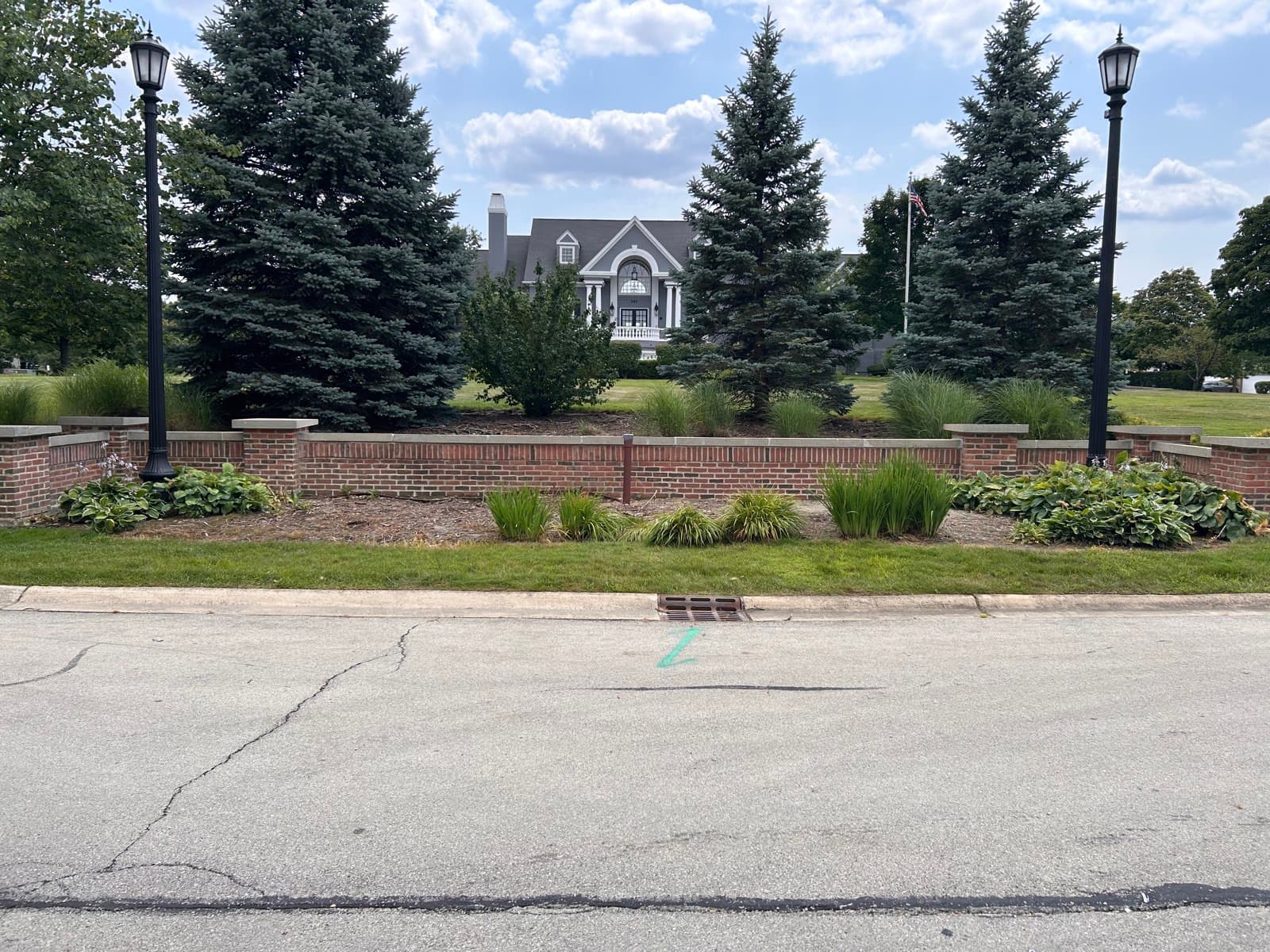
Parapet wall repair in New Lenox, IL means restoring the short wall that rises above a flat roof — the coping on top, the brick on both faces, the flashing hidden inside it and the point where it meets the roof membrane. Paul Lally's Masonry repairs and rebuilds parapets on New Lenox commercial buildings, churches, schools and flat-roof homes, with a free on-site assessment at (708) 448-8866.
Most owners never look at their parapet. It sits above eye level, behind the sign band, out of sight from the parking lot. It is also, on most buildings, the masonry most likely to fail and the masonry most likely to hurt someone when it does.
Paul Lally's Masonry Inc. is a family-owned, insured masonry contractor serving Chicago and the Chicagoland suburbs since 1988 — tuckpointing, brick repair and replacement, chimney repair and rebuilds, lintel replacement, masonry restoration, and waterproofing for residential and commercial properties. Built on Craftsmanship. Backed by Experience. Free on-site estimates — call (708) 448-8866.
A wall with no inside
Every other wall on a building has a warm side. Heat from the occupied space drives moisture outward and dries the masonry between storms. A parapet has no warm side. It is exposed on both faces and across the top, it catches wind-driven rain on the street face and ponded or splashed water on the roof face, and it freezes from every direction.
That is why a parapet built at the same time as the wall below will typically need work decades before the rest of the building does.
Three components keep it alive:
- The coping — stone, precast concrete or metal — which caps the wall and sheds water past both faces with a drip.
- Through-wall flashing beneath the coping, so water that gets past a coping joint is turned back out instead of running down the core of the wall.
- The membrane termination on the roof side, where the roofing system turns up the parapet and must be tied off and counterflashed properly.
When any one of them fails, the other two start failing faster.
New Lenox parapets, specifically
New Lenox grew from a small rail-and-farm village into one of Will County's busier suburbs, and its parapets reflect that mix.
Commercial and retail strips along Route 30, Laraway Road and Cedar Road. Single-storey brick and block buildings with a parapet running the full frontage, often with metal coping and a sign band below. These are the bulk of the parapet work in town. The typical failure is open coping joints or loose metal coping seams, followed by water down the core of the wall and spalled or loose brick at the top courses.
The historic downtown. Older brick commercial buildings with taller parapets, sometimes with stone coping and decorative courses. These carry the most masonry above a public sidewalk and deserve the most careful assessment.
Churches and schools. Long runs of parapet, often at significant height, frequently over entrances used by large numbers of people. Access, phasing around occupancy and overhead protection get planned before any work starts.
Flat-roof modern homes. A smaller group, but the same physics. Residential parapets often have the thinnest detailing — a single wythe and a cap — and leak into finished rooms below.
Mix in the Chicagoland freeze-thaw cycle and long open Will County exposure to wind, and the top of the wall takes a beating.
Signs your parapet needs attention
- Open, cracked or missing mortar at coping joints
- Loose, displaced or rocking coping units; metal coping with lifted seams or missing cleats
- Spalled or crumbling brick at the top courses, often worse on the roof face
- Efflorescence or staining running down the facade below the parapet
- A parapet leaning in or out, or a visible bow along its length
- Horizontal cracking a few courses below the coping
- "Roof leaks" at the perimeter that keep returning after the membrane is repaired
- Masonry debris on the roof, the sidewalk or the canopy below
If you have found pieces of brick on the ground, that is no longer a maintenance question.
Why it should not wait
A parapet is a freestanding wall with nothing bracing it but its own mortar bond. Once that bond fails, wind and ice can move it, and the units at the top are the ones directly above the entry, the sidewalk or the parking spaces.
The water problem compounds alongside the safety one. Water entering at the coping travels down inside the wall, saturates the masonry, corrodes embedded steel and soaks into the roof insulation and deck. A coping repair caught early is a contained job. The same parapet left several more winters is often a full rebuild from the roofline up, plus roofing and interior repairs.
How we repair a parapet
- Inspect both faces and the top, from the roof and from the ground, and note lean, bow, open joints, spalling and the condition of the membrane termination.
- Make anything hazardous safe immediately — loose units removed or secured, overhead protection where people pass below.
- Remove the coping, numbering stone or precast units for reuse where they are sound.
- Repoint or rebuild the parapet as its condition requires. A parapet that is plumb and sound gets repointed on both faces; one that leans or has lost its bond is taken down and relaid.
- Install through-wall flashing beneath the coping, turned out past both faces with a drip.
- Reset or replace the coping on a full mortar bed with sealed or pointed joints, or install metal coping on proper cleats with lapped seams.
- Coordinate the membrane termination with the roofer so the roofing laps under the counterflashing and every drop of water is directed outward.
Our commercial masonry restoration page covers how parapet work fits into a whole-building plan.
Materials
Mortar matched to the existing brick in strength and colour — generally Type N for older, softer brick and Type S where the masonry and exposure call for it, never harder than the units it bonds. Replacement brick matched for size, colour and texture so a rebuilt parapet does not read as a band. Flashing that is continuous, lapped and sealed at the ends. Coping set with a real overhang and drip on both faces.
What drives the cost
The length and height of parapet involved. Coping type, and whether it can be reset or must be replaced. How much is repointed versus rebuilt. Whether through-wall flashing is installed. Roof access, lifts or scaffolding, and overhead protection over walkways. Coordination with the roofing scope. Every assessment is free and in writing, broken out by elevation so it can be phased if needed — call (708) 448-8866.
Serving New Lenox and nearby Will County towns
We work throughout New Lenox and the surrounding communities, including Mokena and Frankfort, plus Orland Park parapets just to the north. In New Lenox we also handle tuckpointing and masonry restoration. Related services: parapet wall repair, tuckpointing, brick replacement and waterproofing. For more detail, read our parapet wall repair guide.
Get the top of the wall looked at
Family-owned since 1988, insured, and our name is on every job.
Request a free on-site parapet assessment — or call (708) 448-8866. Built on Craftsmanship. Backed by Experience.
Parapet Wall Repair in New Lenox, IL — Frequently Asked Questions
How much does parapet wall repair cost in New Lenox, IL?
It depends on the length of parapet involved, its height, whether coping is reset or replaced, whether through-wall flashing goes in, how much must be rebuilt rather than repointed, roof access, and coordination with the roofer. Paul Lally's Masonry provides a free on-site assessment and a written scope broken out by elevation.
Why does the parapet deteriorate faster than the rest of the wall?
Because it is exposed on the street face, the roof face and the top, with no heated space behind it to dry it out. Water gets in from three sides and freezes from three sides, so it goes through far more freeze-thaw damage than the wall below.
My parapet is leaning. Is that urgent?
Yes. A parapet that is visibly out of plumb has usually lost its bond at the mortar joints or is being pushed by expanding steel or a roof deck, and it is a freestanding wall with nothing holding it back. It should be assessed promptly, especially above an entry, sidewalk or parking area.
Is my roof leak coming from the roof or the parapet?
Often the parapet. Water that enters through failed coping joints or open mortar runs down inside the wall and appears below the membrane flashing, so it looks like a roof leak. Repairing the membrane alone will not stop water that is entering above it.
Should the coping be stone, precast or metal?
It depends on what the building was designed with and what the owner wants to maintain. Stone and precast coping need sound joints and a flashing underneath; metal coping needs proper cleats and lapped seams. The coping must shed water past both faces of the wall with a drip.
Do you work with our roofing contractor?
Yes. Parapet work and roof work meet at the membrane termination, so the sequence matters. We agree with the roofer which trade does what at that line before work begins, so the flashing laps the right way and nothing is left between scopes.
Parapet Wall Repair in Nearby Areas
Other Masonry Services in New Lenox, IL
Learn more about our parapet wall repair services across Chicagoland, or view all service areas.
Free on-site estimates across Chicagoland.